Toyota Material Handling Europe has launched a coordinated AGV system designed to operate across mixed fleets. The platform reflects a shift toward scalable, software-driven warehouse automation.
By Daniel Krauss | Edited by Kseniia Klichova
Published:
Updated:
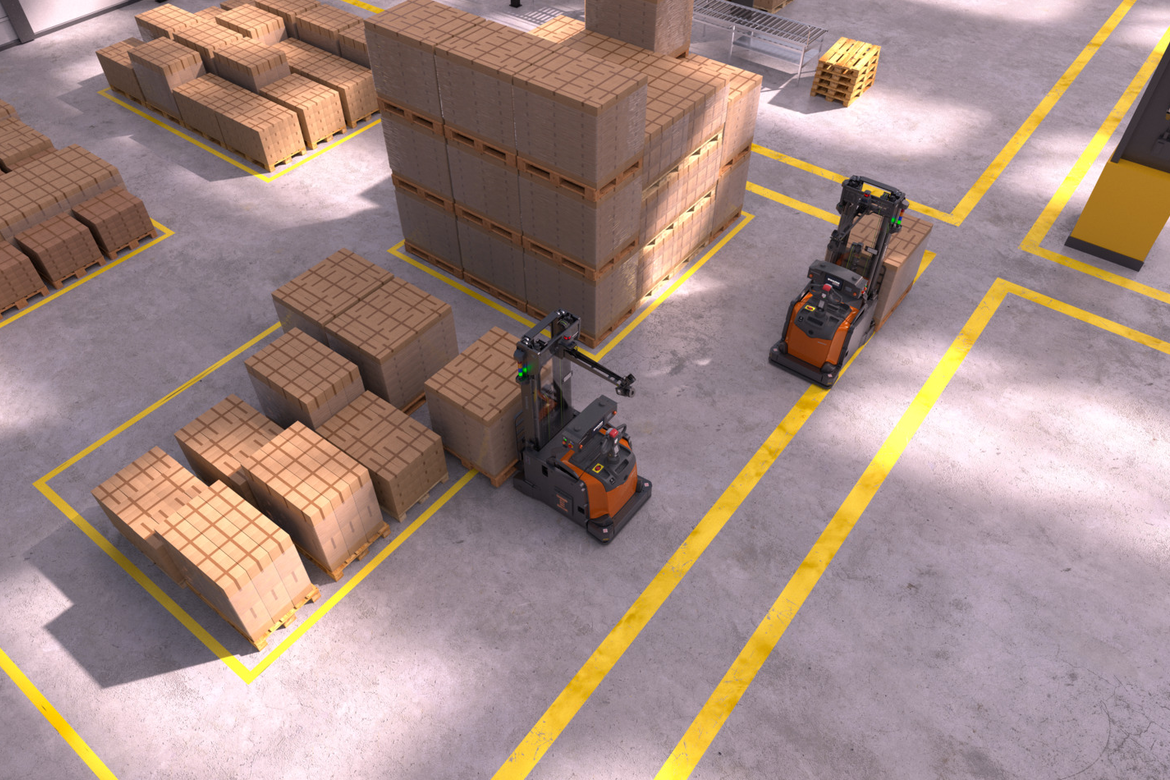
Toyota’s Swarm Automation Transport system coordinates automated and manual warehouse vehicles through a unified software platform, highlighting a shift toward hybrid logistics automation. Photo: Toyota Material Handling
Toyota Material Handling Europe has introduced a coordinated automated transport system aimed at simplifying how warehouses adopt and scale automation. The new platform, called Swarm Automation Transport, combines autonomous vehicles with centralized control software to manage material flows across mixed fleets.
The launch reflects a broader transition in warehouse robotics, where the focus is shifting from isolated automation deployments to systems that can operate alongside existing infrastructure. Rather than requiring full replacement of manual processes, the approach allows companies to introduce automation incrementally.
Coordinated Fleets Instead of Isolated Robots
At the core of the system is the integration of Toyota’s automated counterbalance stacker with its T-ONE software platform. The software orchestrates multiple vehicles, enabling them to coordinate tasks such as pallet transport, stacking, and replenishment across different parts of a facility.
This coordination model moves beyond traditional AGV deployments, where individual units are often assigned fixed routes or narrowly defined tasks. By contrast, the Swarm system enables dynamic task allocation across a fleet, allowing operations to adapt to changing warehouse conditions.
The platform is designed to handle a range of pallet formats, including euro pallets and bottom-deck configurations, and supports different loading orientations. This flexibility is critical in environments such as retail distribution and manufacturing, where standardization is often limited.
Importantly, the system can operate in hybrid environments alongside manual forklifts and other equipment. This reduces the operational disruption typically associated with automation rollouts and allows warehouses to scale deployment based on demand and budget constraints.
Integration and Scalability as Primary Drivers
Toyota positions the system as part of a broader ecosystem rather than a standalone product. The Swarm platform integrates with other automated equipment, including reach trucks, enabling vertical storage operations up to higher rack levels when combined.
This layered approach reflects a growing emphasis on interoperability in warehouse automation. Instead of deploying single-purpose machines, operators are increasingly seeking systems that can connect multiple processes into a unified workflow.
The focus on scalability is also evident in the system’s design. Companies can begin with a limited number of vehicles handling repetitive transport tasks, such as buffer zone movement or replenishment, and expand the fleet over time as operational requirements evolve.
Energy and safety considerations are built into the platform as well. Lithium-ion battery systems with automatic charging support continuous operation, while a combination of sensors, scanners, and bumpers provides 360-degree awareness in mixed-traffic environments.
The introduction of Swarm Automation Transport underscores a shift in how industrial automation is being deployed. Rather than pursuing full autonomy in a single step, manufacturers are increasingly adopting hybrid models that blend automated and manual operations under shared control systems.
For Toyota, the system reinforces its strategy of lowering the barrier to entry for automation by emphasizing compatibility and gradual adoption. For warehouse operators, it reflects a pragmatic path forward, where the value of automation lies not just in replacing labor, but in coordinating complex operations more effectively.
As logistics networks continue to expand in scale and variability, such coordination systems may become a defining layer in how physical workflows are managed, linking individual machines into cohesive, software-driven operations.
Florida Polytechnic University has launched autonomous delivery robots integrated with a campus-wide point-of-sale system. The deployment signals a shift toward fully connected service robotics in everyday environments.
By Laura Bennett | Edited by Kseniia Klichova
Published:
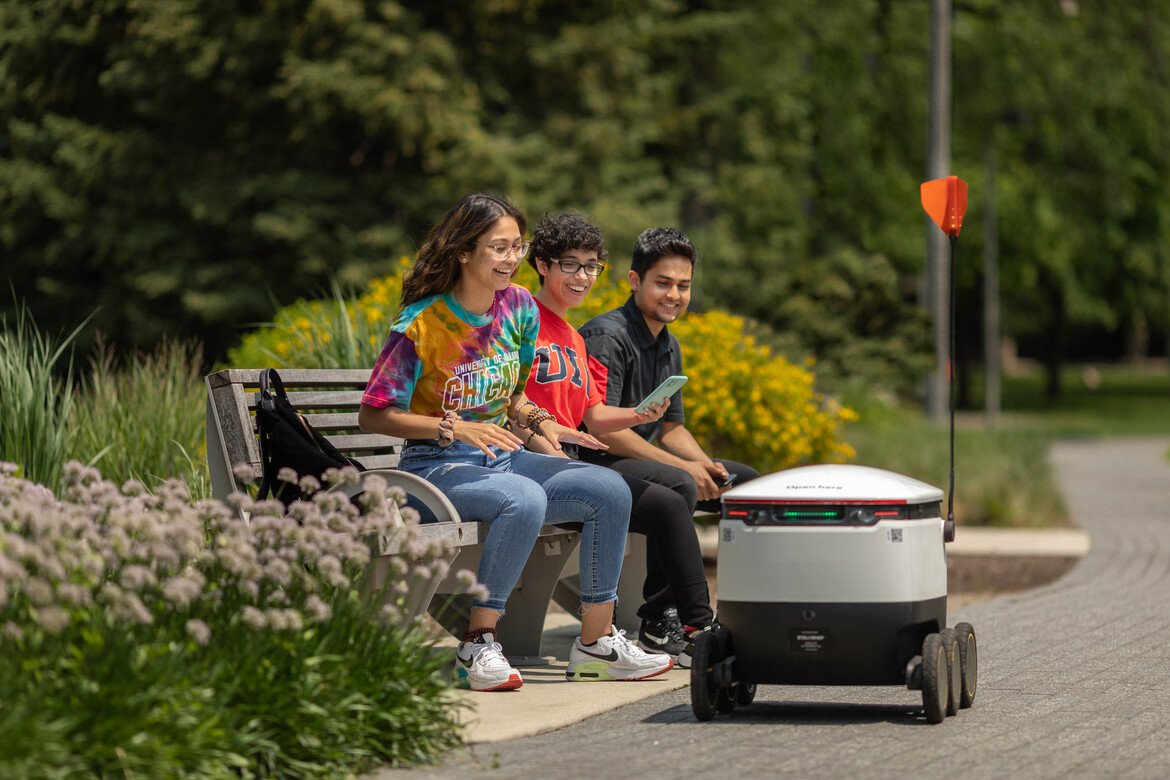
Starship delivery robots operate across Florida Polytechnic’s campus as part of a system that links ordering, payment, and autonomous delivery into a unified service platform. Photo: Starship Technologies
Florida Polytechnic University has deployed a fleet of autonomous delivery robots integrated directly with its campus dining payment system, marking what partners describe as the first point-of-sale integration of its kind in a university setting. The rollout connects ordering, payment processing, and physical delivery into a single workflow, offering a glimpse into how service robotics is evolving beyond standalone applications.
The initiative, launched in partnership with Starship Technologies and campus dining operator Chartwells Higher Education Dining Services, enables students and staff to order food through a mobile app and receive it via autonomous robots navigating campus sidewalks. The system is tied into existing meal plans and digital payment tools, allowing transactions and fulfillment to occur within the same infrastructure.
While robot delivery on campuses is no longer new, the integration of payment systems represents a deeper level of operational alignment between software platforms and physical automation.
From Delivery Feature to Integrated Service System
The deployment is built around Starship’s broader “360” platform, which combines autonomous delivery with point-of-sale infrastructure, mobile ordering, and self-service kiosks. Instead of treating delivery robots as an add-on, the system positions them as one component within a unified service architecture.
In practice, this means orders placed through campus dining channels are automatically routed through a centralized system that manages preparation, payment, and dispatch. Once ready, robots navigate to pick-up locations, travel across campus using a combination of sensors and computer vision, and deliver meals directly to users, who unlock the compartments via a mobile app.
The robots are designed to operate in typical campus conditions, including crossing streets, climbing curbs, and functioning in variable weather. Their navigation systems rely on real-time mapping and obstacle avoidance, allowing them to move within pedestrian environments without dedicated infrastructure.
This level of integration reduces friction across the service chain. Menu customization, payment authorization, and delivery tracking are handled within a single interface, aligning digital transactions with physical fulfillment.
Campuses as Early Platforms for Embodied AI
University campuses have increasingly become testing grounds for service robotics, offering controlled environments with high demand density and predictable logistics patterns. The Florida Polytechnic deployment extends that role by incorporating deeper enterprise-style integration.
Rather than focusing solely on mobility or delivery performance, the project emphasizes system-level coordination. The robots operate as endpoints within a broader software ecosystem, similar to how warehouse robots are integrated into logistics platforms.
This reflects a wider shift in robotics adoption. Value is increasingly derived from how well robots connect to existing systems, rather than from standalone capabilities. In this case, linking autonomous delivery to point-of-sale infrastructure enables a continuous workflow from order placement to fulfillment.
The approach also mirrors trends in enterprise automation, where digital platforms orchestrate multiple layers of operation. By embedding robots into those platforms, organizations can extend automation into physical services without redesigning the entire environment.
The Florida Polytechnic rollout remains a campus-scale deployment, but its implications extend beyond food delivery. As point-of-sale systems, mobile applications, and autonomous machines converge, service robotics may become less visible as a separate technology and more embedded within everyday infrastructure.
For Starship Technologies, the integration signals a move toward platform-based offerings rather than individual robotic services. For institutions like Florida Polytechnic, it demonstrates how automation can be introduced not as a standalone feature, but as part of a coordinated digital and physical system.
Join our list to receive latest Blockchain, Crypto & Fintech news:
WordPress database error: [Table 'u752143311_u5t1U.wp_coingecko_coins' doesn't exist]
            SELECT coins.*, meta.post_id as post_id
            FROM `wp_coingecko_coins` coins
            INNER JOIN wp_postmeta meta ON (meta.meta_key = 'wpcf-coin-main-tag' AND meta.meta_value = coins.slug )
            ORDER BY market_cap_usd
            DESC LIMIT 9