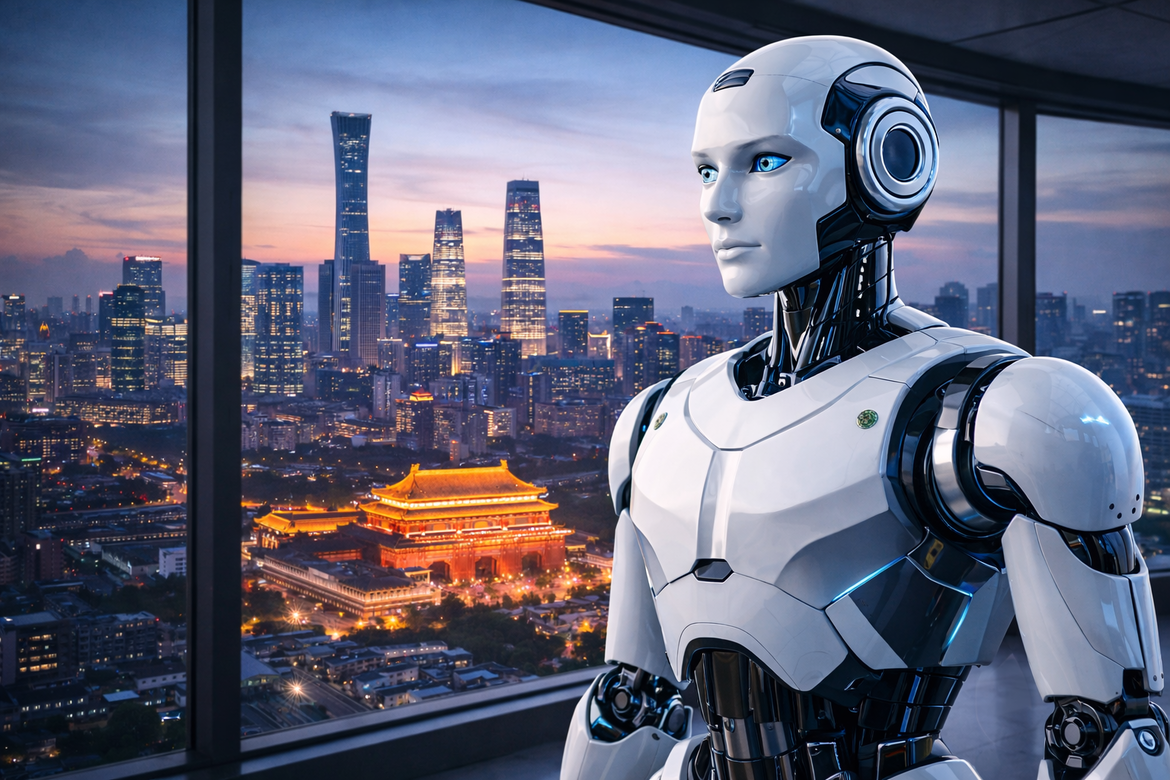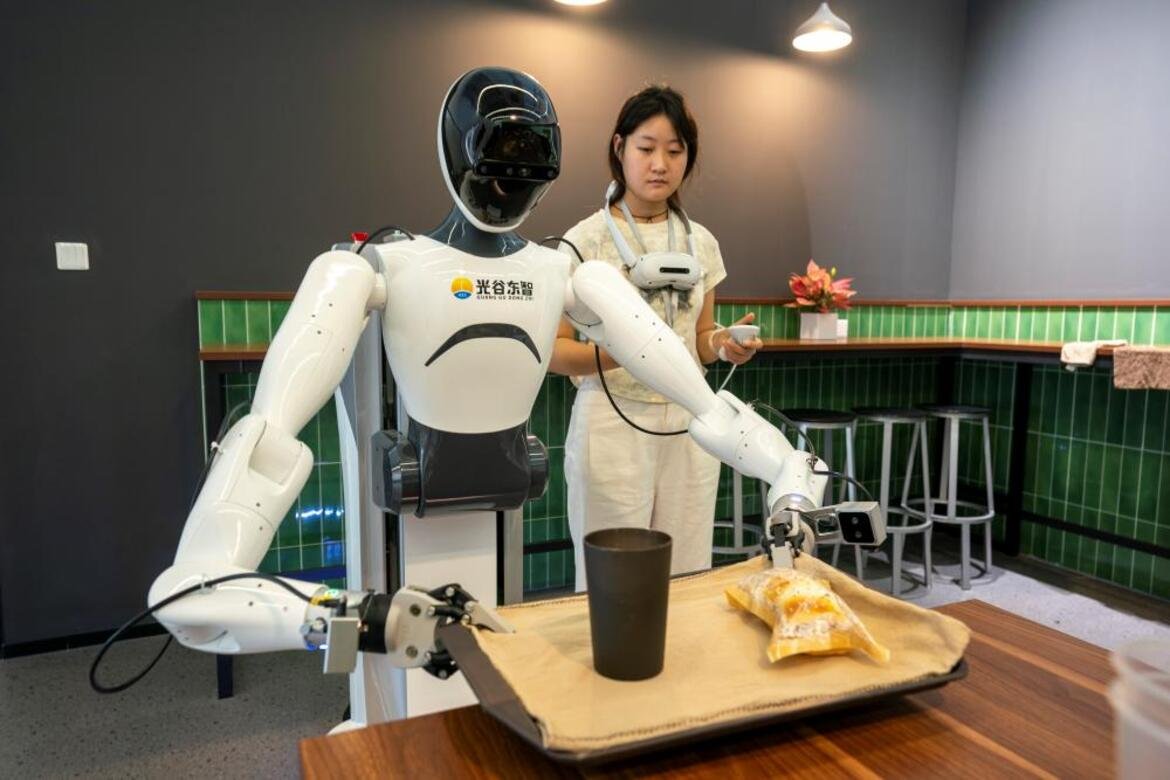
China has opened its first 7S humanoid robot store in Wuhan, marking a new phase in the commercialization of embodied AI. The facility, operated by the Hubei Humanoid Robot Innovation Center, functions not only as a retail showroom but also as a full-service hub integrating sales, training, maintenance, and deployment support.
Located in Wuhan’s East Lake High-Tech Development Zone, a major technology cluster, the store represents an expansion of the traditional automotive dealership model into robotics. The “7S” framework extends beyond sales and service to include solutions development, demonstrations, and technical education, covering the entire lifecycle of humanoid robot deployment.
The concept reflects China’s broader effort to move humanoid robotics from demonstration to scalable commercial infrastructure.
A Retail Model Designed for Industrial Technology
Since opening in November 2025, the Wuhan store has attracted significant public and industry interest. According to operators, it has received approximately 18,000 visitors and generated roughly 615,000 yuan ($88,600) in revenue, with robots deployed in commercial events and experiential demonstrations.
The store features 17 humanoid robot models spanning a wide price range, from entry-level educational units to advanced industrial platforms costing up to 700,000 yuan. Demonstrations include robots serving as retail assistants, playing sports, and performing entertainment functions, as well as machines designed for industrial manufacturing, healthcare support, and public services.
This physical retail presence serves a strategic purpose beyond direct sales. It allows companies to expose customers, engineers, and policymakers to humanoid robots in operational settings, reducing barriers to adoption by providing hands-on experience.
The inclusion of rental services also reflects early commercial experimentation. Short-term deployments at events and public venues allow organizations to test robots in controlled scenarios while generating operational data and market awareness.
Training The Workforce And The Machines
One of the store’s most significant functions is education. Training programs provide hands-on instruction for robot operators, engineers, and students, addressing one of the key bottlenecks in robotics adoption: workforce readiness.
More than 1,000 participants have completed courses covering robot operation, programming, and maintenance. Training initiatives target both professionals and students, building technical capacity across multiple skill levels.
The store also connects directly to a larger training ecosystem. Nearby facilities operated by the Hubei Humanoid Robot Innovation Center use simulation environments and real-world data collection to train humanoid robots themselves. These systems generate large volumes of operational data, which is used to improve control models and accelerate performance improvements.
This dual training approach – educating both humans and robots – highlights the emerging infrastructure required to scale embodied AI.
Building a Domestic Supply Chain for Physical AI
The store also serves as a showcase for China’s growing humanoid robotics supply chain. Regional manufacturers and research institutions contribute key components, including sensors, actuators, and AI systems.
For example, one humanoid robot displayed at the store was developed with significant local supply chain participation, with more than 80 percent of its hardware sourced from regional suppliers. This reflects China’s vertically integrated manufacturing ecosystem, which enables faster development cycles and lower production costs.
Government support is reinforcing this industrial strategy. National and regional policies have identified humanoid robotics as a priority sector, with initiatives aimed at expanding deployment in manufacturing, healthcare, and public services.
Industry forecasts suggest that humanoid robot adoption could expand dramatically in coming decades, with millions of units potentially deployed across industries.
From Showrooms to Deployment Infrastructure
The launch of the 7S store signals a broader shift in robotics commercialization. Early robotics development focused on research labs and isolated pilot deployments. The emergence of retail and service hubs reflects a transition toward scalable distribution and support infrastructure.
Such facilities serve as access points for customers, developers, and integrators, helping bridge the gap between technology availability and practical deployment.
The model also addresses a fundamental challenge in robotics adoption: familiarity. Exposure to operational robots, training opportunities, and deployment services reduces uncertainty and accelerates integration into real-world environments.
The Wuhan store may represent an early prototype of robotics distribution infrastructure. Just as automotive dealerships enabled the expansion of personal vehicles, dedicated robotics service centers could play a similar role in scaling humanoid adoption.
As embodied AI systems move toward mainstream deployment, the creation of physical infrastructure to support sales, training, and lifecycle management may prove as important as advances in the robots themselves.