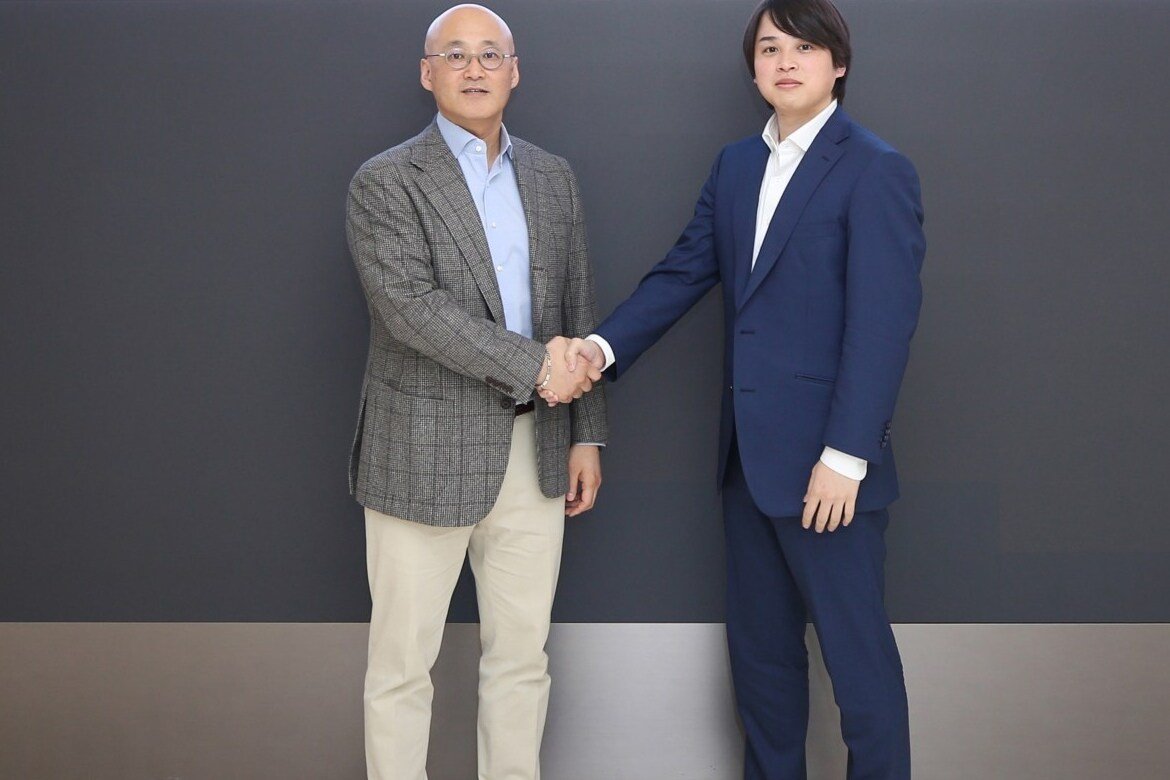
MegazoneCloud and Japanese AI avatar company AVITA have announced a strategic partnership to bring “physical AI” systems into real-world deployment, combining conversational digital avatars with autonomous robots.
The collaboration reflects a growing shift in the robotics industry: moving beyond machines that can act in the physical world toward systems that can also communicate, guide and interact with humans in more natural ways.
By integrating cloud-based AI infrastructure with avatar-driven interaction models, the companies aim to deploy robots capable not only of performing tasks but also of engaging directly with customers across industries such as retail, finance and public services.
From Digital Avatars to Embodied Systems
At the core of the partnership is the integration of AVITA’s avatar technology with autonomous robotic platforms.
AVITA, founded by robotics researcher Hiroshi Ishiguro, has focused on creating AI avatars that can interact with users through conversation and visual representation. Its systems are already used in digital environments for customer support and training.
MegazoneCloud brings cloud infrastructure, AI deployment capabilities and a global enterprise network. Together, the companies plan to embed avatar systems into physical robots, effectively giving machines a conversational interface tied to real-world actions.
The combined system is designed to enable robots to guide customers, provide consultations and respond to inquiries while also performing physical tasks.
This approach differs from traditional service robots, which often rely on limited scripted interactions. By pairing avatars with autonomous decision-making systems, the companies aim to create more adaptive and human-like interactions.
Targeting High-Interaction Industries
The initial focus will be on sectors where customer interaction is central.
In retail, the companies are exploring applications such as unmanned checkout systems and in-store guidance. In finance, robots could assist with customer consultations, while training systems could simulate realistic interactions for employees.
AVITA’s existing products, including a customer interaction platform and a training system that uses AI avatars to simulate real-world conversations, will be integrated into these deployments.
The training system analyzes user responses and provides performance feedback, suggesting that physical AI systems could play a role not only in service delivery but also in workforce development.
The companies also plan to expand into public-sector use cases, where robots could assist with information services or administrative support.
Physical AI Moves Toward Human Interaction
The partnership highlights a broader evolution in robotics.
Early automation systems focused primarily on physical execution – moving objects, assembling parts or navigating spaces. More recent developments in embodied AI have added perception and decision-making capabilities.
The next step, increasingly, is communication.
As robots move into environments such as retail stores, offices and public spaces, their ability to interact with people becomes as important as their ability to perform tasks.
By combining avatars with physical systems, companies are attempting to bridge the gap between digital AI – which excels at conversation – and robotics, which operates in the physical world.
This convergence is drawing interest across the industry, with multiple companies exploring ways to integrate language models, perception systems and robotic hardware into unified platforms.
For MegazoneCloud and AVITA, the challenge will be translating these capabilities into reliable, scalable systems that can operate in real-world conditions.
If successful, the approach could redefine how businesses deploy automation – not just as a tool for efficiency, but as an interface between humans and machines.