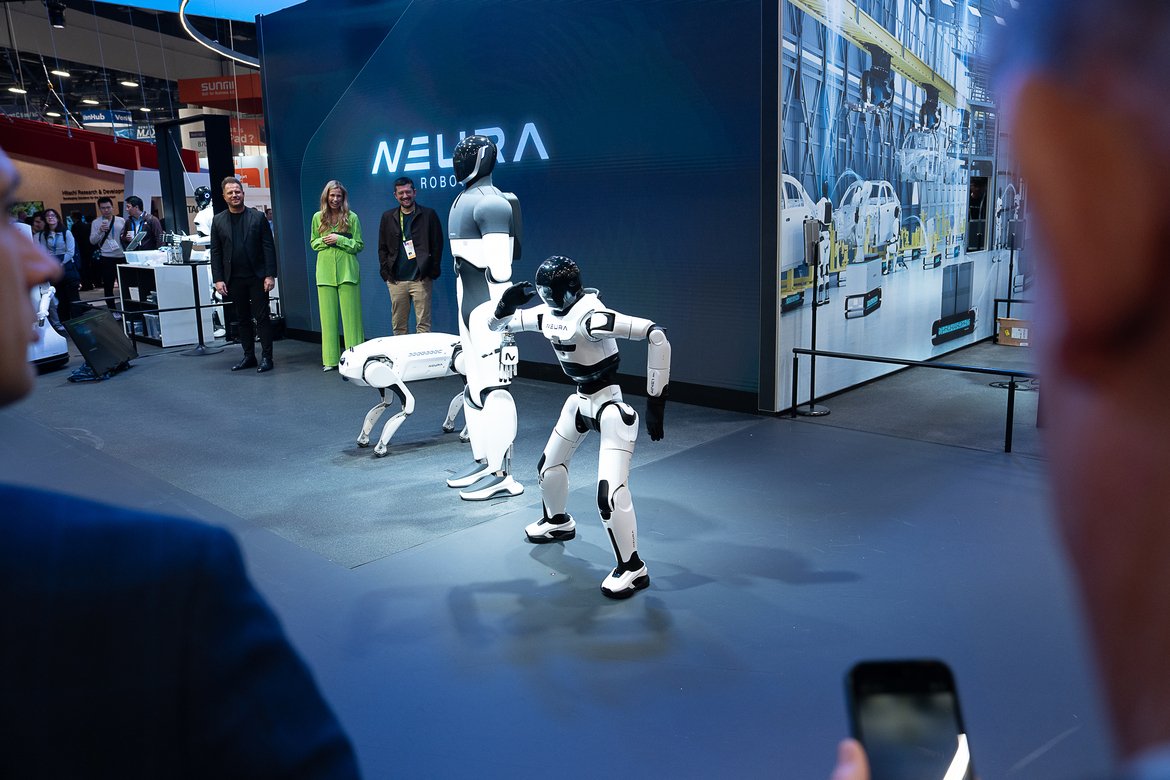


German robotics startup Neura Robotics is reportedly seeking roughly €1 billion in fresh funding at a valuation of about €4 billion, in a deal that would rank among the largest capital raises yet for a humanoid robotics company.
According to reports, the financing effort is attracting backing from Amazon and a prominent Qatari investor, highlighting how global capital is increasingly shifting toward robotics as artificial intelligence expands beyond software into physical machines.
If completed near the reported terms, the funding round would represent a significant milestone for Europe’s emerging robotics sector and underscore the scale of investment now flowing into embodied AI technologies.
Investors Bet on the Physical AI Economy
Neura Robotics is positioning itself as a developer of AI-powered robots capable of working alongside humans in industrial and service environments.
The company focuses on cognitive robotics, combining perception, motion control and machine learning systems designed to allow robots to interact safely with people and adapt to changing conditions. Its portfolio includes collaborative robots and humanoid platforms intended for tasks ranging from manufacturing to logistics.
The size of the planned funding round reflects how investors increasingly view robotics as a key next phase of the AI industry.
For years, artificial intelligence investment was concentrated primarily in cloud software and data infrastructure. Now the focus is shifting toward machines that can apply those capabilities in the physical world.
Amazon’s reported involvement is particularly notable because large technology companies often play an influential role in determining which robotics platforms gain traction. Tech giants can act simultaneously as investors, customers and strategic partners.
Capital Intensity Shapes the Robotics Race
The scale of Neura Robotics’ fundraising also illustrates the financial realities of building robotics companies.
Unlike software startups, robotics firms must fund extensive hardware engineering, manufacturing development and safety testing before products reach large-scale commercialization. These processes require far more capital and longer development cycles than typical AI software ventures.
Seeking funding equal to roughly a quarter of the company’s valuation suggests investors expect years of heavy investment before profitability becomes realistic.
That dynamic has begun to reshape the competitive landscape of robotics. Companies with strong financial backing are increasingly positioned to dominate development of complex systems such as humanoid robots.
The pattern resembles other capital-intensive industries such as aerospace or automotive manufacturing, where long development timelines and high engineering costs tend to concentrate leadership among a smaller number of well-funded players.
The Humanoid Robot Market Heats Up
The potential financing round also highlights the accelerating race to build commercially viable humanoid robots.
Startups and technology giants alike are betting that human-shaped machines could eventually automate tasks in warehouses, factories, logistics networks and service industries.
But the path to that future remains uncertain. Demonstrations of humanoid robots have improved dramatically in recent years, yet large-scale adoption still depends on achieving reliable performance, meeting safety standards and reducing costs to competitive levels.
For Neura Robotics and its backers, the bet is that advances in AI models combined with improved robotics hardware will eventually make such systems economically practical.
If billion-euro funding rounds become more common, the robotics sector could soon enter a new phase in which the competition is defined not only by technological breakthroughs but also by access to long-term capital.
Disclaimer: RobotsBeat is an independent media brand owned and operated by NuvexMedia LLC, publishing news, research, and insights on artificial intelligence, emerging technologies, automation, and related industries. NuvexMedia LLC invests in and collaborates with companies across the AI, Robotics, technology, software, and digital innovation sectors. These relationships do not influence RobotsBeat's editorial coverage, and the publication maintains full editorial independence to provide accurate, timely, and objective information. © 2026 NuvexMedia LLC. All rights reserved. This content is for informational purposes only and should not be considered legal, tax, investment, financial, or other professional advice.