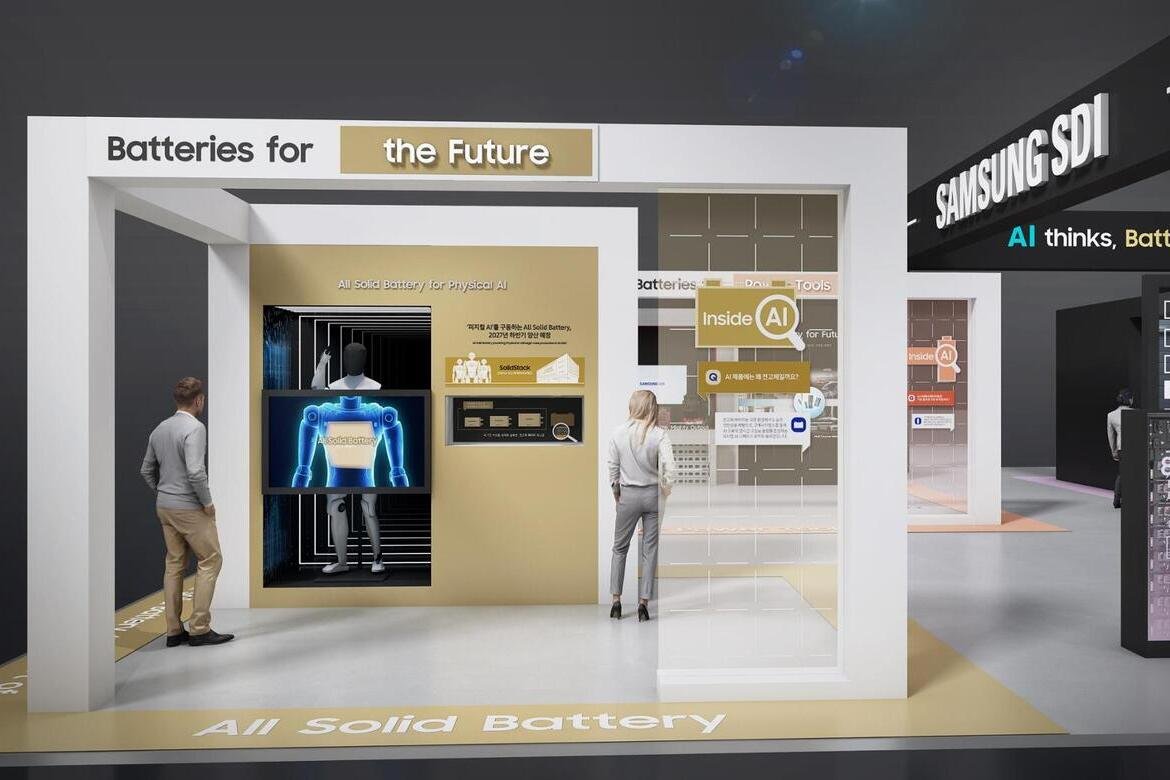
The rapid emergence of humanoid robots and other autonomous machines is forcing a new question across the robotics industry: how to power mobile systems that must operate safely for long periods while carrying increasingly complex computing hardware.
At InterBattery 2026 in Seoul, Samsung SDI plans to publicly present a pouch-style all-solid-state battery designed specifically for robotics applications, marking the company’s first demonstration of solid-state technology aimed at physical AI systems rather than electric vehicles.
The announcement reflects a broader shift in the battery sector as manufacturers begin adapting next-generation energy storage technologies for emerging robotics markets, where reliability, safety, and weight constraints differ significantly from those of passenger vehicles.
Expanding Solid State Batteries Beyond Electric Vehicles
Samsung SDI has spent years developing prismatic all-solid-state batteries primarily for electric vehicles, an area where automakers have long sought higher energy density and improved safety compared with conventional lithium-ion cells.
The company now intends to extend the technology into new form factors suited to robotics and other mobility platforms. For the robotics sector, Samsung SDI is introducing a pouch-style design, which the company says reduces overall weight while maintaining stable power output and improved safety characteristics.
Solid-state batteries replace the liquid electrolyte used in conventional lithium-ion batteries with a solid material, reducing the risk of leakage or thermal runaway while potentially enabling higher energy density. Those properties are especially relevant for humanoid robots, which must balance energy storage with strict limits on weight and thermal management.
Unlike industrial robots connected to fixed power sources, mobile robots depend on compact onboard batteries to support both actuation systems and increasingly demanding artificial intelligence workloads.
Why Energy Storage Is Becoming a Robotics Bottleneck
Battery design has quietly become one of the central constraints in humanoid robotics development. Many emerging robots rely on electric motors, advanced sensors, and onboard AI processors that collectively require large amounts of power.
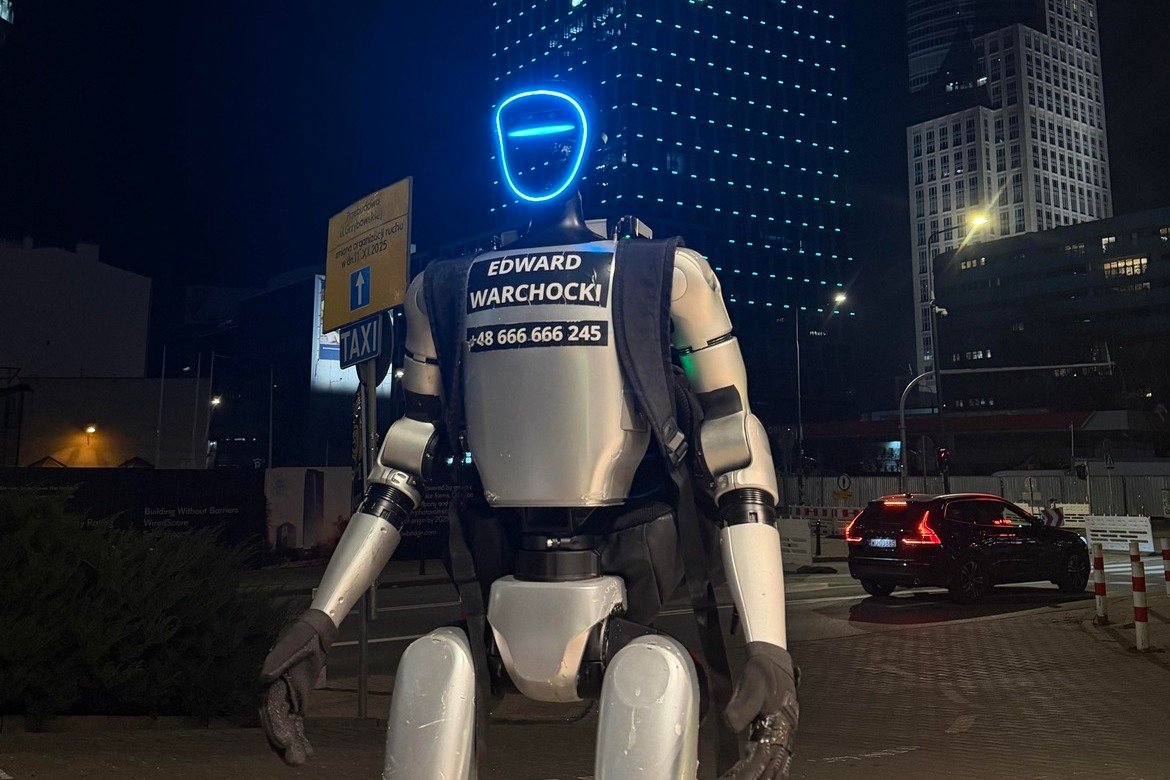
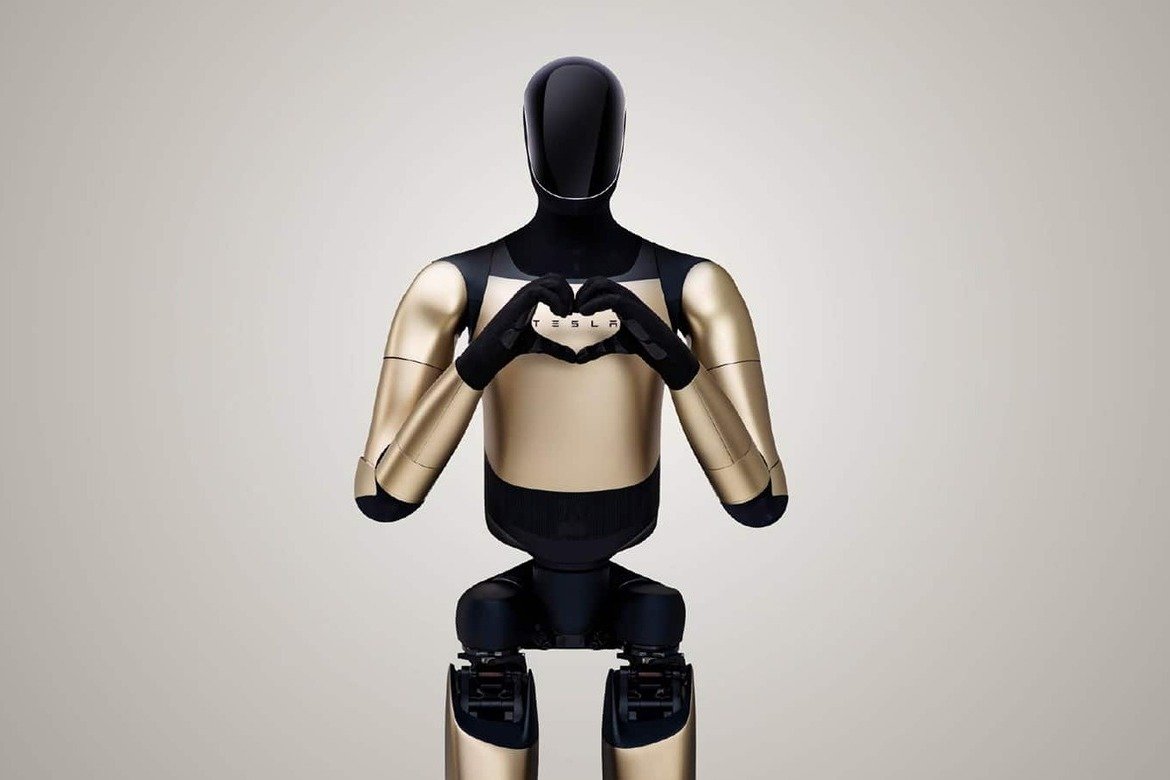
This challenge is particularly visible in humanoid platforms being developed by companies across Asia, the United States, and Europe. Maintaining balance, locomotion, and real-time perception requires continuous computation, while real-world deployments demand operating times that extend well beyond short demonstration cycles.
Energy density therefore plays a direct role in whether robots can move from controlled demonstrations to practical industrial or service applications.
Solid-state batteries offer one potential pathway to addressing that constraint. Higher energy density could allow robots to run longer between charging cycles, while improved thermal stability may simplify safety requirements for systems operating near people.
Samsung SDI said its pouch-format solid-state battery is intended not only for humanoid robots but also for aviation platforms and wearable technologies, suggesting that robotics may become part of a broader category of emerging mobility devices.
What This Signals for the Physical AI Industry
The move underscores how battery manufacturers are beginning to recognize robotics as a distinct energy market alongside electric vehicles and consumer electronics.
Humanoid robotics has attracted growing investment over the past two years, with companies racing to develop machines capable of performing tasks in warehouses, factories, and logistics operations. These systems require compact power systems capable of sustaining both mechanical motion and advanced AI workloads.
Battery suppliers that can adapt their technology to these requirements may find new demand emerging alongside the growth of physical AI systems.
For Samsung SDI, the InterBattery demonstration appears to represent an early step in exploring that opportunity. While the company is targeting mass production of its prismatic solid-state batteries for electric vehicles in the second half of next year, the robotics-focused pouch cell suggests a parallel effort to diversify how the technology is applied.
If humanoid robots reach large-scale deployment in the coming decade, the energy systems that power them could become as strategically important as the AI models that control them.