Stateful Robotics, a University of Oxford spinout developing software to improve robotic decision-making in real-world environments, has raised $4.8 million in a pre-seed funding round aimed at tackling one of the industry’s persistent challenges: giving robots the ability to plan and adapt over long time horizons.
The round was led by Amadeus Capital Partners and Oxford Science Enterprises, with additional investment from serial entrepreneur Stan Boland, founder of autonomous vehicle startup Five. The funding will support the expansion of Stateful Robotics’ engineering team and accelerate deployment of its platform with industrial partners.
The company is focused on what its founders describe as a missing layer in modern robotics: a persistent intelligence system that allows machines to remember previous events, track the progress of tasks, and adapt their behavior as conditions change.
The Limits of Today’s Robot Intelligence
Over the past several years, large AI models have significantly improved robot perception and environment understanding. Foundation models can now interpret visual scenes, recognize objects and generate task instructions with far greater sophistication than earlier systems.
But these advances have not solved a fundamental operational challenge. Most robotic systems still treat each decision as an isolated event, without maintaining a structured memory of what happened previously in a deployment environment.
In practical terms, that means robots often struggle when conditions deviate from carefully scripted workflows. A blocked corridor in a warehouse, a delayed delivery, or unexpected changes in lighting can disrupt operations because the system lacks the context needed to reason about longer-term consequences.
Stateful Robotics is attempting to address that limitation by introducing what it calls a “stateful” intelligence layer. Instead of evaluating each task independently, the platform maintains a continuously updated model of the environment, task history and operational performance.
According to the company’s founders, this persistent representation allows robots to learn from past outcomes and plan more effectively across hours or days of activity rather than reacting moment by moment.
A Software Layer for Scalable Robotics
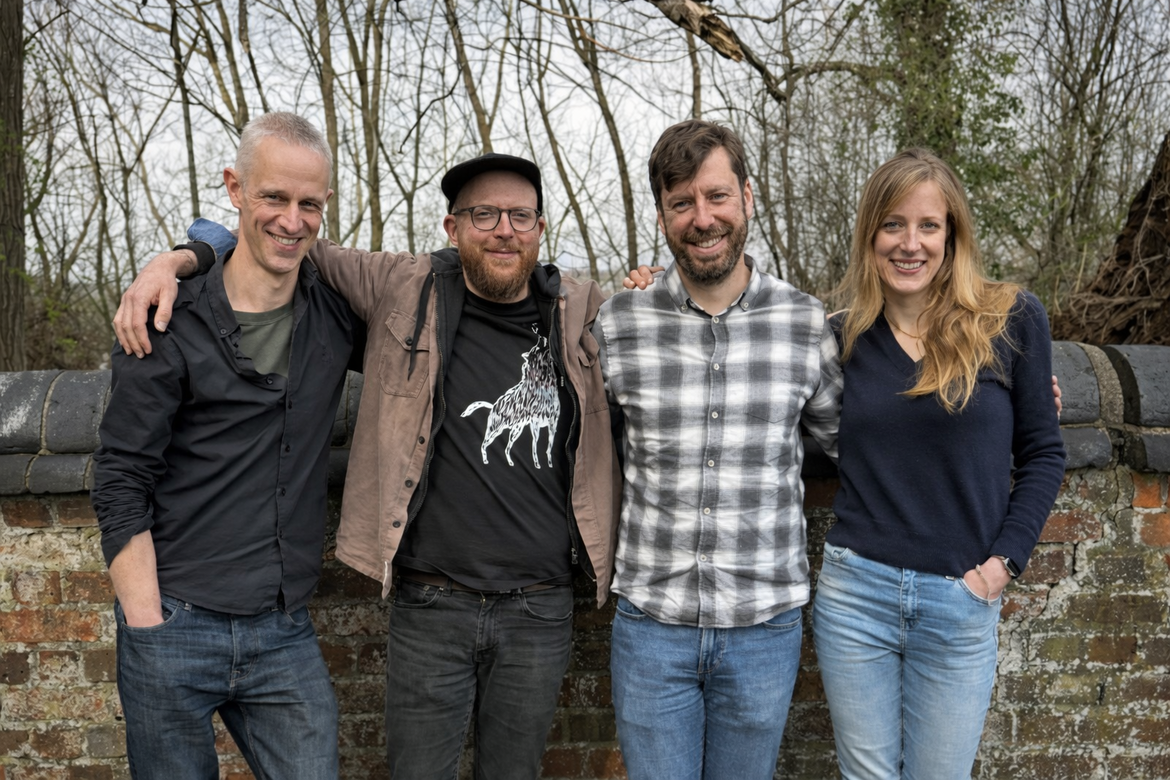
The startup was founded by CEO Kirsty Lloyd-Jukes, previously chief executive of Oxford autonomous driving spinout Latent Logic, which was acquired by Waymo in 2019. She co-founded the company alongside robotics researchers Professor Nick Hawes, Professor David Parker and Dr Bruno Lacerda, whose work at Oxford has focused on autonomous decision-making and verification under uncertainty.
Their platform is designed to integrate data from robots, operational infrastructure and task management systems into a unified model that tracks how work actually unfolds in a real environment.
This model evolves continuously as robots operate, enabling systems to anticipate disruptions, adjust plans and coordinate across fleets or human-robot teams.
The concept addresses a growing concern in the robotics industry: that while hardware platforms have matured significantly, large-scale deployment is still constrained by the reliability of autonomy software.
Investors increasingly view the intelligence layer above robotics hardware as a key determinant of whether robots can operate productively in complex environments such as logistics hubs, factories, hospitals and infrastructure sites.
Bridging Research and Industrial Deployment
Backers of Stateful Robotics argue that long-horizon reasoning could become essential as robotics moves beyond controlled industrial settings into mixed human-machine environments.
In early industrial robotics deployments, machines typically operate in tightly structured spaces where tasks are repetitive and predictable. Newer generations of mobile robots, however, are expected to navigate dynamic environments alongside human workers and other autonomous systems.
That transition requires systems capable of maintaining situational awareness over extended periods, tracking evolving conditions and adjusting operational plans accordingly.
Stateful Robotics says its platform is already being tested with pilot customers in sectors including infrastructure and logistics. The company aims to position its technology as a software layer that can sit above existing robotic platforms rather than requiring entirely new hardware.
If successful, the approach could help address a long-standing bottleneck in robotics: turning promising pilot deployments into reliable systems that can scale across large industrial environments.
For investors, the bet reflects a broader shift in robotics toward embodied AI software that enables machines to operate continuously in complex real-world contexts.