Doosan Bobcat introduced the RX3 autonomous concept loader and a suite of AI-powered jobsite technologies at CES 2026, signaling a shift toward smart, electrified construction equipment.
By Daniel Krauss
Published:
Updated:
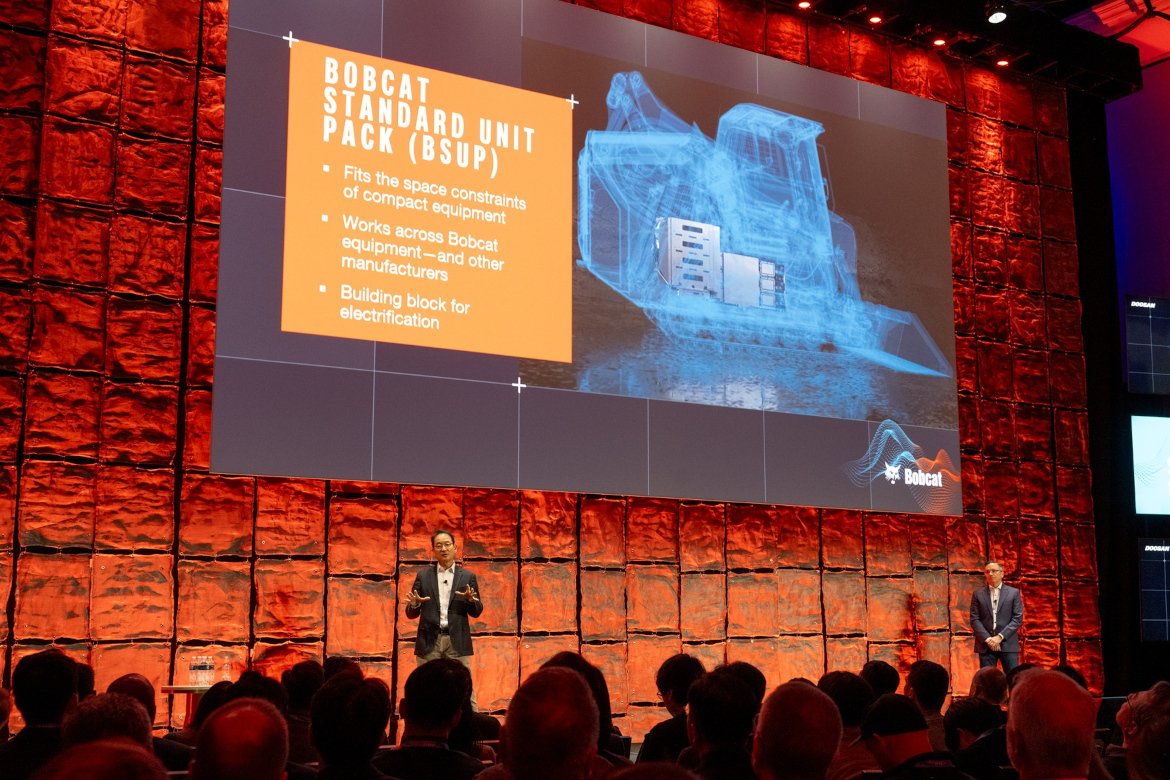
Scott Park, CEO of Doosan Bobcat, presents the company’s next-generation construction equipment vision at CES 2026 Media Day on January 5. Photo: Doosan Bobcat
Doosan Bobcat has unveiled a new generation of autonomous and AI-enabled construction technologies at CES 2026, headlined by the RX3 autonomous concept loader and a growing ecosystem of intelligent jobsite systems. The announcements reflect the company’s push to integrate autonomy, electrification, and artificial intelligence into compact construction equipment designed for real-world deployment.
Presented during CES Media Day in Las Vegas, the technologies are part of what Bobcat describes as a “Smart Construction Jobsite,” where machines assist operators, reduce complexity, and improve safety and productivity. While several systems remain in concept or prototype form, the company emphasized that many are moving steadily toward commercialization.
RX3 Autonomous Concept Loader
The Bobcat RogueX3, or RX3, represents the third generation of Bobcat’s autonomous loader concept. The electric-powered machine is designed to match the size and footprint of existing manned Bobcat equipment, allowing it to operate in current jobsites without major workflow changes. It uses tracked mobility to provide traction across uneven or challenging surfaces while operating quietly and without emissions.
A key feature of the RX3 is its modular design. The platform can be configured with or without a cab, equipped with wheels or tracks, and paired with different lift arms depending on the task. Bobcat said the concept could ultimately support multiple powertrains, including electric, diesel, hybrid, and hydrogen, offering flexibility as energy infrastructure evolves.
“For nearly 70 years, Bobcat has led the compact equipment industry by solving real problems for real people,” said Scott Park, vice chairman and CEO of Doosan Bobcat. “As jobsites become more complex, we’re responding with intelligent systems that help people accomplish more, faster, and smarter.”
Bobcat is also working with Agtonomy as a technology partner, using its perception and fleet management software to enable autonomous and semi-autonomous operation in agricultural and construction contexts.
AI Comes Into the Cab
Alongside the RX3, Doosan Bobcat introduced the Bobcat Jobsite Companion, described as the compact equipment industry’s first AI voice control system. Powered by a proprietary large language model running entirely onboard, the system allows operators to manage more than 50 machine functions using natural voice commands.
Operators can adjust attachment settings, engine speed, lighting, and other controls without taking their hands off the controls. Because the system does not rely on cloud connectivity, it can respond in real time even in remote or connectivity-limited jobsites.
“Jobsite Companion lowers the barrier to entry for new operators while helping experienced professionals work faster and more precisely,” said Joel Honeyman, vice president of global innovation at Doosan Bobcat.
Bobcat also announced Service.AI, an AI-powered support platform designed for dealers and technicians. The system provides instant access to diagnostics, repair manuals, service histories, and troubleshooting guidance, aiming to reduce downtime and speed up maintenance.
Safety, Displays, and Energy Systems
Doosan Bobcat showcased several additional technologies that support its smart jobsite vision. A radar-based collision warning and avoidance system uses imaging radar to monitor surroundings and can automatically slow or stop a machine to prevent accidents.
The company also revealed an advanced display concept using transparent MicroLED screens integrated into cab windows. These displays overlay 360-degree camera views, machine performance data, alerts, and asset tracking directly into the operator’s field of vision.
Powering these systems is the Bobcat Standard Unit Pack, or BSUP, a modular and rugged battery system designed for harsh construction environments. The fast-charging packs are scalable across Bobcat’s equipment lineup and are intended to support broader electrification efforts, including potential use by other manufacturers.
Toward a Smarter Jobsite
Doosan Bobcat said the technologies unveiled at CES 2026 form an integrated ecosystem rather than isolated features. By combining AI, autonomy, electrification, and connectivity, the company aims to redefine how compact equipment is operated and supported.
“We’ll combine AI, autonomy, electrification, and connectivity to create new jobsite standards,” Park said during the Media Day presentation.
While the RX3 and several systems remain concept-stage, Bobcat’s messaging at CES emphasized near-term impact rather than distant vision. The company framed these developments as practical steps toward safer, more productive jobsites where intelligent machines actively support human workers.
Mobileye agreed to acquire humanoid robotics startup Mentee Robotics for $900 million, expanding its autonomy technology from vehicles into Physical AI and general-purpose humanoid robots.
By Rachel Whitman
Published:
Updated:
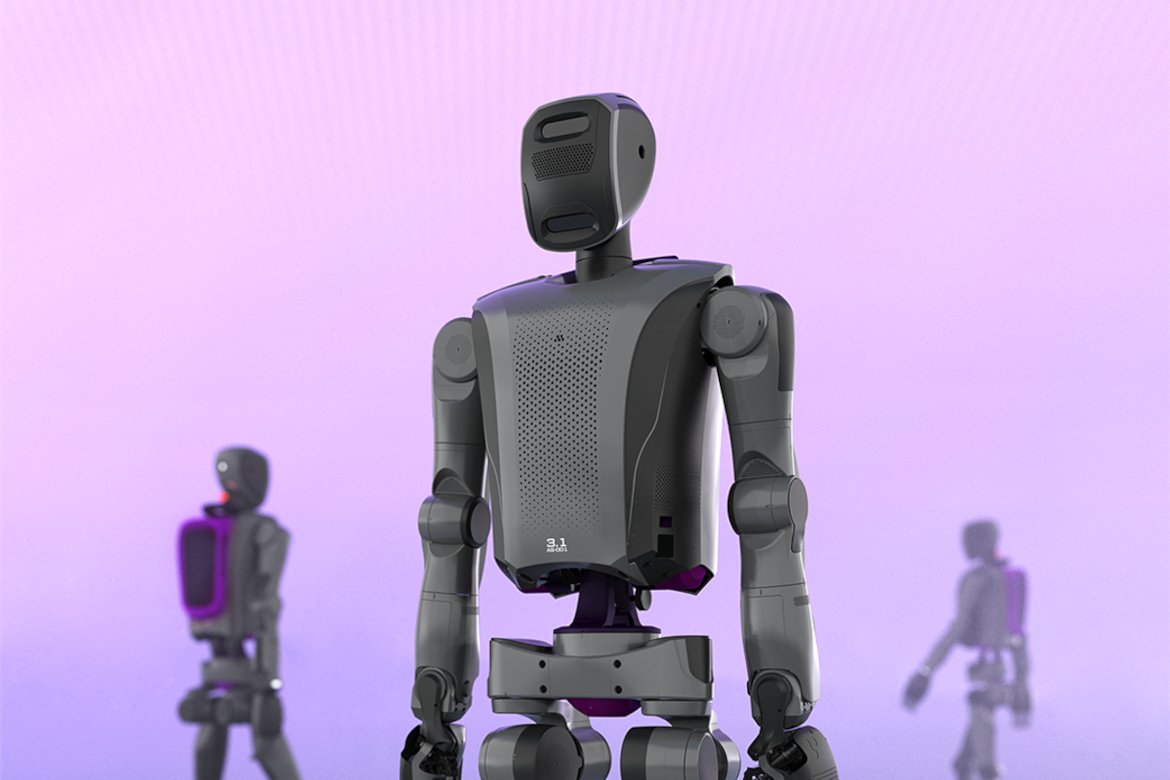
A Mentee Robotics humanoid robot demonstrates autonomous box handling during a Physical AI showcase at CES 2026. Photo: Mentee Robotics
Mobileye has agreed to acquire Mentee Robotics in a $900 million transaction that marks a major strategic shift beyond autonomous driving and into humanoid robotics and Physical AI. Announced during CES 2026 in Las Vegas, the deal positions Mobileye to apply its autonomy technology to machines designed to work directly alongside humans in physical environments.
The acquisition combines Mobileye’s large-scale perception, planning, and safety systems with Mentee’s vertically integrated humanoid robot platform. Together, the companies aim to build general-purpose robots capable of understanding context, inferring intent, and executing tasks safely and autonomously in real-world settings such as factories, warehouses, and industrial facilities.
From Vehicle Autonomy to Embodied Intelligence
Mobileye’s core business has been built around vision-based autonomy for vehicles, with systems designed to interpret complex scenes, predict behavior, and make safety-critical decisions. Those same challenges increasingly define humanoid robotics, where machines must navigate spaces built for people while interacting with objects, equipment, and coworkers.
The company said the acquisition represents a decisive move toward Physical AI, a class of systems that not only perceive the world but also act within it reliably and at scale. Mobileye’s autonomy stack has evolved beyond navigation toward context-aware and intent-aware reasoning, providing a foundation for robots that can operate productively without constant supervision.
The move also reflects Mobileye’s effort to diversify as competition intensifies in autonomous driving and commercialization timelines extend. By expanding into humanoid robotics, the company gains exposure to a parallel growing market where autonomy software may become the primary differentiator.
Mentee’s Humanoid Platform and Learning Approach
Founded four years ago, Mentee Robotics has developed a third-generation humanoid robot designed for scalable deployment rather than laboratory demonstrations. The platform is vertically integrated, with in-house development of hardware, embedded systems, and AI software.
Mentee’s approach emphasizes rapid learning and adaptability. Its robots are trained primarily in simulation, reducing reliance on large-scale real-world data collection and minimizing the gap between simulated and physical performance. The system is designed to acquire new skills through limited human demonstrations and intent cues, rather than continuous teleoperation.
This learning framework enables autonomous, end-to-end task execution, including locomotion, navigation, and safe manipulation of rigid objects. In demonstrations, Mentee robots have shown the ability to perform multi-step material handling tasks with stability and accuracy, supporting the company’s focus on real-world utility.
Deal Structure and Commercial Roadmap
Under the terms of the agreement, Mobileye will pay $900 million for Mentee Robotics, consisting of approximately $612 million in cash and up to 26.2 million shares of Mobileye Class A stock, subject to adjustments. The transaction is expected to close in the first quarter of 2026, pending customary approvals.
Mentee will operate as an independent unit within Mobileye, allowing continuity while gaining access to Mobileye’s AI infrastructure and production expertise. First customer proof-of-concept deployments are planned for 2026, with autonomous operation as a core requirement. Series production and broader commercialization are targeted for 2028.
Mobileye said the acquisition will modestly increase operating expenses in 2026 but aligns with its long-term growth strategy.
CES 2026 and the Rise of Physical AI
Physical AI emerged as a central theme at CES 2026, with humanoid robots, service robots, and embodied AI systems moving beyond concept stages. The Mobileye-Mentee announcement underscored how autonomy is becoming a shared foundation across vehicles and robots, rather than a domain-specific technology.
Mobileye highlighted strong momentum in its core automotive business, citing an $24.5 billion revenue pipeline over the next eight years. Company executives framed the acquisition as a way to extend that success into a second transformative market without abandoning its safety-first philosophy.
“Today marks a new chapter for robotics and automotive AI,” said Mobileye President and CEO Amnon Shashua. “By combining Mentee’s breakthroughs in humanoid robotics with Mobileye’s expertise in autonomy and productization, we have an opportunity to lead Physical AI at a global scale.”
Mentee CEO Lior Wolf said the partnership accelerates the company’s mission to deliver safe, cost-effective humanoid robots capable of meaningful work in human environments.
As CES 2026 made clear, the race to define Physical AI is accelerating. With this acquisition, Mobileye signals that the next phase of autonomy may unfold not just on roads, but across factories, warehouses, and workplaces worldwide.
Qualcomm introduced a comprehensive robotics technology stack at CES 2026, unveiling new processors and partnerships aimed at scaling Physical AI from service robots to full-size humanoids.
By Daniel Krauss
Published:
Updated:
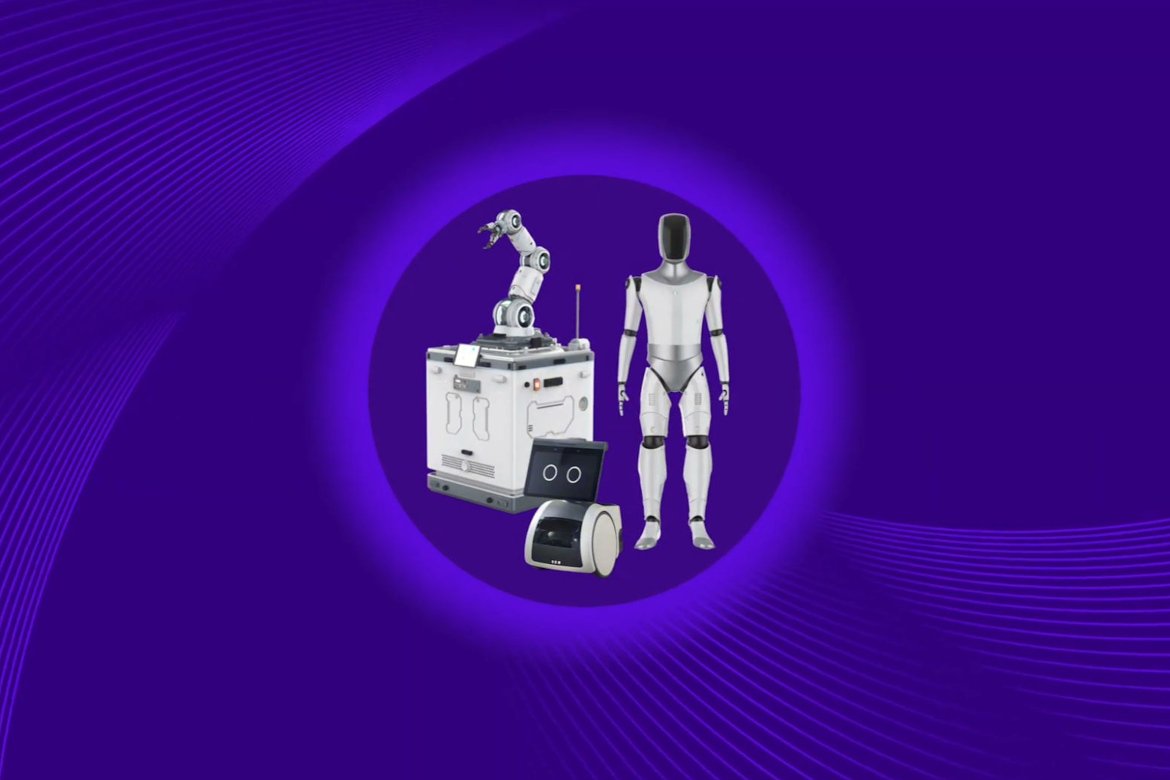
Humanoid and mobile robots powered by Qualcomm Dragonwing processors are showcased during CES 2026 demonstrations. Photo: Qualcomm Technologies
Qualcomm has expanded its ambitions beyond chips for smartphones and vehicles, unveiling a full-stack robotics platform at CES 2026 designed to power the next generation of Physical AI. The company introduced a comprehensive architecture that integrates hardware, software, and AI models to support robots ranging from household assistants to industrial autonomous mobile robots and full-size humanoids.
The announcement reflects a growing industry shift toward general-purpose robotics, where machines are expected to reason, adapt, and act safely in human environments. Qualcomm positioned its new platform as a bridge between laboratory prototypes and deployable systems, emphasizing power efficiency, scalability, and safety-grade performance as key enablers.
Dragonwing IQ10 and the “Brain of the Robot”
At the center of Qualcomm’s robotics push is the Dragonwing IQ10 Series, its latest premium-tier processor designed specifically for advanced robotics workloads. The company describes IQ10 as a high-performance, energy-efficient system-on-chip capable of serving as the primary compute engine for humanoid robots and sophisticated AMRs.
Built on Qualcomm’s experience in edge AI and low-power computing, the processor is optimized for mixed-criticality systems where perception, planning, and control must run simultaneously with strict safety requirements. The IQ10 expands Qualcomm’s existing robotics roadmap, which already supports a range of commercial robots through earlier Dragonwing processors.
The architecture enables advanced perception and motion planning using end-to-end AI models, including vision-language and vision-language-action systems. These capabilities are intended to support generalized manipulation, natural human-robot interaction, and continuous learning across diverse environments.
From Prototypes to Scalable Physical AI
Qualcomm framed its robotics platform as an end-to-end solution rather than a single chip. The architecture combines heterogeneous edge computing, AI acceleration, machine learning operations, and a data flywheel for collecting and retraining models. Developer tools and software frameworks are designed to shorten development cycles and reduce the complexity of deploying robots at scale.
This approach targets what Qualcomm described as the “last-mile” problem in robotics, where promising demonstrations often fail to translate into reliable, mass-produced systems. By providing a unified stack that scales across form factors, Qualcomm aims to accelerate adoption in retail, logistics, manufacturing, and service robotics.
“As pioneers in energy-efficient, high-performance Physical AI systems, we know what it takes to make complex robotics systems perform reliably, safely, and at scale,” said Nakul Duggal, executive vice president and group general manager at Qualcomm Technologies. He added that the company’s focus is on moving intelligent machines out of controlled environments and into real-world use.
Partnerships Across the Robotics Ecosystem
Qualcomm also highlighted a growing network of robotics partners adopting its platform. The company is working with manufacturers and integrators including Advantech, APLUX, AutoCore, Booster, VinMotion, Robotec.ai, and VinMotion to bring deployment-ready robots to market.
Humanoid robotics company Figure is collaborating with Qualcomm to define next-generation compute architectures as it scales its humanoid platforms. Brett Adcock, founder and chief executive of Figure, said Qualcomm’s combination of compute performance and power efficiency is a key building block in realizing general-purpose humanoid robots designed for industrial work.
Qualcomm said its Dragonwing processors already power several humanoid platforms in development, and discussions are underway with major industrial automation players on future robotics solutions.
CES 2026 Demonstrations and Industry Direction
At CES 2026, Qualcomm showcased robots powered by its Dragonwing processors, including VinMotion’s Motion 2 humanoid and Booster’s K1 Geek. The company also demonstrated a commercially available robotics development kit designed for rapid prototyping and deployment across multiple applications.
Additional demonstrations focused on teleoperation tools and AI data pipelines that enable robots to continuously acquire new skills. These capabilities underscore Qualcomm’s emphasis on lifelong learning and adaptability as defining characteristics of Physical AI.
The CES debut positions Qualcomm as a foundational technology provider for embodied intelligence, competing not just with chipmakers but with full-stack autonomy platforms. As humanoids and service robots move closer to commercial deployment, Qualcomm is betting that power-efficient, safety-grade compute will be a decisive advantage.
With Physical AI emerging as a central theme at CES 2026, Qualcomm’s announcement signals that the race to define the underlying infrastructure for intelligent machines is accelerating, and that robotics is becoming a core pillar of the company’s long-term strategy.
Samsung unveiled its “Companion to AI Living” vision at CES 2026, outlining how AI will connect entertainment, home appliances, health, and services into a unified ecosystem.
By Rachel Whitman
Published:
Updated:
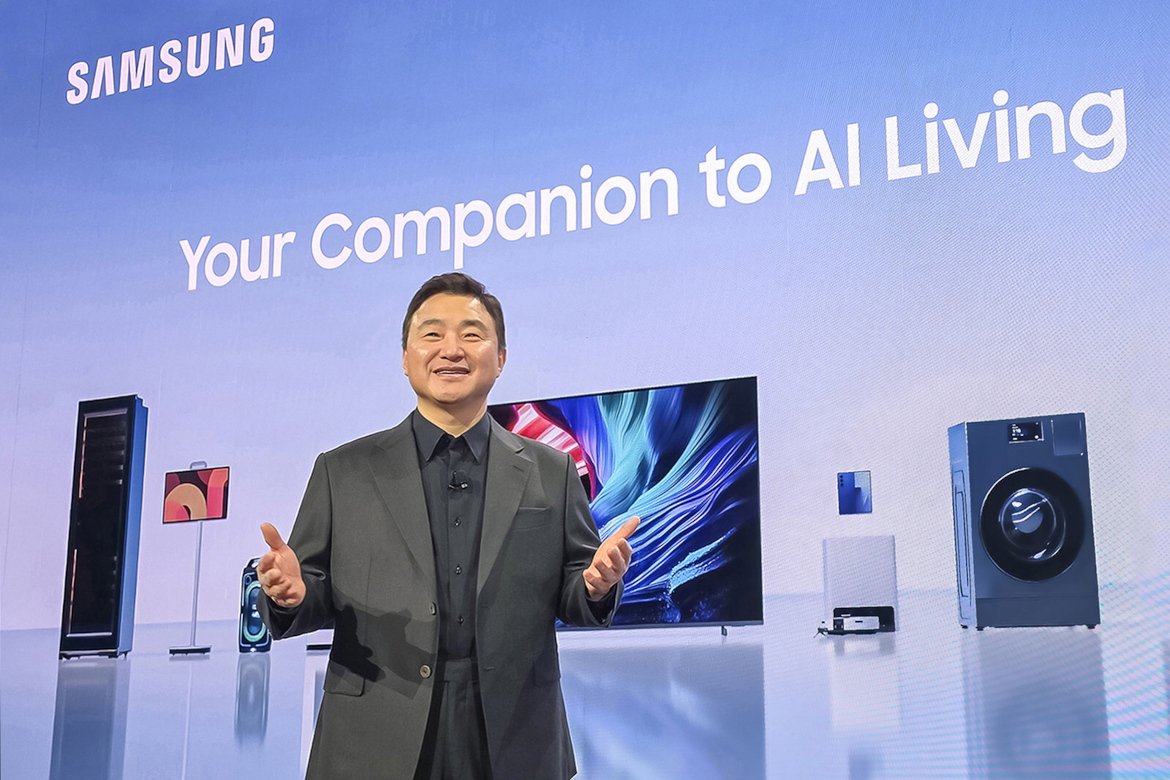
Samsung Electronics President Roh Tae-moon, head of the Device eXperience (DX) Division, delivers a keynote address at the CES 2026 “The First Look” press conference on January 5. Photo: Samsung Electronics
Samsung Electronics opened CES 2026 with a broad statement about the future of consumer technology, positioning artificial intelligence not as a feature but as the foundation of everyday living. At its annual First Look event in Las Vegas, the company introduced its “Companion to AI Living” vision, outlining how AI will connect devices, services, and experiences across the home.
Rather than focusing on a single product category, Samsung framed AI as a unifying layer across its ecosystem, spanning displays, home appliances, mobile devices, wearables, and services. Company executives emphasized that scale, connectivity, and on-device intelligence allow Samsung to move beyond basic automation toward more contextual and personalized experiences.
AI as the Core of the Entertainment Experience
Samsung’s display business showcased how AI is reshaping entertainment into a more interactive and lifestyle-oriented experience. The centerpiece of the lineup was a 130-inch Micro RGB display, which Samsung described as a major leap in screen size and color accuracy, driven by independent red, green, and blue light sources.
Supporting this hardware is Vision AI Companion, an AI system designed to act as an entertainment assistant rather than a passive interface. The system can recommend content, adjust sound and picture settings, and respond to natural language requests across Samsung’s 2026 TV lineup. AI-driven modes tailor experiences for sports, movies, and gaming, allowing users to fine-tune crowd noise, commentary, or background audio through voice commands.
Samsung also highlighted how Vision AI Companion extends beyond viewing. Users can ask for recipes based on food shown on screen, receive music recommendations to match their mood, or send content and instructions to other connected devices throughout the home. The goal, Samsung said, is to turn displays into active participants in daily routines.
Smart Homes That Anticipate Daily Needs
In the home appliance segment, Samsung presented AI-powered devices as companions that reduce friction in everyday tasks. Executives noted that SmartThings now serves more than 430 million users, giving Samsung a large data foundation to personalize experiences across households.
The Family Hub refrigerator remains central to this strategy. With an upgraded AI Vision system built on Google Gemini, the refrigerator can more accurately recognize and track food items, support meal planning, and automate grocery-related decisions. Features such as recipe recommendations, video-to-recipe conversion, and weekly food reports are designed to simplify decision-making rather than add complexity.
Samsung also showcased updates across laundry and home care. The Bespoke AI Laundry Combo removes the need to transfer loads between machines, while the latest AirDresser model uses air and steam to reduce wrinkles automatically. In floor care, the Bespoke AI Jet Bot Steam Ultra combines vision, 3D sensing, and conversational voice control to clean, monitor pets, and detect unusual activity while homeowners are away.
From Reactive Care to Proactive Wellbeing
Samsung’s long-term vision extends into digital health, where AI shifts care from reactive responses to proactive prevention. By connecting phones, wearables, appliances, and home devices, Samsung aims to detect early signs of health issues and provide personalized guidance for sleep, exercise, and nutrition.
The company described future scenarios in which connected devices suggest meals aligned with health goals, flag unusual patterns in mobility or sleep, and enable secure sharing of health data with providers through integrated platforms. Samsung also highlighted ongoing research into dementia detection, using wearables to identify subtle changes in movement, speech, and engagement over time.
Security remains a key pillar of this ecosystem. Samsung emphasized that Knox and Knox Matrix underpin its AI strategy, protecting user data across devices and continuously adapting to emerging AI-related risks.
By presenting AI as a companion woven into daily life rather than a collection of isolated tools, Samsung used CES 2026 to signal a shift toward more holistic, software-driven experiences. The company’s message was clear: the next phase of consumer technology will be defined not by individual devices, but by how intelligently they work together.
Boston Dynamics and Google have reunited to showcase a new phase in humanoid robotics, unveiling progress on the next-generation Atlas robot at CES 2026. The collaboration brings together Boston Dynamics’ expertise in dynamic robot hardware with Google’s latest advances in artificial intelligence, signaling a renewed push toward more capable, adaptable humanoid systems.
The updated Atlas platform reflects a shift away from purely mechanical demonstrations toward robots that can understand context, plan actions, and learn from experience. At CES, the companies highlighted how AI-driven perception and decision-making are being integrated directly into Atlas, moving the humanoid closer to real-world industrial and commercial applications.
A Humanoid Built for Industrial Tasks
The new Atlas stands approximately 6.2 feet tall and features a reach of about 7.5 feet, allowing it to operate effectively in warehouses, factories, and logistics facilities designed for human workers. Its fully electric architecture supports quieter operation and improved energy efficiency compared to earlier hydraulic designs.
Atlas is capable of lifting payloads of up to roughly 110 pounds, enabling it to handle heavy objects such as totes, containers, and industrial components. The robot incorporates fully rotational joints across its body and offers a total of 56 degrees of freedom, supporting complex, whole-body movements and precise manipulation.
A newly designed four-fingered hand improves dexterity and grasp versatility, allowing Atlas to interact with a wide range of objects. The system is sealed to an industrial IP67 standard, providing protection against dust and water and making it suitable for harsh operating environments.
Power, Autonomy, and Control
Battery life for the new Atlas is rated at approximately four hours under typical operation. The robot is designed to swap its own battery packs without human assistance, reducing downtime and enabling longer deployment cycles in industrial settings.
Boston Dynamics highlighted multiple modes of operation for Atlas. The robot can function fully autonomously using AI-driven perception and planning, be remotely operated through a virtual reality interface, or be supervised and controlled using a tablet-based system. This flexibility allows customers to choose different levels of autonomy depending on task complexity and operational requirements.
By integrating Google’s AI technologies, Atlas gains enhanced perception, object recognition, and decision-making capabilities. The robot can interpret complex environments, adjust its actions in real time, and learn from repeated interactions rather than relying solely on predefined scripts.
Renewed Partnership and Market Implications
The collaboration marks a symbolic reunion between Boston Dynamics and Google, which previously worked together during Google’s ownership of the robotics firm more than a decade ago. This time, the focus is firmly on combining mature hardware with scalable AI systems that can support sustained commercial deployment.
Boston Dynamics positioned Atlas as a platform designed to operate within existing human-built environments without requiring major infrastructure changes. The goal is to reduce friction between robots and real-world workplaces, accelerating adoption in logistics, manufacturing, and material handling.
While the companies did not announce deployment timelines or customers at CES, the presentation signaled confidence that humanoid robots are moving closer to practical use. Challenges remain around cost, long-term durability, and large-scale fleet management, but the updated Atlas reflects a clear shift toward production readiness.
The CES 2026 debut suggests that Boston Dynamics and Google see humanoid robots as a cornerstone technology for the next generation of automation. By combining advanced mechanics with AI-driven autonomy, the partners aim to move Atlas beyond spectacle and into everyday industrial operations.
Kodiak has entered a strategic agreement with Bosch to scale production-grade autonomous trucking hardware, aiming to accelerate commercial deployment of driverless trucks.
Kodiak AI has announced a strategic agreement with Bosch to scale the manufacturing of production-grade autonomous trucking hardware, marking a significant step toward large-scale deployment of driverless trucks. The collaboration was revealed ahead of CES 2026, where a Kodiak Driver-powered autonomous truck will be displayed at Bosch’s booth in Las Vegas.
The partnership focuses on building a redundant, automotive-grade platform that integrates hardware, firmware, and software interfaces required to deploy Kodiak’s AI-powered virtual driver at scale. By combining Kodiak’s autonomy software with Bosch’s manufacturing expertise and supply chain capabilities, the companies aim to move autonomous trucking beyond pilots and into sustained commercial operations.
Scaling Physical AI for Heavy-Duty Trucks
Kodiak’s autonomous system, known as the Kodiak Driver, is designed as a unified platform that blends AI-driven perception and planning software with modular, vehicle-agnostic hardware. The system can be integrated either directly on a truck production line or through aftermarket upfitters, giving fleet operators flexibility in how autonomous capability is deployed.
Under the agreement, Bosch will support the development of a redundant autonomous hardware platform, supplying key components such as sensors, steering systems, and other vehicle actuation technologies. These components are designed to meet automotive-grade reliability standards, a critical requirement for long-haul trucking applications where uptime and safety are paramount.
“Advancing the deployment of driverless trucks and physical AI requires not only robust autonomy software, but also manufacturing experience and a resilient supply chain,” said Don Burnette, founder and chief executive of Kodiak. He emphasized that Bosch’s industrial scale and system-level integration expertise are essential for commercial success.
From Commercial Pilots to Industrial Scale
Kodiak has already deployed trucks operating without human drivers in commercial service, positioning the company as one of the few autonomous trucking developers with real-world revenue-generating operations. The new agreement is intended to build on that foundation by enabling higher-volume production and standardized hardware configurations.
Bosch’s role extends beyond component supply. As the world’s largest automotive supplier, the company brings decades of experience in industrialization, quality assurance, and global manufacturing. This expertise is expected to help Kodiak transition from limited deployments to repeatable, scalable production suitable for fleet-wide adoption.
Paul Thomas, president of Bosch in North America and president of Bosch Mobility Americas, said the collaboration allows Bosch to deepen its understanding of real-world autonomous vehicle requirements while contributing production-grade systems to the broader autonomous mobility ecosystem.
CES 2026 and the Push Toward Autonomous Freight
Autonomous trucking emerged as a key theme at CES 2026, with increasing emphasis on commercialization rather than experimental prototypes. Kodiak and Bosch used the event to highlight how Physical AI systems are moving into operational environments where reliability, redundancy, and cost efficiency matter as much as technical performance.
The Kodiak Driver-powered truck on display demonstrates how the integrated platform brings together sensors, compute, and vehicle control into a single autonomous system. Unlike many earlier demonstrations, the focus is on readiness for deployment rather than future concepts.
Industry analysts view the partnership as a sign that autonomous trucking is entering a more mature phase, where partnerships with established automotive suppliers are essential to overcoming manufacturing and regulatory hurdles.
Broader Implications for Autonomous Logistics
For Kodiak, the deal supports its long-term vision of becoming a trusted provider of autonomous ground transportation across commercial and public-sector applications. The company has also positioned its technology for use in government and national security contexts, where reliability and safety standards are especially stringent.
The collaboration underscores a broader trend in robotics and automation, where autonomy developers increasingly rely on established industrial partners to bridge the gap between software innovation and large-scale deployment. As Physical AI systems move from test routes to highways and supply chains, the ability to manufacture and support hardware at scale becomes a decisive competitive advantage.
With CES 2026 as the backdrop, the Kodiak-Bosch agreement signals growing confidence that autonomous trucking is transitioning from experimentation to infrastructure, setting the stage for wider adoption in the years ahead.
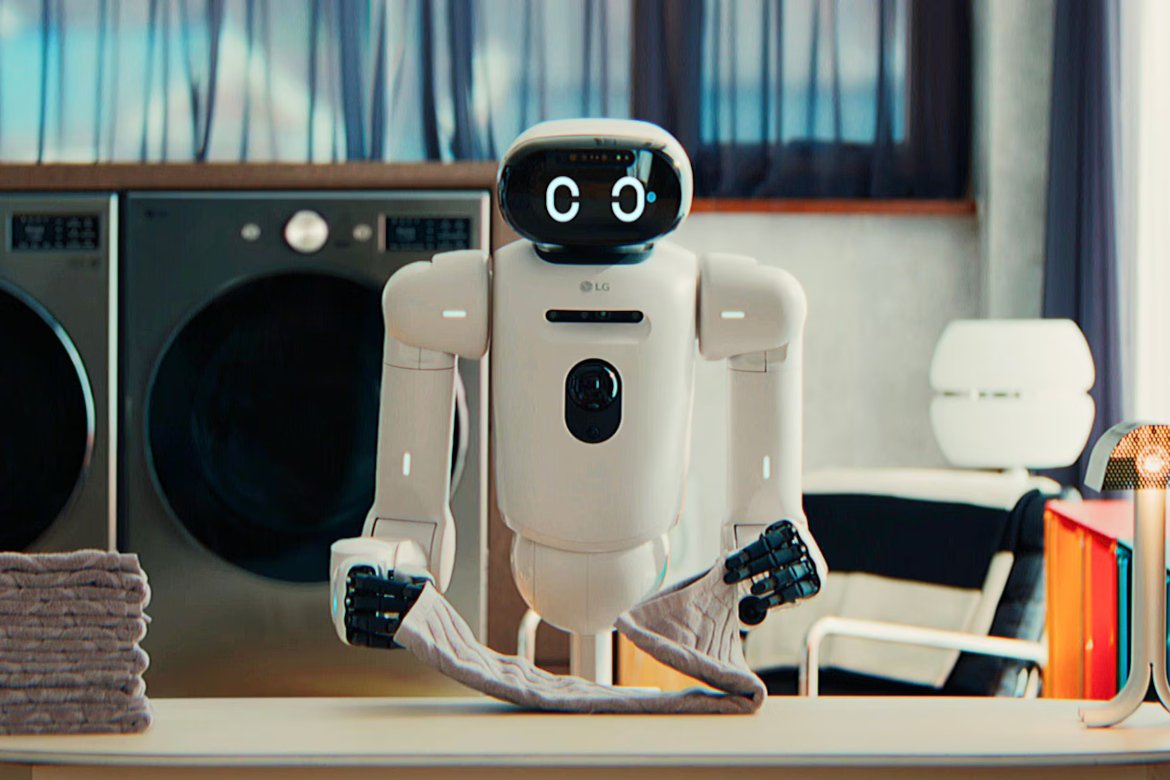
LG Electronics demonstrated its AI-powered CLOiD home robot at CES 2026, highlighting autonomous cooking, laundry folding, and dishwasher management as part of its Zero Labor Home vision.
By Daniel Krauss
Published:
Updated:
LG CLOiD home robot uses articulated arms, vision-based AI, and smart home connectivity to automate household tasks. Photo: LG Electronics
LG Electronics has unveiled its most advanced home robotics concept to date with the public debut of LG CLOiD, an AI-powered household robot designed to take over everyday domestic chores. Presented at CES 2026, the robot reflects LG’s long-term Zero Labor Home strategy, which aims to reduce the physical and mental effort required to manage a modern household through intelligent automation.
Unlike earlier home robots focused on narrow tasks, CLOiD is positioned as a general-purpose domestic assistant. LG demonstrated the robot performing a range of coordinated activities, including preparing simple meals, handling laundry from start to finish, and managing dishwashing tasks. The company says CLOiD is designed to operate as part of a fully connected home rather than as a standalone device.
Demonstrating End-to-End Household Automation
During live demonstrations, CLOiD retrieved food items from a refrigerator, placed pastries into an oven, and initiated cooking processes without human intervention. After occupants left the home, the robot was shown starting laundry cycles, transferring clothes to a dryer, and folding and stacking garments once complete. CLOiD also demonstrated the ability to unload a dishwasher and organize clean dishes.
These scenarios were designed to show how the robot understands sequences of tasks rather than executing isolated commands. CLOiD uses contextual awareness to determine when chores should begin and how appliances should be operated, adapting its actions to household routines and user preferences.
LG emphasized that the robot’s value lies in orchestration. Rather than replacing individual appliances, CLOiD coordinates them, acting as a mobile control layer that connects cooking, cleaning, and laundry into a single automated workflow.
Hardware Built for Domestic Environments
CLOiD features a wheeled base for stability and safe operation in homes with children or pets. The robot’s torso can raise or lower to adjust its working height, enabling it to reach objects on countertops, inside appliances, or closer to the floor. Two articulated arms with seven degrees of freedom each provide human-like mobility.
Each hand includes five independently controlled fingers, allowing CLOiD to grasp delicate items such as glassware as well as heavier objects like laundry baskets. LG selected a wheeled design over a bipedal form to reduce cost, improve reliability, and lower the risk of tipping during operation.
The navigation system builds on LG’s experience with robotic vacuum cleaners and autonomous home platforms. CLOiD can move smoothly between rooms, avoid obstacles, and precisely position itself for manipulation tasks in kitchens and laundry areas.
Physical AI and Smart Home Integration
At the core of CLOiD is LG’s Physical AI framework, which combines vision-based perception, language understanding, and action planning. The robot uses visual data from onboard cameras to recognize appliances, objects, and environments. This information is translated into structured understanding and then into physical actions, such as opening doors, transferring items, or adjusting appliance settings.
CLOiD’s head functions as a mobile AI home hub, housing its processor, sensors, display, speakers, and voice-based generative AI. The robot communicates with users through spoken dialogue and expressive visual cues while continuously learning household layouts and routines.
Deep integration with LG’s ThinQ and ThinQ ON platforms allows CLOiD to control and coordinate smart appliances across the home. This connectivity enables more complex automation scenarios, such as preparing meals based on available ingredients or scheduling chores around user absences.
Robotics Components and Long-Term Strategy
Alongside CLOiD, LG introduced AXIUM, a new family of robotic actuators designed for service robots and physical AI systems. Actuators control motion and force within robotic joints and are considered one of the most critical and cost-intensive components in advanced robots.
LG says its background in appliance component manufacturing provides an advantage in producing lightweight, compact, and high-torque actuators suitable for home robotics. Modular actuator designs also allow customization across different robot configurations and use cases.
Looking ahead, LG plans to expand robotics capabilities across both standalone home robots and robotized appliances. The company envisions refrigerators that open automatically as users approach and appliances that actively coordinate with home robots to complete tasks autonomously.
“The LG CLOiD home robot is designed to naturally engage with and understand the humans it serves, providing an optimized level of household help,” said Steve Baek, president of the LG Home Appliance Solution Company. “We will continue our efforts to achieve our Zero Labor Home vision.”
At CES 2026, LG positioned CLOiD as a glimpse into a future where household labor is largely delegated to intelligent machines, allowing people to spend more time on activities beyond routine chores.
Join our list to receive latest Blockchain, Crypto & Fintech news:
WordPress database error: [Table 'u752143311_u5t1U.wp_coingecko_coins' doesn't exist]
            SELECT coins.*, meta.post_id as post_id
            FROM `wp_coingecko_coins` coins
            INNER JOIN wp_postmeta meta ON (meta.meta_key = 'wpcf-coin-main-tag' AND meta.meta_value = coins.slug )
            ORDER BY market_cap_usd
            DESC LIMIT 9