
Hefei Metro Deploys Robot Dogs and Drones to Automate Rail Operations

Hefei’s metro system has deployed robot dogs, drones, and humanoid robots to automate inspections, improve safety, and modernize urban rail operations.

By Rachel Whitman | Edited by Kseniia Klichova Published:
Robot dogs and aerial drones patrol and inspect Hefei’s metro system, illustrating how robotics is being integrated into urban rail operations. Photo: Hefei Metro

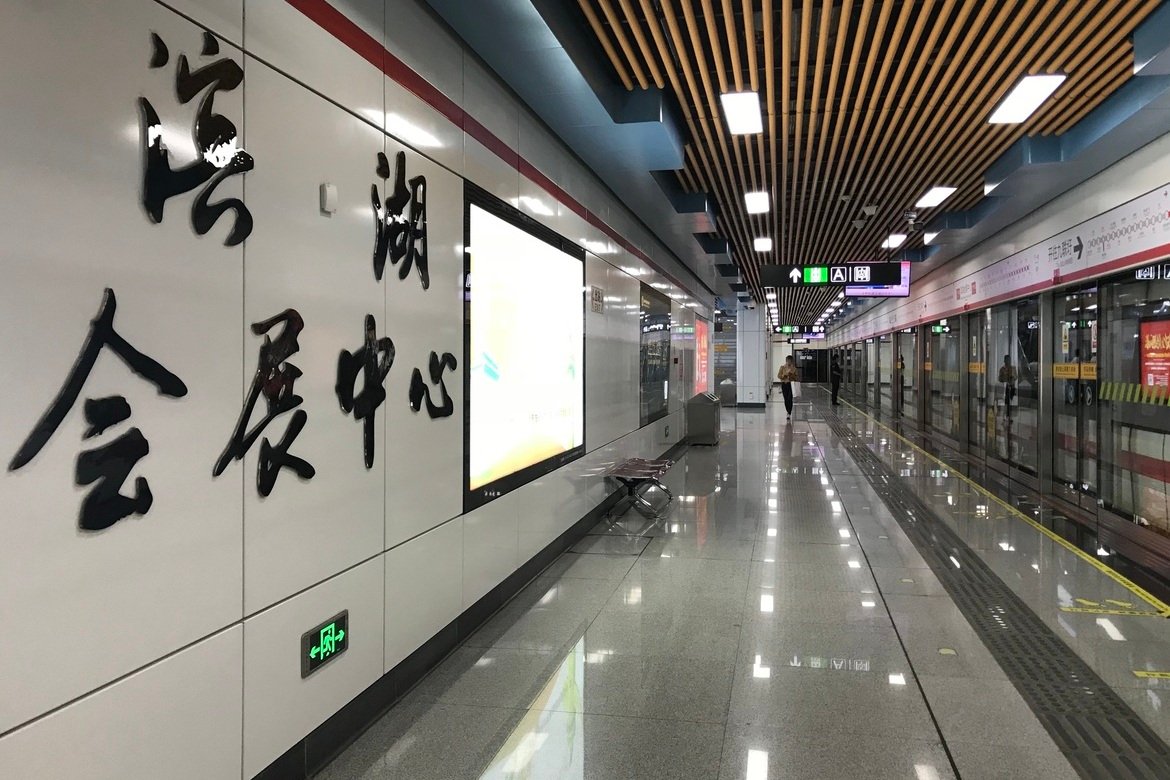
The Hefei Metro system in eastern China has introduced a network of robot dogs, drones, and AI-powered service robots as part of a broader initiative to modernize urban rail operations. The deployment represents one of the most visible examples of robotics being integrated into public transit infrastructure to improve safety, inspection efficiency, and passenger services.

The autonomous systems now operate across stations and tunnels in Hefei’s metro network, assisting human staff with tasks ranging from security patrols to infrastructure inspections. City authorities say the program aims to improve operational reliability and reduce the risk of accidents in one of the region’s busiest transport systems.

The initiative reflects a broader shift toward robotics-driven infrastructure management as cities adopt smart technologies to handle growing urban populations.

Robot Dogs and Drones Automate Inspection Tasks

Among the most prominent additions to the metro system are quadruped robot dogs equipped with cameras and environmental sensors. These machines patrol station platforms and corridors, scanning for obstacles, safety hazards, and abnormal conditions.

Unlike traditional human patrols, the robots can operate continuously and monitor multiple areas simultaneously. Their sensors allow them to identify potential issues such as objects left on platforms or equipment anomalies that could affect operations.

Drones are also being used to inspect tunnels and track infrastructure. Flying inspection systems can access areas that are difficult or dangerous for workers to reach, capturing visual and sensor data used to assess equipment conditions and detect potential maintenance problems.

Together, the robotic systems form what metro officials describe as a “robot cluster” supporting operational safety and infrastructure monitoring.

Robotics Expands into Public Transportation Infrastructure

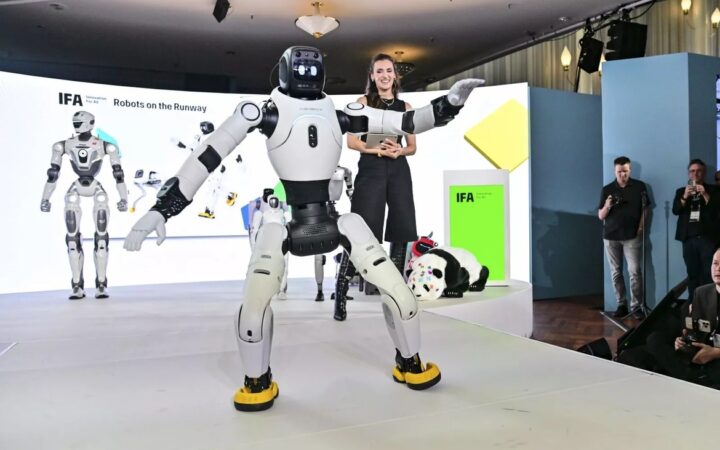
In addition to inspection robots, Hefei Metro has introduced humanoid service robots that interact with passengers. These robots provide directions, answer questions, and assist commuters navigating stations.

The deployment illustrates how robotics can support both operational tasks and customer service in public infrastructure. While robots handle routine inspections and monitoring, human staff remain responsible for supervision, emergency response, and complex operational decisions.

Such systems are particularly valuable during peak travel periods, including major holiday travel surges, when passenger volumes increase dramatically.

By automating routine monitoring tasks, metro operators can allocate personnel more efficiently while maintaining high safety standards.

Smart Transit Systems Become a Key Urban Technology

Hefei’s robotics deployment is part of a broader push to integrate artificial intelligence, sensors, and data analytics into public transport networks. Smart metro systems increasingly rely on predictive maintenance, real-time monitoring, and automated inspection technologies to maintain reliability and reduce disruptions.

Data collected by robots and sensors can be analyzed to identify early signs of equipment wear or operational anomalies, allowing maintenance teams to address problems before they lead to service interruptions.

These capabilities are becoming increasingly important as urban rail networks expand and passenger demand continues to grow.

Cities around the world are exploring similar technologies as part of broader smart city initiatives designed to improve infrastructure efficiency and safety.

Robotics Moves into Everyday Urban Infrastructure

The Hefei Metro project highlights how robotics is gradually becoming embedded in everyday public systems rather than remaining confined to industrial environments. From transportation and utilities to construction and maintenance, robots are increasingly being used to monitor and manage complex infrastructure.

For urban transit networks, robotics offers the ability to improve safety while reducing operational costs and manual inspection requirements.

Hefei’s deployment provides an early example of how multiple types of robots – including quadrupeds, drones, and humanoids – can work together within a coordinated infrastructure system.

As cities continue to modernize their transportation networks, robotics and AI are likely to play a growing role in ensuring that critical infrastructure remains safe, efficient, and capable of supporting expanding urban populations.

Automation, News, Robots & Robotics, Science & Tech

Agibot Deploys Humanoid Robots in Live Electronics Manufacturing, Eyes 100-Unit Expansion

Agibot has deployed its G2 humanoid robots at a Shanghai electronics manufacturer, reporting throughput of up to 310 units per hour and a success rate above 99%, with plans to scale to 100 robots by Q3 2026.

By Laura Bennett | Edited by Kseniia Klichova Published: Updated:
Humanoid robots operating on an electronics manufacturing line, handling precision loading and unloading tasks at automated testing stations. Photo: AGIBOT

Agibot has deployed its G2 humanoid robots in an active production environment at Longcheer Technology, a Shanghai-based consumer electronics manufacturer. The rollout marks one of the more concrete demonstrations of humanoid robots operating within a live industrial workflow, moving the technology beyond controlled pilots into continuous factory-floor use.

The deployment comes months after Agibot announced the production of its 10,000th humanoid robot in March, a milestone the company described as a turning point in the industrialization of embodied AI.

What the Robots Are Doing

G2 units are stationed at multimedia-integrated testing stations, where they perform precision loading and unloading of devices into testing fixtures. The task demands millimeter-level placement accuracy, consistent cycle timing, and the ability to sort finished and defective units without interruption.

Agibot reports throughput of up to 310 units per hour, with individual cycle times of approximately 19 to 20 seconds per operation and a success rate exceeding 99% in continuous use. Production line integration was completed within 36 hours, and each shift produces approximately 3,000 units. The system has logged over 140 hours of cumulative continuous operation, with downtime losses below 4%.

The robots use multi-modal sensing – combining visual perception and spatial awareness – to identify objects and execute task sequences without custom tooling. The platform supports mixed-model production, meaning it can handle different device configurations on the same line, reducing changeover time.

The Underlying Architecture

Agibot describes its approach as a full-stack ecosystem for embodied intelligence, integrating robot hardware, AI models, and large-scale data infrastructure into a single system designed for continuous learning. Rather than executing fixed instructions, the robots are built to adapt to task and environment variations over time through a combination of simulation-based validation, reinforcement learning, and on-device inference.

“This project shows that embodied AI is no longer experimental. It is a practical, production-ready capability that can operate reliably in real industrial environments and deliver measurable economic value,” said Maoqing Yao, Partner, Senior Vice President, and President of the Embodied Business Unit at Agibot.

Scale and Next Steps

Agibot plans to expand the deployment to 100 robots by Q3 2026 and has identified automotive, semiconductors, and energy as the next target sectors. The company is also developing Genie Sim 3.0, a simulation platform designed to accelerate training of new robot behaviors before physical deployment.

The broader implication of the Longcheer deployment is not the throughput figures alone, but what they suggest about deployment speed. A 36-hour integration timeline and no custom tooling requirement lower the barrier for manufacturers evaluating humanoid robots against conventional fixed automation. Whether those numbers hold across more varied factory environments – with different layouts, device types, and production rhythms – will determine how transferable the model is at scale.

News, Robots & Robotics, Science & Tech

Toyota Unveils CUE7, a Lighter Basketball Robot Built on Hybrid AI Control

Toyota has introduced CUE7, the latest iteration of its basketball-shooting robot, featuring a significantly lighter frame, an inverted two-wheel base, and a hybrid control system combining reinforcement learning with model predictive control.

By Daniel Krauss | Edited by Kseniia Klichova Published:

Toyota has unveiled CUE7, the seventh generation of its basketball-shooting robot platform, on April 12. The system marks the most significant technical upgrade in the CUE series to date, with reductions in weight, a new mobility architecture, and a hybrid AI control system that combines reinforcement learning with model predictive control.

The robot was developed by Toyota’s Frontier Research Center and signals the company’s continued investment in embodied AI research outside its traditional automotive domain.

What Changed in CUE7

The most immediate change is physical. CUE7 weighs 74 kg, down from 120 kg in its predecessor – a reduction of nearly 40%. The wheeled base has been redesigned around an inverted two-wheel structure, replacing the earlier fixed-platform approach and giving the robot greater dynamic stability during motion.

The control architecture is also new. Rather than relying on a single AI method, CUE7 uses a hybrid system that combines reinforcement learning – where the robot improves through repeated trial and feedback – with model predictive control, which uses forward simulation to plan and execute precise movements in real time. The result is a platform capable of more dynamic, fluid motion than earlier versions of the robot.

CUE7 uses vision systems to identify the basket, estimate distance, and calculate shot trajectory. Its upper body makes deliberate postural adjustments to align the release angle before executing the shot with calibrated force.

A Platform Built Over Years

The CUE project began as an internal employee initiative before becoming a dedicated research program. CUE3 set a Guinness World Record in 2019 by completing 2,020 consecutive free throws. CUE6 extended the platform’s range, completing a 24.55-meter shot during a record attempt.

Each iteration has expanded the robot’s operational scope. Early versions were stationary shooters. Later models introduced mobility, ball retrieval, and dribbling. CUE7 advances the underlying control and sensing systems rather than adding new physical tasks, consolidating the platform’s technical foundation.

The Broader Purpose

Toyota uses the CUE series as a testbed for capabilities with direct relevance to general robotics: vision-based target acquisition, real-time trajectory planning, precise force control, and repeatable physical execution under variable conditions. Basketball provides a structured environment in which each of these capabilities can be isolated, measured, and improved.

The platform reflects a wider industry pattern in which automakers are applying their manufacturing and systems engineering expertise to humanoid and semi-humanoid robotics. Toyota has not announced commercial applications for CUE7, and the robot remains a research demonstration. The hybrid control architecture, however, represents a technical approach with potential applicability beyond sport – particularly in industrial and service environments where consistent, adaptive physical performance is required.

Business & Markets, News, Robots & Robotics, Science & Tech

SoftBank Robotics America and Matternet Partner to Scale Autonomous Drone Delivery

SoftBank Robotics America and Matternet have signed a strategic partnership to accelerate autonomous drone delivery deployments across the U.S., targeting healthcare and other industries where speed and reliability are critical.

By Rachel Whitman | Edited by Kseniia Klichova Published:
An autonomous delivery drone operating over an urban environment as part of a commercial logistics network. Photo: Matternet

SoftBank Robotics America has signed a strategic partnership with Matternet, a drone delivery company, to accelerate the deployment of autonomous aerial last-mile delivery in the U.S. and other key markets. The deal combines SoftBank Robotics America’s role as a physical AI integrator with Matternet’s FAA-certified drone platform, targeting enterprise operators in healthcare, commerce, and industrial logistics.

Last-mile delivery continues to face structural pressure from labor shortages, rising costs, and urban congestion. Autonomous aerial delivery is emerging as a cost-competitive alternative to traditional ground-based methods, particularly at scale.

What Each Company Brings

Matternet has spent more than a decade building commercial drone delivery infrastructure. The company is the first in the industry to achieve both FAA Type Certification and Production Certification, and its technology has enabled tens of thousands of commercial flights in urban and suburban environments across the U.S. and Europe. Its M2 drone and software platform are already deployed through partnerships with UPS and Ameriflight.

SoftBank Robotics America operates as an integrator – its role is to take proven autonomous technologies and embed them into real-world operational environments at scale. The company works across senior living, hospitality, aviation, facilities management, and commercial cleaning, and has built a track record of translating robotics pilots into production deployments.

Brady Watkins, President and GM of SoftBank Robotics America, said:

“The challenge is not the technology, but rather operationalizing the technology such that it produces consistent measurable outcomes.”

Healthcare as the Initial Focus

The partnership’s initial emphasis is on healthcare, where delivery speed and reliability directly affect patient outcomes. Medical supplies, lab samples, and pharmaceuticals represent a natural fit for autonomous aerial delivery – time-sensitive, high-value, and moving between fixed points such as hospitals, labs, and pharmacies.

Katya Akudovich, Vice President of New Ventures at SoftBank Robotics America, said:

“By combining Matternet’s technology with our global commercialization capability and experience, we are creating a powerful partnership to bring the benefits of autonomous drone delivery into day-to-day operations for vertical markets such as healthcare where speed and reliability are mission critical.”

Scaling the Infrastructure

Andreas Raptopoulos, founder and CEO of Matternet, framed the partnership as part of a broader shift toward autonomous logistics networks. He said:

“Our partnership with SoftBank Robotics America will accelerate deployment of our technology and help build the autonomous delivery infrastructure for healthcare, commerce, and industry.”

The partnership does not introduce new drone hardware. Instead, it focuses on the integration layer – the processes, support structures, and operational frameworks needed to move autonomous drone delivery from isolated pilots to consistent, large-scale networks. That focus on operationalization rather than invention reflects where the autonomous delivery industry is broadly: the technology is sufficiently mature, but deployment at enterprise scale remains the central challenge. The companies did not disclose financial terms of the agreement.

Business & Markets, News, Robots & Robotics

Accenture Invests in General Robotics to Build a Unified AI Layer for Industrial Robots

Accenture Ventures has invested in General Robotics, whose GRID platform connects robots from multiple manufacturers under a single AI intelligence layer, targeting scaled automation in factories and warehouses.

By Daniel Krauss | Edited by Kseniia Klichova Published:
Industrial robots operating on a factory floor managed by a unified AI orchestration platform. Photo: Accenture

Accenture has invested in General Robotics, a startup building a unified AI intelligence platform for industrial robots, through its Accenture Ventures arm. The two companies will also partner to help manufacturers, logistics operators, and other asset-intensive industries deploy autonomous robotic systems at scale. Financial terms were not disclosed.

The deal reflects a wider strategic push by Accenture to move beyond software consulting and into the physical infrastructure of AI-driven automation.

The Problem GRID Is Designed to Solve

Most factories operate robots from multiple manufacturers, each running its own software stack, programming language, and integration requirements. Scaling automation across a multi-vendor fleet is expensive and slow, and the cost has historically limited full deployment to only the largest industrial operators.

General Robotics addresses this with GRID, a platform that sits above the hardware layer and connects robots from more than 40 manufacturers – including FANUC, Flexiv, Ghost Robotics, and Galaxea – under a single orchestration framework. Rather than programming each machine individually, GRID offers modular, reusable AI skills deployable across different hardware through cloud-based orchestration, simulation-based training, and full data sovereignty for enterprise customers.

“While robotics hardware and AI models advance at a rapid pace, real-world impact is constrained by the lack of a unified intelligence infrastructure,” said Ashish Kapoor, CEO and co-founder of General Robotics. Kapoor previously served as general manager of autonomous systems and robotics research at Microsoft, where he created AirSim, a widely used open-source simulator for training autonomous vehicles and drones.

Accenture’s Physical AI Strategy

The investment extends an infrastructure position Accenture has been building for over a year. The company launched its Physical AI Orchestrator in October 2025, a system that uses NVIDIA Omniverse libraries and the NVIDIA Mega Blueprint to coordinate robotic and autonomous systems in industrial settings. GRID integrates NVIDIA Isaac Sim, allowing manufacturers to train robotic AI skills in digital twins before deploying them on physical hardware – a capability that aligns directly with Accenture’s existing toolchain.

Where Accenture’s Physical AI Orchestrator handles coordination at the facility level, GRID handles robot-level AI – the skills, perception, and decision-making that individual machines need to perform complex tasks autonomously. Together, the two layers form a more complete stack for enterprise robotics deployment.

Prior investments in Sanctuary AI and a partnership with Schaeffler for industrial humanoid robots in automotive manufacturing point to a consistent thesis: Accenture is positioning itself as the primary integrator for physical AI at the enterprise level.

Scale and Market Context

“Piloting robotic systems takes too long, is expensive, and often not scalable and repeatable across a network of facilities,” said Prasad Satyavolu, Accenture’s global lead for manufacturing and operations. The stated goal of the partnership is to compress that deployment cycle by delivering an enterprise-grade robotics intelligence and orchestration layer that clients can apply across multiple facilities.

The physical AI market is projected to grow from roughly $1.5 billion in 2026 to more than $15 billion by 2032. A Deloitte survey found that 58% of global business leaders are already using some form of physical AI, though scaled deployment remains concentrated in automotive, electronics, and logistics. General Robotics remains an early-stage company without publicly reported revenue figures, and the broader challenge – persuading manufacturers to adopt an independent orchestration layer over proprietary vendor platforms – will require demonstrated performance on working factory floors, not just in simulation.

Artificial Intelligence (AI), Business & Markets, News, Startups & Venture

Grab Introduces Carri Robot to Speed Up Food Delivery in Southeast Asia

Grab unveiled an AI-powered delivery robot called Carri at its annual GrabX 2026 event, designed to reduce the time drivers spend navigating malls and office buildings to collect orders.

By Laura Bennett | Edited by Kseniia Klichova Published:
A delivery robot navigating an indoor commercial space to collect food orders for handoff to a human driver. Photo: Grab X

Grab unveiled an AI-powered delivery robot called Carri at GrabX 2026, the company’s annual product event held in Jakarta this month. The announcement is part of a broader push by the Singapore-based super app to embed physical automation into a platform that has long depended entirely on gig workers.

Anthony Tan, Grab’s CEO and co-founder, said the company is building an Intelligence Layer – AI infrastructure fueled by real-world, real-time signals – that sits underneath every feature and innovation in the app. That layer now extends into hardware.

Carri and the Indoor Delivery Problem

Tan said delivery partners currently lose around 10% of their earning time navigating large malls or waiting for customers to come down from office buildings. Carri is designed to absorb that idle time by handling restaurant retrieval and handoff, freeing drivers to stay on the road.

The robot is built for both indoor and outdoor environments, equipped with LIDAR sensors and cameras to navigate crowds and avoid obstacles. It features secure storage compartments that open only for the specific user assigned to a given order.

Carri is still in the development and testing phase, and the pricing or cost model for deployment has not yet been determined. Tan framed the move as a natural extension of the platform’s AI capabilities into the physical world. “We are moving into hardware to improve the messy physical parts of the job that software alone cannot fix,” he said.

13 New Features Across Three User Groups

GrabX 2026 introduced 13 AI-powered features designed around three core pillars: local life, effortless travel, and business empowerment.

For consumers, Grab introduced Group Ride for shared fares, GrabMore for multi-merchant orders under a single delivery fee, and a Grab AI Assistant that handles food, shopping, and bookings. GrabMaps and a Cash Loan product round out the consumer-facing additions.

For travelers, Grab unveiled GrabStays for hotel bookings, Discover by Grab for AI-curated dining recommendations, and GrabPay for Travel to enable cross-border QR payments across Southeast Asia.

For merchants and drivers, Grab announced a Virtual Store Manager using CCTV hardware for AI-powered monitoring, a Cloud Printer to automate order handling, and Tap to Pay to turn smartphones into contactless payment terminals. A Driver AI Assistant provides hands-free route and earnings guidance.

Monetization and the Road Ahead

Tan said Grab is also planning to extend its intelligence layer into autonomous vehicles and CCTV cameras, signaling that hardware will become a structural component of the business rather than a peripheral experiment.

On the revenue side, merchant hardware tools including cloud printers and virtual store management are set to move from free trials to a subscription model. A recent Barclays analysis estimated that widespread use of robots and drones in food delivery could reduce per-order costs to as little as $1 – a threshold that, if reached, would reshape the unit economics of every major delivery platform in the region.

Business & Markets, News, Robots & Robotics
Exit mobile version