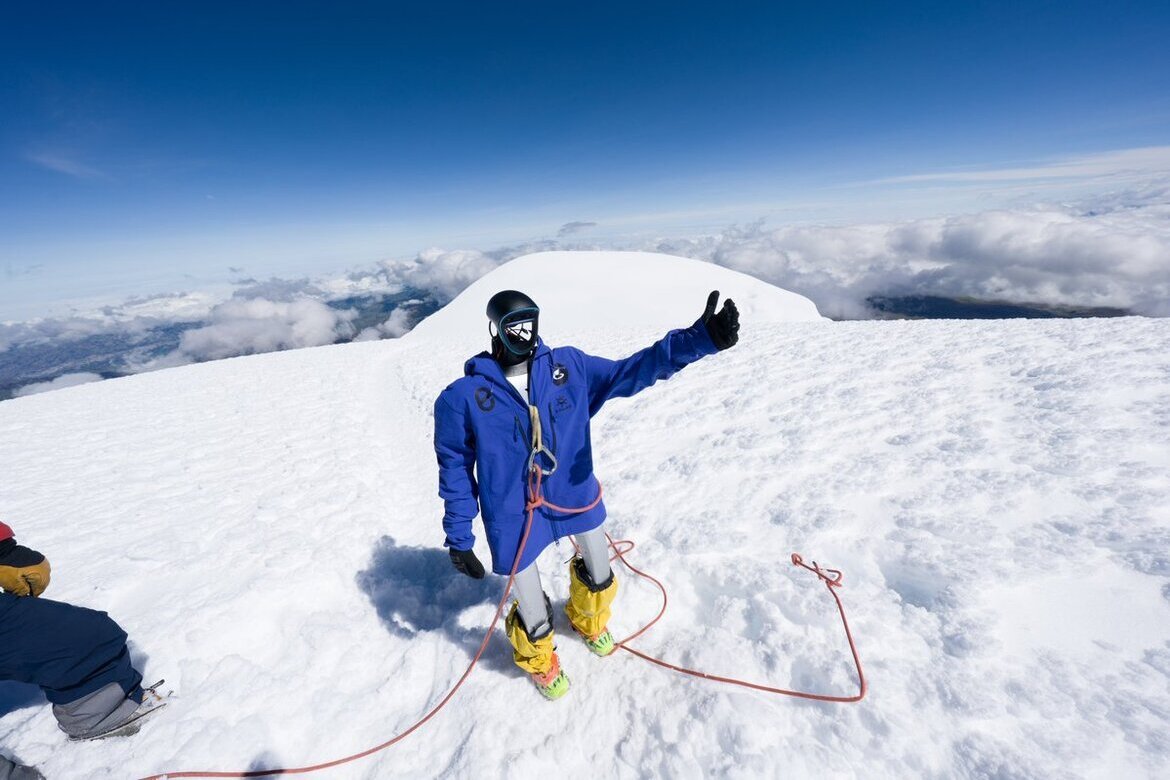


A modified Unitree G1 humanoid robot named Pemba has reached the summit of Chimborazo, a 6,263-meter volcano in Ecuador and one of the highest peaks in the Americas, during a 16-hour expedition made public in June 2026. The climb was led by engineer Pablo Berlanga Boemare, founder of Geologic Dome, a company with prior conservation work alongside the WWF in the Congo Basin and the Amazon. The team’s next stated objective is Mount Everest, though a Nepalese regulatory barrier is currently blocking the attempt.
The summit marks a meaningful environmental and locomotion milestone for humanoid robotics, though it comes with an important qualification: Pemba walked autonomously only on sections with an incline below 30 degrees. On the steeper and technically demanding stretches, the expedition team carried the machine. The climb was partially autonomous, not fully.
The Autonomy Gap and What Comes Next
The team is transparent about this limitation and frames it as the starting point rather than the conclusion of the project. Reinforcement learning systems trained on increasingly challenging terrain are being developed to expand Pemba’s autonomous range on steeper inclines. The Chimborazo ascent is described as the first stage of an expedition sequence called the Triple Crown, with Everest as the ultimate destination.
The hardware adaptations required for high-altitude operation were significant. At altitude, batteries and electronics face freezing temperatures, rapid thermal cycling, and reduced cooling efficiency. The team developed custom thermal control and ventilation systems integrated into protective outerwear designed for the robot, effectively mountaineering clothing for a machine. Prior cold-weather testing in China’s Altay region, where a Unitree G1 reportedly operated in temperatures as low as -47°C and took more than 130,000 steps through snow using LiDAR and depth cameras, provided the baseline for the Chimborazo preparation.
The Practical Purpose
The project was not conceived as a demonstration exercise. Berlanga Boemare’s underlying question is whether humanoid robots can serve as practical tools in remote and dangerous environments where fixed sensors and camera networks have limited reach. The proposal is a future version of Pemba equipped with cameras, satellite connectivity, and AI operating autonomously in protected areas to monitor wildlife, detect illegal logging, and track poaching across large terrain.
Future iterations are envisioned as solar-powered and Starlink-connected, providing mobile sensing capability that could replace or supplement the fixed infrastructure currently used in conservation and environmental monitoring. The extreme environment testing on Chimborazo is, in this framing, application development rather than spectacle.
The Everest Obstacle
Nepal does not currently have legislation governing robotic expeditions on Everest. Geologic Dome and Nepal-based Fourteen Peaks Expedition proposed a 52-day research expedition testing the robot between Base Camp and altitudes approaching 8,000 meters, with stated applications including waste collection, glacier monitoring, and rescue operation support. Authorities have requested the creation of specific regulations, fees, and guidelines for what the Department of Tourism described as “non-human climbers” before permitting the mission. The attempt has been postponed pending that regulatory framework.
The Chimborazo ascent demonstrates both the progress humanoid robotics has made in operating outside controlled environments and the distance that remains before a system like Pemba could complete a technically demanding mountain route without human assistance. For now, the volcano marks the highest point a humanoid robot has reached under its own power – even if not entirely under its own power.
Disclaimer: RobotsBeat is an independent media brand owned and operated by NuvexMedia LLC, publishing news, research, and insights on artificial intelligence, emerging technologies, automation, and related industries. NuvexMedia LLC invests in and collaborates with companies across the AI, Robotics, technology, software, and digital innovation sectors. These relationships do not influence RobotsBeat's editorial coverage, and the publication maintains full editorial independence to provide accurate, timely, and objective information. © 2026 NuvexMedia LLC. All rights reserved. This content is for informational purposes only and should not be considered legal, tax, investment, financial, or other professional advice.