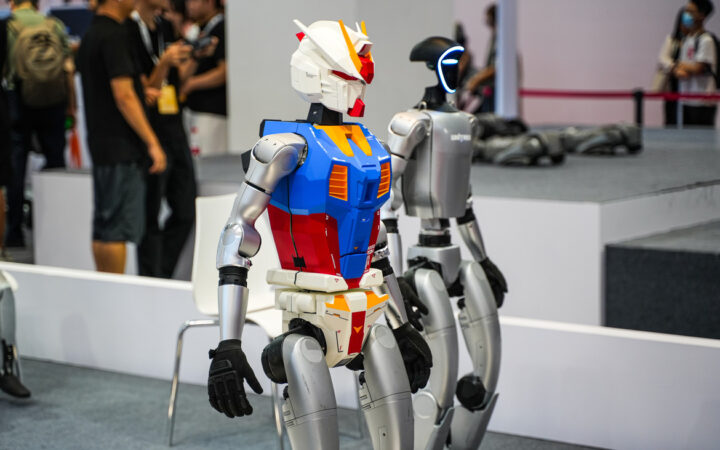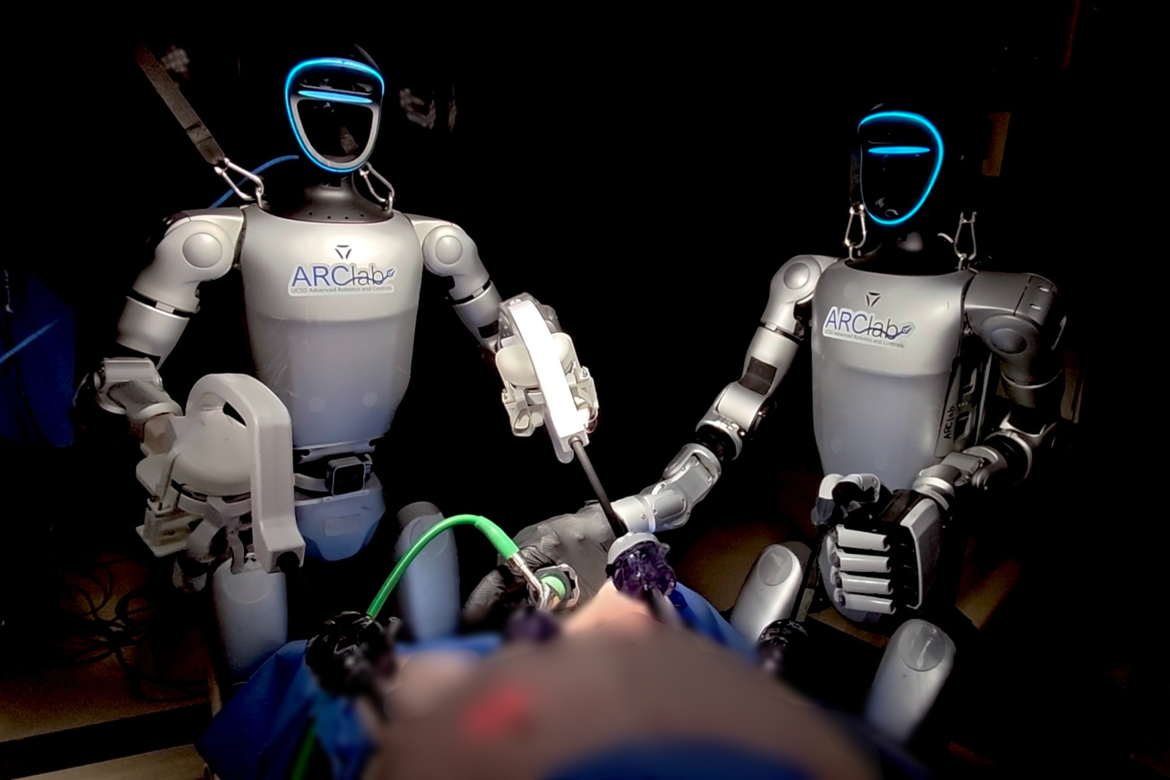


Researchers at the University of California San Diego have performed two minimally invasive gallbladder removal surgeries on live pigs using a teleoperated Unitree G1 humanoid robot, in what is described as the world’s first surgery performed by a humanoid robot under remote surgeon control. The preclinical study was published in Nature. The robot, nicknamed Surgie, was controlled by a surgeon operating a console with a stereo headset display and foot pedal interface, while the robot executed the corresponding movements at the operating table.
The study is an early-stage demonstration, not a clinical readiness milestone. The surgeries required multiple pauses for recalibration, took significantly longer than equivalent procedures using specialized surgical robots, and revealed several constraints in the Unitree G1 platform that would need to be addressed before any human patient application.
Why Humanoid Robots for Surgery
The case for humanoid robots in surgical settings is not performance – it is access and cost. Intuitive Surgical’s da Vinci Surgical System, the regulatory-cleared standard for robotic-assisted minimally invasive surgery, costs between half a million and several million dollars, weighs approximately 1,800 pounds, and requires dedicated operating room space. A Unitree G1 stands five feet tall, weighs 60 pounds, and costs between $13,500 for a base model and approximately $67,000 with dexterous hand upgrades.
“It’s a fraction of the cost and it takes a fraction of the space in an operating room,” said Shanglei Liu, an assistant professor of surgery at UC San Diego School of Medicine. “So it’s easy to deploy, anywhere from rural areas, to the battlefield, and even to space.”
The deployment vision is explicitly about extending surgical access to settings that cannot accommodate specialized surgical infrastructure – smaller hospitals, rural clinics, military field environments, and eventually remote space operations.
The Technical Approach and Its Limitations
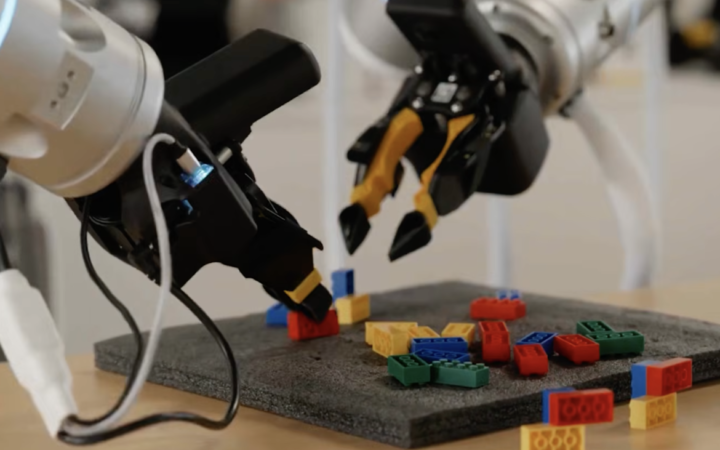
The research team built physical adapters to allow the G1 to hold surgical tools, and developed software translating intuitive surgeon hand movements into control signals for the instruments attached to the robot’s wrists. The first surgery included a human assistant standing alongside the robot; the second used two teleoperated G1 units working together.
The procedure revealed current constraints clearly. The G1’s arm span of 450 millimeters – compared to 1.6 to 1.8 meters for an adult human – limited reach for remote operators. Frequent recalibration pauses during surgery increased cognitive and operational load for the surgical team. Both new residents and experienced surgeons performed faster on practice tasks using standard da Vinci Research Kit controls compared to the humanoid robot interface.
Latency is the most technically significant challenge for any future remote surgery application. Current teleoperated humanoid systems operate with latencies in the hundreds of milliseconds. Previous research suggests surgical robots should have latency below 150 milliseconds. Closing that gap is a prerequisite for the teleoperated humanoid surgery approach to be clinically viable, particularly in remote operation scenarios where network delay compounds the control system’s inherent latency.
The Longer-Term Research Direction
Michael Yip, a professor of electrical and computing engineering at UC San Diego, described the longer-term goal as developing an autonomous surgical assistant capable of working alongside human surgeons on general tasks including tool retrieval and operating room preparation. “Remotely operated and autonomous humanoid robots have real potential for amplifying access to critical surgeries to which patients would otherwise not have access,” Yip said.
General-purpose surgical autonomy remains a distant goal. The Nature publication represents a proof of concept that teleoperated humanoid robots can perform live surgery – not that they can do so at a standard comparable to existing specialized systems. The value of the demonstration is establishing the feasibility of the approach and identifying the specific engineering gaps that must be closed before clinical translation is realistic.
Disclaimer: RobotsBeat is an independent media brand owned and operated by NuvexMedia LLC, publishing news, research, and insights on artificial intelligence, emerging technologies, automation, and related industries. NuvexMedia LLC invests in and collaborates with companies across the AI, Robotics, technology, software, and digital innovation sectors. These relationships do not influence RobotsBeat's editorial coverage, and the publication maintains full editorial independence to provide accurate, timely, and objective information. © 2026 NuvexMedia LLC. All rights reserved. This content is for informational purposes only and should not be considered legal, tax, investment, financial, or other professional advice.