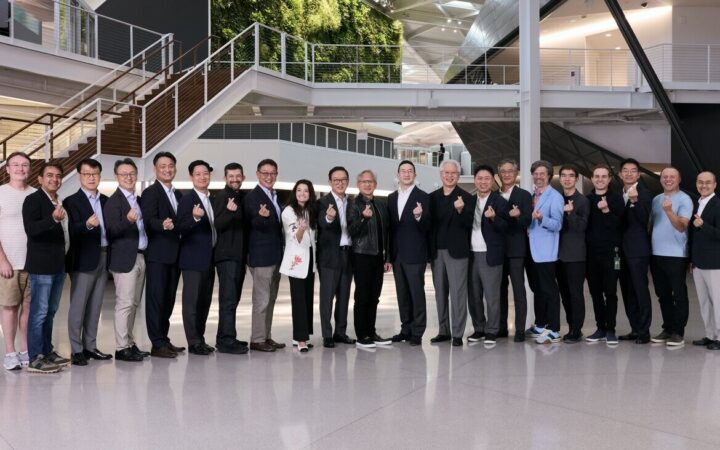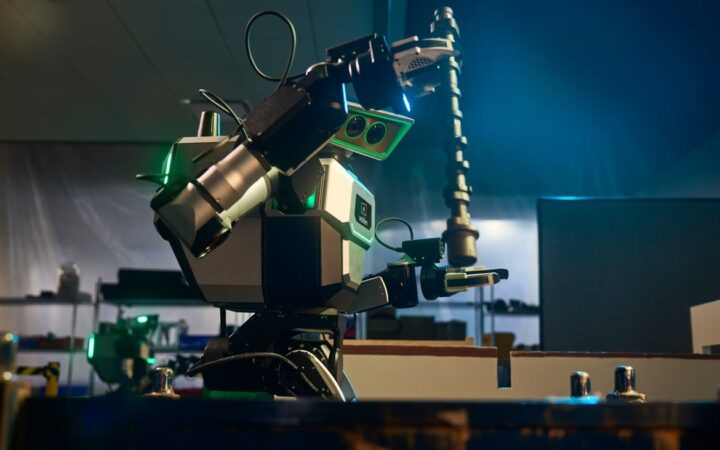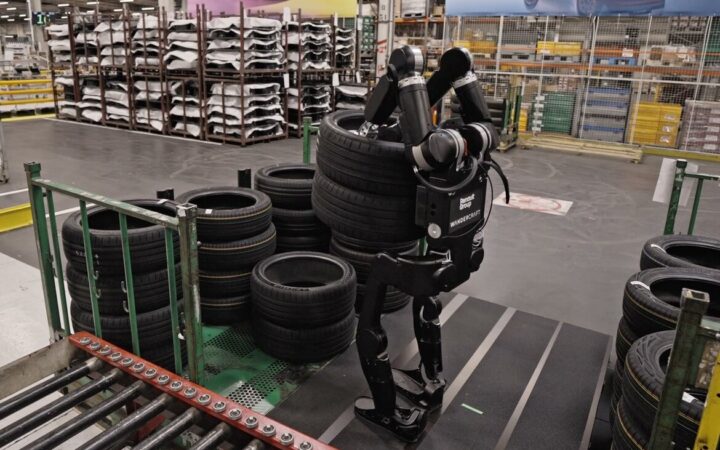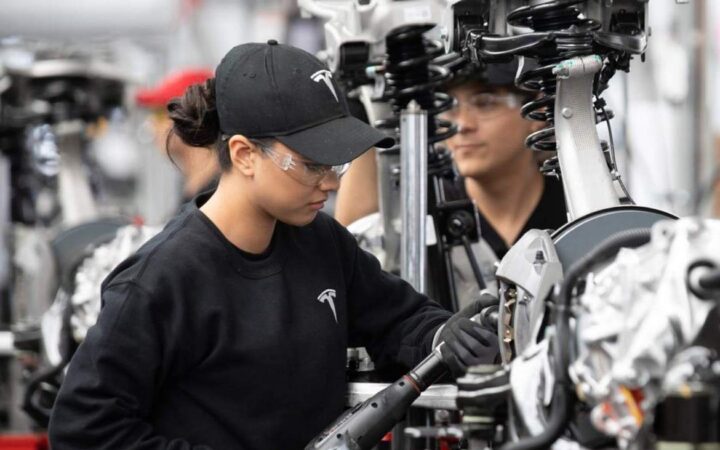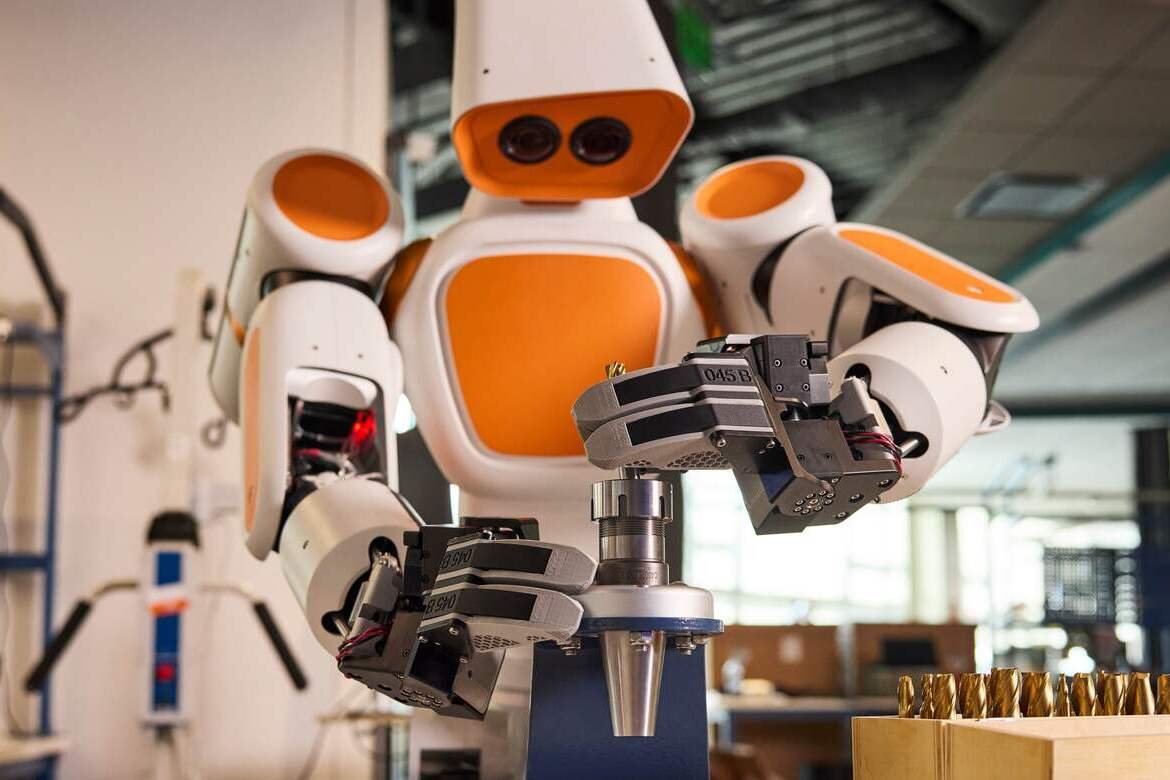


Walden Robotics has launched from stealth with $300 million in funding at a $1.1 billion valuation, with its general-purpose robots already performing real production work at a Toyota plant in North America. The round is co-led by Toyota – through Toyota Motor Corp, Toyota Invention Partners, and Toyota Ventures – and Deviation Capital, with participation from NVIDIA, Boeing, AE Ventures, Samsung Ventures, Prologis Ventures, and CoreWeave Ventures, among others.
The company was founded in January 2026 by researchers from Toyota Research Institute, MIT, Stanford, and Amazon, and moved from first pilot to live production at the Toyota facility within two months.
The Technology Foundation
Walden’s robots are powered by Large Behavior Models – a frontier model class the founding team helped pioneer, including through work on Diffusion Policy at Toyota Research Institute. LBMs allow robots to quickly learn new tasks and continuously improve through real-world operation, rather than requiring explicit reprogramming for each new task or environment.
CEO Dr. Russ Tedrake is a professor at MIT and former Senior Vice President of Large Behavior Models at Toyota Research Institute. The founding team’s decade of foundational AI and robotics research is the basis for the company’s technical differentiation claim: robots that learn and improve while working, from day one, in actual production environments.
“Core advances in Physical AI, and all of the excitement and attention surrounding it, has made disruptive change possible,” said Tedrake. “But providing real value to customers and building a robust and scalable business requires a deep understanding and respect for how manufacturing is done today.”
What Walden Is Doing Today
Walden deploys robots into live manufacturing and logistics environments alongside human workers from the start of engagement, rather than running isolated pilots before transitioning to production. The Toyota North American plant deployment – operational since February 2026 – is the primary public evidence of that claim. The company has strategic partners across automotive, aerospace, semiconductors, electronics, logistics, and life sciences.
The deployment model reflects the industry shift identified by Walden’s investors: the bottleneck in physical AI is not the technology but the ability to operate reliably in real production environments from the beginning. “Walden’s uniqueness is its ability to deliver robots that provide value from day one in real-world work environments: robots that continuously improve through learning, while always keeping people at the center,” said Hiroki Nakajima, Executive Vice President and CTO of Toyota Motor Corporation.
The Investor Rationale
The investor composition reflects the breadth of the industrial sectors Walden is targeting. Toyota provides both capital and the most important early customer reference. NVIDIA’s involvement connects Walden to the physical AI compute and simulation infrastructure that has become standard across the humanoid and general-purpose robot sector. Boeing and Samsung Ventures signal aerospace and electronics manufacturing interest. Prologis Ventures – the investment arm of the world’s largest industrial real estate operator – is a direct signal of logistics warehouse deployment ambition.
“The Walden team is generational, bringing together a rare, interdisciplinary group of experts spanning foundational robotics research, large-scale production hardware, and operational and business leadership,” said Colin Beirne, Founding Partner of Deviation Capital.
Disclaimer: RobotsBeat is an independent media brand owned and operated by NuvexMedia LLC, publishing news, research, and insights on artificial intelligence, emerging technologies, automation, and related industries. NuvexMedia LLC invests in and collaborates with companies across the AI, Robotics, technology, software, and digital innovation sectors. These relationships do not influence RobotsBeat's editorial coverage, and the publication maintains full editorial independence to provide accurate, timely, and objective information. © 2026 NuvexMedia LLC. All rights reserved. This content is for informational purposes only and should not be considered legal, tax, investment, financial, or other professional advice.