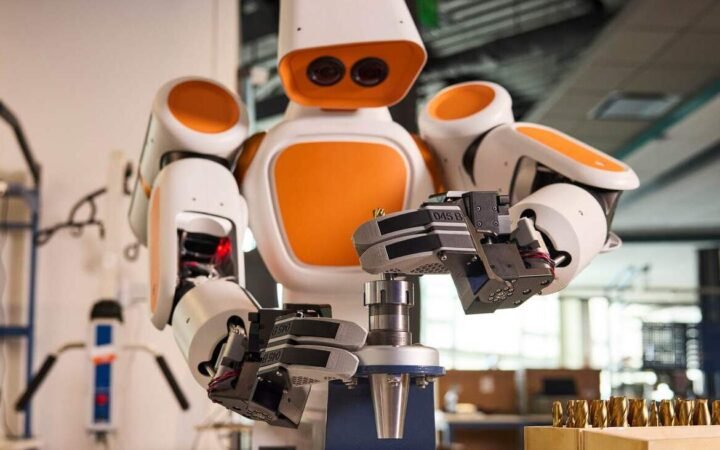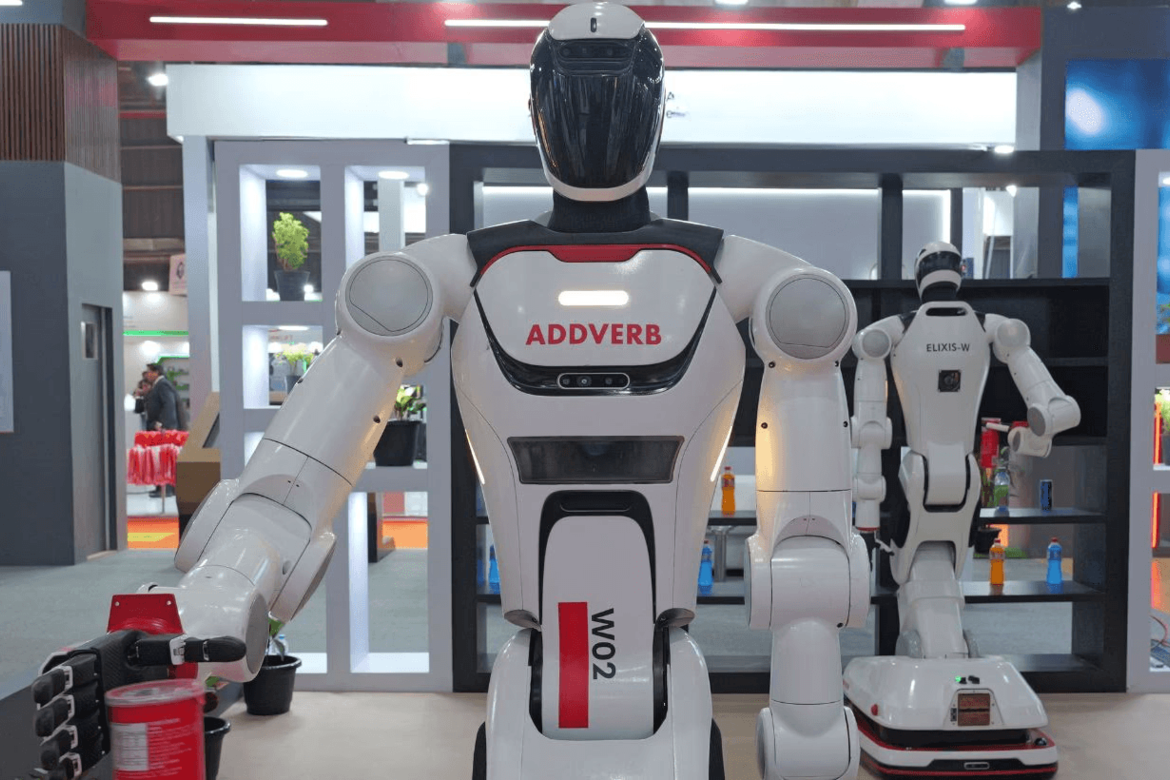


Addverb Technologies, India’s largest robotics company by domestic market presence, is seeking to raise more than $100 million to fund humanoid and quadruped robot development, AI system training, and continued international expansion. The fundraising is the company’s first major capital effort since Reliance Industries – the conglomerate controlled by billionaire Mukesh Ambani – invested $132 million in 2021 and took a controlling stake.
“We want to be in the top 10 in the next 5 years and top 5 in the next 10 years,” CEO Sangeet Kumar said in an interview at one of Addverb’s two factories on the outskirts of New Delhi. The company currently estimates it ranks just outside the global top 30 in robotics by revenue.
What Addverb Does Today
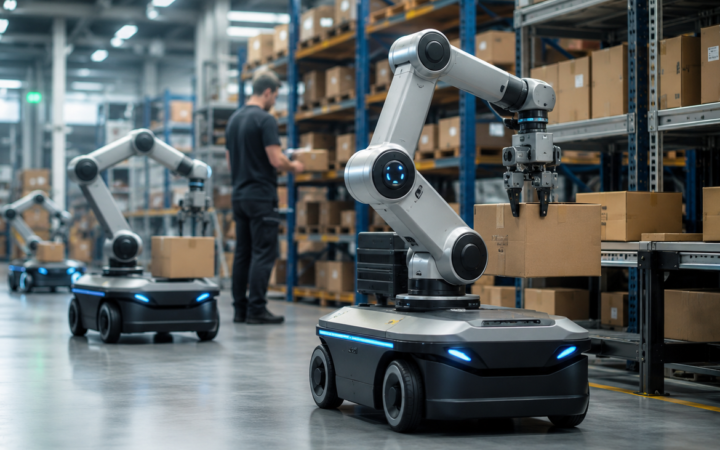
Founded in 2016 by four engineers who previously worked at Asian Paints, Addverb started as a warehouse automation firm before expanding into factory automation, electronics manufacturing, healthcare, defense, and research applications. Its robots handle sorting, material movement, and logistics tasks for customers including Lenskart, Hindustan Unilever, and Reliance across India and internationally.
The company employs nearly 1,100 people across more than two dozen countries and generates half its revenue from outside India. Revenue is expected to reach approximately 1,300 crore rupees ($136 million) in the fiscal year through March 2027, supported by an order book of approximately $200 million. After reporting losses during its international expansion over the past two years, Addverb expects to return to profitability on an adjusted basis in the current fiscal year, with net profit the following year.
The Humanoid and AI Investment
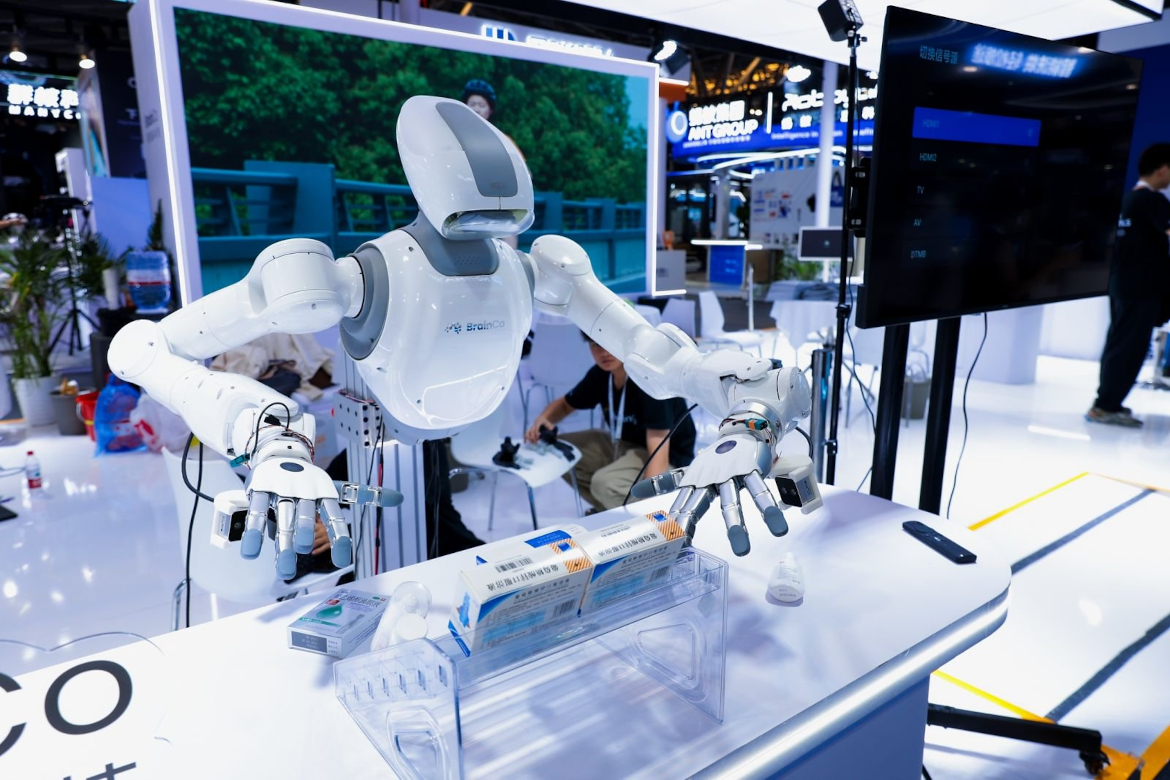
The fresh capital will be directed primarily toward humanoid and quadruped robot development, data collection, and AI system training. Addverb sees humanoid robots as a major growth opportunity in a market where Unitree, Tesla’s Optimus, and Chinese manufacturers are competing for early positioning. Kumar believes Indian companies can build competitive strengths even against China’s head start and government subsidy advantages.
One concrete step toward reducing component dependency is Addverb’s planned launch of proprietary lidar sensors, developed over more than two years, which will reduce reliance on imported sensing hardware. Vertical integration in components is a standard strategy for robotics companies attempting to compete against better-resourced rivals on cost and supply chain control.
The Path to IPO
An initial public offering is a medium-term option rather than an immediate plan. Kumar said the company is “too small” for an IPO at its current revenue scale and has set a target of 4,000 to 5,000 crore rupees in annual revenue before pursuing a listing – a milestone he estimates could be reached within two years at the current growth pace. The $100 million raise is designed to accelerate toward that threshold by funding the product development and market expansion that will drive revenue growth.
Addverb’s position as the leading domestic Indian robotics manufacturer gives it a structural advantage in a market that is increasingly relevant to global supply chain diversification discussions. India’s manufacturing sector is growing as companies seek alternatives to Chinese production, and a domestic robotics capability serves both Indian manufacturers and the government’s industrial modernization agenda.