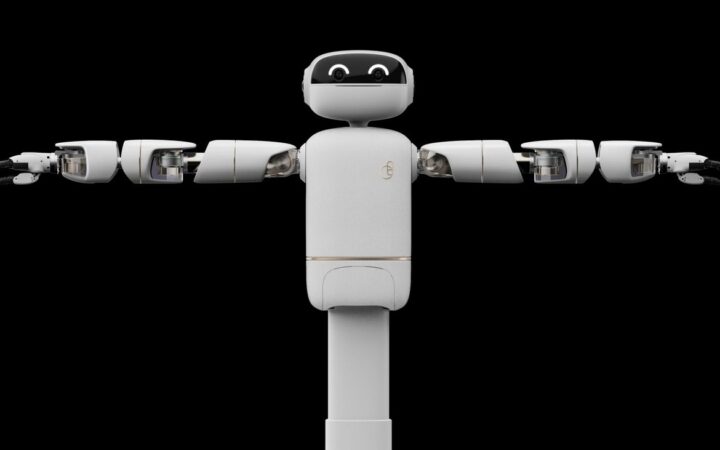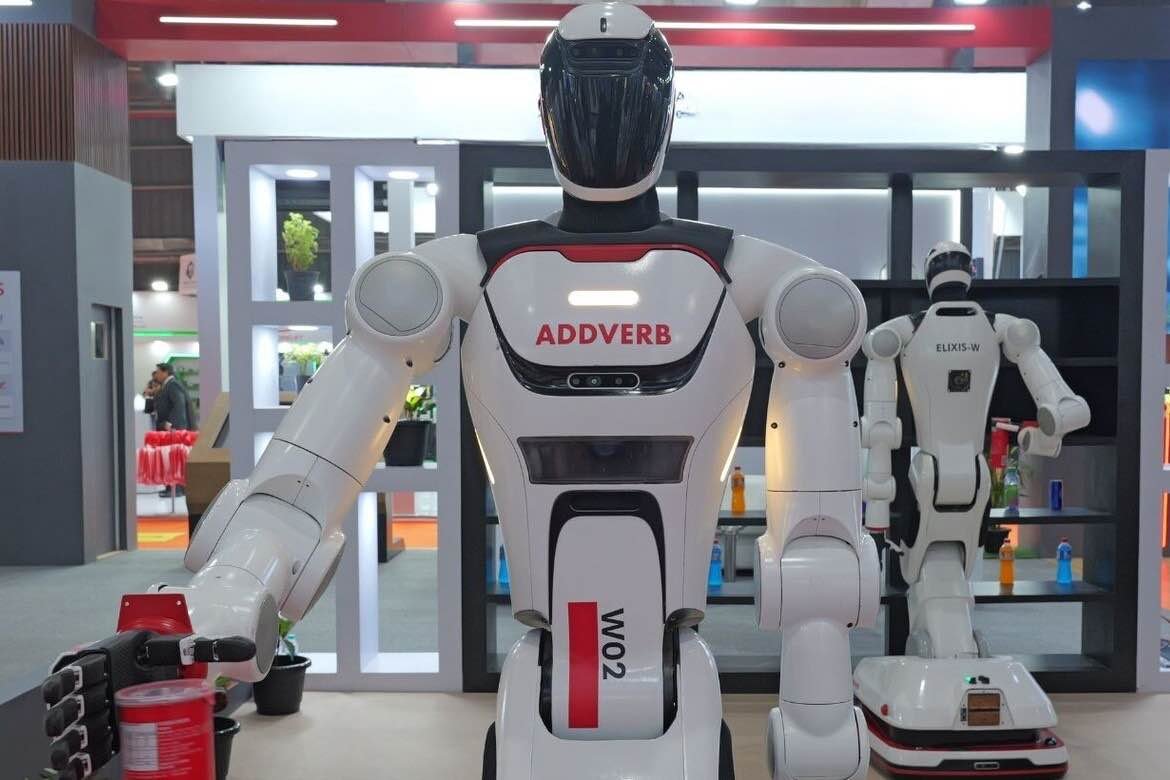


Indian automation company Addverb has officially entered the humanoid robotics race with the launch of Elixis-W, a wheeled humanoid robot designed specifically for industrial environments. The robot was unveiled at LogiMAT India 2026, one of the country’s largest logistics and supply chain exhibitions, and positions India as an active contributor to the global shift toward physical AI.
Wheeled humanoid robots working in the warehouse🏭
Indian automation company @Addverb_Tech unveiled its first wheeled humanoid robot:Elixis-W, at LogiMAT India 2026.
Built on a physical AI architecture, Elixis-W uses sensors to perceive its environment and can perform path… pic.twitter.com/dD6MkAQOjA
— CyberRobo (@CyberRobooo) February 7, 2026
Unlike consumer-focused humanoids or lab prototypes, Elixis-W was introduced as a practical system built for warehouses, factories, and intralogistics operations. Industry reaction at the event reflected a broader inflection point: humanoid robotics in India is moving beyond demonstrations and into controlled, real-world deployment.
Addverb executives framed the launch not as a spectacle, but as an extension of the company’s long-standing focus on automation systems that solve concrete operational problems.
Why Addverb Chose a Wheeled Humanoid
Elixis-W combines wheeled mobility with dual-arm manipulation, perception systems, and learning capabilities. The decision to adopt wheels rather than bipedal locomotion was deliberate. Most industrial facilities are built around flat, structured floors, where wheeled platforms offer greater stability, efficiency, and faster integration with existing infrastructure.
According to Addverb leadership, this approach allows teams to validate use cases such as material handling, repetitive tasks, and higher-risk operations without requiring costly changes to factory layouts. Legged humanoids remain part of the company’s longer-term roadmap, but the wheeled form factor enables earlier commercialization and safer deployment today.
The robot is intended to assist with physically demanding and repetitive work while operating alongside human workers. Addverb has emphasized that Elixis-W is designed to augment human labor, not replace it, with people retaining responsibility for supervision, decision-making, and exception handling.
From Automation Systems to Physical AI Platforms
The launch of Elixis-W reflects a broader evolution in Addverb’s strategy. The company initially built its reputation by solving structured automation challenges in warehouses and manufacturing. With Elixis-W, it is moving toward collaborative robotics capable of functioning in environments designed for humans.
Deployment will begin through limited, closely supervised proof-of-concept programs in controlled industrial settings. This phased rollout is intended to validate safety, reliability, and consistency before any wider adoption.
Alongside the robot, Addverb also introduced Addverb.ai, a platform aimed at advancing general-purpose robotics and physical AI. By opening the platform to developers and researchers, the company hopes to accelerate progress toward robots that can adapt across tasks rather than being locked into single-purpose roles.
For Addverb, Elixis-W is not positioned as a final product, but as a foundation. It represents a pragmatic step toward human-robot collaboration at scale, rooted in industrial realities rather than futuristic promises.
Disclaimer: RobotsBeat is an independent media brand owned and operated by NuvexMedia LLC, publishing news, research, and insights on artificial intelligence, emerging technologies, automation, and related industries. NuvexMedia LLC invests in and collaborates with companies across the AI, Robotics, technology, software, and digital innovation sectors. These relationships do not influence RobotsBeat's editorial coverage, and the publication maintains full editorial independence to provide accurate, timely, and objective information. © 2026 NuvexMedia LLC. All rights reserved. This content is for informational purposes only and should not be considered legal, tax, investment, financial, or other professional advice.