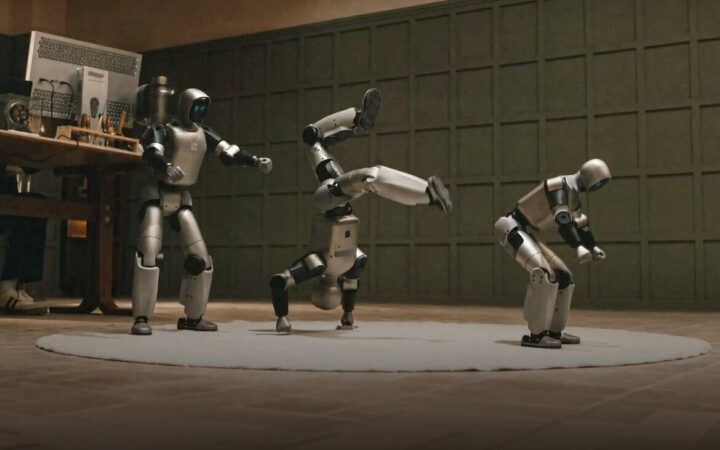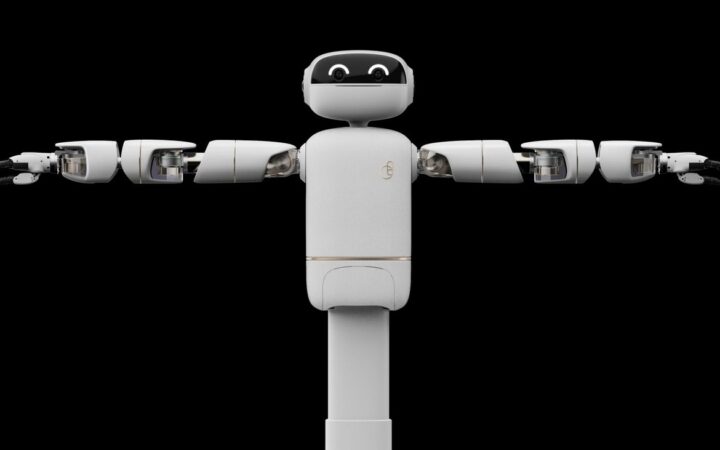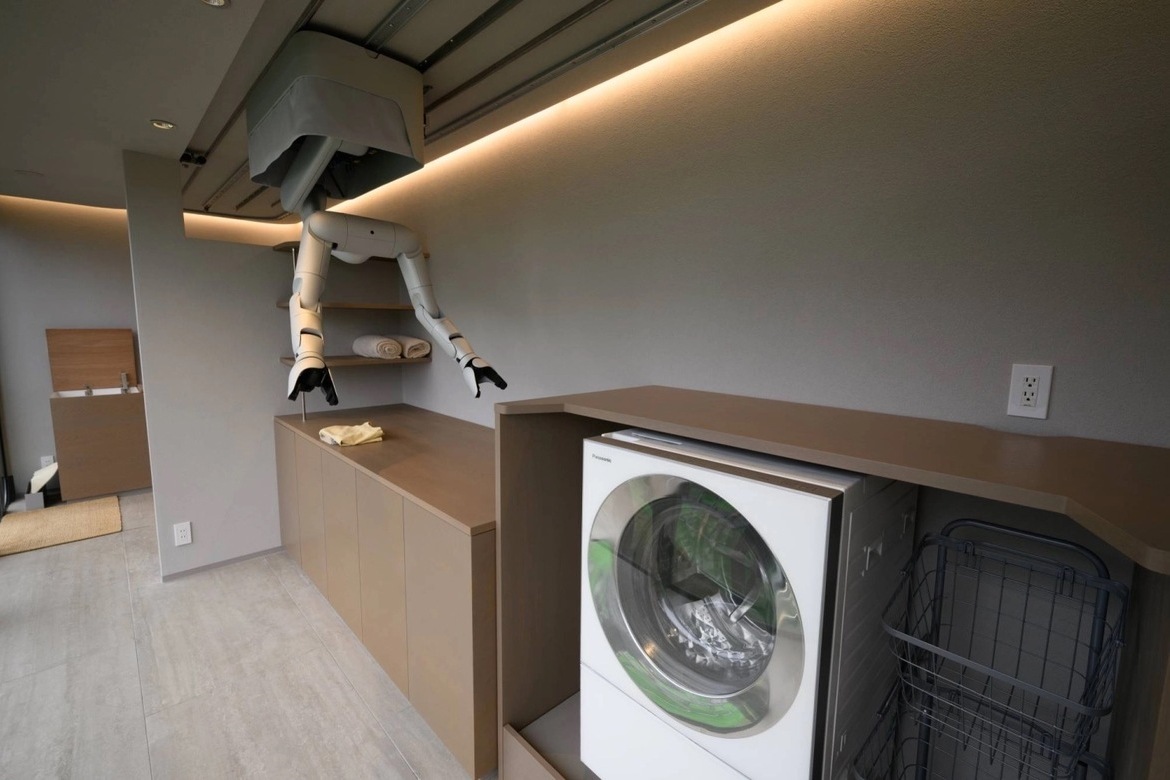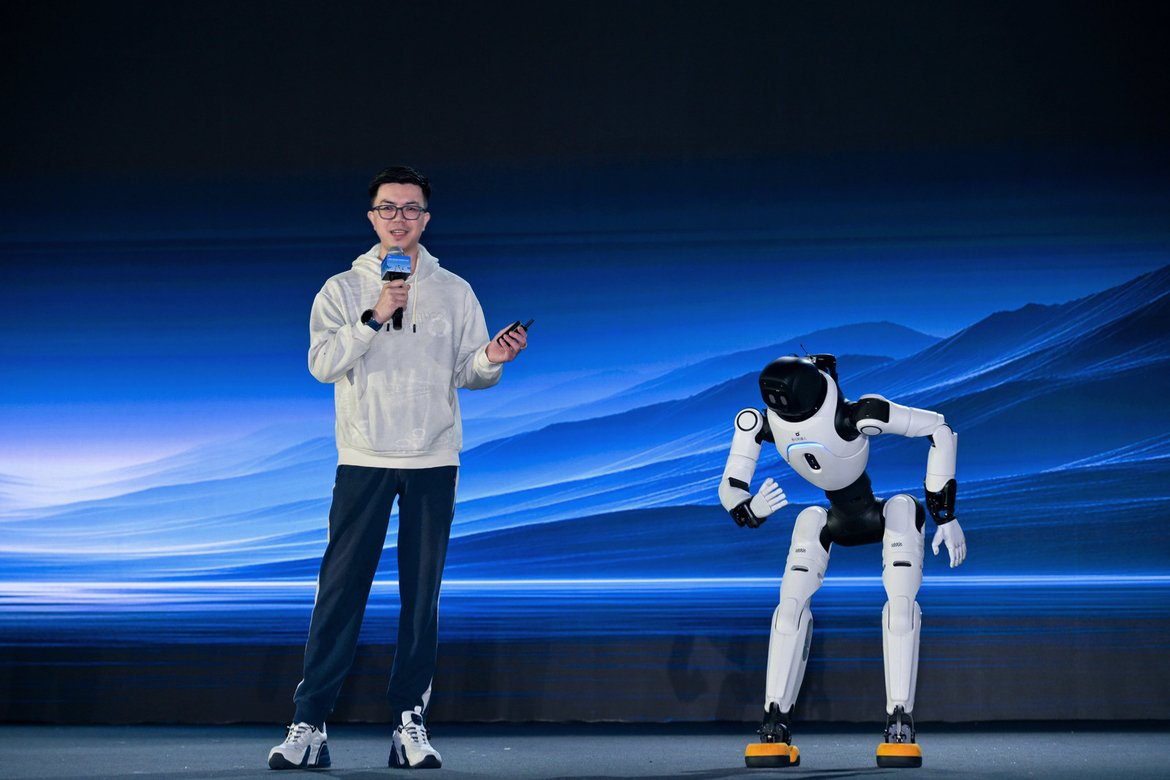


Agibot used its annual partner conference, APC 2026, to declare 2026 as “Deployment Year One” for embodied AI – the point at which the industry transitions from validating robot capabilities to generating measurable productivity at scale. The company unveiled five new robotic platforms, eight AI models, and a full-stack open development architecture called AIMA, framing the announcements as the infrastructure layer for its next phase of commercialization.
The declaration is grounded in operational data. Agibot rolled out its 10,000th humanoid robot in March 2026, and its humanoid robot revenue grew more than 22-fold in 2025 to become the company’s largest revenue stream, according to figures the company has previously reported.
Five Platforms, One Unified Architecture
Agibot positioned itself at APC 2026 as the only company offering a full-series lineup spanning humanoids, wheeled platforms, and multi-form robots across different sizes and deployment scenarios. The five new platforms are built on what the company calls a “One Robotic Body with Three Intelligences” framework, integrating motion intelligence, interaction intelligence, and operation intelligence into a unified system.
The architecture is designed to address a core limitation of earlier robotic deployments: systems optimized for a single task or environment. By coupling perception, decision-making, and physical execution within one hardware and software stack, Agibot argues that robots can generalize across complex real-world environments rather than operating within narrowly defined parameters.
Seven Commercial Solutions
To support faster enterprise adoption, Agibot introduced seven standardized productivity solutions targeting specific industrial scenarios: loading and unloading, industrial handling, logistics sorting, guidance and retail assistance, retail service stations, security patrol, and industrial and commercial cleaning. Each solution bundles hardware, AI models, and data infrastructure into a repeatable deployment package, reducing the integration complexity that has historically extended robotics pilot timelines.
“The industry is moving from proving what robots can do, to proving what value they can consistently deliver at scale,” said Edward Deng, Founder, Chairman, and CEO of Agibot.
AIMA: An Open Architecture for Embodied AI
The most structurally significant announcement was the launch of AIMA – AI Machine Architecture – described as the first complete open technology system for embodied intelligence. Built on a “1+3+X” design, AIMA consists of a unified robot operating system called Link-U OS, three development platforms covering motion creation, interaction design, and task development, and an extensible layer supporting third-party applications and the AGIBOT Embodied Agent Framework.
The architecture provides an end-to-end toolchain from low-level system control to high-level application development, and Agibot intends to continue open-sourcing components to attract developers and partners. The company plans to invest more than 2 billion yuan over five years to expand the ecosystem, targeting partnerships with universities, industry operators, and a large-scale developer community.
A Three-Stage Industry Roadmap
Agibot also presented a long-term framework for the embodied AI industry structured around three development curves. The current phase, running through 2026, covers foundational development and early adoption. The period from 2026 to 2030 is characterized as a deployment growth stage, during which robot productivity is expected to approach human levels and scenario-based deployment scales significantly. From 2030 onward, the company projects a qualitative leap in generalization capability, collective intelligence, and robots beginning to surpass human productivity in selected domains.
The roadmap is a strategic positioning exercise as much as a technical forecast. With more than 150 humanoid robot manufacturers active in China alone, the company that can credibly claim platform and ecosystem leadership – rather than competing on individual robot specifications – is likely to capture a disproportionate share of the emerging enterprise market.
Disclaimer: RobotsBeat is an independent media brand owned and operated by NuvexMedia LLC, publishing news, research, and insights on artificial intelligence, emerging technologies, automation, and related industries. NuvexMedia LLC invests in and collaborates with companies across the AI, Robotics, technology, software, and digital innovation sectors. These relationships do not influence RobotsBeat's editorial coverage, and the publication maintains full editorial independence to provide accurate, timely, and objective information. © 2026 NuvexMedia LLC. All rights reserved. This content is for informational purposes only and should not be considered legal, tax, investment, financial, or other professional advice.