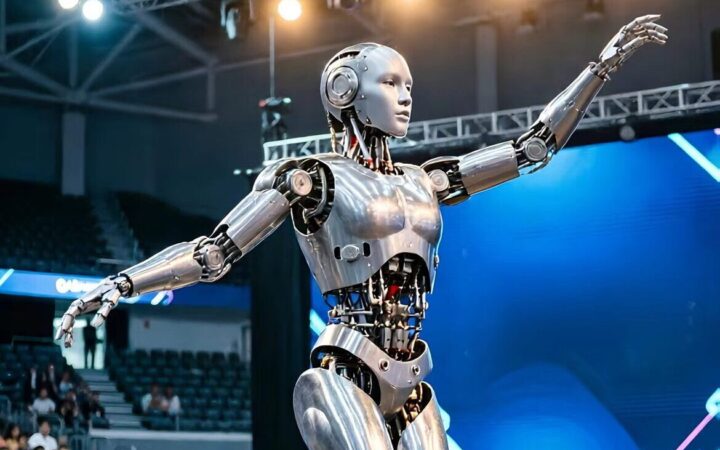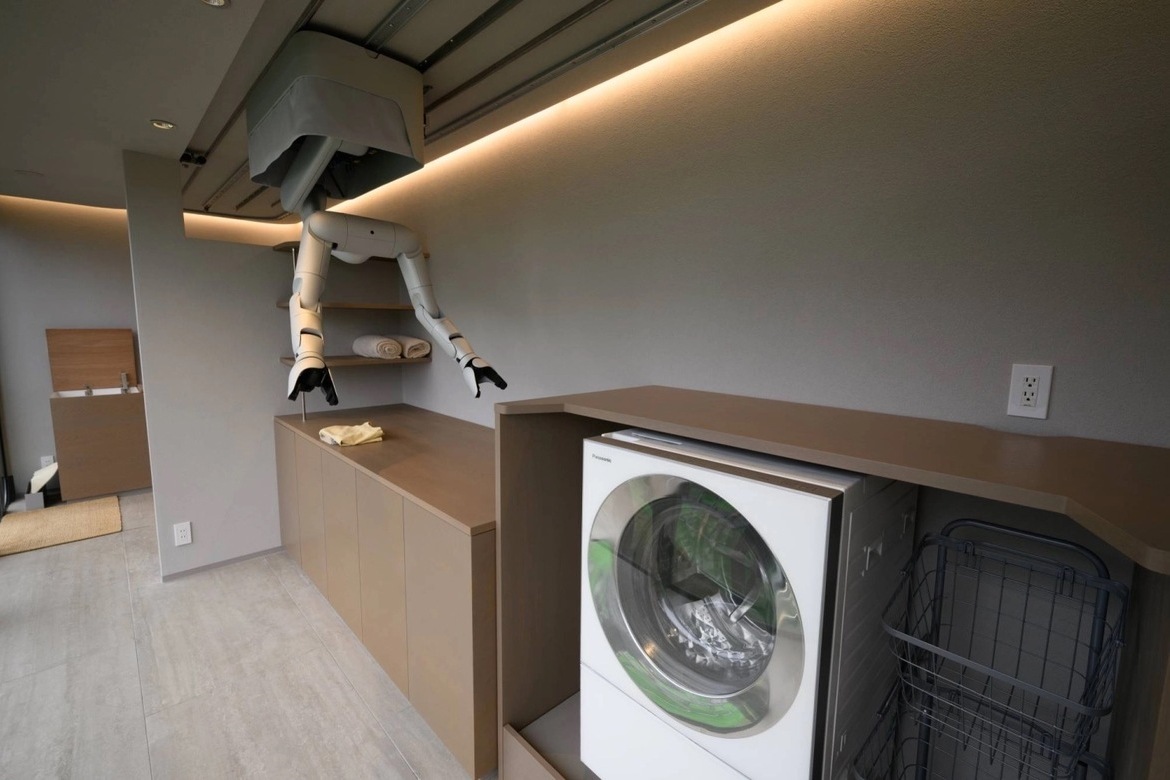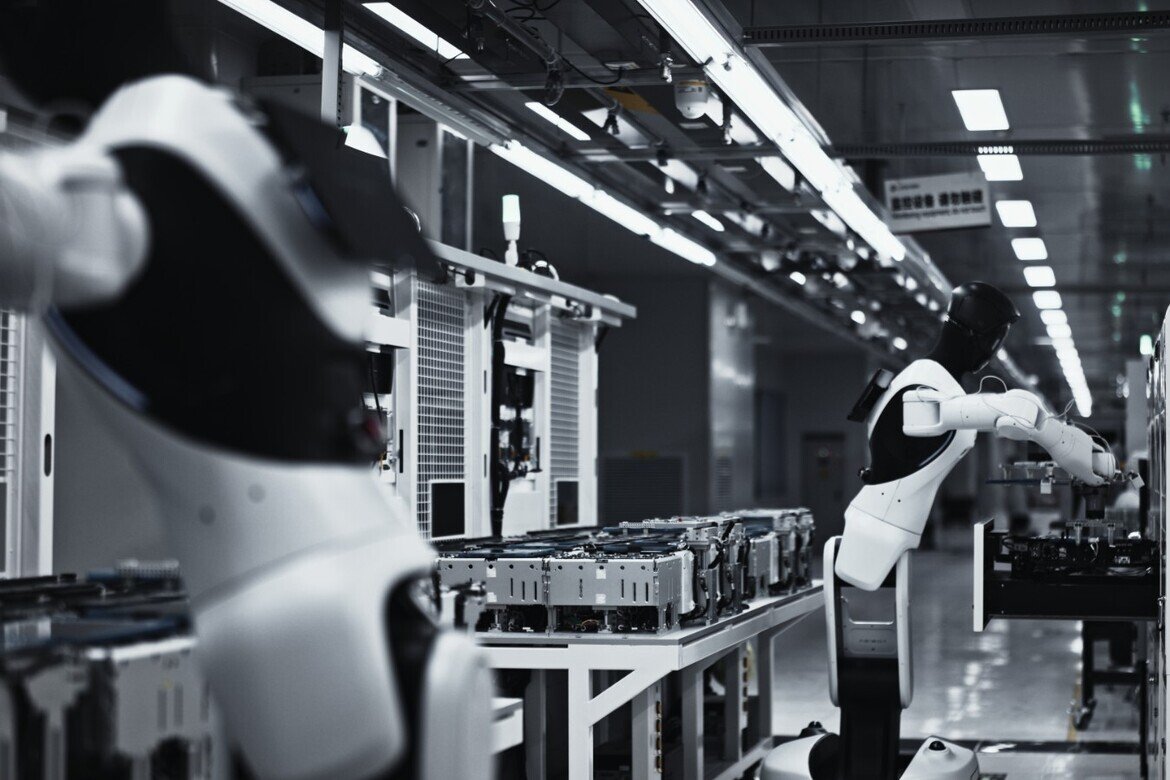

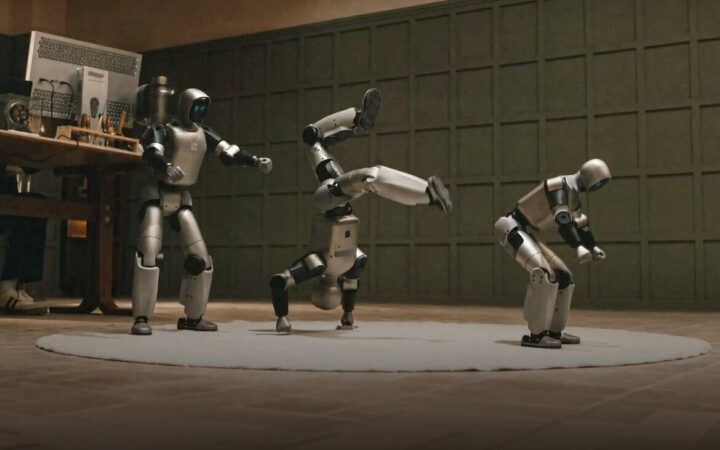
Agibot has deployed its G2 humanoid robots in an active production environment at Longcheer Technology, a Shanghai-based consumer electronics manufacturer. The rollout marks one of the more concrete demonstrations of humanoid robots operating within a live industrial workflow, moving the technology beyond controlled pilots into continuous factory-floor use.
The deployment comes months after Agibot announced the production of its 10,000th humanoid robot in March, a milestone the company described as a turning point in the industrialization of embodied AI.
What the Robots Are Doing
G2 units are stationed at multimedia-integrated testing stations, where they perform precision loading and unloading of devices into testing fixtures. The task demands millimeter-level placement accuracy, consistent cycle timing, and the ability to sort finished and defective units without interruption.
Agibot reports throughput of up to 310 units per hour, with individual cycle times of approximately 19 to 20 seconds per operation and a success rate exceeding 99% in continuous use. Production line integration was completed within 36 hours, and each shift produces approximately 3,000 units. The system has logged over 140 hours of cumulative continuous operation, with downtime losses below 4%.
The robots use multi-modal sensing – combining visual perception and spatial awareness – to identify objects and execute task sequences without custom tooling. The platform supports mixed-model production, meaning it can handle different device configurations on the same line, reducing changeover time.
The Underlying Architecture
Agibot describes its approach as a full-stack ecosystem for embodied intelligence, integrating robot hardware, AI models, and large-scale data infrastructure into a single system designed for continuous learning. Rather than executing fixed instructions, the robots are built to adapt to task and environment variations over time through a combination of simulation-based validation, reinforcement learning, and on-device inference.
“This project shows that embodied AI is no longer experimental. It is a practical, production-ready capability that can operate reliably in real industrial environments and deliver measurable economic value,” said Maoqing Yao, Partner, Senior Vice President, and President of the Embodied Business Unit at Agibot.
Scale and Next Steps
Agibot plans to expand the deployment to 100 robots by Q3 2026 and has identified automotive, semiconductors, and energy as the next target sectors. The company is also developing Genie Sim 3.0, a simulation platform designed to accelerate training of new robot behaviors before physical deployment.
The broader implication of the Longcheer deployment is not the throughput figures alone, but what they suggest about deployment speed. A 36-hour integration timeline and no custom tooling requirement lower the barrier for manufacturers evaluating humanoid robots against conventional fixed automation. Whether those numbers hold across more varied factory environments – with different layouts, device types, and production rhythms – will determine how transferable the model is at scale.
Disclaimer: RobotsBeat is an independent media brand owned and operated by NuvexMedia LLC, publishing news, research, and insights on artificial intelligence, emerging technologies, automation, and related industries. NuvexMedia LLC invests in and collaborates with companies across the AI, Robotics, technology, software, and digital innovation sectors. These relationships do not influence RobotsBeat's editorial coverage, and the publication maintains full editorial independence to provide accurate, timely, and objective information. © 2026 NuvexMedia LLC. All rights reserved. This content is for informational purposes only and should not be considered legal, tax, investment, financial, or other professional advice.