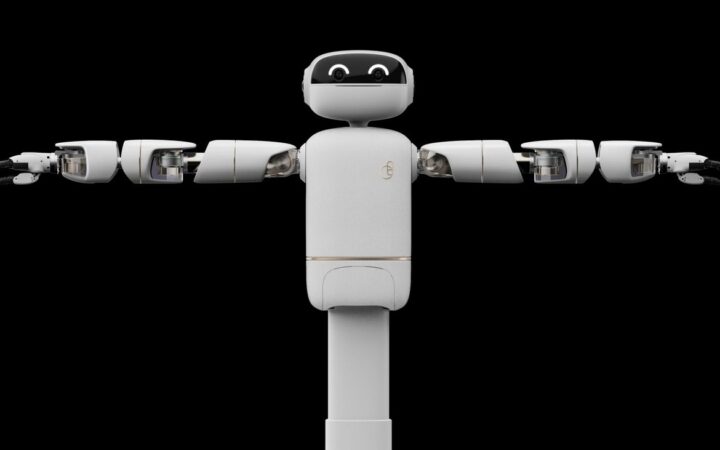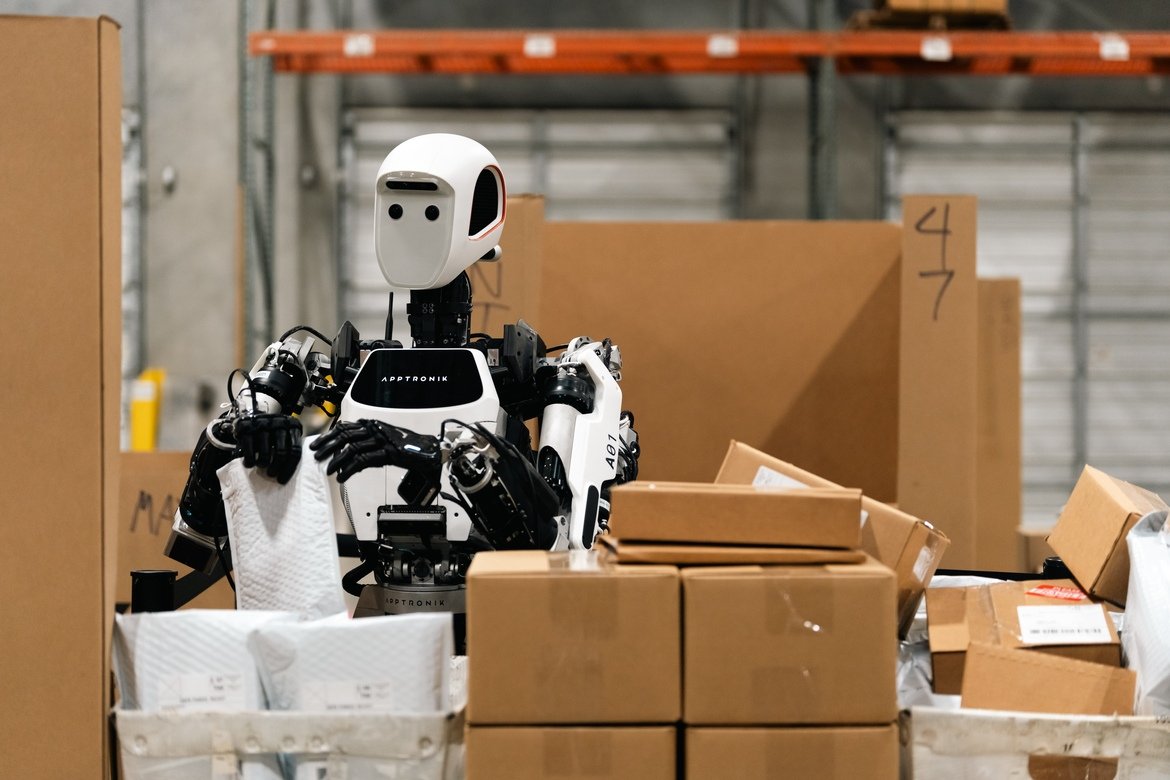

Apptronik has opened an expanded Robot Park facility in Austin, Texas, covering nearly 90,000 square feet, and unveiled Apollo 2 – the current version of its humanoid robot platform – in both bipedal and wheeled-base configurations. The facility anchors a growing global network of Robot Park locations at customer and partner sites, with additional cities planned. The expanded program deepens Apptronik’s research partnership with Google DeepMind, with Apollo 2 robots continuously generating real-world training data that feeds into Gemini Robotics, DeepMind’s foundational AI models for robotics.
The announcement positions Robot Park not as a showcase facility but as operational infrastructure – a data generation engine designed to accelerate the development of Apptronik’s next commercial humanoid platform, Apollo 3.
The Data Collection Architecture
Humanoid robots require large volumes of real-world interaction data to train the embodied AI models that enable autonomous operation. Robot Park is where much of that data is created. Inside the Austin facility, Apollo 2 robots work across an extensive array of customer-driven tasks in logistics, manufacturing, retail, and other operational categories. Similar data collection workflows are deployed at Robot Park locations established at Google DeepMind, Mercedes-Benz, and GXO, a global logistics operator.
Through a combination of teleoperation and autonomous execution, Apollo 2 robots continuously generate high-quality training data across these sites. That data is used to train and refine the Gemini Robotics models that will power Apptronik’s commercial fleet at deployment.
“What we’re building is a continuous learning loop with the Google DeepMind Robotics team: robots working, collecting data, and improving with every cycle, in real environments, on real tasks,” said Jeff Cardenas, CEO and co-founder of Apptronik. “Robot Park enables the data collection that is fuel for that, and Apollo 2 is the machine that makes it possible.”
Apollo 2’s Modular Design
Apollo 2 has been the operational platform behind Robot Park for more than a year. Its modular architecture – offering both wheeled and bipedal configurations – allows deployment optimization across different environments. The wheeled configuration conforms with existing industrial mobile robot safety standards, fitting into customer operations without requiring safety infrastructure changes. The bipedal configuration provides adaptability in complex, multi-level environments and generates data for refining walking platform safety and reliability.
“By developing Apollo as a modular platform, we’re able to deploy the same core humanoid technology across different configurations – wheeled robots that align with current industrial safety standards, and bipedal robots for maximum adaptability,” said Barry Phillips, Chief Commercial Officer at Apptronik.
The Path to Apollo 3
Everything Apptronik is learning through Apollo 2 deployments is directly informing the development of Apollo 3, its next-generation commercial product. The massive data streams generated across Robot Park locations and customer sites, processed through the Gemini Robotics partnership, are designed to give Apollo 3 significantly more out-of-the-box embodied intelligence at commercial launch than any prior generation could demonstrate.
The Robot Park model – operating fleets at customer sites that simultaneously serve commercial functions and generate training data – mirrors strategies being deployed by LG Electronics with its CLOiD data factory in Seoul and by Apptronik’s own partner Google DeepMind through its European robotics accelerator cohort. The shared logic is that real-world deployment at scale is the only reliable way to generate the volume and variety of physical interaction data that embodied AI models require.
Disclaimer: RobotsBeat is an independent media brand owned and operated by NuvexMedia LLC, publishing news, research, and insights on artificial intelligence, emerging technologies, automation, and related industries. NuvexMedia LLC invests in and collaborates with companies across the AI, Robotics, technology, software, and digital innovation sectors. These relationships do not influence RobotsBeat's editorial coverage, and the publication maintains full editorial independence to provide accurate, timely, and objective information. © 2026 NuvexMedia LLC. All rights reserved. This content is for informational purposes only and should not be considered legal, tax, investment, financial, or other professional advice.