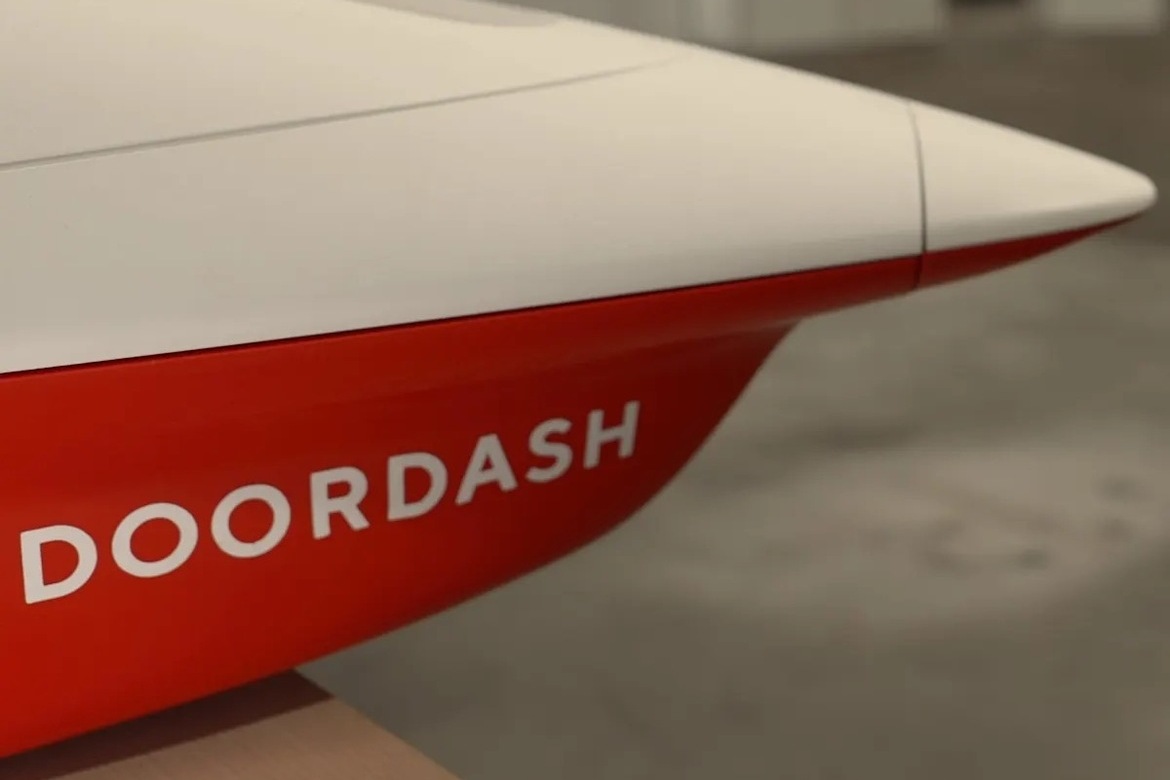

DoorDash has earned Part 135 air carrier certification from the Federal Aviation Administration, making it one of only eight drone operators in the United States to complete the agency’s five-stage evaluation process. The certification allows DoorDash to operate as a licensed air carrier, and the company is launching DoorDash Air, its in-house drone delivery program built within DoorDash Labs, its internal robotics and autonomy team.
The five-stage certification process required airworthiness testing, detailed flight operations and maintenance documentation reviewed by the FAA, an FAA-accepted safety management system, a hazardous materials program, and additional compliance verification. DoorDash described the process as representing years of engagement with the FAA.
Why In-House, Given Existing Partnerships
DoorDash already works with Wing for drone deliveries through third-party partnerships. The decision to build a parallel in-house program reflects a specific strategic view: that controlling the full stack – software routing, ground infrastructure, drone design, and now air carrier operations – is necessary to make drone delivery work at commercial scale across any merchant and any location.
“We want drone delivery to work for any merchant, anywhere,” said Harrison Shih, head of DoorDash Air. “We’re building the full stack to make that possible, from the ground infrastructure to the drone itself, and the handoff systems that make it work together seamlessly.”
The three-component architecture DoorDash is building around DoorDash Air covers its Autonomous Delivery Platform, which routes each order to the most efficient delivery mode across Dashers, its Dot ground robot, drones, autonomous vehicles, and third-party sidewalk robots; interoperable ground infrastructure for merchant handoffs designed to support drones from multiple providers; and the Part 135 certification enabling it to fly and maintain its own aircraft.
DoorDash is designing its unmanned aerial vehicles to be built in the United States using primarily American-made components.
The Mid-Range Delivery Gap
The market rationale is specific. More than 20% of DoorDash orders in 2025 traveled three to five miles – a distance range that took on average nearly 25% longer to fulfill than shorter deliveries, largely because finding an available ground-based Dasher for mid-range trips is less efficient than for shorter ones close to merchant clusters.
Routing those mid-range orders to drones would allow human Dashers to concentrate on shorter routes where they can complete multiple deliveries efficiently. DoorDash’s 2025 pilot data supports the case: drone deliveries averaged 25 minutes, and locations participating in partner drone pilots saw order volume grow approximately 30%, with the increase sustained for nine weeks following launch.
DoorDash has not disclosed which cities will receive DoorDash Air service or when the program will expand beyond existing pilot testing. The company said it plans to share more details at its Dash Forward event in September.
Disclaimer: RobotsBeat is an independent media brand owned and operated by NuvexMedia LLC, publishing news, research, and insights on artificial intelligence, emerging technologies, automation, and related industries. NuvexMedia LLC invests in and collaborates with companies across the AI, Robotics, technology, software, and digital innovation sectors. These relationships do not influence RobotsBeat's editorial coverage, and the publication maintains full editorial independence to provide accurate, timely, and objective information. © 2026 NuvexMedia LLC. All rights reserved. This content is for informational purposes only and should not be considered legal, tax, investment, financial, or other professional advice.