

Mobile World Congress 2026 underscored a structural change in the AI industry: artificial intelligence is no longer confined to apps running on smartphones. It is beginning to reshape the hardware itself.
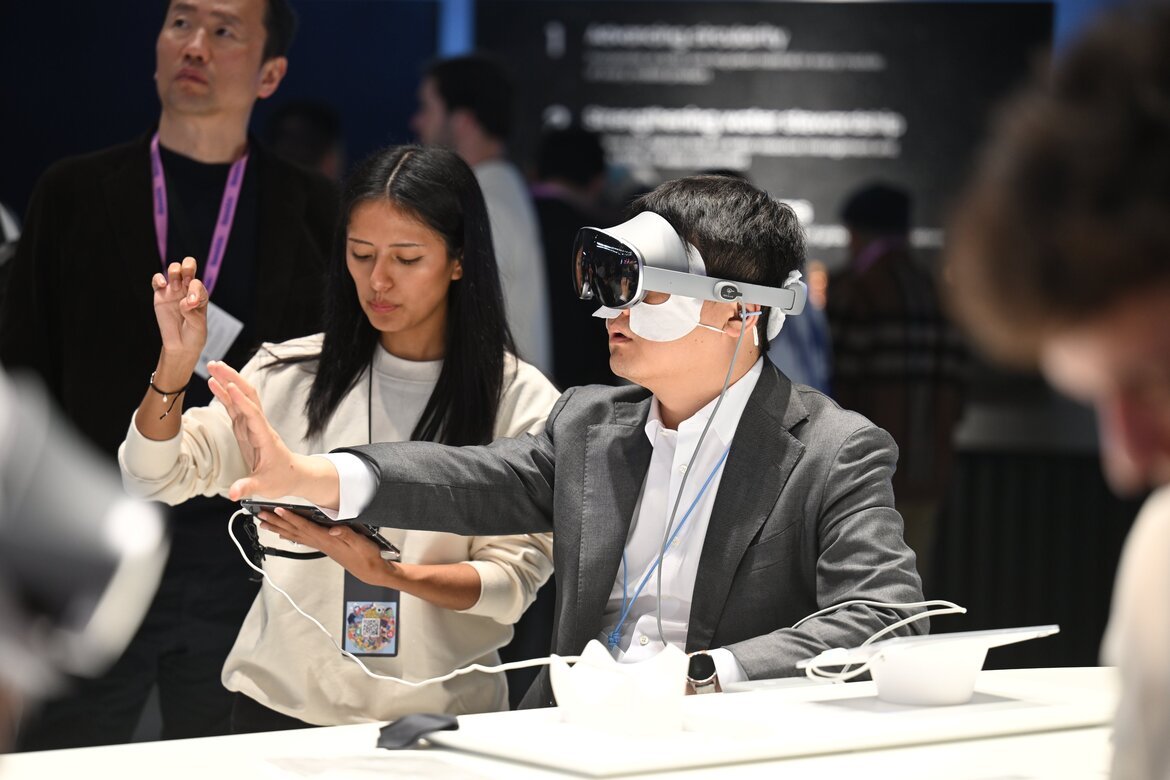
Across the exhibition floor in Barcelona, companies presented humanoid robots controlled entirely by voice, AI glasses positioned as daily computing devices, and smartphones equipped with mechanical camera systems that physically move. The theme was consistent: large AI models are evolving from software layers into defining elements of device architecture.
Smartphone Makers Enter Robotics
Several Chinese smartphone manufacturers used MWC to demonstrate ambitions beyond handsets.
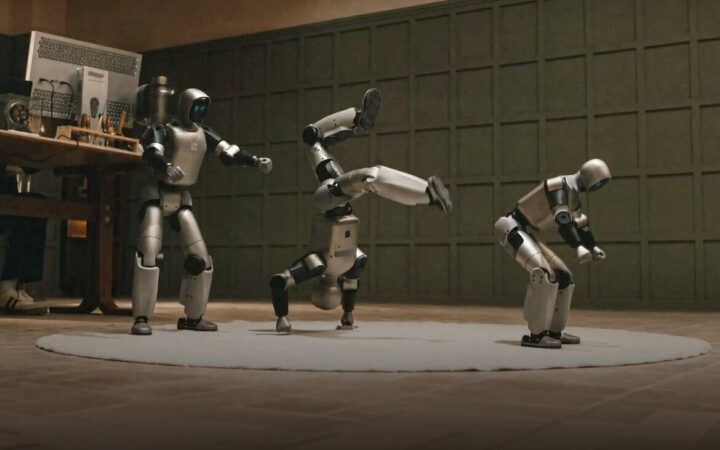
Honor unveiled its first humanoid robot during its global launch event, showcasing AI-driven motion control and multimodal interaction. The demonstration included acrobatic movements and coordinated choreography, signaling technical progress in embodied control systems.
Xiaomi, which introduced its CyberOne humanoid in 2022, did not display a robot on the show floor but reported new milestones. According to the company, its humanoid systems have begun operating in automotive factories, performing tasks such as self-tapping nut installation and material transport. Chairman Lei Jun said large-scale deployment in Xiaomi’s factories could occur within five years.
The move into robotics comes as smartphone growth slows. IDC estimates that China’s smartphone shipments reached roughly 284 million units in 2025, a slight year-on-year decline. For manufacturers with in-house chips, operating systems, and AI models, robotics represents an adjacent growth market built on overlapping technologies.
Lu Weibing, president of Xiaomi’s mobile division, has argued that investments in proprietary silicon, operating systems, and foundational AI are interconnected and transferable to robotics platforms.
Other technology firms are also advancing embodied systems. At MWC, iFlytek demonstrated a humanoid guide robot powered by upgraded multimodal voice interaction, eliminating the need for handheld remote controls. China Mobile presented an unmanned restaurant concept in which embodied robots collaborated on ordering, food preparation, and delivery.
These deployments suggest that large models are increasingly acting as real-time control interfaces rather than conversational add-ons.
AI Glasses and the Search for Monetization
While AI apps saw a surge in daily active users during China’s Spring Festival promotions, retention and revenue models remain uncertain. Several internet companies are now shifting attention toward AI hardware.
Alibaba’s Qwen brand introduced its first AI glasses at MWC, embedding large language models into wearable devices capable of translation, transcription, photography, and object recognition. The devices are positioned for both consumer and professional use.
IDC forecasts that global smart glasses shipments will exceed 23 million units by 2026, including nearly 5 million units in China. Compared with heavily subsidized AI apps, glasses offer a direct hardware revenue stream and clearer monetization path.
iFlytek also debuted lightweight AI glasses weighing approximately 40 grams, emphasizing multimodal recording and translation capabilities.
Redefining the Smartphone Form
AI integration is also altering the smartphone itself.
ZTE showcased AI-powered devices that embed assistants directly into the system layer, enabling cross-application control via natural language. Rather than functioning as standalone apps, these AI agents are integrated into core operating system workflows.
Honor introduced a more experimental concept: a “Robot Phone” featuring a motorized multi-axis gimbal paired with a 200-megapixel sensor. The device can physically rotate and track users during video calls, combining AI vision with mechanical motion.
The common thread across categories is the shift from AI-enabled hardware to AI-defined hardware. Large models are beginning to influence device structure, interaction methods, and mechanical design.
MWC 2026 did not present a single dominant form factor. Instead, it revealed a competitive search for the most natural interface between AI systems and the physical world. Whether that interface proves to be humanoid robots, wearable glasses, or reengineered smartphones remains unsettled. What is clear is that AI is no longer just inside devices. It is beginning to shape what those devices become.
Disclaimer: RobotsBeat is an independent media brand owned and operated by NuvexMedia LLC, publishing news, research, and insights on artificial intelligence, emerging technologies, automation, and related industries. NuvexMedia LLC invests in and collaborates with companies across the AI, Robotics, technology, software, and digital innovation sectors. These relationships do not influence RobotsBeat's editorial coverage, and the publication maintains full editorial independence to provide accurate, timely, and objective information. © 2026 NuvexMedia LLC. All rights reserved. This content is for informational purposes only and should not be considered legal, tax, investment, financial, or other professional advice.