Waymo Raises $16 Billion to Scale Robotaxi Operations Globally
Waymo has secured $16 billion in new funding to expand its autonomous ride-hailing service, accelerate fleet deployment, and support international launches in Europe and Asia.
New York Robotics has formally launched as the Tri-State region surpasses 160 robotics startups, signaling New York’s rise as a major global center for robotics and physical AI.
Tesla is signaling a strategic pivot away from its Model S and Model X vehicles as it prioritizes investment in autonomous driving systems and its Optimus humanoid robot program.
Elon Musk told World Economic Forum attendees that humanoid robots could outnumber humans and enter mass markets as early as 2027, reshaping labor, economics, and daily life.
OpenAI has quietly built a growing robotics lab with around 100 employees, focusing on data collection using robotic arms rather than developing a full humanoid robot.
Airbus has placed a six-figure order for humanoid robots from UBTech, marking one of the largest industrial deployments of humanoid robotics in aerospace manufacturing to date.
Asus is winding down new smartphone development as it redirects resources toward AI computing, robotics, and physical AI systems for industrial and enterprise markets.
Elon Musk says Tesla’s humanoid robots could eventually become more valuable than its electric vehicle business, positioning robotics as the company’s long-term growth engine.
NEURA Robotics and Bosch have formed a strategic partnership to industrialize humanoid robots and physical AI in Germany, combining real-world data collection with large-scale manufacturing expertise.
Skild AI raised nearly $1.4 billion in a funding round led by SoftBank, valuing the robotics AI company at more than $14 billion as it scales a unified foundation model for robots.
CES 2026 marked a turning point for Physical AI, as humanoids, autonomous machines, and AI-driven platforms moved from experiments to scalable, real-world systems.
Caterpillar and NVIDIA deepened their partnership at CES 2026, outlining how Physical AI will transform construction, mining, manufacturing, and industrial supply chains.
Doosan Bobcat introduced the RX3 autonomous concept loader and a suite of AI-powered jobsite technologies at CES 2026, signaling a shift toward smart, electrified construction equipment.
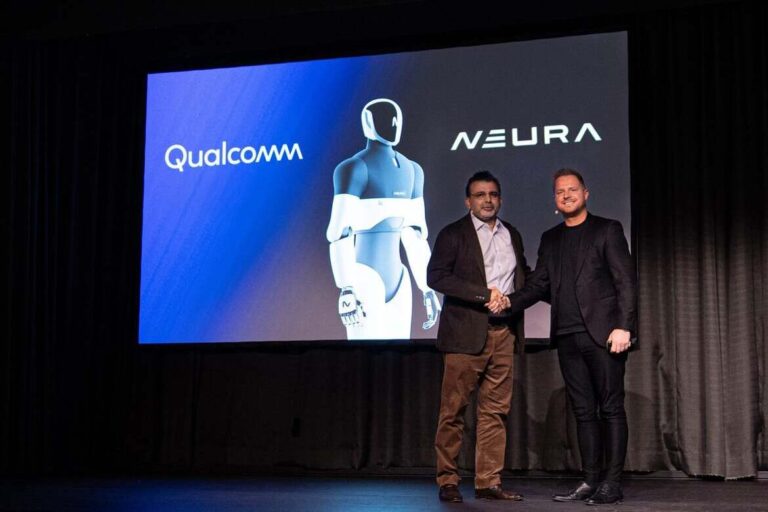
Qualcomm introduced a comprehensive robotics technology stack at CES 2026, unveiling new processors and partnerships aimed at scaling Physical AI from service robots to full-size humanoids.
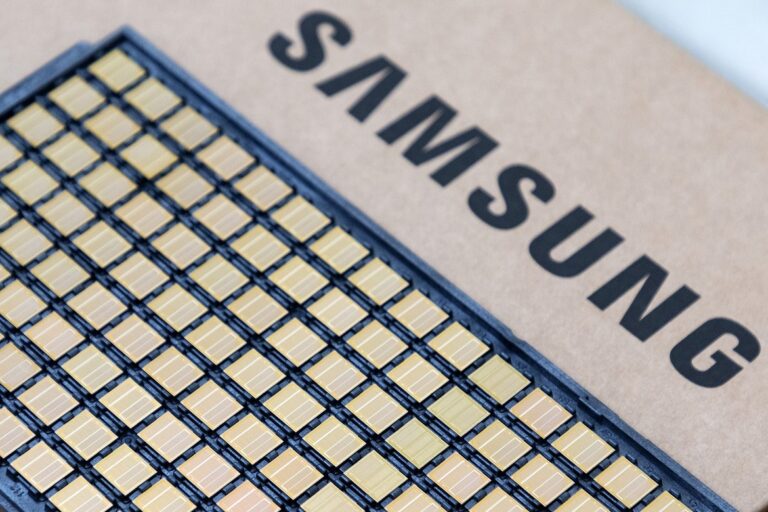
Samsung unveiled its “Companion to AI Living” vision at CES 2026, outlining how AI will connect entertainment, home appliances, health, and services into a unified ecosystem.