
OpenAI has quietly returned to hands-on robotics, building an internal lab dedicated to experimenting with physical AI systems, as first reported by Business Insider. According to people familiar with the work, the lab was launched in early 2025 and has since grown to around 100 employees, signaling a renewed commitment to understanding how artificial intelligence can operate in the physical world.
The effort marks a notable shift for OpenAI, which previously stepped back from robotics after winding down an earlier program in 2020. That earlier initiative produced a high-profile robotic hand capable of solving a Rubik’s Cube, but leadership ultimately chose to refocus on large-scale AI models. While OpenAI exited direct robot development at the time, it continued to back the sector financially, investing in companies such as Figure, 1X, and Physical Intelligence.
By late 2024, internal discussions reportedly resurfaced around whether OpenAI should once again build robotic systems in-house. Those conversations have now translated into an operational lab, although the current work remains deliberately narrow in scope.
A Data-First Approach to Robotics
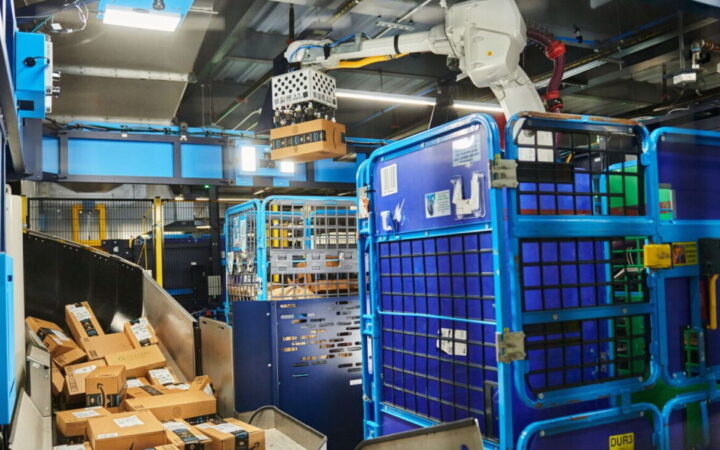
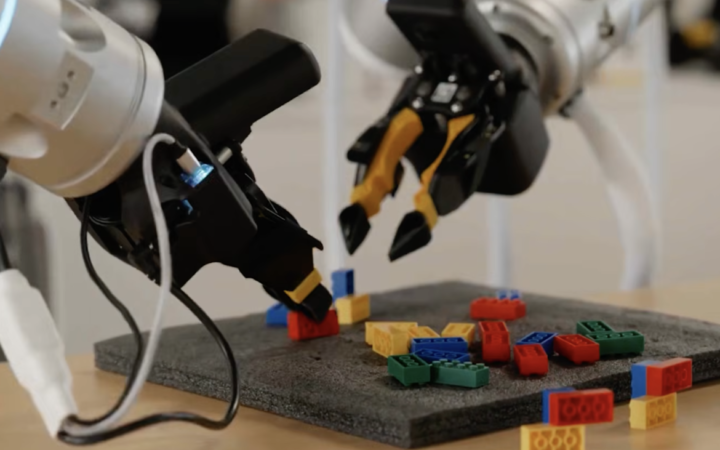
Rather than developing a full humanoid robot, OpenAI’s lab is focused on gathering high-quality training data. Inside the facility, robotic arms perform repetitive household-style tasks such as placing bread into a toaster, folding laundry, or rearranging objects. These systems run for extended periods, generating large volumes of interaction data that engineers use to refine perception, control, and decision-making models.
The emphasis reflects a broader challenge in robotics: unlike language models, robots do not benefit from vast, readily available datasets. Physical interaction data must be created deliberately, often through slow and expensive real-world experimentation. OpenAI’s approach suggests it is prioritizing the foundations of physical intelligence before committing to a specific robot form factor.
Engineers reportedly evaluate whether each training cycle leads to measurable improvements, adjusting models and task setups accordingly. The process is incremental, but it allows OpenAI to study how general-purpose AI systems learn from repeated physical interaction.
From Robots to “Brains” for Robots
It remains unclear whether OpenAI ultimately intends to build its own humanoid robot. People close to the project suggest that the company may instead aim to develop general-purpose control and reasoning models that could power robots built by partners.
That strategy would be consistent with OpenAI’s broader role in the AI ecosystem, where it supplies foundational models rather than finished products. A robotics-focused foundation model could potentially be deployed across multiple platforms, from industrial arms to mobile manipulators and humanoid systems.
The company’s existing investments in robotics startups also point toward a collaborative rather than vertically integrated approach. By supplying the intelligence layer, OpenAI could influence the future of robotics without competing directly with hardware manufacturers.
Robotics Returns to the AI Agenda
OpenAI’s renewed interest in robotics comes amid a wider industry push toward physical AI. Advances in large language models, vision systems, and reinforcement learning have revived optimism that robots can move beyond tightly scripted tasks and operate more flexibly in real environments.
Still, the company appears cautious. While reports suggest OpenAI has discussed opening a second robotics lab, no public timeline exists for commercial products or humanoid robots. For now, the focus remains on experimentation, data, and learning how intelligence transfers from screens into the physical world.
Whether OpenAI ends up building robots, powering them, or both, its quiet return to robotics underscores a growing consensus across the AI sector: true general intelligence will not be confined to software alone.
Disclaimer: RobotsBeat is an independent media brand owned and operated by NuvexMedia LLC, publishing news, research, and insights on artificial intelligence, emerging technologies, automation, and related industries. NuvexMedia LLC invests in and collaborates with companies across the AI, Robotics, technology, software, and digital innovation sectors. These relationships do not influence RobotsBeat's editorial coverage, and the publication maintains full editorial independence to provide accurate, timely, and objective information. © 2026 NuvexMedia LLC. All rights reserved. This content is for informational purposes only and should not be considered legal, tax, investment, financial, or other professional advice.