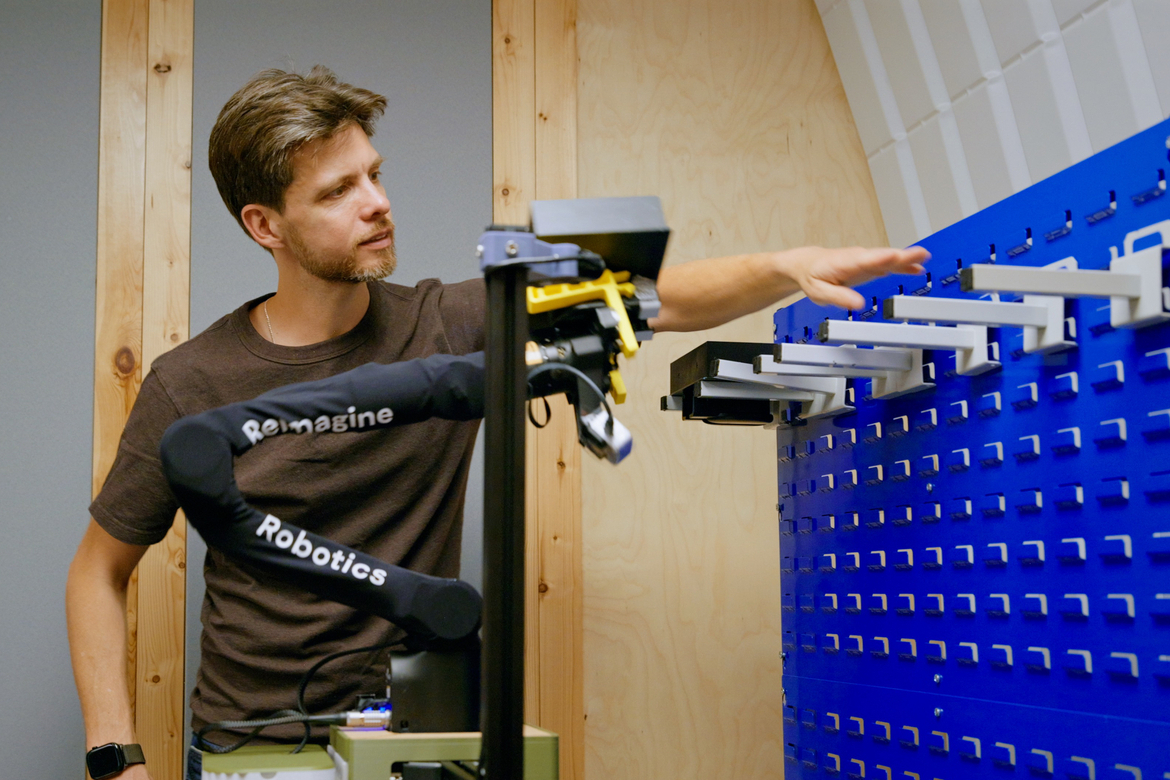

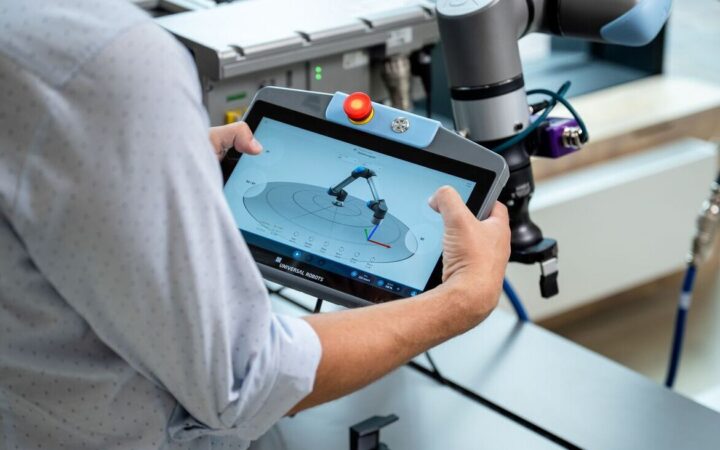
Reimagine Robotics, an AI robotics company founded by former leaders of Google DeepMind’s Applied Robotics team, has emerged from stealth with a platform that allows workers to train, correct, and adapt robots on the factory floor without specialist programmers. The company is simultaneously announcing a new fundraising round and expanding its deployment capacity following a first phase funded by Fly Ventures, firstminute capital, and angel investors.
The company was founded in April 2025 by Jonathan Scholz, who founded Google DeepMind’s Applied Robotics team in London and led it for seven years, alongside former DeepMind colleagues Oleg Sushkov, Akhil Raju, and Misha Denil. Headquarters are in London and Sydney.
The Core Technology
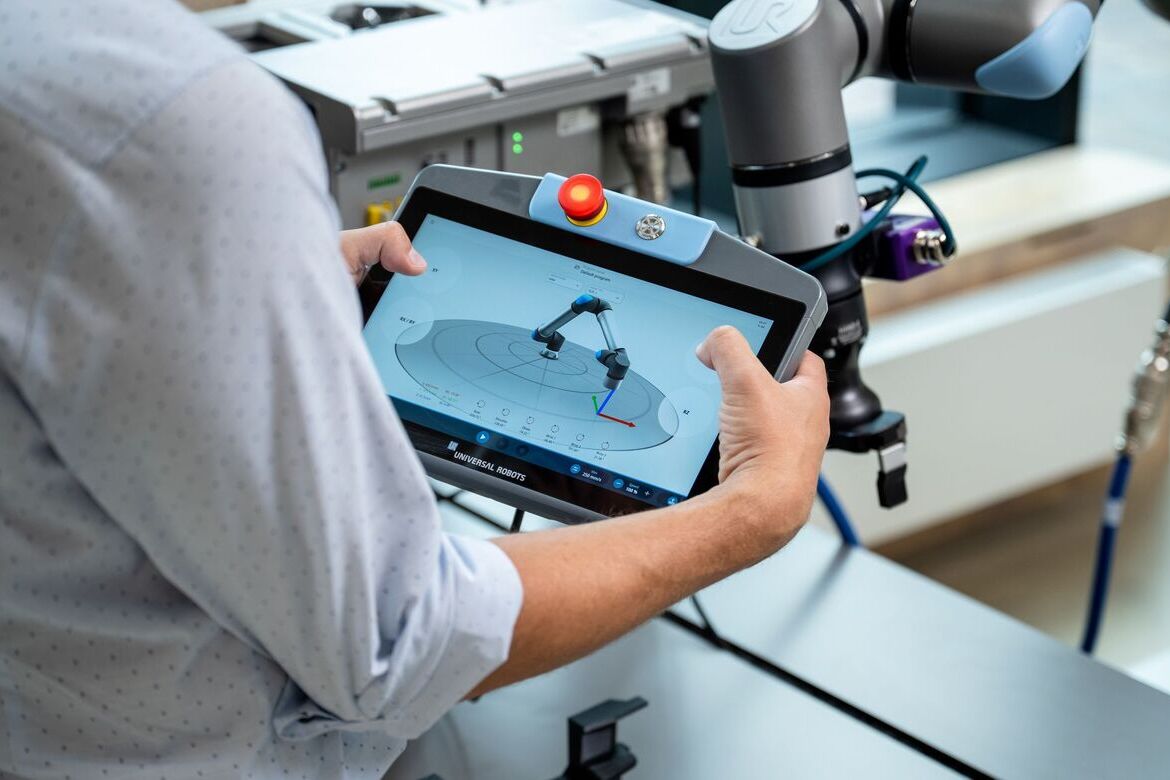
Reimagine Robotics describes its approach as “monkey-see, monkey-do”: a worker shows the robot what to do, watches it attempt the task, and corrects it directly when it makes a mistake. The robot incorporates that correction into its behavior without requiring a programmer to update code or rebuild a training pipeline. The process repeats until the robot is useful, at which point the same learned behavior can be deployed wherever it is needed.
“A useful robot should be able to learn from the person doing the work,” said Scholz. “They should be able to show it a task, put it right when it makes a mistake and move on to the next problem. A robot should arrive with the attitude of a new colleague: ‘How can I help? What do you want me to do?'”
The model is designed to keep workers central rather than marginal. The worker identifies where help is needed, provides the demonstration, and corrects the robot until it is effective. The robot turns that person’s knowledge into scalable leverage – eliminating the need for that person to repeat the same physical task thousands of times themselves.
What Is Already Deployed
The company has been operating in stealth with live customer deployments for approximately a year. At a made-to-order plastics business, Reimagine Robotics trained robots to tend 3D printers overnight – removing print beds, operating latches, and pressing controls. The customer’s own team then used the platform independently to automate additional stages including washing, curing, and drying, without Reimagine Robotics engineers present.
In a separate deployment, Reimagine Robotics worked with process engineers at an electronics facility to build a three-robot disassembly cell for recovering critical materials from used hard drives. During that project, the time required to prototype and test a new robot behavior was reduced from approximately one day to around ten minutes. That compression allowed robots to become part of the process-design conversation: teams could propose a new use for a robot and test the idea almost immediately rather than waiting for a programming cycle.
The Business Case
The ten-minute prototyping loop is the commercial argument for the platform. In conventional industrial robotics, every time a production process changes – different part geometry, new assembly step, altered workflow – specialist programmers must be brought in to update robot behavior, introducing cost and delay that makes robots economically unsuitable for high-mix, frequently changing manufacturing environments. Reimagine Robotics is targeting exactly those environments: advanced manufacturing and electronics facilities where task variation is the norm.
“This next stage is about expanding our team for more deployment muscle, putting robots into more workplaces, and showing that each deployment can make the next one faster, more reliable, and more efficient,” said Scholz.
Disclaimer: RobotsBeat is an independent media brand owned and operated by NuvexMedia LLC, publishing news, research, and insights on artificial intelligence, emerging technologies, automation, and related industries. NuvexMedia LLC invests in and collaborates with companies across the AI, Robotics, technology, software, and digital innovation sectors. These relationships do not influence RobotsBeat's editorial coverage, and the publication maintains full editorial independence to provide accurate, timely, and objective information. © 2026 NuvexMedia LLC. All rights reserved. This content is for informational purposes only and should not be considered legal, tax, investment, financial, or other professional advice.