

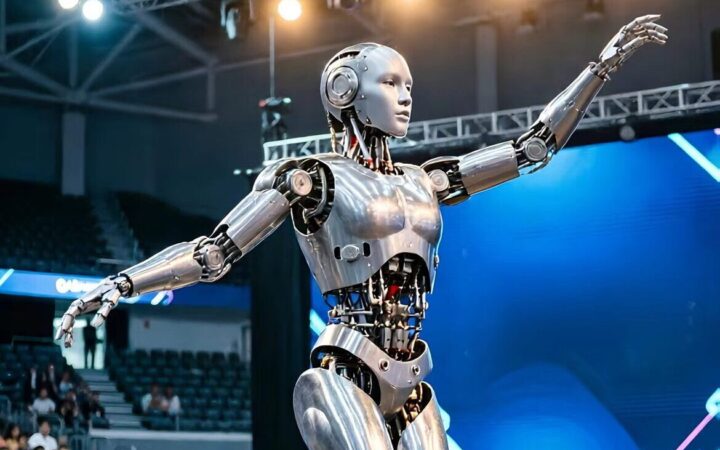
Beijing-based Beijing Innovation Center of Humanoid Robotics, also known as X-Humanoid, has unveiled Embodied Tien Kung 3.0 – a next-generation general-purpose humanoid platform designed to balance openness with practical deployment. The launch signals a shift in China’s humanoid robotics strategy from demonstration projects toward scalable industrial integration.
Built on X-Humanoid’s proprietary Wise KaiWu embodied AI platform, the full-size robot introduces upgrades across balance control, motion coordination, and autonomous decision-making. The company says Tien Kung 3.0 is the first humanoid of its size to combine high-dynamic whole-body motion control with integrated tactile interaction, positioning it for more demanding real-world tasks.
An Open Architecture Aimed At Accelerating Adoption
A central theme of the Tien Kung 3.0 release is interoperability. The humanoid robotics sector continues to face fragmentation – with closed hardware stacks and incompatible software frameworks slowing commercial rollouts. X-Humanoid is attempting to address those bottlenecks directly.
On the hardware side, the robot includes multiple expansion interfaces that allow developers to integrate different end-effectors and tools without redesigning the base system. The architecture is intended to simplify adaptation across manufacturing, commercial services, and specialized industrial scenarios.
Software openness is equally emphasized. The Wise KaiWu ecosystem provides documentation, toolchains, and a low-code environment designed to reduce development complexity. Compatibility with widely used middleware and communication protocols such as ROS2, MQTT, and TCP/IP allows research institutions and integrators to customize applications without reengineering foundational components.
X-Humanoid has also open-sourced several core technologies tied to the platform, including elements of its motion control framework, world model, embodied vision-language models, cross-ontology VLA systems, training pipelines, datasets, and simulation libraries. The strategy aims to cultivate a broader developer ecosystem capable of iterating and deploying humanoid applications more quickly.
From High-Torque Hardware To Multi-Robot Intelligence
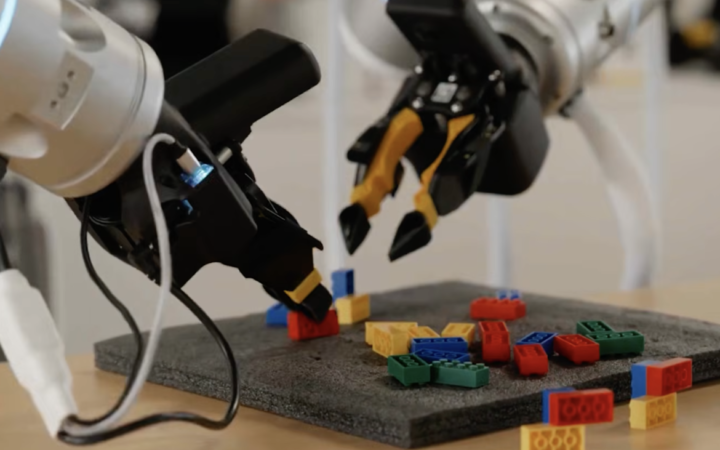
Beyond openness, the company is positioning Tien Kung 3.0 as a practical industrial machine rather than a research prototype. The robot integrates high-torque joints capable of supporting heavy-load tasks while maintaining balance on uneven terrain. Its multi-degree-of-freedom coordination allows for complex actions such as kneeling, bending, obstacle clearing, and precise manipulation in confined spaces.
Millimeter-level calibration accuracy, enabled through coordinated joint control, is intended to meet industrial precision requirements. The physical platform is paired with the Wise KaiWu AI stack, which establishes a continuous perception-decision-execution loop.
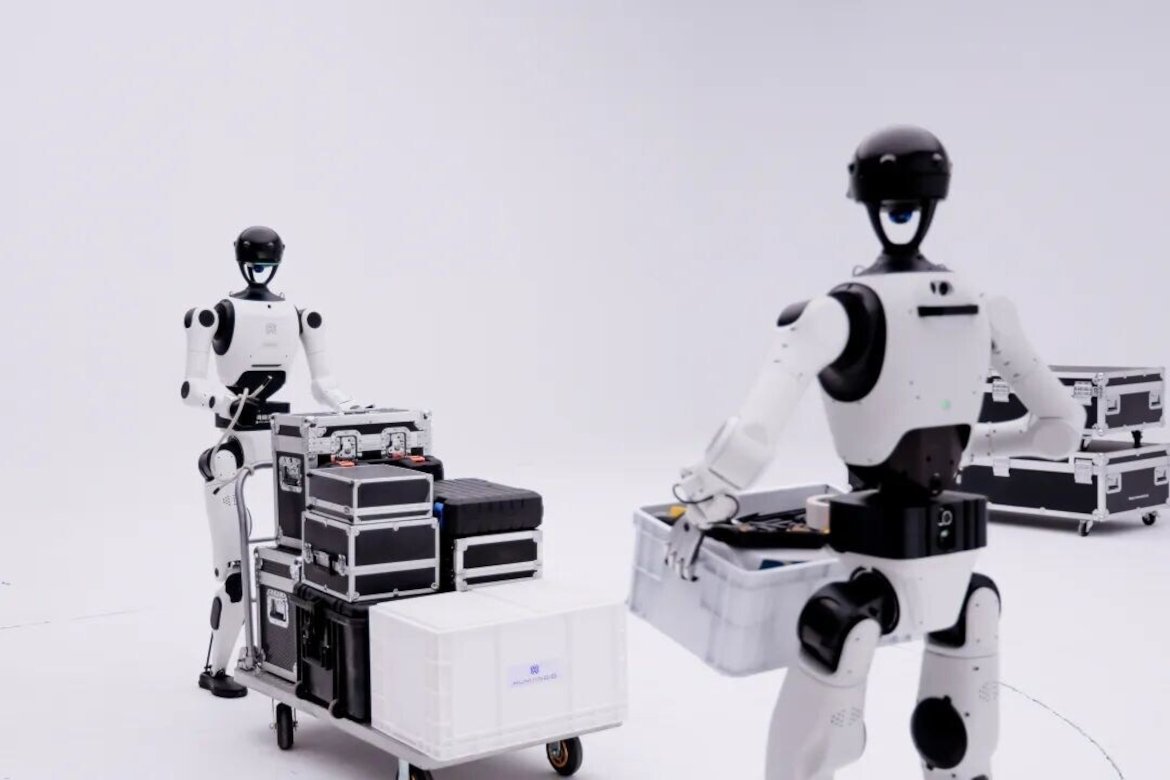
At the cognitive level, world models and vision-language systems interpret scenes and break down complex tasks into executable steps. Real-time navigation and VLA-based control manage obstacle avoidance and fine motor actions. A multi-agent framework enables centralized scheduling and collaboration among multiple robots, signaling a move from single-unit operation to coordinated fleet deployment.
Taken together, Embodied Tien Kung 3.0 reflects a broader ambition: transforming humanoid robotics from experimental showcases into interoperable, production-ready systems capable of functioning in commercial and industrial environments at scale.
Disclaimer: RobotsBeat is an independent media brand owned and operated by NuvexMedia LLC, publishing news, research, and insights on artificial intelligence, emerging technologies, automation, and related industries. NuvexMedia LLC invests in and collaborates with companies across the AI, Robotics, technology, software, and digital innovation sectors. These relationships do not influence RobotsBeat's editorial coverage, and the publication maintains full editorial independence to provide accurate, timely, and objective information. © 2026 NuvexMedia LLC. All rights reserved. This content is for informational purposes only and should not be considered legal, tax, investment, financial, or other professional advice.