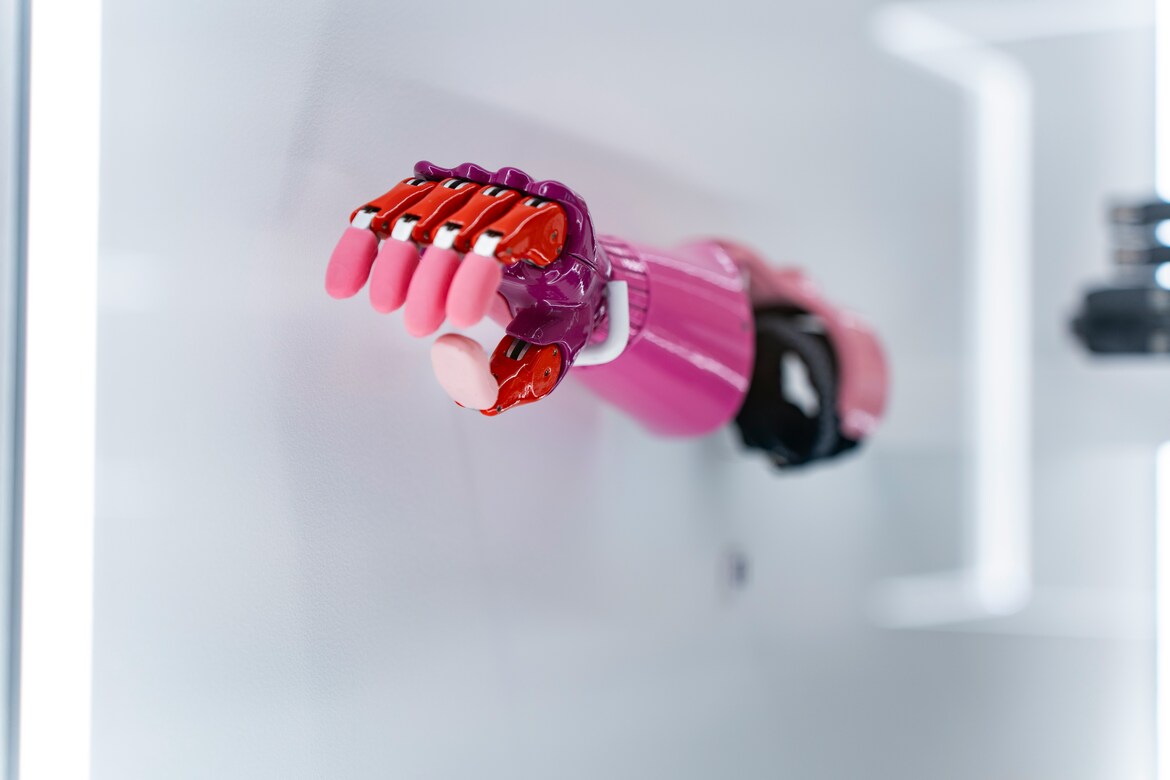

Researchers at the Chinese University of Hong Kong in Shenzhen have developed BioflexBot, a robotic gripper that achieves dexterous manipulation through a coiled spring, a constraining shell, and two compressed air inputs rather than by reproducing the anatomical complexity of a human hand. The prototype can pinch, rotate, hook, and grasp objects across a range of scales, extending and contracting 3.5 times further than a human hand while operating a bottle cap with nearly four times the rotational range of human wrist motion.
The design achieves cross-scale grasping – handling objects almost 13 times larger than those manipulated by comparable robotic systems – through the same two pneumatic inputs that control precision tasks like acupuncture needle threading and pipette liquid transfer.
The Design Philosophy
Conventional robotic hands reproduce human dexterity by recreating biological features: fingers, joints, tendons, and actuated muscles. The resulting systems can perform sophisticated movements but are mechanically complex, expensive, and difficult to control. BioflexBot takes a function-first approach, identifying the essential movements required for manipulation – bending, extending, contracting, rotating – and recreating them through structural flexibility and basic pneumatic control.
Compressed air supplied through two inputs causes the spring-based mechanism to deform according to the task, without requiring a separate actuator for each degree of freedom. “By harnessing structural and physical intelligence, we pursued a simple design capable of both cross-scale grasping and complex human-like manipulation,” said senior author Yingtian Li.
Demonstrated Capabilities
In testing, BioflexBot threaded an acupuncture needle and transferred liquid with a pipette, demonstrating the fine motor control required in healthcare and laboratory settings. It opened a bottle cap by rotating nearly four times further than a human hand can. It hooked and carried goggles and a toolbox, and grasped objects across a size range that includes items almost 13 times larger than those handled by comparable systems.
The 3.5x extension range relative to a human hand addresses a specific deployment problem: robots operating in confined spaces – aircraft maintenance bays, narrow industrial equipment, laboratory equipment racks – often need to reach locations that a human hand cannot access from the same position. BioflexBot’s extension capability is directly relevant to those scenarios without requiring the robot to reposition its entire body.
Practical Deployment Tests
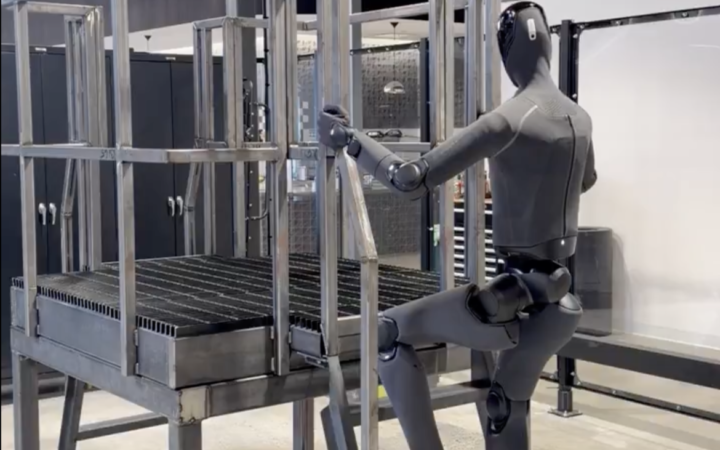
The research team demonstrated three practical applications. BioflexBot inspected aeroengine blades in a confined inspection scenario. It performed everyday activities integrated with a humanoid robot platform. It conducted a chemistry experiment involving delicate equipment and materials. These demonstrations reflect the range of environments where a low-cost, high-reach gripper with minimal control complexity would provide practical value.
The technology remains at the prototype stage. The researchers plan to develop it into a fully automated platform capable of sensing its surroundings, selecting appropriate grip strategies, and completing complex tasks without continuous human supervision. BioflexBot has not been commercialized, and independent performance validation has not yet been published.
Disclaimer: RobotsBeat is an independent media brand owned and operated by NuvexMedia LLC, publishing news, research, and insights on artificial intelligence, emerging technologies, automation, and related industries. NuvexMedia LLC invests in and collaborates with companies across the AI, Robotics, technology, software, and digital innovation sectors. These relationships do not influence RobotsBeat's editorial coverage, and the publication maintains full editorial independence to provide accurate, timely, and objective information. © 2026 NuvexMedia LLC. All rights reserved. This content is for informational purposes only and should not be considered legal, tax, investment, financial, or other professional advice.