Bleckmann, the supply chain specialist serving fashion brands such as Superdry and Gymshark, has activated a new automated storage and retrieval system at its Almelo site in the Netherlands, marking a significant step in the company’s shift toward robotics-driven warehouse operations.
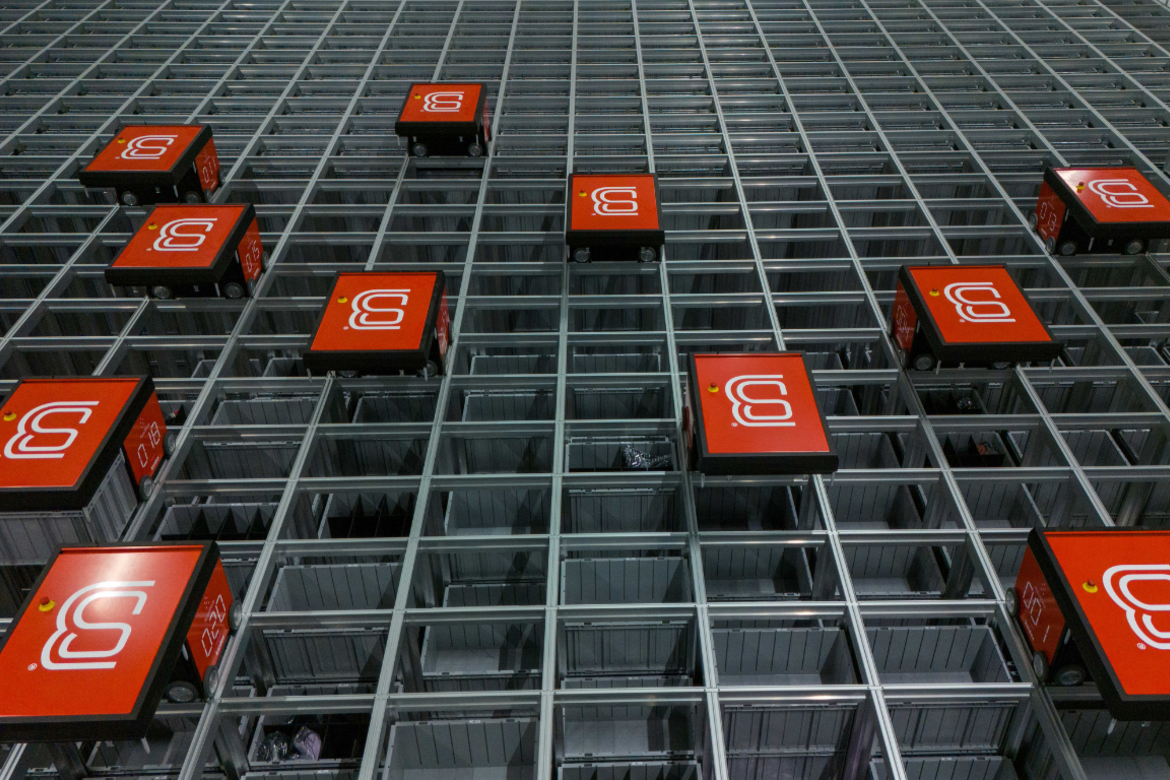
The system is built around Kardex’s AutoStore technology, a high-density grid in which radio-controlled robots retrieve storage bins and deliver them to human operators or automated packing lines. By adopting a goods-to-person model, Bleckmann is reducing the need for warehouse staff to walk between picking locations, compressing fulfillment times and lowering operational friction.
The deployment comes as European logistics providers face persistent labor shortages and mounting pressure from fashion retailers to shorten delivery windows without expanding physical warehouse footprints.
High-Density Storage and Faster Picking
AutoStore systems rely on fleets of small robots that travel across the top of a cubic storage grid, lifting bins from stacked columns and transporting them to designated workstations. According to Bleckmann, the installation in Almelo can use up to seven times less space than a conventional picking floor to store the same inventory volume.
The compact layout allows for higher SKU density and multi-client storage within a single grid, reducing the risk of stock imbalances while increasing throughput. Bleckmann executives say the system automatically prioritizes frequently ordered items, making high-demand products more accessible during peak sales periods.
Tom Wijlens, chief operating officer for Netherlands North at Bleckmann, said the system can be programmed ahead of high-volume events such as Black Friday to accelerate access to top-selling products. The goal is to extend order cut-off times for next-day delivery without increasing labor intensity.
From the moment items enter the grid to final packing, the company aims to minimize manual handling. According to Kevin Paindeville, director of warehouse solutions and innovation at Bleckmann, each product is physically handled only once before shipment, reducing both error rates and product damage.
Robotics as a Response to Labor Scarcity
The move reflects a broader structural shift in European e-commerce logistics. Warehousing has historically depended on large numbers of temporary workers during peak periods. Automation offers a way to stabilize operations amid workforce shortages while improving predictability.
Bleckmann has framed the Almelo installation as part of a longer-term automation strategy designed to address labor scarcity and create a more scalable fulfillment model. Unlike traditional rack storage, AutoStore systems can expand incrementally by adding robots or grid modules, allowing capacity increases without major facility redesign.
Energy efficiency also factors into the business case. The company notes that multiple robots operating simultaneously consume relatively low power, and because the grid system does not require constant lighting across large picking floors, overall energy usage can decline.
Competitive Pressure in Fashion Logistics
Fashion and lifestyle brands are among the most demanding e-commerce clients, managing high SKU turnover, seasonal peaks, and return-heavy order flows. Faster fulfillment and later order cut-offs can translate directly into competitive advantage for retailers.
By investing in robotics infrastructure, Bleckmann is positioning itself as a technology-enabled logistics partner rather than a conventional warehouse operator. The Almelo deployment may also serve as a blueprint for similar installations across its European network.
Automated storage systems have become increasingly common in grocery and electronics logistics, but adoption in fashion has lagged due to SKU complexity and variability. Bleckmann’s rollout signals that robotics-based goods-to-person systems are maturing to handle the demands of apparel fulfillment at scale.
As supply chains face tighter margins and higher customer expectations, warehouse robotics is shifting from efficiency enhancement to operational necessity. Bleckmann’s latest deployment illustrates how automation is becoming embedded in the infrastructure of European fashion logistics rather than layered on as an optional upgrade.