
A San Francisco robotics startup called The Bot Company is facing a $12,383.50 lawsuit from an Airbnb host who alleges employees of the firm secretly tested a household robot in his rental property over an 11-night stay in April, leaving it extensively damaged. The host, Sean Donovan, discovered the booking’s true purpose only after the guests had checked out and he began comparing notes with other affected hosts in the area.
The Bot Company has not publicly responded to the allegations.
What the Host Discovered
Donovan accepted the booking for eight guests across eleven nights before noticing something unusual when he went to take out the trash and found black wires and a person sitting next to what appeared to be a robot. Ring camera footage showed large black cases being regularly carried in and out of the property throughout the stay. After checkout, Donovan found his property extensively damaged: stained furniture, a cracked dishwasher, broken bathroom tiles, a missing shoe rack, and crockery scattered throughout rooms other than the kitchen.
After identifying negative reviews from other hosts describing similar patterns of damage and large case deliveries, Donovan concluded that the properties had been used as robot testing environments without disclosure to hosts. He filed the lawsuit against The Bot Company directly rather than the individual guests, based on his belief that they were company employees.
“If they had come straight up, ‘Hey, we would like to rent your house for testing of our robot,’ then we could have come to an agreement,” Donovan told the San Francisco Standard. “But it’s the lying and the misrepresentation that makes me feel violated.”
The Bot Company’s Profile
The Bot Company was co-founded in 2024 by Kyle Vogt, the former CEO of Cruise – the General Motors robotaxi subsidiary whose California license was suspended following an autonomous vehicle accident in 2023, after which Vogt resigned. Vogt also co-founded Justin.tv, which later became Twitch. The company has raised $150 million in a seed round at a $2 billion valuation and does not yet have a public product.
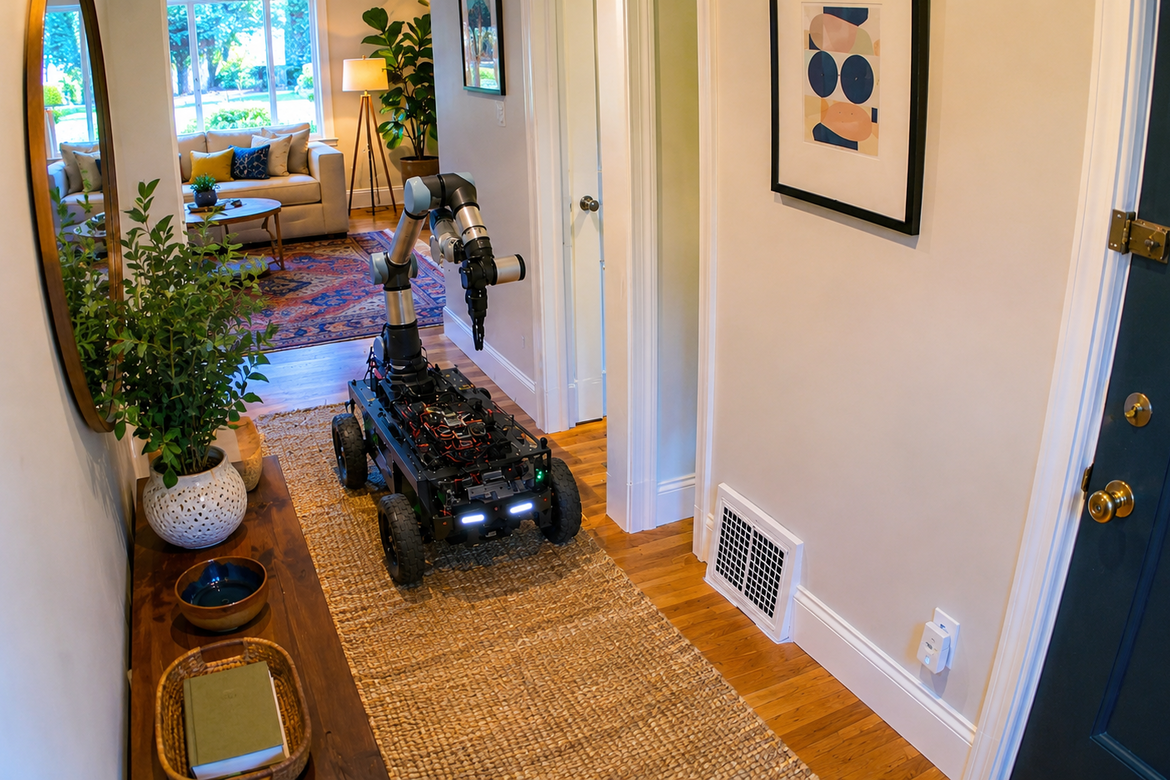
According to startup tracking platform Sacra, The Bot Company has a prototype described as resembling a coffee table on wheels, equipped with an articulated arm and dual grippers capable of picking up and organizing household items autonomously. Images of the prototype captured on Donovan’s Ring camera have been published by the San Francisco Standard. The company’s stated mission is to build a robot capable of helping with household tasks – a goal that explains the choice of residential rental properties as testing environments, even if the method of accessing them is now legally contested.
A Pattern Across Multiple Properties
At least 12 other Airbnb hosts have left negative reviews for guests from the same booking group that stayed at Donovan’s property. One incident involved a historic Victorian-era home where the fridge exterior was cracked, walls had black streaks, there was broken glass in the trash, and paint on doors was chipped. Guests left a whiteboard message reading “Sorry 🙁 Did my best!” – initially interpreted by the host as evidence of a party before neighbors confirmed seeing large black cases moved in and out of the property. Airbnb rejected that host’s damage claims.
The legal exposure from using short-term rentals as undisclosed commercial testing sites potentially encompasses fraudulent inducement, zoning violations, and civil fraud – questions the lawsuit will likely clarify as it proceeds.
Disclaimer: RobotsBeat is an independent media brand owned and operated by NuvexMedia LLC, publishing news, research, and insights on artificial intelligence, emerging technologies, automation, and related industries. NuvexMedia LLC invests in and collaborates with companies across the AI, Robotics, technology, software, and digital innovation sectors. These relationships do not influence RobotsBeat's editorial coverage, and the publication maintains full editorial independence to provide accurate, timely, and objective information. © 2026 NuvexMedia LLC. All rights reserved. This content is for informational purposes only and should not be considered legal, tax, investment, financial, or other professional advice.