Cognibotics Wins $1.7M Order for Robot Calibration Technology

Cognibotics has secured a $1.7 million order for its CogniCal robot calibration system from a major industrial robot manufacturer. The deal highlights growing demand for precision calibration in large-scale automation.

By Rachel Whitman Published:

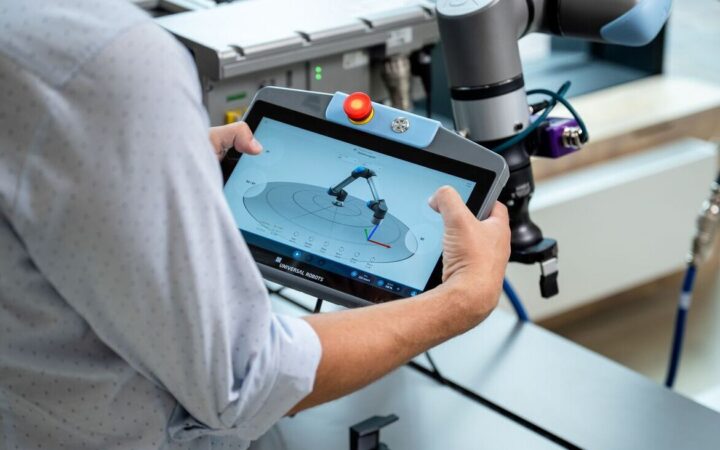
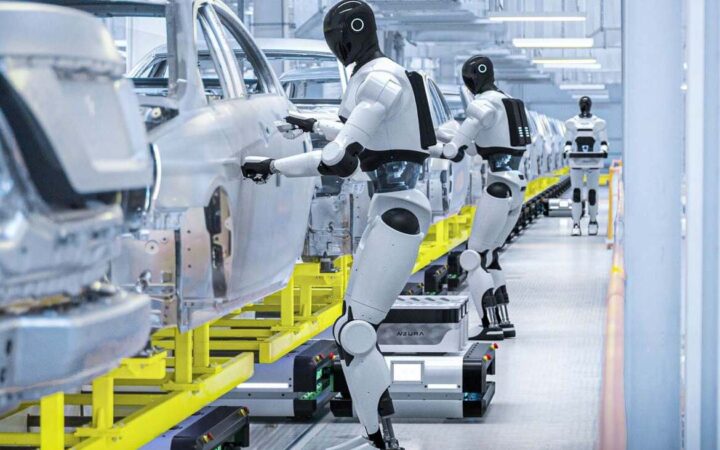
Cognibotics has received an order worth approximately $1.7 million for its CogniCal robot calibration technology from a major global industrial robot manufacturer. The order expands the customer’s use of CogniCal within robot production processes and reflects increasing emphasis on precision calibration as automation systems scale.

CogniCal improves robot accuracy by compensating for geometric deviations, structural elasticity, and payload effects that can vary between individual machines. By aligning robot motion more precisely, the system reduces performance variance across fleets and shortens commissioning time for integrators and end users deploying automation systems.

The demand for calibration technologies is rising as robotics systems incorporate perception and AI-driven workflows. Inconsistent robot geometry can introduce noise into training data and limit the transferability of learned behaviors. Calibration layers such as CogniCal are therefore emerging as core infrastructure for scalable industrial robotics and AI-enabled automation.

News, Robots & Robotics

Faraday Future Reports 68 Cumulative Embodied AI Robot Shipments Toward 200-Unit June Target

Faraday Future has reported 46 new robot sales and shipments in April, bringing cumulative deliveries to 68 units against a target of 200 by the end of June. The company is also expanding its embodied AI robotics business through U.S. university partnerships and K-12 education programs.

By Daniel Krauss Published:

Faraday Future Intelligent Electric has reported 46 new robotics sales and shipments in April through its embodied AI business unit, bringing cumulative deliveries to 68 units. The figures were disclosed in a weekly investor update from founder and global co-CEO YT Jia. The company is targeting 200 cumulative shipments by the end of June and says each delivered model is producing positive gross margin. Faraday Future positions itself as the first U.S. company to deliver both humanoid and bionic robots, with the rollout structured around what it calls a “Device-Data-Brain” flywheel.

April deliveries were directed to a mix of B2C buyers and B2B education customers, including Boston International Business School and Triple I. On the platform side, the company has launched a developer incentive program and what it describes as the first youth developer program for AI-native users. It is also building out an EAI Data Factory framework intended to support model training using operational data collected from deployed units. Detailed technical specifications for the robots, including form factor breakdown between humanoid and bionic models, were not disclosed in the update.

The education channel is emerging as a primary near-term distribution route. Faraday Future and Boston International Business School officially launched the BIBS–FF AI and Robotics Institute in Omaha, timed to coincide with the Berkshire Hathaway annual shareholders meeting. The company says it is in discussions with UCLA on potential collaboration and recently ran a K–12 immersive robotics class with BrainBuilders STEM Education that drew more than 30 students and parents. Next steps include strategic partnerships with K–12 schools and universities, robot procurement programs, and an EAI education summer camp.

The shipment numbers remain modest by the standards of established robotics manufacturers, and Faraday Future’s broader financial position has historically been a source of investor scrutiny. However, the disclosed figures are notable as concrete deployment data from a publicly listed U.S. company attempting to bridge electric vehicles and humanoid robotics under a single platform strategy. Whether the 200-unit June target is reached and whether the education-led distribution model produces durable demand will be the key indicators of execution in the coming quarter.

Business & Markets, News, Robots & Robotics

Schaeffler and VinDynamics Sign Partnership to Develop Humanoid Robot Actuator Systems

German motion technology company Schaeffler and Vingroup-backed VinDynamics have signed a memorandum of understanding to jointly develop actuator systems for humanoid robots. The deal marks Schaeffler’s first humanoid robotics partnership in Southeast Asia.

By Rachel Whitman Published:

Schaeffler and VinDynamics have signed a memorandum of understanding to establish a strategic partnership focused on joint research and technology development for humanoid robots. Under the agreement, signed in Hanoi, Schaeffler will supply high-precision actuator systems and related motion technology components to VinDynamics, a humanoid robotics company backed by Vingroup. The deal marks Schaeffler’s first cooperation with a humanoid robotics company in Southeast Asia, expanding its existing portfolio of partnerships with humanoid developers globally.

The collaboration covers research, development, and optimization of actuator systems and related motion technology components, which provide the precise and reliable movement that humanoid platforms require. VinDynamics will conduct technical assessments and optimize its control software for compatibility with Schaeffler’s hardware. The partnership also extends to product simulation and validation, with VinDynamics sharing operational data from deployed actuators back to Schaeffler. That data feedback loop is intended to support iterative design improvements and to enable services such as condition monitoring and predictive maintenance.

The deal reflects the growing structural importance of component suppliers in the humanoid robotics value chain. Actuators are among the most cost-sensitive and reliability-critical parts of humanoid platforms, and major industrial component manufacturers including Schaeffler, Bosch, and Harmonic Drive have been positioning themselves to supply emerging humanoid programs. By embedding directly with a developer at an early stage, Schaeffler can shape actuator specifications around real deployment data rather than relying on generic industrial benchmarks.

For Vietnam, the partnership signals an effort to establish a domestic humanoid robotics capability through Vingroup’s broader industrial portfolio, which already includes electric vehicles and consumer electronics. While most humanoid development today is concentrated in China, the United States, and parts of Europe, the VinDynamics-Schaeffler agreement extends the geographic spread of the sector and indicates that Southeast Asia is beginning to attract serious component-level engagement from established global suppliers.

Business & Markets, News, Robots & Robotics

GS25 Becomes First Convenience Store Chain to Sell Humanoid Robots in South Korea

South Korean convenience store chain GS25 has begun selling humanoid robots, quadrupeds, and AI social robots as part of its Family Month curated lineup. The retailer is offering 11 robot products, marking the first time humanoid robots are being sold through the convenience store channel.

By Rachel Whitman Published:

South Korean convenience store chain GS25, operated by GS Retail, has begun selling humanoid robots through its retail channel as part of a curated lineup of more than 130 Family Month items. The retailer is offering 11 robot products, including the AI social robot Liku, a G1 humanoid robot, an Air quadruped walking robot, and Ailico robot keyrings. According to GS Retail, this marks the first time humanoid robots are being sold through the convenience store format in the country.

Liku, positioned as the flagship product, is a Korean-developed AI social robot equipped with conversation and emotion-expression capabilities, with target use cases in children’s education and elderly care. The broader robot lineup ranges from full-sized humanoid and quadruped platforms to smaller form factors such as keyring devices designed for portable, low-stakes interaction. The robots are being offered alongside non-technology items including pure gold and silver bars, Korean beef, seafood, and fruits as part of the chain’s Family Month promotion.

The move signals a shift in how consumer-facing robotics products are reaching the mass market in South Korea. Rather than being confined to specialty retailers, electronics chains, or direct-from-manufacturer sales, robots are now being positioned alongside everyday consumer goods. This approach treats robots as gift or lifestyle items, lowering the perceived barrier for first-time buyers and broadening the distribution surface for early-stage humanoid and social robot products.

Whether the convenience store channel becomes a meaningful sales pathway for humanoid robots will depend on price points, after-sales support, and consumer interest beyond the initial promotional window. Still, the listing reflects the maturation of South Korea’s domestic robotics ecosystem and the willingness of major retailers to test embodied AI products in formats traditionally reserved for fast-moving consumer goods.

News, Robots & Robotics

Toyota Woven City Begins Real-World Testing of Robotics and Autonomous Mobility Near Mount Fuji

Toyota’s Woven City in Japan has moved from concept to operational testbed, with around 100 early residents already living alongside delivery robots, autonomous vehicles, and AI systems. The site near Mount Fuji is positioned as a long-term proving ground for mobility and human-machine interaction.

By Daniel Krauss Published:

Toyota’s Woven City, an experimental urban development near Mount Fuji, has transitioned from a concept project into an active testbed for robotics, artificial intelligence, and autonomous mobility. The first phase covers roughly 47,000 square meters and is set to expand to about 294,000 square meters at full build-out. Around 100 early residents, referred to as “weavers”, are already living on site, with long-term plans for up to 2,000 inhabitants. The project carries an estimated long-term cost of around $10 billion.

The development is structured as a functioning urban environment rather than a demonstration zone. Underground passageways handle logistics and mobility systems, while above-ground spaces host trials involving home robots, autonomous transport prototypes, and AI safety infrastructure. Concepts such as flying taxis are being explored in simulation. Residents participate directly in evaluation cycles, providing feedback on usability and human-machine interaction that feeds back into product development.

The closed-but-populated model is intended to address a regulatory gap that limits large-scale autonomous vehicle and robotics testing on standard public roads. By controlling the operating environment while maintaining real pedestrian and resident behavior, Toyota and its partners aim to collect data on mobility patterns, safety incidents, and everyday usage that would be difficult to gather on conventional streets. Developers have indicated this evidence is intended to inform future regulatory frameworks for autonomous transport.

Woven City reflects a broader industry shift toward integrated, real-world environments for validating embodied AI and autonomous systems, moving beyond isolated lab tests and individual pilot deployments. Similar approaches are being explored elsewhere, but the scale and corporate backing of Toyota’s project make it one of the most substantial efforts to combine robotics, mobility, and urban infrastructure in a single operating site. Its long-term influence will depend on whether the data and design lessons generated translate into deployable systems beyond the controlled perimeter.

Artificial Intelligence (AI), News, Robots & Robotics, Science & Tech

SquareMind Raises $18M to Scale Swan Robotic Dermatology Imaging Platform

French medical robotics company SquareMind has raised $18 million to commercialize Swan, a robotic platform that performs automated full-body dermoscopic skin imaging. The round was led by Sonder Capital, the venture fund co-founded by Intuitive Surgical’s Fred Moll.

By Laura Bennett | Edited by Kseniia Klichova Published: Updated:

Medical robotics company SquareMind has raised $18 million to commercialize Swan, a robotic platform that performs automated full-body dermoscopic skin imaging for dermatology practices. The round was led by Sonder Capital, the venture fund co-founded by Intuitive Surgical founder Fred Moll, with participation from the Deeptech 2030 Fund managed by Bpifrance on behalf of the French government, Adamed Technology, Calm/Storm Ventures, Teampact Ventures, and several entrepreneurs. The capital will fund commercial, engineering, and customer support hiring ahead of Swan’s launch in the United States and Europe.

Swan acts as an augmented dermatoscope, capturing standardized images of the entire skin surface at a resolution typically reserved for close-up examination of individual moles. SquareMind says it is the first robot to perform this kind of automated full-body dermoscopic capture. During a session, the patient stands in a private exam room while a robotic arm moves around them, guided by visual and audio prompts, with image acquisition completed in minutes and without physical contact. The platform is paired with AI-based review software that helps track new or changing lesions over time, while clinical judgment remains with the physician.

The company is targeting a structural bottleneck in dermatology. Skin screening is the highest-volume procedure in the specialty, and waitlists in many markets now stretch into months as an aging population drives demand. SquareMind notes that roughly 80 percent of melanomas appear as new lesions rather than changes to existing ones, making consistent full-body documentation important for early detection but difficult to achieve under typical appointment time constraints.

The investment reflects continued capital flow into clinical robotics platforms designed to automate high-volume, documentation-heavy procedures rather than complex surgical interventions. Whether Swan can establish itself as a standard tool will depend on integration with clinical workflows, reimbursement pathways, and the ability of its imaging and AI-assisted review pipeline to produce outcomes that justify the equipment footprint in dermatology practices.

Business & Markets, News, Robots & Robotics
Exit mobile version