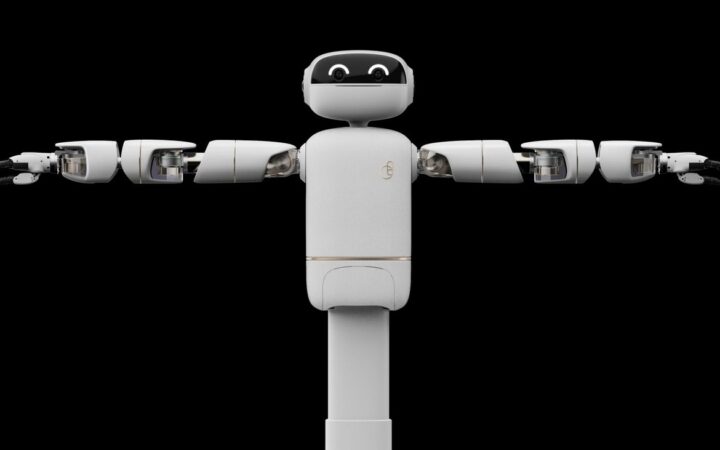
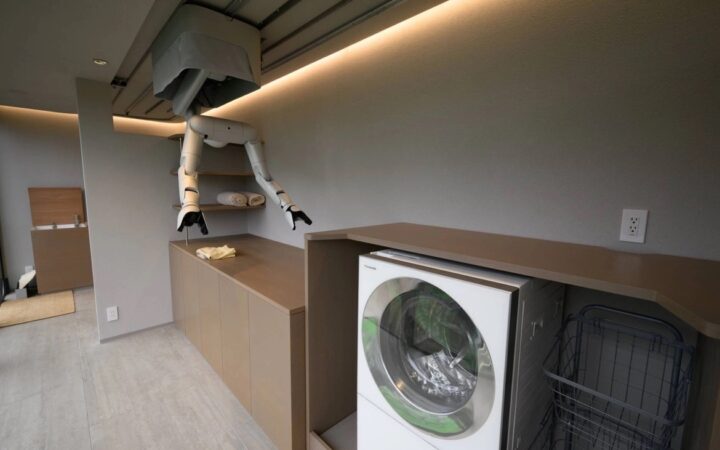
Guo Renjie, CEO of Ant-backed Chinese humanoid robotics startup JoyIn, has published a public letter to OpenAI accusing the U.S. company of “distilling” elements of JoyIn’s robotics model framework and design. In the Chinese-language statement issued Thursday, Guo said his Suzhou-based startup had publicly presented its “extraterrestrial visitor” AI model framework in Silicon Valley several weeks before OpenAI Chief Scientist published a piece titled “An Alien Mind” on September 6. He pointed to similarities in core technological concepts such as recursive self-improvement and the use of AI to optimize computing power, as well as similarities between the outer space-inspired design of OpenAI’s GPT-6 Astra web page and JoyIn’s Aether model site, which Guo said was released two months earlier.
CNBC reported that it was unable to independently verify Guo’s claims, noting that some of the concepts he referenced are established parts of broader AI research even where different companies implement them differently. OpenAI did not immediately respond to a request for comment. Guo added that JoyIn has begun the process of filing a lawsuit. The public accusation reverses the more familiar direction of distillation disputes over the past year, in which U.S. companies including Anthropic have repeatedly flagged unauthorized distillation of their models by Chinese firms. Earlier this week, a U.S. cybersecurity agency identified six Chinese companies, including DeepSeek and Alibaba, that it said distilled models from Anthropic, Google, and OpenAI.
Alongside the letter, JoyIn announced the release of its Aether robotics model. According to Zhu Mingxuan, who led the model’s development, Aether uses a perceptive rather than text-based approach to robotic control and claims a 90 percent success rate on first-attempt task completion. She said the approach reduced training time by two-thirds and that JoyIn plans to open-source portions of the model, including elements related to touch, while retaining sections related to energy use. Zhu previously worked at U.S. humanoid company Figure on models designed to help robots mimic human actions before leaving last year, part of a broader pattern of engineer movement between U.S. and Chinese humanoid programs.
The exchange highlights how competitive tensions between U.S. and Chinese AI and robotics companies are intensifying at the model layer, not only in hardware and manufacturing. Y Combinator CEO Garry Tan recently told CNBC he would “do nothing” about distillation, noting that U.S. companies have themselves trained models on copyrighted data. The dispute also underscores the difficulty of establishing clear intellectual property boundaries in an environment where research concepts, model designs, and marketing aesthetics can all circulate rapidly across borders. Whether JoyIn’s legal action results in a meaningful adjudication or remains a public positioning exercise, the case adds to the growing catalog of cross-border IP disputes now surfacing as humanoid robotics moves from research to commercial deployment.
Disclaimer: RobotsBeat is an independent media brand owned and operated by NuvexMedia LLC, publishing news, research, and insights on artificial intelligence, emerging technologies, automation, and related industries. NuvexMedia LLC invests in and collaborates with companies across the AI, Robotics, technology, software, and digital innovation sectors. These relationships do not influence RobotsBeat's editorial coverage, and the publication maintains full editorial independence to provide accurate, timely, and objective information. © 2026 NuvexMedia LLC. All rights reserved. This content is for informational purposes only and should not be considered legal, tax, investment, financial, or other professional advice.