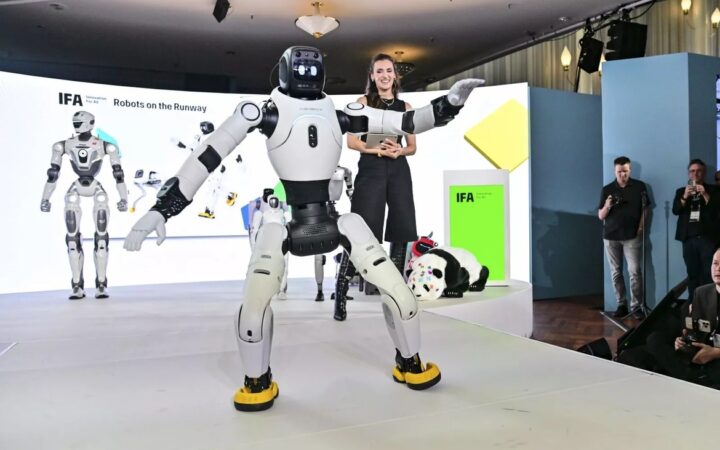
Southwest Airlines has introduced a policy banning humanoid and animal-like robots from its flights, whether carried in the cabin or as checked baggage, regardless of size, purpose, or whether a seat has been purchased for the device. The Dallas-based carrier defines human-like robots as devices designed to resemble or imitate human appearance, movement, or behavior, with animal-like robots treated under the same rule. Other robots, including toys, remain permitted if they fit inside a carry-on bag and comply with existing battery restrictions.
The policy follows a widely shared incident involving Stewie, a 3.5-foot humanoid robot owned by Aaron Mehdizadeh, founder of The Robot Studio in North Dallas. Mehdizadeh purchased the robot a passenger seat on a Southwest flight from Las Vegas to Dallas Love Field. Before boarding, the robot was fitted with a smaller battery to clear airport security, then walked through the terminal and onto the aircraft. A separate Southwest flight from Oakland to San Diego was delayed by nearly an hour after another humanoid robot, Bebop, was brought onboard and crew raised concerns about seating and battery size.
Southwest has framed the restriction as a safety measure, citing risks associated with the lithium-ion batteries commonly used in advanced robotic devices. Lithium-ion thermal events have become a recurring concern across commercial aviation, with regulators tightening rules on laptops, power banks, scooters, and e-bikes. The robot incidents also created practical cabin issues, as crew determined that a carry-on classified device could not occupy a passenger seat in the same manner as a person. Robot owners have disputed the safety reasoning, with Mehdizadeh arguing that Stewie’s battery was comparable to a laptop’s.
The decision points to a broader operational challenge as consumer-facing humanoid and quadruped robots become more visible in public settings. Existing baggage and battery frameworks were designed around standard assumptions about passengers, luggage, and cargo, and humanoid form factors fall awkwardly across those categories. Southwest’s blanket prohibition gives crews a clear rule to apply, but other carriers will likely face similar questions as humanoid robots move into retail, events, and consumer ownership. How aviation regulators and airlines define the status of these devices, whether as equipment, cargo, or something requiring a new category, will shape how easily robotics companies can transport their hardware across markets.
Disclaimer: RobotsBeat is an independent media brand owned and operated by NuvexMedia LLC, publishing news, research, and insights on artificial intelligence, emerging technologies, automation, and related industries. NuvexMedia LLC invests in and collaborates with companies across the AI, Robotics, technology, software, and digital innovation sectors. These relationships do not influence RobotsBeat's editorial coverage, and the publication maintains full editorial independence to provide accurate, timely, and objective information. © 2026 NuvexMedia LLC. All rights reserved. This content is for informational purposes only and should not be considered legal, tax, investment, financial, or other professional advice.