China’s leading humanoid robot companies will gather in Seoul next month to present their latest technologies and global expansion strategies, signaling intensifying competition in the emerging embodied AI sector. The companies will participate in Smart Factory & Automation World (AW) 2026, one of Asia’s largest industrial automation events.
The conference will mark the first time several of China’s major humanoid robot developers appear together at a robotics exhibition in South Korea. The event reflects China’s growing influence in robotics manufacturing and highlights the country’s ambition to expand its humanoid robot industry internationally.
China’s Robotics Leaders Expand Global Presence
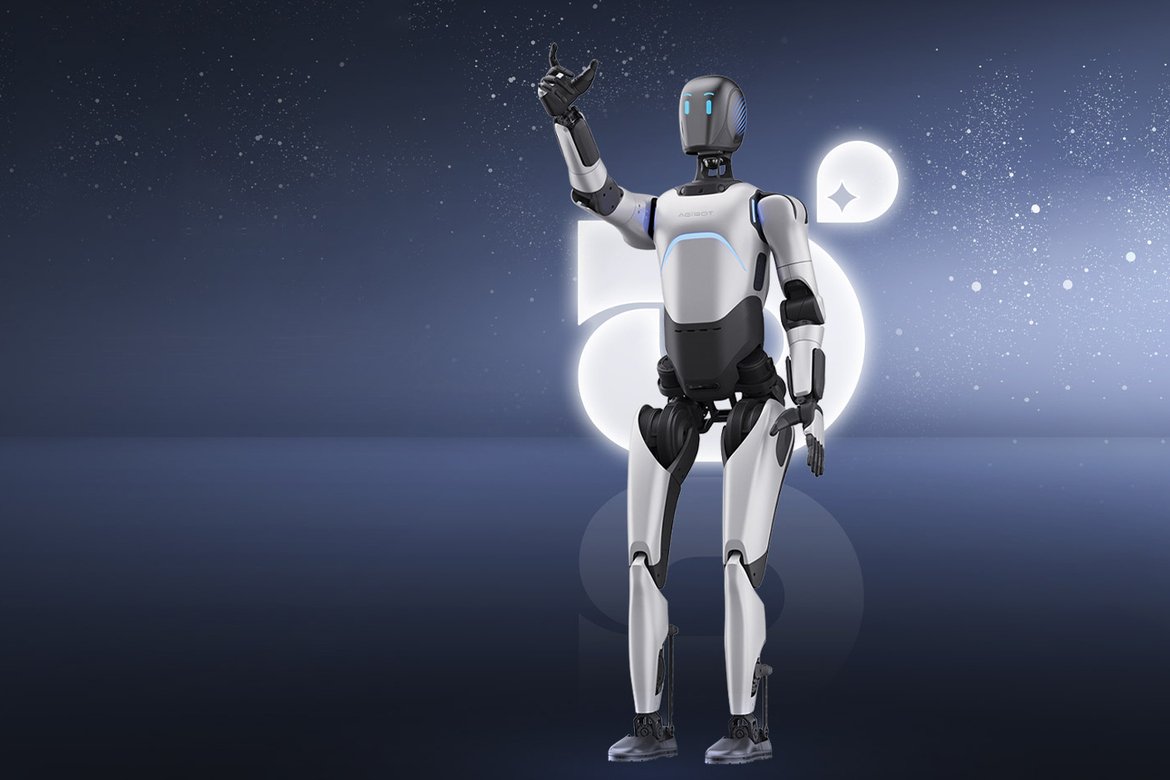
The participating companies include Unitree Robotics, Huawei, Fourier, and Leju Robotics, along with AGIBOT, a major player in humanoid robotics shipments. Executives and technical leaders from these firms will present commercialization roadmaps, technical progress, and global expansion plans.
The companies will also showcase live demonstrations of their humanoid robot platforms. These include AGIBOT’s X2 and G2 humanoids, Unitree’s G1 robot, and Leju’s Kuavo humanoid systems.
These demonstrations provide insight into how humanoid robots are evolving beyond research prototypes toward commercial deployment. The robots incorporate advanced actuators, perception systems, and AI-based control software designed for industrial and service applications.
Industry observers view such events as critical for establishing partnerships, attracting customers, and accelerating adoption.
Humanoid Robots Become Strategic Industrial Priority
The gathering highlights how humanoid robots are becoming a strategic priority for manufacturing and automation industries. Robotics companies are increasingly focusing on humanoid form factors, which allow robots to operate in environments designed for human workers.
Humanoid robots can perform tasks in factories, warehouses, and public environments without requiring specialized infrastructure. This flexibility makes them attractive for automation across a wide range of industries.
China has emerged as a major hub for humanoid robotics development, supported by strong manufacturing capabilities and growing investment in embodied AI.
Companies are expanding pilot deployments and working toward large-scale commercialization. Demonstrations at international events help validate technical progress and build confidence among potential customers.
Global Competition Intensifies in Physical AI
AW 2026 is expected to bring together hundreds of companies and thousands of industry participants, reflecting growing interest in robotics and automation technologies.
The participation of China’s humanoid robot developers underscores the global nature of competition in robotics. Companies from multiple countries are investing heavily in AI-driven automation, viewing robotics as a key component of future industrial productivity.
South Korea is also emerging as an important robotics hub, with companies including Hyundai Motor Group expanding robotics development and manufacturing capabilities.
The presence of academic researchers and industry leaders at the conference highlights the convergence of research and commercialization in humanoid robotics.
A Defining Moment for the Humanoid Robot Industry
The collective appearance of major humanoid robot companies reflects the rapid acceleration of embodied AI development.
As robots become more capable and economically viable, companies are racing to establish leadership in a market expected to expand significantly over the coming decade.
Events like AW 2026 serve as milestones in this transition, providing a platform for companies to showcase progress and shape the future direction of the industry.
The humanoid robot race is no longer confined to research labs. It is becoming a global industrial competition, with companies and countries investing heavily to define the next generation of automation.
China’s strong presence at AW 2026 highlights its growing role in shaping the future of robotics and physical AI.