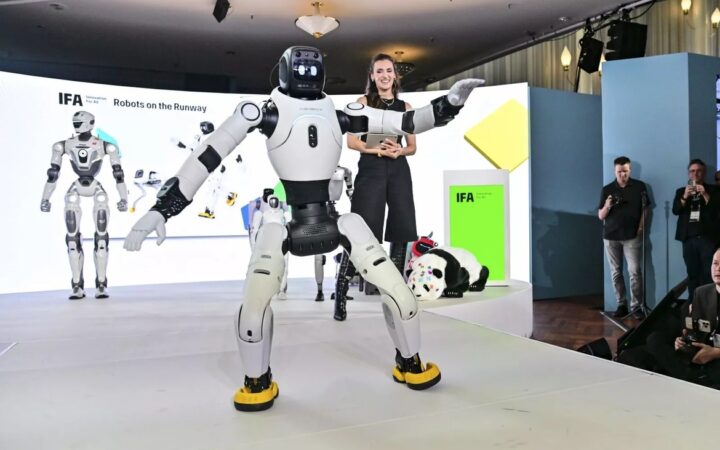


China’s annual Spring Festival Gala has long been a cultural event, but it is increasingly becoming a technology signal. This year’s broadcast, watched by hundreds of millions of viewers, is showcasing humanoid robots from leading domestic startups, turning prime-time television into a stage for the country’s robotics ambitions.
The event, aired by state broadcaster CCTV and often compared to the Super Bowl in reach and cultural influence, is featuring machines developed by companies including Unitree Robotics, AgiBot, Galbot, Noetix, and MagicLab. The visibility reflects how humanoid robotics has moved from experimental development into a strategic national priority aligned with China’s manufacturing and artificial intelligence agenda.
From Demonstration to Strategic Signaling
The gala has historically served as a platform to highlight China’s technological progress, from space missions to drones. Humanoid robots now occupy that role, reflecting their importance within Beijing’s industrial roadmap.
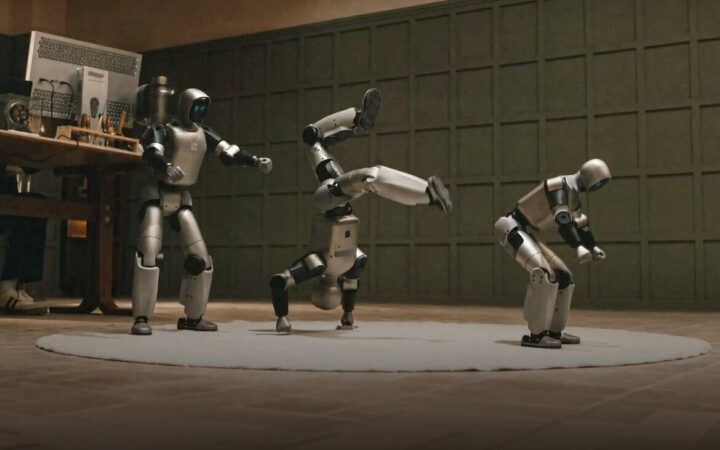
Last year’s broadcast featured coordinated performances by multiple full-size humanoid robots, demonstrating synchronized movement alongside human dancers. This year’s event builds on that precedent, with analysts watching closely for advances in coordination, manipulation, and fault tolerance.
Public demonstrations at this scale serve multiple purposes. They validate engineering progress while signaling political and economic priorities. According to industry observers, companies featured in the gala often gain increased investor attention, commercial partnerships, and government support following their appearance.
The prominence of humanoid robotics also reflects high-level political interest. Chinese leadership has engaged directly with robotics startup founders in recent months, placing the sector alongside electric vehicles and semiconductors as strategic technologies.
China’s Manufacturing Strategy Meets Embodied AI
Behind the spectacle lies a broader industrial objective. China is positioning robotics and embodied AI as foundational technologies to sustain productivity growth, particularly as demographic trends reduce labor availability.
Humanoid robots offer a compelling convergence of China’s strengths: vertically integrated hardware supply chains, rapid iteration cycles, and increasingly capable AI models trained on large-scale real-world data.
According to industry estimates, China accounted for roughly 90 percent of global humanoid robot shipments last year. Analysts expect deployment volumes to grow significantly as companies transition from demonstrations to practical use cases in logistics, manufacturing, and service sectors.
Several Chinese robotics firms are already testing early deployments. Robots are being evaluated in controlled industrial environments such as battery factories and logistics hubs, where they assist with repetitive handling and operational support tasks.
Competition is intensifying globally. Tesla CEO Elon Musk has acknowledged Chinese robotics companies as key competitors as Tesla develops its Optimus humanoid platform. The rivalry reflects a broader shift, with humanoid robots emerging as a focal point of next-generation automation strategies.
The Attention Economy of Robotics
The gala highlights a critical dynamic in emerging technology markets: attention itself is a resource. Public demonstrations shape perception among policymakers, investors, and customers, accelerating momentum for companies and technologies that capture visibility.
However, the technical gap between performance and practical deployment remains substantial. While dynamic motions such as dancing or martial arts demonstrate balance and actuator capability, industrial applications depend more on precise manipulation, reliability, and safety under continuous operation.
Even so, the presence of humanoid robots at China’s most-watched television event signals a shift in how embodied AI is being introduced to the public. Instead of remaining confined to laboratories and engineering conferences, humanoid robots are entering mainstream visibility as symbols of national industrial capability.
As embodied AI matures, such public showcases may serve as early indicators of which companies and countries are positioned to lead the transition from experimental robotics to operational infrastructure.
Disclaimer: RobotsBeat is an independent media brand owned and operated by NuvexMedia LLC, publishing news, research, and insights on artificial intelligence, emerging technologies, automation, and related industries. NuvexMedia LLC invests in and collaborates with companies across the AI, Robotics, technology, software, and digital innovation sectors. These relationships do not influence RobotsBeat's editorial coverage, and the publication maintains full editorial independence to provide accurate, timely, and objective information. © 2026 NuvexMedia LLC. All rights reserved. This content is for informational purposes only and should not be considered legal, tax, investment, financial, or other professional advice.