

The rapid expansion of artificial intelligence infrastructure is reshaping the world’s largest electronics manufacturing operations, and Foxconn is increasingly turning to robotics to keep pace.
The Taiwanese manufacturing giant, formally known as Hon Hai Precision Industry, said strong demand for AI servers is expected to drive growth in 2026, even as geopolitical tensions and supply chain pressures continue to affect global technology markets. At the same time, the company is expanding partnerships aimed at introducing AI-driven robotics into its production lines.
Foxconn has traditionally been known for assembling consumer electronics, most notably Apple’s iPhone. But the company has spent the past several years shifting toward higher-value sectors including AI infrastructure, electric vehicles, and advanced manufacturing automation.
Chairman Young Liu told analysts that demand for AI servers remains strong and is expected to accelerate further. AI-related hardware has become one of the fastest-growing segments of the company’s business, reflecting the global surge in spending on data centers and machine learning infrastructure.
Robotics Moves into Electronics Assembly
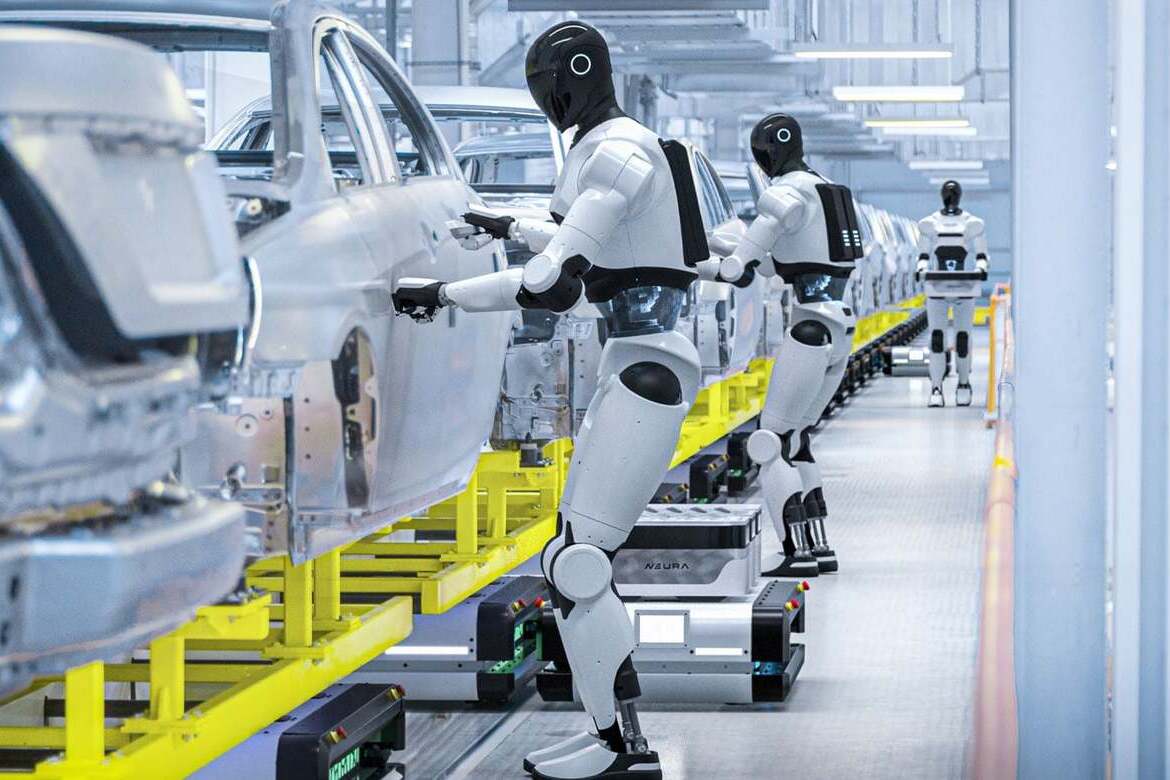
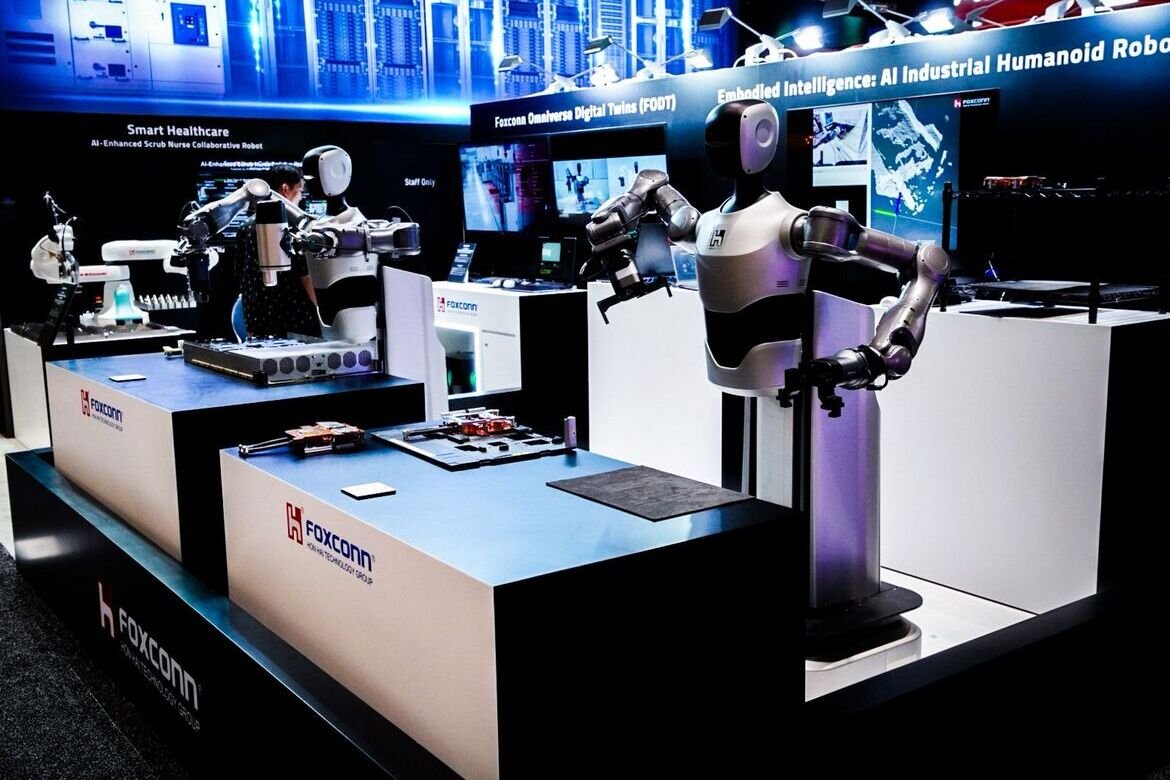
As manufacturing volumes for AI hardware grow, Foxconn is experimenting with new robotics systems designed to increase precision and throughput in complex assembly tasks.
The company is piloting an AI robotics platform developed with ABB and NVIDIA, aimed at bringing advanced perception and decision-making capabilities to industrial robots working on electronics assembly lines. The system uses simulation tools and digital twin technology to model factory operations before deploying robots on the production floor.
Another initiative involves integrating a generalized robotics intelligence system developed by Skild AI. The technology is designed as a shared “robot brain” that can be deployed across different types of robots and tasks, allowing machines to adapt to multiple workflows without extensive reprogramming.
Foxconn plans to use the system to support electronics assembly processes tied to its AI hardware production, particularly as the complexity of advanced computing components continues to rise.
The push reflects a broader shift in robotics, where manufacturers are moving away from narrowly programmed automation toward AI-enabled systems that can adapt to changing production environments.
AI Hardware Demand Reshapes Foxconn’s Business
Foxconn’s move into robotics coincides with a major change in its revenue mix driven by AI infrastructure.
Cloud and networking products, which include AI servers, now represent a significantly larger share of the company’s business than in previous years. The segment accounted for roughly 40 percent of revenue in 2025, up from about 30 percent the year before.
The growth comes as technology companies worldwide increase spending on computing power required to train and operate large AI models. Foxconn is one of the key manufacturers producing servers used in these systems, including hardware built for NVIDIA’s AI platforms.
The company reported net profit of NT$189.4 billion in 2025, a 24 percent increase from the previous year, with total revenue reaching NT$8.1 trillion.
At the same time, executives acknowledged that the broader environment remains uncertain. Tariffs, geopolitical tensions, and supply chain disruptions continue to affect global technology manufacturing. Rising energy prices linked to international conflicts have also introduced cost pressures across logistics and industrial operations.
Despite those challenges, Liu said the company expects strong growth in AI server shipments, forecasting high double-digit quarter-on-quarter increases in AI rack demand early in 2026.
For Foxconn, the combination of AI infrastructure demand and robotics deployment signals a strategic shift in how electronics manufacturing will evolve. As factories become more automated and AI-driven, manufacturers may increasingly rely on intelligent robotic systems not just for efficiency but to manage the growing complexity of advanced computing hardware.
Disclaimer: RobotsBeat is an independent media brand owned and operated by NuvexMedia LLC, publishing news, research, and insights on artificial intelligence, emerging technologies, automation, and related industries. NuvexMedia LLC invests in and collaborates with companies across the AI, Robotics, technology, software, and digital innovation sectors. These relationships do not influence RobotsBeat's editorial coverage, and the publication maintains full editorial independence to provide accurate, timely, and objective information. © 2026 NuvexMedia LLC. All rights reserved. This content is for informational purposes only and should not be considered legal, tax, investment, financial, or other professional advice.