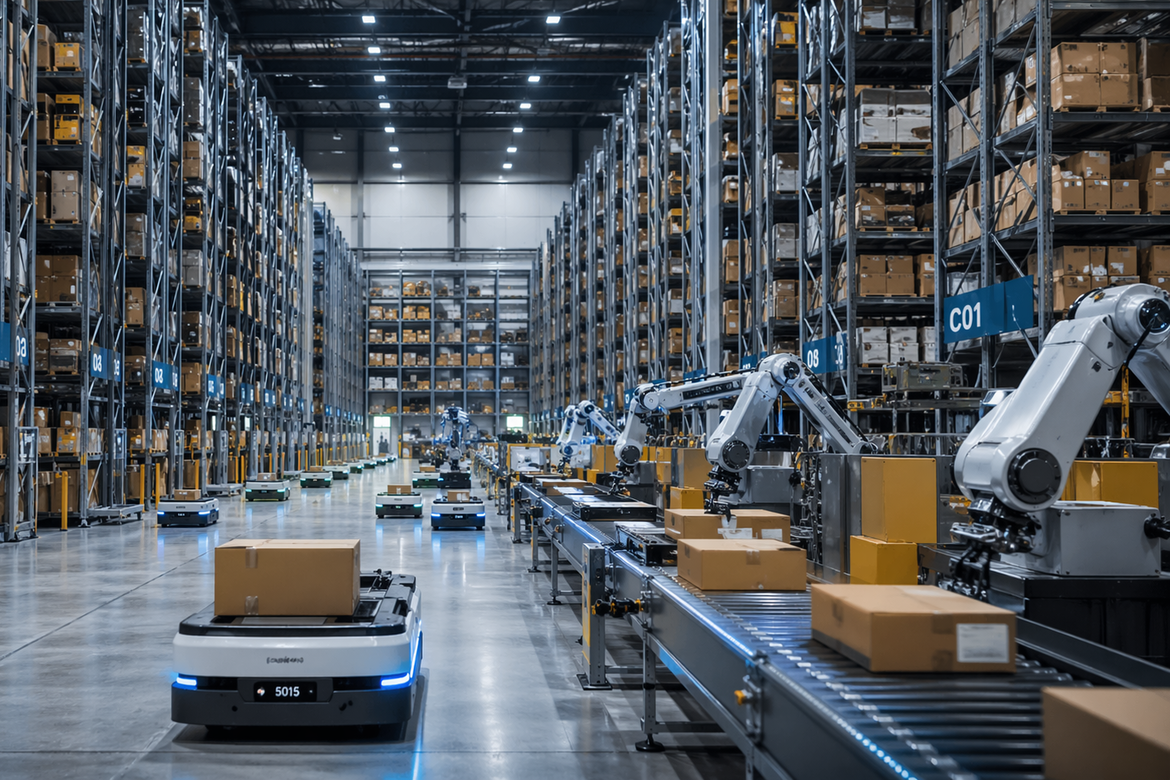

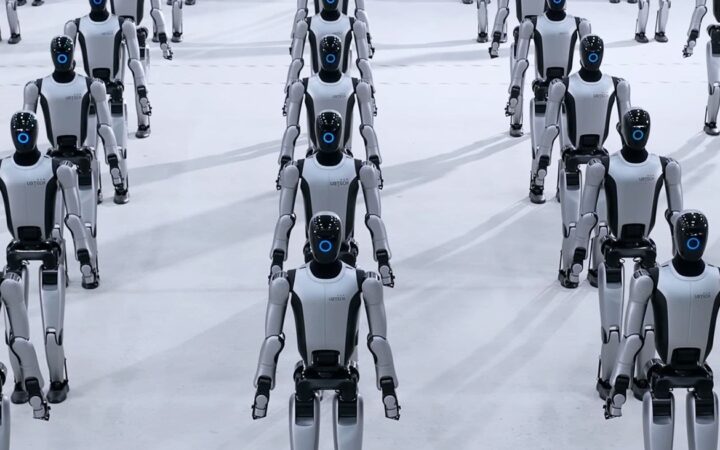
Gartner has forecast that 50% of new warehouses built in developed markets by 2030 will be designed as robot-centric facilities, where human workers are required only for exception handling rather than serving as the operational foundation. The prediction, published this month by the business and technology research firm, reflects sustained pressure from labor shortages, rising labor costs, and the accelerating capability of AI-orchestrated intralogistics systems.
The forecast marks a structural shift in how warehouse design is being approached, moving from retrofitting existing facilities with automation to building environments optimized from the ground up for robotic operation.
What Is Driving the Transition
The underlying pressures are labor-side rather than technology-side. Warehouse workers are increasingly unwilling to perform repetitive manual tasks, and many organizations cannot sustain operations through hiring alone as labor supply tightens and costs rise across most of the year. Chief supply chain officers are responding by accelerating adoption of intralogistics smart robotics – a category that encompasses autonomous mobile robots, robotic picking systems, and AI-driven fleet orchestration platforms.
“AI continuously optimizes warehouse environments in real-time, shifting them from static structures into agile systems that adapt as demand changes,” said Abdil Tunca, Senior Principal Analyst in Gartner’s Supply Chain practice. “This changes how CSCOs think about designing warehouses for scalability, from settings that primarily rely on human labor to environments that maximize the ability to orchestrate robotic fleets.”
Design and Operational Implications
Robot-centric warehouses differ from automated warehouses primarily in how human labor is positioned within operations. In existing automated facilities, robots augment human workers. In the human-optional model, humans handle only exceptions – anomalies, edge cases, and tasks that fall outside robotic capability – while robots manage the volume and routine workflows entirely.
This design shift enables operational advantages beyond labor cost reduction. Autonomous facilities can run with reduced lighting and climate control requirements, reconfigure workflows through software rather than physical infrastructure changes, and reallocate tasks dynamically between robots and humans as staffing levels or demand patterns fluctuate. Robotic pickers can be rerouted to higher-priority orders during peak periods without the scheduling constraints that human shift structures impose.
The intralogistics smart robotics market is highly fragmented, and Gartner notes that most organizations will need to deploy more than one robot type and a multiagent orchestration platform to coordinate heterogeneous fleets effectively. Managing interoperability across robot vendors – each with distinct software stacks and communication protocols – remains one of the primary integration challenges for organizations moving toward robot-centric operations.
Strategic Recommendations
Gartner recommends supply chain executives adopt digital twin and simulation models early in the design process to validate layouts and optimize robotic performance before construction begins. The firm also advises favoring scalable, software-defined robotics platforms over single-purpose automation to reduce obsolescence risk as the technology continues to develop rapidly, and establishing long-term vendor ecosystem partnerships to support future integration and expansion.
The upfront capital cost of robot-centric warehouse construction is higher than traditional facilities. Gartner frames this as a structural investment rather than an operational expense – one that offers compounding cost advantages as order volumes increase, because the marginal cost of additional throughput in an automated facility is substantially lower than adding headcount in a labor-dependent one.
Disclaimer: RobotsBeat is an independent media brand owned and operated by NuvexMedia LLC, publishing news, research, and insights on artificial intelligence, emerging technologies, automation, and related industries. NuvexMedia LLC invests in and collaborates with companies across the AI, Robotics, technology, software, and digital innovation sectors. These relationships do not influence RobotsBeat's editorial coverage, and the publication maintains full editorial independence to provide accurate, timely, and objective information. © 2026 NuvexMedia LLC. All rights reserved. This content is for informational purposes only and should not be considered legal, tax, investment, financial, or other professional advice.