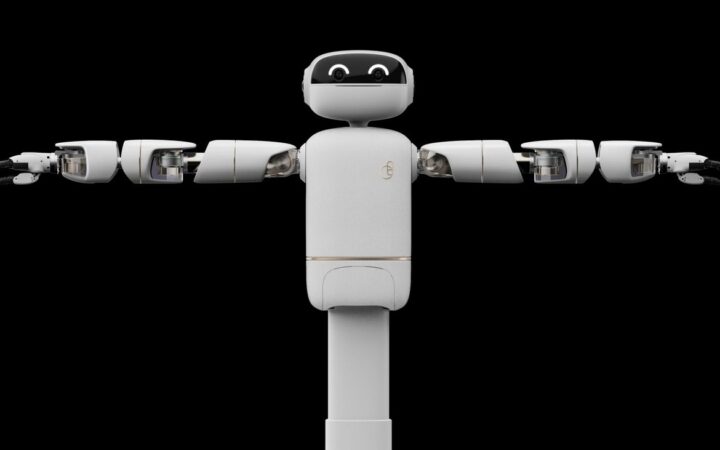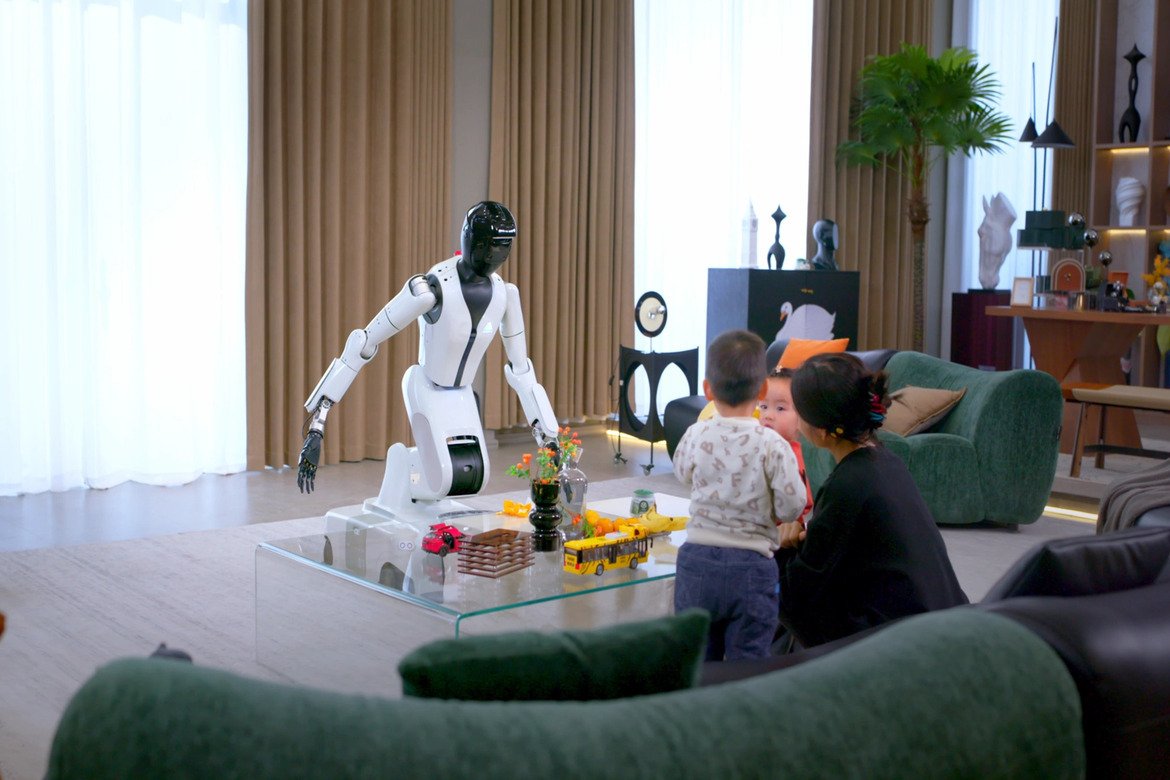

GigaAI has unveiled the SeeLight S1, described as China’s first general-purpose household humanoid robot, developed in collaboration with the Hubei Humanoid Robot Innovation Centre and Hubei Humanoid Robotics Industry Alliance. The company plans to deploy the S1 free of charge in Wuhan family homes as early as the first half of 2027, with households that include elderly members, children, or pets prioritized for the initial pilot.
A fleet of 100 S1 units will begin trials at employee housing in high-tech industry zones later this month, preceding the residential deployment. GigaAI CEO Zhu Zheng said the company aims to lower the hardware price to below 100,000 yuan – approximately $14,700 – by June 2027, roughly halving its current cost.
What the S1 Can Do
The SeeLight S1 is a two-armed, wheeled platform designed for unstructured domestic environments. A demonstration video published on the company’s WeChat account showed the robot chopping vegetables, frying eggs, loading a washing machine, hanging laundry, making a bed, and opening curtains. Unlike factory robots that rely on hard-coded algorithms and pre-configured routines, the S1 uses embodied AI models to autonomously understand tasks and plan execution trajectories in real time.
For safety in homes with children or pets, the robot is equipped with a compliant control mechanism that immediately freezes movement on contact. Zhu said he expects significant breakthroughs in both commercialization and embodied AI model capability by 2028.
Why Home Is Harder Than the Factory
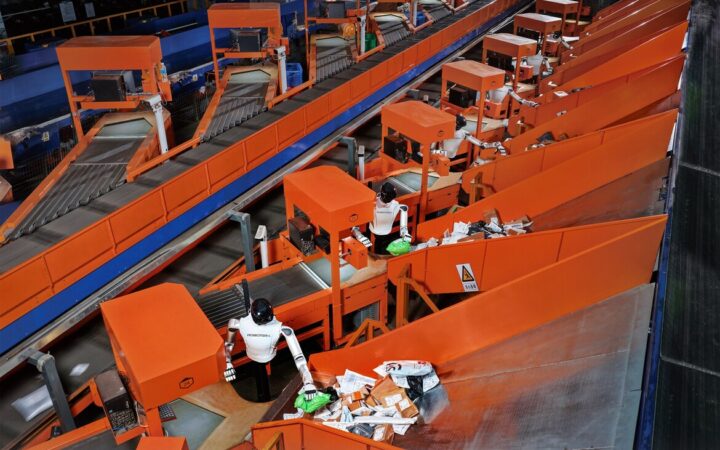
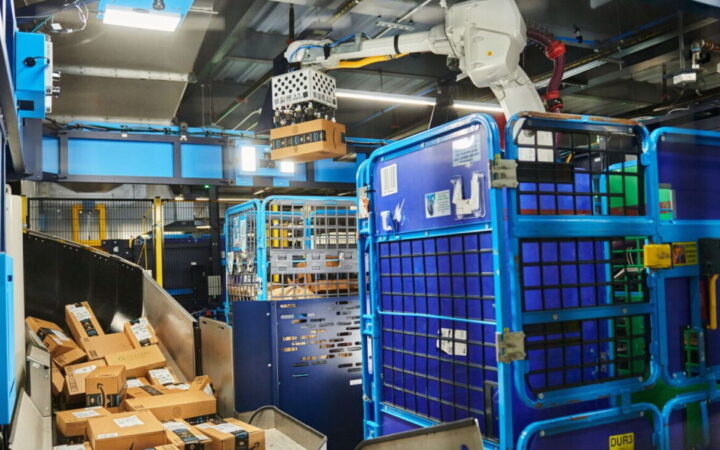
The domestic environment represents a fundamentally different challenge from the industrial deployments that have defined most humanoid robot progress to date. “Home environments are non-standardised, where a robot faces an environment that changes every day,” said Guo Renjie, founder and CEO of robotics engineering firm Zeroth. Factory floors have consistent layouts, predictable object configurations, and abundant structured data. Homes have none of these properties.
Unitree Robotics CEO Wang Xingxing acknowledged last year that while household use showed significant potential, it remained “challenging” at this stage – a position that GigaAI’s timeline and the broader industry’s data-collection efforts reflect.
Data as the Prerequisite
Addressing the domestic data gap is becoming a parallel industry effort. Shenzhen-based OneRobotics, which listed in Hong Kong in December, announced a 45 million yuan deal this week to collect embodied AI training data across household scenarios including elder care and retail spaces. The company will deploy its OneRo H1 robots to gather data in kitchens, bedrooms, bathrooms, and balconies – high-frequency task environments that are currently underrepresented in robotics training datasets.
The global household robot market reached an estimated $41 billion last year, dominated by robotic vacuum cleaners. No humanoid model is currently commercially available for general household tasks. The market is projected to grow at approximately 20% annually through 2027, according to research firm LeadLeo – a trajectory that assumes meaningful humanoid capability arrives within the forecast window, something GigaAI’s 2027 Wuhan pilot is designed to begin testing.
Disclaimer: RobotsBeat is an independent media brand owned and operated by NuvexMedia LLC, publishing news, research, and insights on artificial intelligence, emerging technologies, automation, and related industries. NuvexMedia LLC invests in and collaborates with companies across the AI, Robotics, technology, software, and digital innovation sectors. These relationships do not influence RobotsBeat's editorial coverage, and the publication maintains full editorial independence to provide accurate, timely, and objective information. © 2026 NuvexMedia LLC. All rights reserved. This content is for informational purposes only and should not be considered legal, tax, investment, financial, or other professional advice.