Humanoid Robotics Emerges as $200 Billion Industrial Opportunity

A new report projects humanoid robotics could grow into a $200 billion market, driven by labor shortages, aging populations, and advances in physical AI deployment.

By Daniel Krauss | Edited by Kseniia Klichova Published:
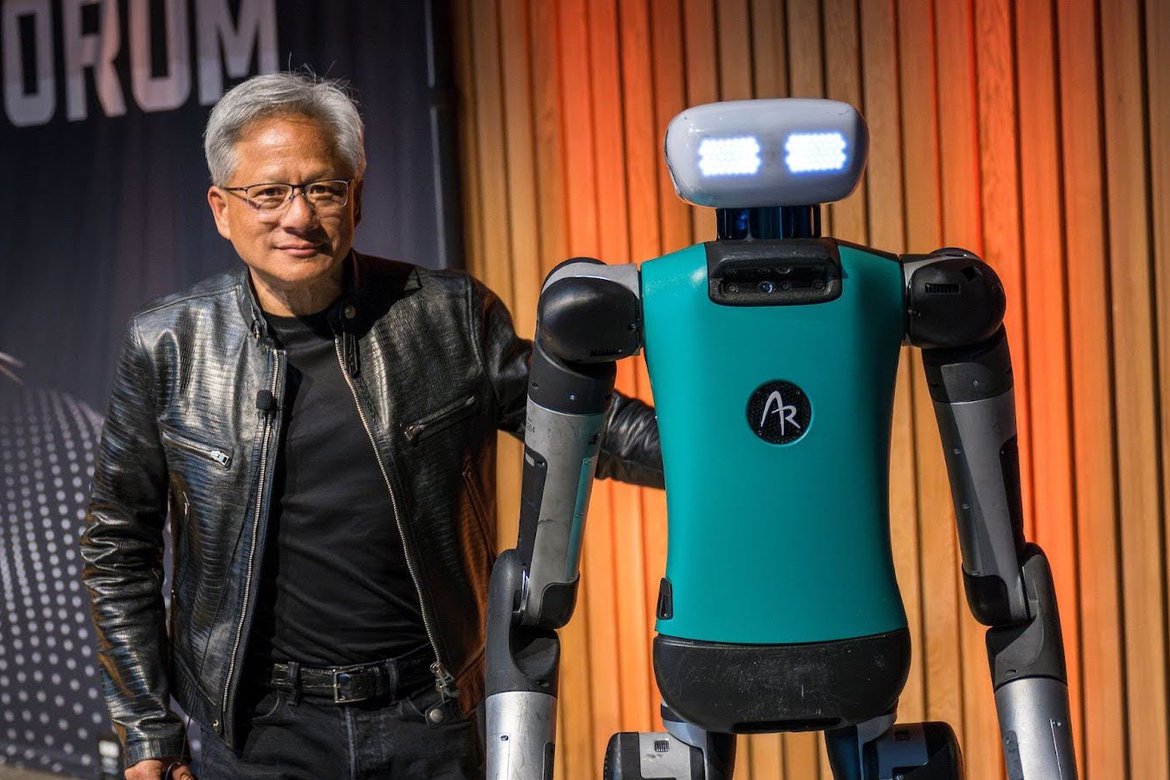
Humanoid robots deployed in industrial environments reflect the convergence of AI, hardware engineering, and automation reshaping global productivity. Photo: Agility Robotics

Humanoid robotics is transitioning from experimental technology to industrial infrastructure, according to a new report from the Future Investment Initiative Institute in collaboration with Barclays. The analysis projects the sector could grow from a $2 billion to $3 billion market today into a $200 billion industry over the coming decade, driven by structural labor shortages and advances in embodied artificial intelligence.

The shift reflects a broader evolution in AI. After years dominated by software systems such as large language models, the next phase centers on physical AI – machines capable of translating digital intelligence into physical action. This convergence of AI, hardware, and industrial engineering is reshaping how companies think about productivity, automation, and workforce scalability.

Structural Forces Driving Humanoid Adoption

Several long-term trends are accelerating humanoid robot development. Global demographics are shifting rapidly, with the proportion of people over 65 expected to rise significantly by mid-century. At the same time, urbanization and workforce preferences are reducing the availability of labor for physically demanding or repetitive roles.

These pressures are especially acute in manufacturing, logistics, agriculture, and healthcare. Humanoid robots are designed to operate in environments built for human workers, giving them an advantage over traditional automation systems that require specialized infrastructure.

The productivity implications are substantial. Even operating at partial efficiency, humanoid robots can deliver higher sustained output due to near-continuous operation. At full human parity, the report estimates productivity gains could reach up to 150 percent. This scalability transforms labor from a fixed constraint into a variable resource, allowing production capacity to expand without proportional workforce increases.

Deployment is already underway. Companies such as Agility Robotics and Figure AI have placed humanoid robots into operational environments, including logistics facilities and automotive manufacturing plants. These deployments mark a transition from proof-of-concept demonstrations to real-world industrial roles.

The Three Pillars of Physical AI

The report identifies three critical components driving humanoid robotics development: compute systems, mechanical hardware, and energy storage. Together, these elements enable machines to perceive, plan, and execute physical actions.

Compute systems provide perception, reasoning, and decision-making capabilities. Mechanical hardware – actuators, motors, sensors, and structural components – converts digital instructions into motion. Batteries supply the energy required for sustained operation.

Hardware remains the dominant cost factor, accounting for roughly half the build cost of a humanoid robot. However, rapid technological progress has significantly reduced total system costs. A decade ago, humanoid robots could cost millions of dollars per unit. Today, some platforms are approaching price points near $100,000, bringing commercial deployment within reach.

These cost reductions mirror earlier technology adoption cycles, where declining component costs enabled widespread deployment. As manufacturing scales and supply chains mature, humanoid robots could become economically viable across a wider range of industries.

A Global Industrial Realignment

The rise of physical AI is reshaping global industrial competition. China currently leads in humanoid production and deployment, benefiting from integrated manufacturing ecosystems and supply chain scale. Europe, meanwhile, is positioned to compete through its strengths in precision engineering and automotive manufacturing.

Investment activity reflects growing confidence in the sector. Venture capital funding in robotics has increased dramatically in recent years, while new humanoid platforms continue to enter development. Partnerships between robotics companies and industrial manufacturers are accelerating integration into real-world production environments.

According to Jensen Huang, CEO of NVIDIA, humanoid robots could reach widespread deployment sooner than many expect. Such statements reflect growing industry consensus that embodied AI is approaching commercial viability.

The broader implications extend beyond robotics manufacturers. Supply chains supporting motors, actuators, sensors, and energy systems stand to benefit as production scales. The transition to physical AI could reshape industrial sectors in ways comparable to earlier automation revolutions.

Humanoid robots will not replace human labor overnight. But as engineering, computing, and energy systems converge, they are emerging as a scalable solution to productivity constraints. The report suggests that the defining characteristic of the next industrial era may not be software alone, but machines capable of applying intelligence in the physical world.

Unitree Unveils AS2 Robot Dog with 143 Pound Payload and 11 mph Speed

Unitree Robotics has introduced the AS2 quadruped robot, combining high-speed mobility, heavy payload capacity, and LiDAR-enabled autonomy for industrial and field applications.

By Daniel Krauss | Edited by Kseniia Klichova Published:

Unitree Robotics has unveiled the AS2, a high-performance quadruped robot designed to balance speed, payload strength, and AI-driven autonomy. The new model expands the Chinese company’s portfolio of robotic platforms aimed at industrial inspection, logistics, research, and outdoor operations.

Weighing approximately 18 kilograms with its battery installed, the AS2 can achieve peak speeds approaching 5 meters per second, or roughly 11 miles per hour. It also supports a standing payload capacity of up to 65 kilograms in its education-focused configuration, positioning it among the more capable quadrupeds currently on the market.

The launch reflects a broader push in the robotics industry to move legged robots beyond demonstration environments into practical deployment scenarios.

Engineering for Mobility and Load Capacity

The AS2 is powered by high-torque inner rotor motors delivering up to 90 newton-meters of joint torque. With 12 degrees of freedom and dual encoders per joint, the system is designed for precision control and dynamic stability.

Industrial-grade bearings and an optimized torque-to-weight ratio allow the robot to carry meaningful loads while maintaining agility. Under continuous walking conditions, it can transport approximately 15 kilograms for extended periods, while unloaded runtime exceeds four hours, covering distances of more than 20 kilometers.

Battery configurations vary by model, with higher-end versions equipped with a 15,000mAh lithium pack supporting longer endurance and fast charging. The robot’s IP54 rating and operating temperature range from -20°C to 50°C position it for use in harsh environments, including industrial sites and outdoor terrain.

Mobility metrics indicate the robot can climb stairs up to 25 centimeters, handle 40-degree slopes, and traverse uneven surfaces. These capabilities are increasingly important for inspection and maintenance tasks where wheeled systems struggle.

AI and LiDAR Integration Expand Autonomy

Beyond mechanical performance, the AS2 integrates advanced sensing and computing capabilities. Higher-end models include industrial-grade LiDAR systems with up to 128 lines, enabling real-time mapping and obstacle detection.

The robot runs on an 8-core CPU and, in its developer-focused EDU version, supports optional expansion with NVIDIA Jetson Orin NX modules. This allows users to deploy embodied AI applications, integrate autonomous navigation stacks, and develop custom robotics software.

Connectivity options include Wi-Fi 6, Bluetooth 5.2, and optional 4G and GPS modules. The system also features onboard cameras, microphones, and speakers, supporting inspection, teleoperation, and human-robot interaction.

An intelligent side-follow system enables centimeter-level positioning and stable following behavior, useful for scenarios such as equipment inspection or mobile payload transport.

Quadrupeds Move Toward Industrial Utility

Quadruped robots have gained global attention over the past several years, but commercial adoption has remained concentrated in niche applications such as security patrols, research, and infrastructure inspection.

The AS2’s combination of speed, endurance, and payload suggests a focus on expanding those applications into more demanding industrial environments. As robotics companies compete to deliver practical legged systems, performance benchmarks such as torque, range, and load capacity are becoming increasingly central to differentiation.

Unitree’s approach emphasizes open development and integration flexibility, allowing researchers and industrial partners to customize applications. This aligns with broader industry trends toward modular robotics platforms that support third-party AI software and hardware expansion.

While pricing details have not been disclosed, the company positions the AS2 as a high-performance system suited for real-world tasks rather than purely experimental use.

As legged robots continue to evolve, platforms like the AS2 illustrate how advances in actuation, sensing, and embedded AI are pushing quadrupeds closer to sustained industrial deployment.

News, Robots & Robotics, Science & Tech

German Researchers Develop AI Robot System to Recycle Smart Textiles

Researchers at Osnabrück University are building an AI-powered robotic system to identify and sort smart textiles, aiming to make e-textile recycling scalable and sustainable.

By Laura Bennett | Edited by Kseniia Klichova Published:
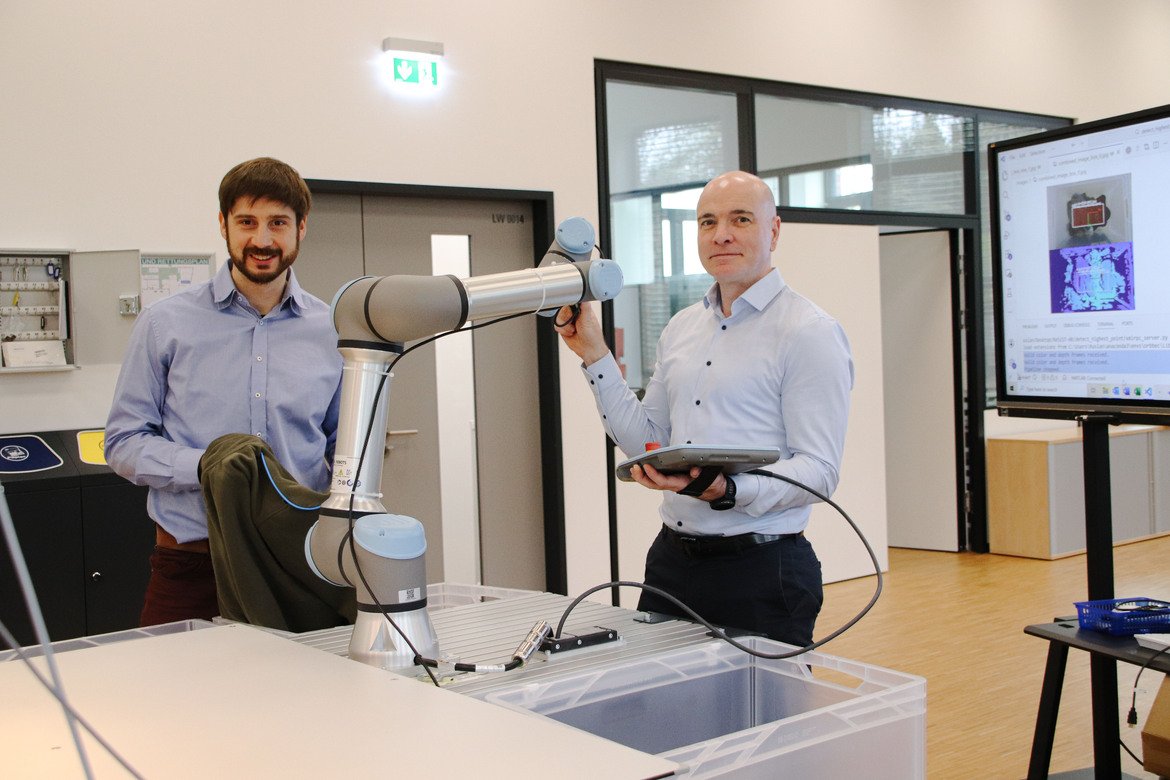
An AI-powered robotic system uses multispectral imaging and 3D sensors to identify smart textiles and embedded electronics on sorting lines. Photo: Osnabrück University of Applied Sciences

Researchers at Osnabrück University of Applied Sciences in Germany have launched a two-year initiative to develop an AI-powered robotic system capable of identifying and sorting smart textiles for recycling. The project addresses a growing sustainability challenge as garments embedded with electronics become more common in consumer wearables, industrial uniforms, and automotive applications.

The initiative, known as ReSiST-AR, is backed by regional development funding and aims to automate the detection and separation of e-textiles from conventional clothing streams. As smart fabrics integrate sensors, wiring, and electronic modules, traditional textile recycling systems struggle to process them safely and efficiently.

Without automated sorting, many of these garments risk ending up in landfills or being shipped abroad for low-cost manual processing.

Teaching Robots to Recognize Soft, Complex Materials

Unlike rigid materials such as metals or plastics, textiles present unique challenges for robotics systems. Fabrics are flexible, irregularly shaped, and often tangled or layered when placed on conveyor belts. Smart textiles add further complexity by embedding electronic components that may be hidden within seams or woven into fibers.

The research team is developing a robotic platform equipped with multispectral cameras and 3D sensors capable of scanning garments in mixed piles. AI-based material classification algorithms analyze the captured data to distinguish between fabric types and detect embedded electronics.

The goal is to enable robots to identify smart garments regardless of how they are positioned or folded. This requires machine learning models capable of interpreting varied visual and structural cues in real time.

Automation engineering researcher Steffen Greiser, who leads the project, noted that manual textile sorting is labor-intensive and often outsourced internationally, raising both environmental and ethical concerns. By automating the process, the team hopes to create regional recycling loops that reduce transportation and improve sustainability.

Designing Smart Textiles for Future Recyclability

Beyond sorting, the project also examines how smart textiles can be designed to simplify recycling. A separate research team is analyzing different integration methods, including sewn-in electronics, embroidery, and welded components, to determine how sensors and circuits can remain durable during use while being easier to remove at end of life.

This design-for-recycling approach reflects a broader shift in sustainable manufacturing, where product architecture is increasingly shaped by lifecycle considerations.

Guidelines developed through the project could help manufacturers create smart textiles that balance performance, user requirements, and recyclability. By embedding sustainability principles into product design, the initiative aims to prevent future waste streams from becoming unmanageable.

Robotics Expands into Circular Economy Applications

The ReSiST-AR project highlights how robotics and AI are moving into environmental and circular economy applications. Automated waste sorting has traditionally focused on rigid materials such as plastics and metals. Smart textiles introduce new technical demands that require advanced sensing and AI interpretation.

By combining robotics with multispectral imaging and AI-driven classification, researchers are building systems capable of operating in complex, variable environments where traditional automation struggles.

The project also involves collaboration with regional robotics and textile companies, allowing researchers to test prototypes in real industrial settings. These partnerships aim to accelerate commercialization and ensure that the technology can integrate into existing recycling infrastructure.

As wearable electronics and connected garments continue to proliferate, scalable recycling solutions will become increasingly necessary. The Osnabrück initiative offers an early example of how physical AI systems can support sustainability goals by automating complex sorting tasks that were previously dependent on manual labor.

Artificial Intelligence (AI), News, Robots & Robotics, Science & Tech

Japan’s Robot Orders Hit Record as Global Labor Shortages Accelerate Automation

Japan’s robotics industry posted its strongest quarterly orders on record in early 2025, driven by global labor shortages and surging demand for industrial automation.

By Daniel Krauss | Edited by Kseniia Klichova Published:
Industrial robots on a Japanese factory floor reflect record global demand as manufacturers accelerate automation to address labor shortages. Photo: FANUC

Japan’s robotics industry recorded its highest quarterly order volume on record in the first quarter of 2025, underscoring how demographic pressures are reshaping global manufacturing. Orders for industrial robots reached ¥324.5 billion, a 14.2% increase from a year earlier and the strongest quarterly performance since tracking began in the 1980s.

The surge was driven largely by exports, which account for roughly 70% of Japan’s robot shipments. Demand expanded sharply across China, South Korea, the United States, and Germany as manufacturers moved to offset labor shortages and rising wage pressures.

The figures highlight a structural shift in the global labor market. Automation is no longer primarily a cost-cutting strategy. In many economies, it has become a response to workforce scarcity.

Demographics Push Automation from Option to Necessity

Japan’s working-age population has declined by more than 10 million people since its mid-1990s peak. The country currently has more job openings than applicants, a gap that has widened in manufacturing hubs where aging workers are retiring faster than replacements can be hired.

Similar trends are unfolding elsewhere. South Korea’s fertility rate has fallen to historic lows. Germany faces a projected industrial workforce decline of millions over the next decade. Even fast-growing Southeast Asian economies are seeing wage increases that make automation economically viable.

The result is a rapidly expanding robotics market. Analysts estimate the global industrial robot market could exceed $35 billion within the next few years, up from just over $20 billion in 2023.

Japan, long a leader in industrial robotics through companies such as FANUC and Yaskawa Electric, is benefiting from this wave. But record orders also mask intensifying competition.

China Emerges as Both Customer and Rival

China remains the largest consumer of industrial robots, accounting for more than half of global installations last year. The country’s manufacturing sector continues to automate aggressively as its own working-age population contracts.

At the same time, Chinese robotics manufacturers are gaining market share. Domestic producers now account for a growing percentage of installations within China, narrowing the historical technology gap with Japanese and European suppliers.

This dual role as top buyer and rising competitor creates strategic pressure for Japan’s robotics firms. Maintaining leadership will depend not only on hardware quality but also on advances in AI integration, cost competitiveness, and scalability.

Cobots and AI Redefine the Growth Cycle

Unlike previous automation booms centered on large industrial arms, much of the recent growth is coming from collaborative robots, or cobots. These systems are designed to operate alongside human workers without heavy safety barriers, expanding automation into small-batch manufacturing, food processing, and logistics.

Cobots now represent a growing share of global installations, up sharply over the past decade. Japanese firms are investing in AI-enabled systems capable of adapting to variable environments and learning tasks through demonstration.

Research from Japanese universities indicates that AI-integrated cobots significantly reduce programming and training time, a critical advantage for factories struggling to retain skilled workers.

This shift toward flexible automation reflects a broader transformation in robotics. Intelligence, rather than pure mechanical precision, is becoming the defining competitive factor.

Robotics and the New Labor Equation

The record order data reflects a deeper economic reality. In many advanced economies, there are not enough workers to sustain current industrial output without automation.

For countries facing demographic decline, robotics is increasingly viewed as essential infrastructure rather than discretionary investment. Governments are responding with targeted subsidies for next-generation robotics research and manufacturing support.

However, the automation surge also raises questions about workforce adaptation. While robots can fill gaps in physically demanding roles, long-term productivity gains depend on retraining programs and integration strategies that balance efficiency with employment stability.

For Japan’s robotics industry, the current moment represents both opportunity and urgency. Global labor shortages provide a powerful tailwind. But as competitors scale rapidly and AI reshapes manufacturing systems, technological leadership will depend on sustained innovation.

The record-setting quarter suggests that automation is entering a new phase. Not one driven primarily by cost savings, but by the fundamental need to maintain industrial capacity in a world where human labor is becoming increasingly scarce.

Business & Markets, News, Robots & Robotics

Hefei Metro Deploys Robot Dogs and Drones to Automate Rail Operations

Hefei’s metro system has deployed robot dogs, drones, and humanoid robots to automate inspections, improve safety, and modernize urban rail operations.

By Rachel Whitman | Edited by Kseniia Klichova Published:
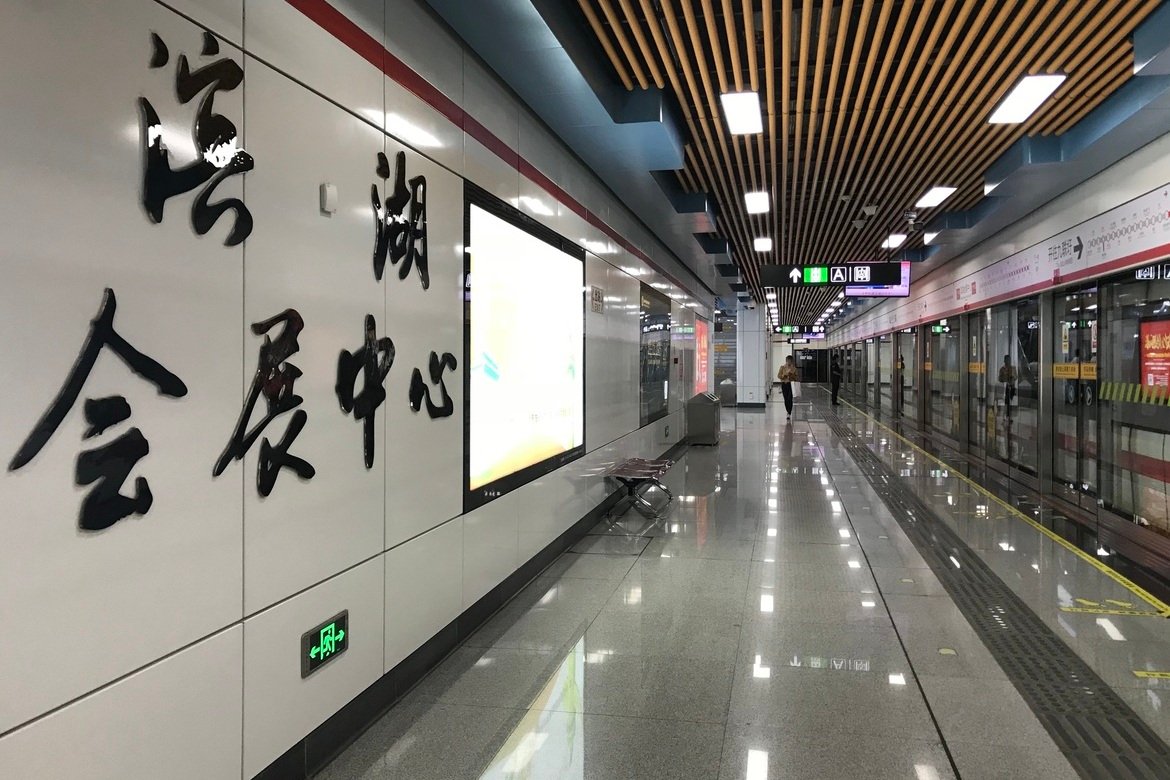
Robot dogs and aerial drones patrol and inspect Hefei’s metro system, illustrating how robotics is being integrated into urban rail operations. Photo: Hefei Metro

The Hefei Metro system in eastern China has introduced a network of robot dogs, drones, and AI-powered service robots as part of a broader initiative to modernize urban rail operations. The deployment represents one of the most visible examples of robotics being integrated into public transit infrastructure to improve safety, inspection efficiency, and passenger services.

The autonomous systems now operate across stations and tunnels in Hefei’s metro network, assisting human staff with tasks ranging from security patrols to infrastructure inspections. City authorities say the program aims to improve operational reliability and reduce the risk of accidents in one of the region’s busiest transport systems.

The initiative reflects a broader shift toward robotics-driven infrastructure management as cities adopt smart technologies to handle growing urban populations.

Robot Dogs and Drones Automate Inspection Tasks

Among the most prominent additions to the metro system are quadruped robot dogs equipped with cameras and environmental sensors. These machines patrol station platforms and corridors, scanning for obstacles, safety hazards, and abnormal conditions.

Unlike traditional human patrols, the robots can operate continuously and monitor multiple areas simultaneously. Their sensors allow them to identify potential issues such as objects left on platforms or equipment anomalies that could affect operations.

Drones are also being used to inspect tunnels and track infrastructure. Flying inspection systems can access areas that are difficult or dangerous for workers to reach, capturing visual and sensor data used to assess equipment conditions and detect potential maintenance problems.

Together, the robotic systems form what metro officials describe as a “robot cluster” supporting operational safety and infrastructure monitoring.

Robotics Expands into Public Transportation Infrastructure

In addition to inspection robots, Hefei Metro has introduced humanoid service robots that interact with passengers. These robots provide directions, answer questions, and assist commuters navigating stations.

The deployment illustrates how robotics can support both operational tasks and customer service in public infrastructure. While robots handle routine inspections and monitoring, human staff remain responsible for supervision, emergency response, and complex operational decisions.

Such systems are particularly valuable during peak travel periods, including major holiday travel surges, when passenger volumes increase dramatically.

By automating routine monitoring tasks, metro operators can allocate personnel more efficiently while maintaining high safety standards.

Smart Transit Systems Become a Key Urban Technology

Hefei’s robotics deployment is part of a broader push to integrate artificial intelligence, sensors, and data analytics into public transport networks. Smart metro systems increasingly rely on predictive maintenance, real-time monitoring, and automated inspection technologies to maintain reliability and reduce disruptions.

Data collected by robots and sensors can be analyzed to identify early signs of equipment wear or operational anomalies, allowing maintenance teams to address problems before they lead to service interruptions.

These capabilities are becoming increasingly important as urban rail networks expand and passenger demand continues to grow.

Cities around the world are exploring similar technologies as part of broader smart city initiatives designed to improve infrastructure efficiency and safety.

Robotics Moves into Everyday Urban Infrastructure

The Hefei Metro project highlights how robotics is gradually becoming embedded in everyday public systems rather than remaining confined to industrial environments. From transportation and utilities to construction and maintenance, robots are increasingly being used to monitor and manage complex infrastructure.

For urban transit networks, robotics offers the ability to improve safety while reducing operational costs and manual inspection requirements.

Hefei’s deployment provides an early example of how multiple types of robots – including quadrupeds, drones, and humanoids – can work together within a coordinated infrastructure system.

As cities continue to modernize their transportation networks, robotics and AI are likely to play a growing role in ensuring that critical infrastructure remains safe, efficient, and capable of supporting expanding urban populations.

Automation, News, Robots & Robotics, Science & Tech

Siemens Partnership Launches UK’s First Customizable AMR Manufacturing Capability

Siemens and two robotics partners have launched the UK’s first fully customizable autonomous mobile robot manufacturing capability, aimed at modernizing factory logistics and industrial automation.

By Laura Bennett | Edited by Kseniia Klichova Published:
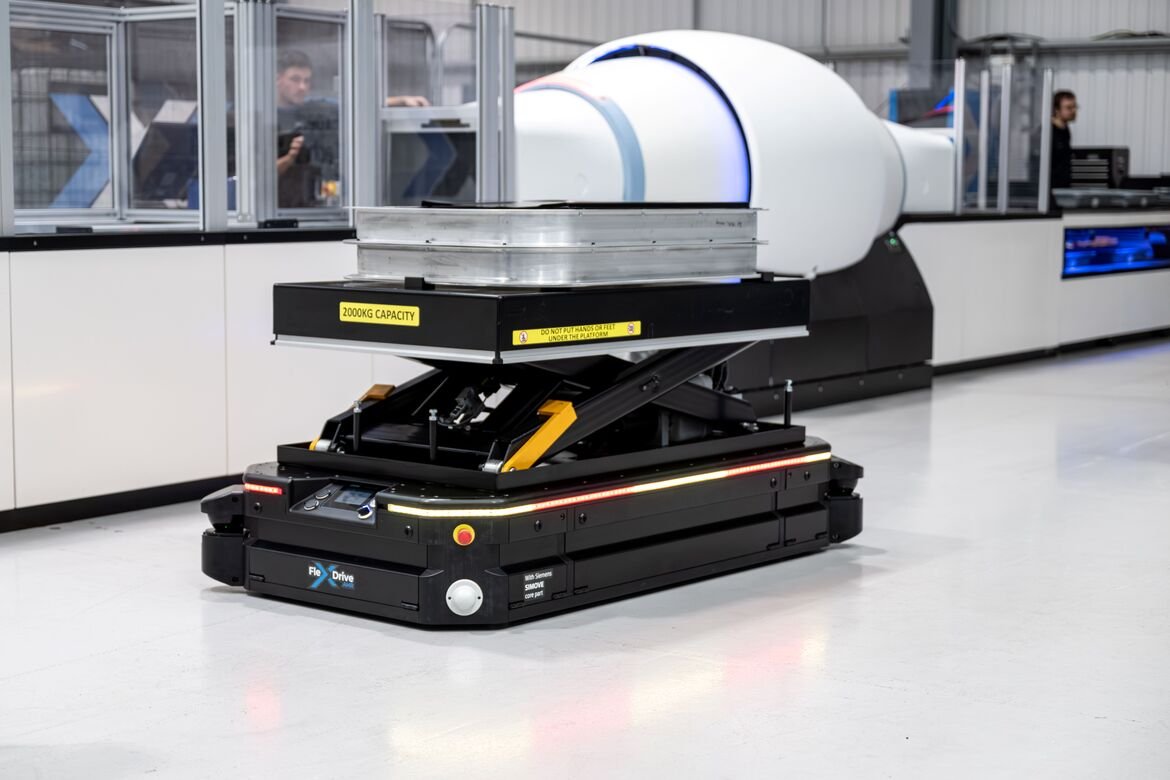
A new Siemens-led collaboration is enabling the UK’s first fully customizable autonomous mobile robot manufacturing capability for industrial logistics. Photo: Siemens

Siemens has partnered with Expert Technologies Group and RMGroup to create the United Kingdom’s first manufacturing capability dedicated to fully customizable autonomous mobile robots (AMRs). The initiative aims to provide domestic manufacturers with flexible automation systems designed to improve factory logistics and material handling.

The collaboration marks a strategic effort to strengthen the UK’s industrial automation ecosystem by developing robotics systems locally rather than relying on imported technologies. By combining Siemens’ automation software with robotics integration expertise from the two partner companies, the project creates an end-to-end platform for deploying AMR systems in manufacturing and warehouse environments.

Autonomous mobile robots are increasingly used to move materials within factories and distribution centers, offering an alternative to traditional automated guided vehicles that rely on fixed tracks or dedicated infrastructure.

Flexible Robotics for Modern Manufacturing

AMRs differ from earlier factory transport systems by navigating environments using onboard sensors, real-time mapping, and intelligent path planning. This allows them to move dynamically through busy industrial settings while avoiding obstacles and adapting to layout changes.

The robots produced through the new partnership are designed to be customizable for different industrial environments. Manufacturers can configure systems to support tasks such as delivering components to assembly lines, transporting finished goods to storage areas, or supplying materials to production cells.

The technology platform integrates Siemens’ SIMOVE control software, which enables robots to coordinate movements and manage logistics operations across facilities. Expert Technologies Group contributes its FlexDrive AMR platform, providing modular drive systems and navigation capabilities. RMGroup adds robotics integration and safety systems designed for industrial environments.

Together, these technologies allow factories to deploy robotics fleets tailored to their operational requirements, rather than adapting workflows to standardized equipment.

Building Domestic Robotics Capability

The partnership reflects growing interest in strengthening domestic robotics manufacturing in the UK. Many automation systems used in British factories are imported, which can create challenges related to integration, maintenance, and technical support.

By building robots locally and supporting them with domestic engineering teams, the collaboration aims to provide manufacturers with more reliable deployment and long-term support. The partners say this approach addresses a common problem in automation projects where overseas suppliers cannot provide sufficient integration support.

Local development also allows robotics systems to be adapted more easily to specific industry requirements, including aerospace, automotive, food processing, and logistics operations.

In addition to robotics hardware, the system incorporates wireless connectivity technologies such as industrial Wi-Fi and 5G to support real-time communication between robots, factory infrastructure, and digital management systems.

Autonomous Logistics Becomes Central to Industrial Automation

Material movement inside factories and warehouses represents a significant operational challenge for manufacturers. Traditionally, these tasks rely heavily on manual labor or fixed automation systems that are difficult to modify when production changes.

Autonomous mobile robots offer a more adaptable solution by enabling dynamic logistics operations. Fleets of AMRs can coordinate movements, optimize routes, and respond to changing workloads without requiring major infrastructure modifications.

These capabilities also allow manufacturers to scale automation gradually, starting with small deployments and expanding fleets as operational needs grow.

As manufacturing becomes more digital and data-driven, AMRs are increasingly integrated with digital twin simulations and factory management systems. This allows companies to analyze workflows, optimize operations, and improve productivity.

The Siemens-led collaboration represents a step toward building a domestic robotics ecosystem capable of supporting these advanced manufacturing technologies. By combining automation software, robotics hardware, and integration expertise, the partnership aims to help UK manufacturers deploy flexible, intelligent logistics systems as automation becomes an essential component of modern industrial production.

Business & Markets, News, Robots & Robotics, Science & Tech
Exit mobile version