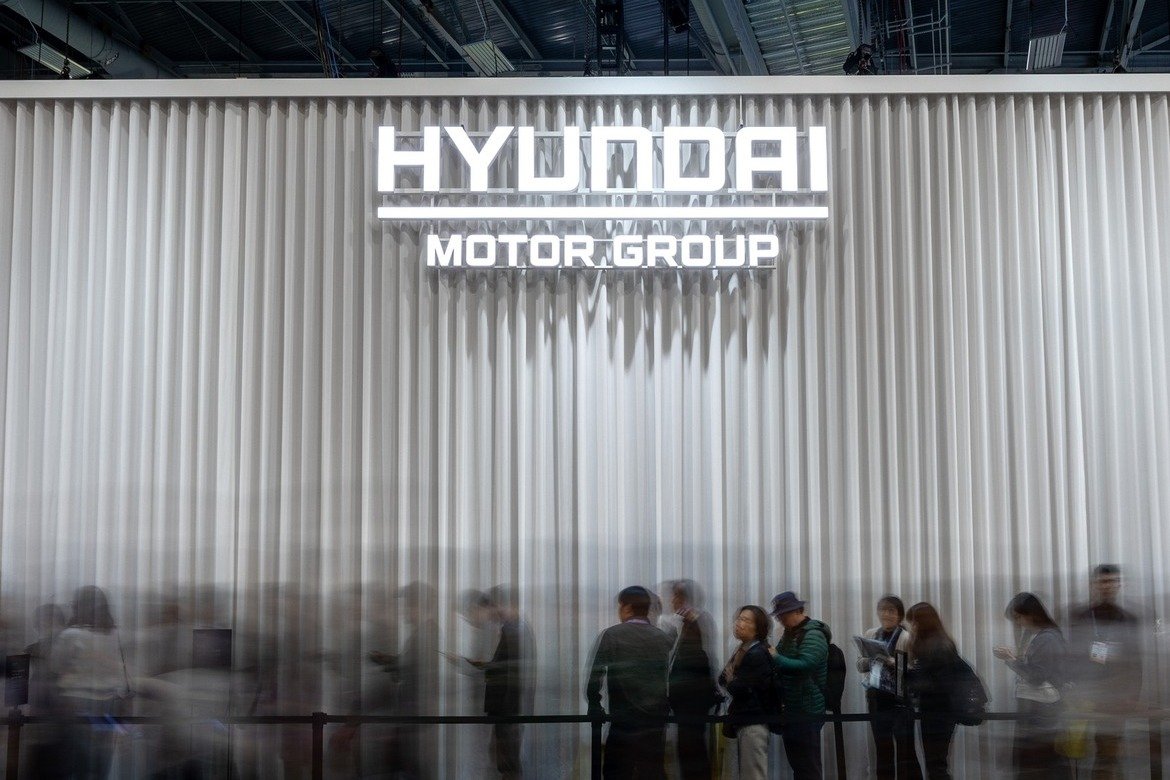
Hyundai Motor Group plans to invest approximately $6.9 billion in a major artificial intelligence, hydrogen, and robotics hub in South Korea, underscoring its ambitions to become a leading player in physical AI and robotics manufacturing. The planned investment, centered in the Saemangeum region, reflects the company’s long-term strategy to build integrated infrastructure supporting next-generation autonomous and robotic systems.
The project includes plans for AI data centers, robotics manufacturing facilities, and hydrogen production infrastructure. Together, these components form a comprehensive ecosystem designed to support robotics development, production, and deployment at scale.
Building Infrastructure for Physical AI
At the core of Hyundai’s plan is the construction of a large-scale AI data center. Such facilities are essential for training and operating robotics and autonomous systems, which rely on massive datasets to improve perception, motion control, and decision-making.
Robots generate vast amounts of sensor data, including visual, spatial, and mechanical information. Processing this data requires high-performance computing infrastructure capable of training machine learning models and supporting real-time operation.
By building dedicated AI infrastructure, Hyundai aims to accelerate development of robotics and autonomous technologies across its manufacturing and mobility platforms.
The hub will also include a robotics manufacturing and foundry facility. This plant will produce robotic systems and components, supporting Hyundai’s expanding robotics portfolio, including humanoid robots and industrial automation platforms.
Establishing domestic manufacturing capacity allows the company to scale production while maintaining tighter integration between hardware development and AI software.
Integrating Robotics, Energy, and Manufacturing
Hyundai’s investment extends beyond robotics manufacturing to include hydrogen production facilities. The company plans to build water electrolysis plants to generate green hydrogen, supporting its broader strategy to integrate robotics with sustainable energy systems.
Hydrogen infrastructure can play a key role in powering future robotics and mobility systems, particularly in industrial and logistics environments requiring long-duration operation.
Saemangeum’s geographic advantages make it well suited for such infrastructure. The region offers extensive land availability and strong renewable energy potential, allowing large-scale deployment of energy-intensive computing and manufacturing facilities.
By colocating AI data centers, robotics manufacturing, and hydrogen production, Hyundai aims to create a vertically integrated ecosystem for physical AI development.
Robotics at the Center of Hyundai’s Transformation
Hyundai’s robotics investments reflect a broader shift in its corporate strategy. Traditionally known as an automotive manufacturer, the company is positioning itself as a mobility and robotics technology provider.
The company has committed tens of trillions of won to emerging technologies, including robotics, AI, and software-defined vehicles, as part of its long-term investment plan through 2030.
Robotics plays a central role in this strategy. The company’s acquisition of Boston Dynamics in 2021 provided access to advanced humanoid robotics technology, accelerating Hyundai’s entry into the embodied AI sector.
Developing robotics manufacturing infrastructure complements these efforts, enabling the company to move from research and development into large-scale production.
A Strategic Bet on Industrial AI
Hyundai’s investment highlights a broader industry shift toward physical AI infrastructure. As robotics adoption accelerates, companies are investing not only in robots themselves but also in the computing, manufacturing, and energy systems needed to support them.
AI data centers enable training of robotics models. Manufacturing facilities enable scalable production. Energy infrastructure ensures reliable operation.
Together, these elements form the foundation of the physical AI ecosystem.
Hyundai’s robotics hub also has broader economic implications. The project is expected to create jobs, stimulate regional economic growth, and strengthen South Korea’s position in advanced robotics manufacturing.
The investment reflects increasing competition among global technology and automotive companies to establish leadership in robotics and embodied AI.
As humanoid robots and autonomous systems move closer to widespread deployment, infrastructure investments like Hyundai’s Saemangeum hub will play a critical role in determining which companies lead the next phase of automation.
Hyundai’s strategy signals that the future of robotics will be shaped not only by advances in AI software, but also by the industrial infrastructure needed to bring physical AI systems into the real world.