Japan’s robotics industry recorded its highest quarterly order volume on record in the first quarter of 2025, underscoring how demographic pressures are reshaping global manufacturing. Orders for industrial robots reached ¥324.5 billion, a 14.2% increase from a year earlier and the strongest quarterly performance since tracking began in the 1980s.
The surge was driven largely by exports, which account for roughly 70% of Japan’s robot shipments. Demand expanded sharply across China, South Korea, the United States, and Germany as manufacturers moved to offset labor shortages and rising wage pressures.
The figures highlight a structural shift in the global labor market. Automation is no longer primarily a cost-cutting strategy. In many economies, it has become a response to workforce scarcity.
Demographics Push Automation from Option to Necessity
Japan’s working-age population has declined by more than 10 million people since its mid-1990s peak. The country currently has more job openings than applicants, a gap that has widened in manufacturing hubs where aging workers are retiring faster than replacements can be hired.
Similar trends are unfolding elsewhere. South Korea’s fertility rate has fallen to historic lows. Germany faces a projected industrial workforce decline of millions over the next decade. Even fast-growing Southeast Asian economies are seeing wage increases that make automation economically viable.
The result is a rapidly expanding robotics market. Analysts estimate the global industrial robot market could exceed $35 billion within the next few years, up from just over $20 billion in 2023.
Japan, long a leader in industrial robotics through companies such as FANUC and Yaskawa Electric, is benefiting from this wave. But record orders also mask intensifying competition.
China Emerges as Both Customer and Rival
China remains the largest consumer of industrial robots, accounting for more than half of global installations last year. The country’s manufacturing sector continues to automate aggressively as its own working-age population contracts.
At the same time, Chinese robotics manufacturers are gaining market share. Domestic producers now account for a growing percentage of installations within China, narrowing the historical technology gap with Japanese and European suppliers.
This dual role as top buyer and rising competitor creates strategic pressure for Japan’s robotics firms. Maintaining leadership will depend not only on hardware quality but also on advances in AI integration, cost competitiveness, and scalability.
Cobots and AI Redefine the Growth Cycle
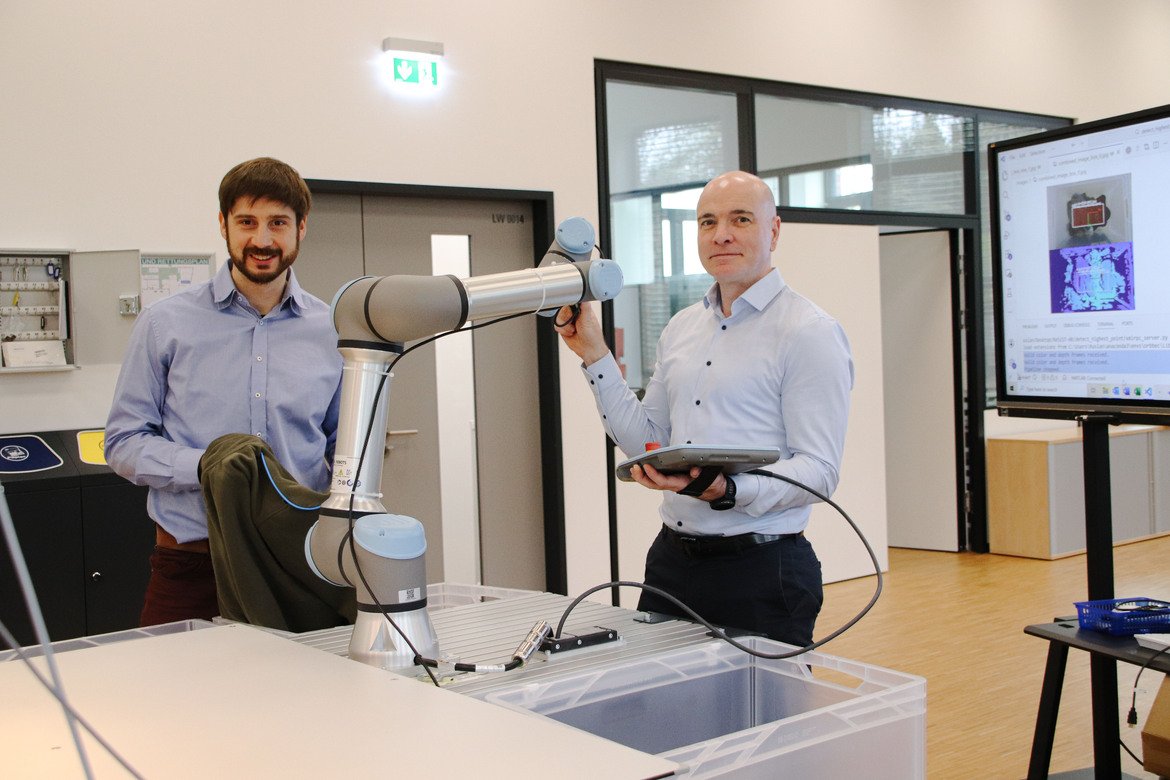
Unlike previous automation booms centered on large industrial arms, much of the recent growth is coming from collaborative robots, or cobots. These systems are designed to operate alongside human workers without heavy safety barriers, expanding automation into small-batch manufacturing, food processing, and logistics.
Cobots now represent a growing share of global installations, up sharply over the past decade. Japanese firms are investing in AI-enabled systems capable of adapting to variable environments and learning tasks through demonstration.
Research from Japanese universities indicates that AI-integrated cobots significantly reduce programming and training time, a critical advantage for factories struggling to retain skilled workers.
This shift toward flexible automation reflects a broader transformation in robotics. Intelligence, rather than pure mechanical precision, is becoming the defining competitive factor.
Robotics and the New Labor Equation
The record order data reflects a deeper economic reality. In many advanced economies, there are not enough workers to sustain current industrial output without automation.
For countries facing demographic decline, robotics is increasingly viewed as essential infrastructure rather than discretionary investment. Governments are responding with targeted subsidies for next-generation robotics research and manufacturing support.
However, the automation surge also raises questions about workforce adaptation. While robots can fill gaps in physically demanding roles, long-term productivity gains depend on retraining programs and integration strategies that balance efficiency with employment stability.
For Japan’s robotics industry, the current moment represents both opportunity and urgency. Global labor shortages provide a powerful tailwind. But as competitors scale rapidly and AI reshapes manufacturing systems, technological leadership will depend on sustained innovation.
The record-setting quarter suggests that automation is entering a new phase. Not one driven primarily by cost savings, but by the fundamental need to maintain industrial capacity in a world where human labor is becoming increasingly scarce.