Linkerbot Targets $6 Billion Valuation as Dexterous Robotic Hand Market Surges

Beijing-based Linkerbot, which claims over 80% of the global market for high-degree-of-freedom robotic hands, is targeting a $6 billion valuation in its next funding round, double the $3 billion valuation established in a Series B+ round closed last week.

By Daniel Krauss | Edited by Kseniia Klichova Published:
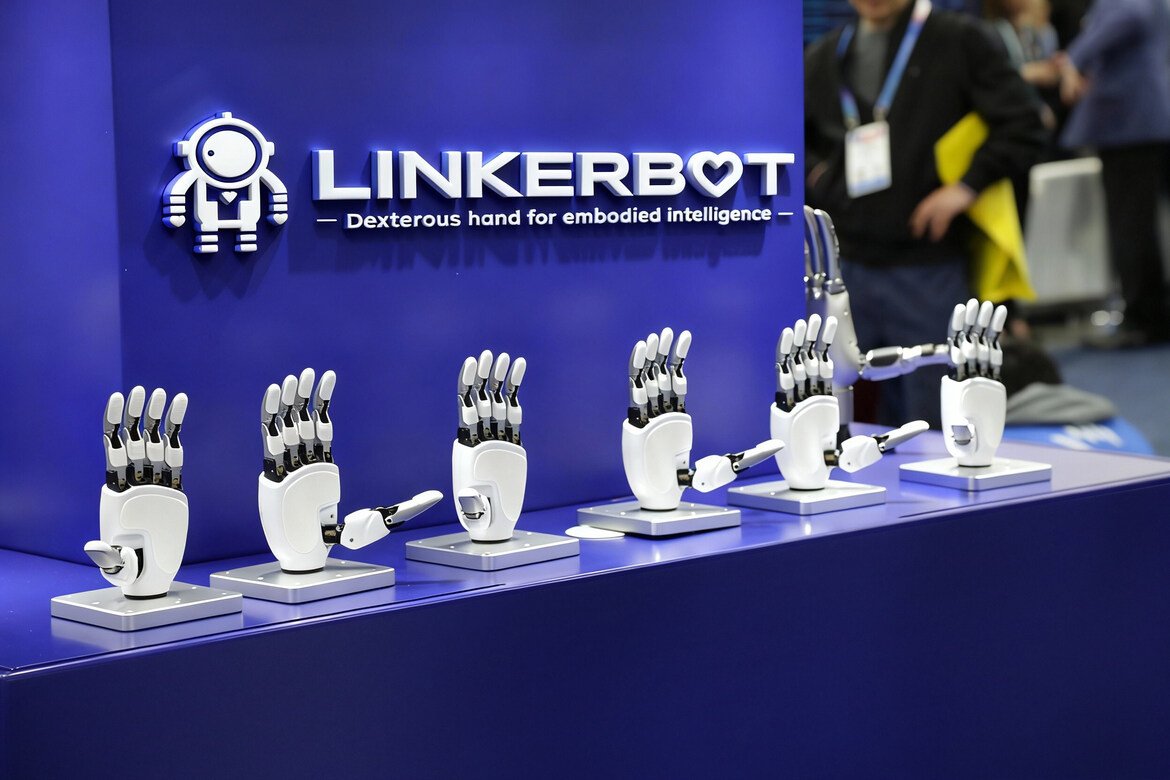
A highly dexterous robotic hand performing precision manipulation tasks. Photo: LINKERBOT

Linkerbot, a Beijing-based robotics startup specializing in dexterous robotic hands for humanoid platforms, is targeting a $6 billion valuation in its next financing round – double the $3 billion valuation established in a Series B+ round closed last week. The two-year-old company currently claims over 80% of the global market for high-degree-of-freedom robotic hands and is producing approximately 5,000 units per month, with plans to scale to 10,000 monthly units soon.

The latest funding round drew participation from state-backed Zhongguancun Science Park Fund, Bank of China Asset Management, and Fosun Capital, alongside existing backers Alibaba’s Ant Group and Sequoia spin-off HongShan Group. The company has not disclosed when the next round will launch or whether the $6 billion target is being pursued through private investment or an IPO.

Why Hands Are the Hard Problem

The robotic hand is widely regarded as the most mechanically and computationally demanding component in a humanoid robot. “The hand is the most complex part of the whole humanoid robot,” said Georg Stieler, head of robotics and automation at technology consultancy Stieler. “Elon Musk described on several occasions that the part was taking more than half of their whole engineering effort for Tesla’s Optimus.”

Linkerbot’s hands can thread a needle, turn screws rapidly, grasp deformable soft objects, and perform high-precision manufacturing tasks. Its O6 lightweight model can carry a 50-kilogram load despite weighing only 370 grams – a strength-to-weight ratio the company describes as a key advantage for industrial applications where miniaturization matters. Key components including joint modules, motors, and reducers are manufactured in-house, using specialized self-lubricating and corrosion-resistant polymers.

The LinkerSkillNet Platform

Beyond hardware, Linkerbot has built LinkerSkillNet, a multimodal data collection platform that converts human dexterous skills into standardized, reusable robotic capabilities. The platform currently contains over 500 skills and functions as what the company claims is the world’s largest real-world dexterous manipulation dataset – a training resource that gives its hands a software advantage alongside the mechanical one.

“We aren’t just making hands. Our goal is to replicate the entire library of human dexterous skills within our hardware,” said CEO Alex Zhou.

A More Pragmatic Deployment Path

Linkerbot is also addressing the cost barrier that has slowed humanoid adoption in factories. Leading industrial humanoid platforms from Unitree, Agibot, and UBTECH currently cost between $100,000 and $150,000 per unit. Linkerbot’s hands can be mounted directly onto existing robotic arms, allowing manufacturers to add dexterous manipulation capability to infrastructure they already own rather than purchasing a complete humanoid system.

“Chinese factory owners are extremely pragmatic. They’ve realised that for most factory work, two arms and a pair of dexterous hands are enough,” said Zhou. “Currently, many of our customers simply mount our hands onto existing robotic arms rather than buying a full humanoid.”

The company supplies leading Chinese humanoid manufacturers as well as foreign industrial clients operating under nondisclosure agreements. It has over 400 employees and five factories across Beijing and Shenzhen, and is developing intelligent production lines where robotic hands are used to manufacture other robotic hands.

Investor interest in the Chinese humanoid supply chain has accelerated significantly following Unitree’s widely viewed Spring Festival performance and the Beijing half-marathon in April. Unitree filed for a Shanghai IPO in March targeting a valuation of up to $7 billion, and Linkerbot’s trajectory suggests the supply chain layer is attracting comparable capital at comparable speed.

Galaxy Corporation Opens Robot Theme Park in Seoul Featuring K-Pop Concerts and Portrait-Drawing Robots

South Korean AI entertainment company Galaxy Corporation has opened Galaxy Robot Park in Seoul’s Gangdong district, a 16,500 square-meter venue combining robot performances, K-pop concerts, and interactive experiences, with a soft launch timed to Children’s Day.

By Rachel Whitman | Edited by Kseniia Klichova Published:
Robots performing on stage at an entertainment venue in Seoul, combining K-pop concert production with AI-driven interactive audience experiences. Photo: Galaxy Corporation

Galaxy Corporation, a South Korean AI entertainment technology company, opened Galaxy Robot Park in Godeok-dong, Gangdong-gu, Seoul on Tuesday, timed to coincide with Children’s Day. The venue covers approximately 16,500 square meters and is designed as a permanent cultural platform combining robot performances, interactive experiences, and media content.

The opening marks one of the first facilities globally to position robots not as industrial tools or research subjects but as entertainment performers in a purpose-built public venue.

What the Park Offers

The centerpiece of the facility is Robot Arena, an experiential program designed to demonstrate how robot technology can engage with human emotion and daily life. Current programming includes a Robot K-Pop Concert, a Portrait Performance in which robots draw portraits of visitors on demand, and an Interactive Robot Experience targeted at children.

For the Children’s Day opening, Galaxy Corporation invited approximately 100 children, including 70 from single-parent families and children with borderline intelligence, to experience the programs ahead of general public access.

A New Cultural Industry Model

Galaxy Corporation is positioning the park as a template for a new category of robot-based cultural entertainment rather than a conventional technology exhibition. The company plans to expand its robot performance and experience content over time, developing media properties alongside the physical venue.

“Galaxy Robot Park will be a starting point for the expansion of robot culture beyond a simple theme space,” said CEO Choi Yongho. “We plan to expand into the global market starting from Korea.”

The facility reflects a broader pattern in South Korea and China of deploying humanoid and performance robots in public-facing entertainment contexts – from Spring Festival gala appearances to airport guides to sports events – as a way of normalizing robot presence in everyday social environments while generating commercial revenue from the technology before industrial deployment reaches scale.

Artificial Intelligence (AI), News, Robots & Robotics

Meta Acquires Humanoid AI Startup ARI to Advance Robot Control and Physical Intelligence

Meta has acquired Assured Robot Intelligence, a humanoid robotics startup building foundation models for robot control and self-learning, with the founding team joining Meta’s Superintelligence Labs research division.

By Laura Bennett | Edited by Kseniia Klichova Published:
A humanoid robot performing adaptive physical tasks in a dynamic environment, guided by foundation models trained on human behavior data. Photo: Kseniia Klichova / RobotsBeat

Meta has acquired Assured Robot Intelligence, known as ARI, a startup building foundation models for humanoid robots to perform physical labor in complex, human-occupied environments. The financial terms were not disclosed. ARI’s founding team, including co-founders Xiaolong Wang and Lerrel Pinto, will join Meta’s Superintelligence Labs research division.

“We acquired Assured Robot Intelligence, a company at the frontier of robotic intelligence designed to enable robots to understand, predict, and adapt to human behaviors in complex and dynamic environments,” a Meta spokesperson said.

Who ARI’s Founders Are

The acquisition is notable for the caliber of the researchers involved. Xiaolong Wang was previously a researcher at Nvidia and an associate professor at UC San Diego, with a research background in robot learning and computer vision. Lerrel Pinto previously taught at NYU and co-founded Fauna Robotics, a kid-size humanoid startup acquired by Amazon last month. Both co-founders carry significant academic and industry credentials in the robotics AI research community.

ARI was building foundation models intended to enable humanoid robots to perform a broad range of physical tasks, including household chores – a use case that requires robots to operate reliably in unstructured environments with variable object configurations and human presence.

Meta’s Humanoid Ambitions

Meta researchers have been working on humanoid robotics technology for several years. A leaked internal memo in early 2025 outlined ambitions to develop both AI models and hardware for a consumer humanoid robot. The ARI acquisition accelerates the AI model side of that program, adding a team with specific expertise in whole-body humanoid control and self-learning systems.

“This team will bring deep expertise in how we can design our models and frontier capabilities for robot control and self-learning to whole-body humanoid control,” the Meta spokesperson said.

The acquisition also reflects a broader thesis gaining traction in the AI research community: that the path toward artificial general intelligence may require training AI models through direct physical interaction with the real world, rather than on data alone. Robots that learn by doing – adapting through experience in dynamic environments – generate a class of training signal that text and image datasets cannot replicate.

Industry Context

The ARI deal follows Amazon’s acquisition of Fauna Robotics last month and is part of an accelerating pattern of large technology companies acquiring robotics AI research teams rather than building the capability internally from scratch. Meta, Amazon, Google, and Apple have all made moves in physical AI over the past year, reflecting a shared view that embodied intelligence is becoming a foundational capability rather than a peripheral research area.

Market size projections for the humanoid robot sector vary significantly – Goldman Sachs estimates a $38 billion market by 2035, while Morgan Stanley projects $5 trillion by 2050 – a spread that reflects both the sector’s long-term potential and the substantial uncertainty that remains around commercialization timelines and deployment scale.

Nvidia and Doosan Robotics to Develop AI-Powered Industrial Robot Platform

Nvidia and Doosan Robotics have announced plans to connect Doosan’s agentic robot operating system with Nvidia’s simulation and training infrastructure, targeting an intelligent robot solution launch in 2027 and an industrial humanoid by 2028.

By Daniel Krauss | Edited by Kseniia Klichova Published:
A collaborative robotic arm operating in an industrial setting, integrated with AI-powered control and simulation software for autonomous task execution. Photo: Doosan Robotics

Nvidia and Doosan Robotics have agreed to collaborate on physical AI for industrial robots, connecting Doosan’s agentic robot operating system with Nvidia’s AI simulation and training infrastructure. The announcement followed a visit by Madison Huang, Senior Director of Omniverse and Robotics Product Marketing at Nvidia and the eldest daughter of CEO Jensen Huang, to Doosan Robotics’ Innovation Center in Bundang-gu, Seongnam, South Korea, on Wednesday.

Huang met with Doosan Robotics CEO Kim Min-pyo to discuss the technical cooperation framework and outline a product roadmap built around the combined platform.

What the Partnership Will Build

The two companies plan to integrate Doosan’s agentic robot operating system – currently in development – with Nvidia’s Isaac simulation, reinforcement learning, and edge compute infrastructure to create a robot execution platform for industrial applications. The focus is on reliability in the field: the ability of a robot to carry out complex, adaptive tasks without errors in unstructured manufacturing environments.

Doosan Robotics plans to unveil an intelligent robot solution based on the agentic OS in 2027 and release an industrial humanoid by 2028. The companies intend to present the results of the collaboration at major global exhibitions including CES next year.

“The success of physical AI depends not only on the intelligence of AI models but also on the stability of the execution platform that drives them without errors in the field,” said Kim. “We will combine Doosan’s hardware manufacturing capabilities with Nvidia’s software ecosystem to commercialize intelligent robot solutions and industrial humanoids.”

A Pattern of Korean Outreach

The Doosan visit was part of a broader tour of South Korean technology companies by Huang, who also met with LG Electronics, Hyundai, Samsung Electronics, and SK Hynix in the same period. The visits reflect Nvidia’s active effort to build physical AI partnerships across South Korea’s industrial and semiconductor ecosystem – a market that combines advanced manufacturing capability, significant robotics investment, and chip production infrastructure relevant to edge AI deployment.

Doosan Robotics, listed on the Korea Exchange, is one of South Korea’s leading collaborative robot manufacturers, with a product line focused on industrial arms used in manufacturing and logistics. The agentic OS under development represents the company’s push to add AI-driven autonomy and decision-making capability to its existing hardware portfolio, moving from programmable cobots toward systems capable of adapting to task variation without explicit reprogramming.

Artificial Intelligence (AI), Business & Markets, News, Robots & Robotics

MagicLab Robotics Unveils MagicBot X1 and World Model at Silicon Valley Summit, Targets $14 Billion Revenue by 2036

MagicLab Robotics held its Global Embodied Intelligence Summit in Silicon Valley, unveiling the MagicBot X1 humanoid, the Magic-Mix world model, and a $1 billion developer ecosystem investment, as the company projects $14 billion in annual revenue by 2036.

By Rachel Whitman | Edited by Kseniia Klichova Published: Updated:
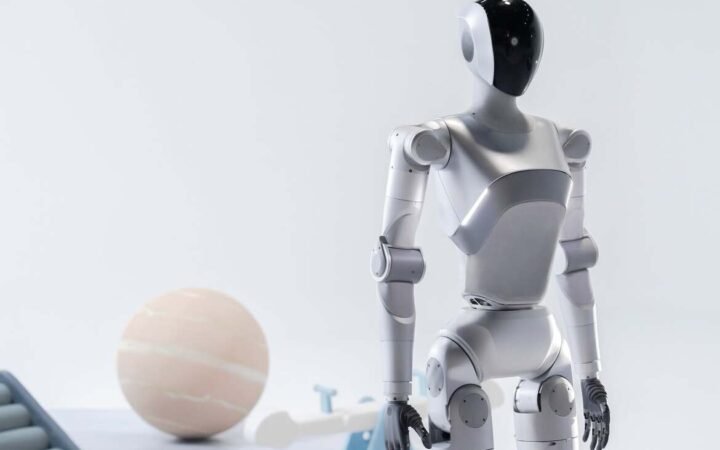
A full-sized humanoid robot demonstrated at a Silicon Valley robotics and embodied AI product summit alongside dexterous hand hardware and AI model infrastructure. Photo: MagicLab Robotics

MagicLab Robotics held its Global Embodied Intelligence Summit in Silicon Valley this week, unveiling a next-generation product portfolio and outlining a long-term commercial trajectory that targets $14 billion in annual revenue by 2036. The company presented MagicBot X1, its flagship humanoid robot; Magic-Mix, a foundational world model for embodied AI; and the H01 dexterous hand, designed for precise manipulation across service and industrial environments.

The summit served as MagicLab’s most significant public positioning event to date, combining product launches with a series of strategic partnership announcements and a major developer ecosystem commitment.

Product Portfolio

MagicLab describes itself as a full-stack embodied AI company, developing hardware and software in-house across humanoid robots, quadruped platforms, and the underlying AI models that power them. The MagicBot X1 is the company’s general-purpose humanoid, designed for deployment across manufacturing, commercial services, and home environments. The H01 dexterous hand is a standalone component targeting precision manipulation use cases. Magic-Mix is the foundational world model that underpins the company’s approach to robot intelligence – enabling systems to understand and interact with real-world environments across variable conditions.

The product ecosystem is organized around nine deployment scenarios: healthcare services, industrial manufacturing, inspection and security, smart guidance, public safety, smart logistics, events and entertainment, scientific research and education, and home living.

Developer Ecosystem and Silicon Valley Partnerships

MagicLab announced a $1 billion investment over five years to build a dedicated developer ecosystem for robotics, enabling third-party development on its platform and supporting a global network of partners. Under its Co-Create 1000 Initiative, the company has entered strategic collaborations with four Silicon Valley-based AI companies – Openmind, PrismaX AI, Cosmicbrain AI, and Physis – as initial ecosystem partners.

The initiative reflects a platform strategy: rather than building every vertical application internally, MagicLab is positioning its hardware and world model as a foundation that third-party developers can build on, extending its reach across industries and use cases faster than an integrated approach would allow.

Global Footprint and Revenue Trajectory

International markets accounted for 60% of MagicLab’s total sales in 2025, with operations spanning more than 50 countries and regions. The company did not disclose absolute revenue figures, making the $14 billion 2036 projection difficult to evaluate against current scale. The trajectory implies either a very large current revenue base or an expectation of extraordinary compound growth – or both – over a ten-year period.

The Silicon Valley location for the summit is itself a strategic signal. With Chinese humanoid manufacturers increasingly present in international markets, hosting a major product event in the center of the U.S. technology industry communicates a direct ambition to compete for enterprise customers, developer talent, and strategic partnerships on a global basis rather than from a China-first starting point.

News, Robots & Robotics, Science & Tech

Beeple Installs Robot Dogs with Musk and Zuckerberg Heads at Berlin’s Neue Nationalgalerie

American digital artist Beeple has installed a group of robot dogs fitted with hyper-realistic silicone heads modeled after Elon Musk, Mark Zuckerberg, Jeff Bezos, Andy Warhol, and Pablo Picasso at Berlin’s Neue Nationalgalerie, where they roam freely and print AI-transformed images of their surroundings.

By Laura Bennett | Edited by Kseniia Klichova Published: Updated:

American digital artist Beeple, whose legal name is Mike Winkelmann, has opened an interactive installation at Berlin’s Neue Nationalgalerie featuring robot dogs fitted with hyper-realistic silicone heads modeled after some of the most recognizable figures in technology and cultural history. The dogs roam freely through the museum, carrying the likenesses of Elon Musk, Mark Zuckerberg, Jeff Bezos, Andy Warhol, and Pablo Picasso – as well as a head modeled after Beeple himself.

The work, entitled “Regular Animals”, was first shown at Art Basel Miami Beach in 2025 and is now on extended display in Berlin.

How the Installation Works

Each robot dog is equipped with integrated cameras that continuously capture images of its surroundings as it moves through the gallery. Those images are processed by AI and periodically printed – with the output filtered through the personality or aesthetic worldview of the figure each dog represents. The Picasso dog produces images in Cubist style. The Warhol dog outputs in pop art. The technology billionaire dogs reinterpret their surroundings through AI models conditioned on each figure’s public identity and worldview.

The printing mechanism is deliberately unglamorous: the dogs occasionally stop and produce the images in a manner the artist and press have described as defecating. The choice of delivery method is part of the work’s visual language.

The Commentary Behind the Hardware

Beeple has been direct about the installation’s intent. “In the past, our view of the world was shaped in part by how artists saw the world,” he told the Associated Press. “How Picasso painted changed how we saw the world, how Warhol talked about consumerism, pop culture, that changed how he saw those things.”

The figures who shape perception now, he argues, are not artists but technology executives controlling algorithmic platforms that determine what billions of people see and do not see. “That’s an immense amount of power that I don’t think we’ve fully understood, especially because when they want to make a change, they don’t need to lobby the U.N. They don’t need to get something through Congress or the EU – they just wake up and change these algorithms.”

By placing those figures’ faces on quadruped robots – hardware associated with surveillance, industrial automation, and military research – the installation draws a connection between algorithmic power and physical AI systems that is rarely made this explicitly in a public cultural setting.

Lisa Botti, the exhibition’s curator, said artificial intelligence is among the phenomena most significantly affecting daily life and that museums are the appropriate spaces for society to examine such shifts. Beeple, according to Christie’s, is the third most expensive living artist to sell at auction, after David Hockney and Jeff Koons.

Artificial Intelligence (AI), News, Robots & Robotics
Exit mobile version