Pokémon Go Data Is Now Training Delivery Robots

Location data collected from millions of Pokémon Go players is now being used to train delivery robots, highlighting the unexpected role of consumer AR games in robotics development.

By Laura Bennett | Edited by Kseniia Klichova Published:
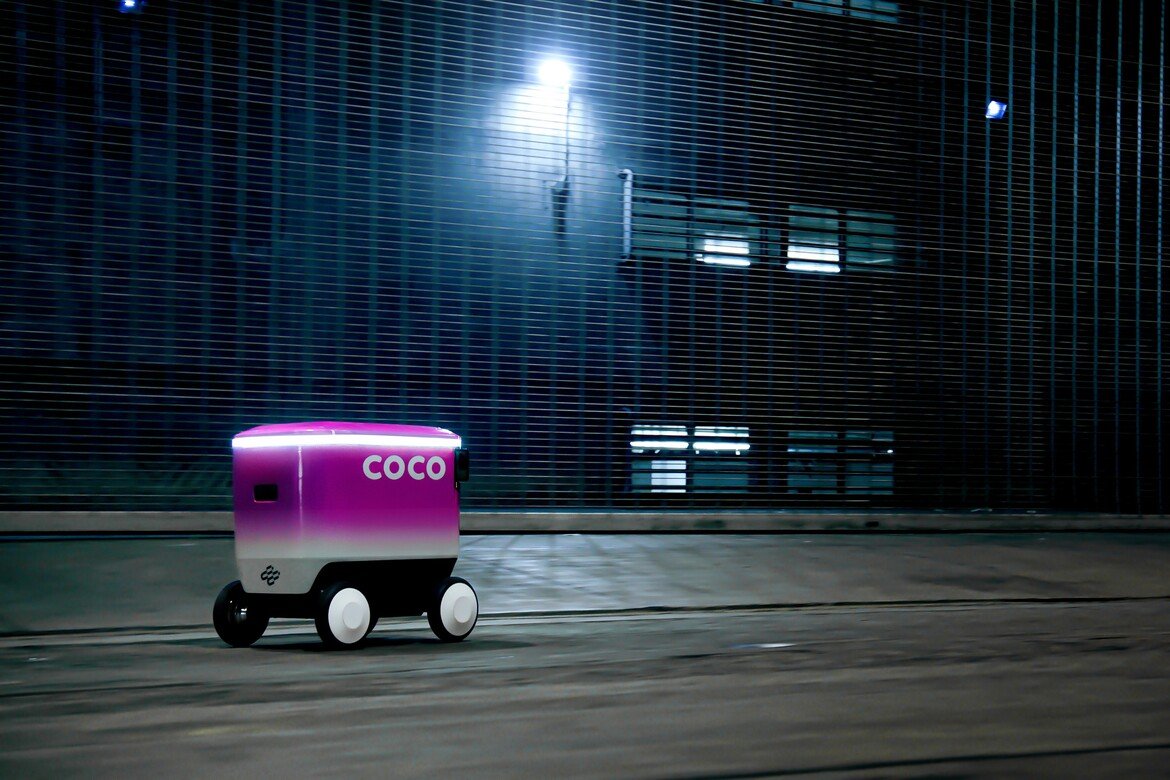
A small delivery robot navigates a city sidewalk as spatial data originally collected through mobile AR games helps improve robotic navigation in urban environments. Photo: Coco Robotics

Millions of people who spent years chasing virtual Pokémon through city streets unknowingly helped create one of the largest real-world datasets now being used to train robots.

Niantic Spatial, a company spun out of the augmented reality developer behind Pokémon Go, has partnered with Coco Robotics to improve navigation for urban delivery robots. The collaboration uses spatial mapping data collected from players of Niantic’s games to help robots move through complex city environments.

The project highlights an unexpected intersection between gaming, artificial intelligence, and robotics: the same technology used to place digital creatures on a phone screen can also guide autonomous vehicles through real-world streets.

Turning AR Gameplay into Spatial Intelligence

When Pokémon Go launched in 2016, millions of players explored cities while using their smartphones to capture virtual creatures layered onto real-world environments.

Behind the scenes, the game relied on Niantic’s Visual Positioning System (VPS), a technology designed to understand a user’s location by analyzing surrounding landmarks rather than relying solely on GPS signals.

Players contributed to this system by scanning buildings, monuments, and other public spaces from different angles using their phones.

Over time, these scans created detailed three-dimensional maps of real-world locations.

The data helped Niantic improve AR accuracy in its games, but it also built a massive spatial dataset describing how cities look from ground level – exactly the type of information robots need to navigate sidewalks and intersections.

The Same Problem as Catching Pikachu

Niantic Spatial now aims to apply that dataset to robotics.

The company’s first robotics partnership is with Coco Robotics, which operates a fleet of small autonomous delivery robots designed to transport food and groceries through city streets.

Coco’s robots currently operate in several cities, including Los Angeles, Chicago, Miami, Jersey City, and Helsinki.

Navigating urban environments is one of the hardest problems in robotics. Tall buildings interfere with GPS signals, sidewalks are crowded with pedestrians, and conditions change constantly.

Niantic’s VPS technology helps solve this problem by allowing robots to identify their exact location by comparing camera images to its spatial database of landmarks.

According to Niantic Spatial CEO John Hanke, the underlying technical challenge is surprisingly similar to what players experienced in the AR game.

In both cases, software must understand how objects move through a complex physical world.

A Dataset Built by Millions of Players

Much of the data powering the system was collected indirectly by players.

Niantic introduced features that encouraged users to photograph and scan locations in exchange for rewards within the game, such as items or rare Pokémon.

These contributions helped build a detailed visual model of cities under different lighting conditions, weather, and viewing angles.

While Niantic has long acknowledged that its games collect environmental data, the revelation that these datasets are now helping train robots may surprise some players.

Still, for robotics developers, such datasets are extremely valuable.

Unlike simulation environments or small-scale robotics experiments, Niantic’s data reflects the messy complexity of real-world cities.

Gaming Data Meets Urban Robotics

The collaboration illustrates a broader trend in robotics development: companies are increasingly relying on large-scale datasets collected outside traditional robotics research.

Consumer technologies – including smartphones, cameras, and games – are generating vast amounts of real-world visual information that can help train autonomous systems.

For delivery robots attempting to navigate dense urban environments, that data may prove critical.

If the partnership succeeds, the hours players spent exploring parks, sidewalks, and landmarks in search of digital creatures may end up helping robots find their way through the same streets.

In other words, catching Pikachu may have helped teach a robot how to deliver pizza.

Automation, News, Robots & Robotics

Samsung Targets Robotic Hands as the Next Breakthrough in Humanoid Robotics

Samsung has launched a dedicated robotics research group focused on developing advanced robotic hands, betting that dexterity will be the key to unlocking practical humanoid robots.

By Rachel Whitman | Edited by Kseniia Klichova Published:
A robotic hand prototype designed for precision manipulation illustrates the growing focus on dexterous robotics systems for manufacturing and humanoid robots. Photo: Kseniia Klichova / RobotsBeat

Samsung Electronics is placing a major strategic bet on one of the most difficult problems in robotics: building robot hands capable of manipulating objects with human-like precision.

The company recently established a new research group called Hand Lab within its Future Robotics Task Force. The initiative focuses on developing advanced robotic hands that could eventually enable humanoid robots and automated manufacturing systems to handle delicate tasks currently performed by humans.

Industry analysts view the move as a signal that Samsung intends to compete more aggressively in the emerging humanoid robotics market.

While robots have become increasingly capable of walking, navigating environments, and maintaining balance, engineers say the real challenge lies elsewhere – dexterous manipulation.

Why Robotic Hands Matter

In robotics research, the ability to move like a human is no longer the primary obstacle.

Modern robots can climb stairs, recover from falls, and navigate complex environments with increasing reliability. But performing tasks that humans consider simple – tightening a screw, picking up a fragile object, or assembling small components – remains extremely difficult.

These tasks require a combination of force control, tactile feedback, and coordinated finger motion that traditional industrial robots struggle to achieve.

Most factory robots rely on simple grippers designed for highly structured environments. Humanoid robots, however, must interact with tools, components, and devices originally designed for human hands.

The result is a growing consensus within robotics research that the future of humanoid robots depends heavily on hand design.

Samsung’s decision to create a specialized research group dedicated to robotic hands reflects this shift in priorities.

A Tendon-Driven Approach to Dexterity

According to industry reports, Samsung’s robotic hand project is exploring a tendon-driven design, a system inspired by the anatomy of the human hand.

Instead of placing motors directly inside each finger, artificial tendons – cables running through the arm – pull and control finger movements. This architecture allows for smoother motion, finer force control, and potentially greater energy efficiency.

The approach is significantly more complex to engineer and manufacture than conventional robotic grippers, which is why most industrial robots avoid it.

However, tendon-driven systems can produce more natural and adaptable movements, making them well suited for humanoid robotics.

Samsung also plans to incorporate tactile sensors that allow robotic fingers to detect pressure, texture, and contact forces. These signals could feed into machine-learning systems that help robots adjust their grip in real time.

Such capabilities are considered essential for what researchers increasingly call physical AI – systems that combine artificial intelligence with real-world robotic interaction.

Building a Robotics Ecosystem

Samsung’s focus on robotic manipulation is part of a broader strategy to build a vertically integrated robotics ecosystem.

Over the past several years, the company has expanded its investments in robotics technology across multiple business units.

Samsung SDI is developing batteries tailored for robotics systems, while Samsung Electro-Mechanics is working on actuators and components for robotic motion.

The company also acquired a controlling stake in Korean robotics developer Rainbow Robotics, known for its humanoid and dual-arm robotic platforms.

Together, these initiatives could allow Samsung to integrate hardware, sensors, computing, and AI into a unified robotics platform.

The company has also outlined a longer-term plan to create AI-powered autonomous factories by 2030, where intelligent robots perform tasks ranging from logistics and inspection to complex assembly.

In such environments, robotic hands capable of delicate manipulation could become the key enabling technology.

Global Competition Intensifies

Samsung’s push into robotic manipulation also reflects rising global competition in humanoid robotics.

China’s robotics sector is expanding rapidly, with analysts projecting tens of thousands of humanoid robots could be produced annually within the next few years.

Chinese manufacturers have already achieved scale in service robots such as delivery and cleaning machines, often competing on cost.

Samsung appears to be taking a different approach – focusing on technological differentiation rather than mass production.

If the company succeeds in developing robotic hands capable of human-level dexterity, it could unlock new applications not only in electronics manufacturing but also across logistics, construction, and industrial automation.

Within robotics circles, engineers often summarize the challenge with a simple observation:

Many robots can walk.

Very few can truly use their hands.

Samsung’s new Hand Lab is designed to change that.

Humanoid Robot Escorted by Police After Startling Pedestrian in Macau

A humanoid robot used for promotional activities in Macau was escorted away by police after startling a pedestrian, highlighting new challenges as robots increasingly appear in public spaces.

By Daniel Krauss | Edited by Kseniia Klichova Published: Updated:
A humanoid robot stands on a city street during a public demonstration as police intervene after the machine startled a pedestrian in Macau. Photo: Kseniia Klichova / RobotsBeat

A humanoid robot operating in a residential neighborhood in Macau was escorted away by police after startling an elderly pedestrian, an incident that has sparked debate about how robots should operate in public spaces.

The episode occurred near a housing complex in the Patane district when a Unitree G1 humanoid robot was reportedly following behind a woman walking along the street. According to local reports, the 70-year-old pedestrian became alarmed after noticing the robot behind her while she was checking her phone.

A video circulating online shows the woman confronting the robot while several onlookers watch. Police later arrived at the scene and escorted the robot away from the area.

The woman was later taken to a hospital after reporting that she felt unwell. Authorities said she was examined and discharged, and that no physical contact or injuries occurred.

A Promotional Robot in the Wrong Place

Local officials said the robot belonged to an educational center and had been used for promotional activities in the neighborhood.

According to representatives from the organization operating the machine, the encounter was accidental. The woman had stopped in the middle of the walkway while looking at her phone, and the robot – unable to navigate around her – remained stationary behind her until she turned around and noticed it.

The robot’s illuminated sensors and late-evening timing may have contributed to the surprise.

Police returned the machine to its operator and advised him to exercise greater caution when using robots in public areas.

Public Robots and Social Reactions

The incident quickly spread online after video footage showed officers walking the humanoid robot away from the scene in what many viewers described as an unusual “perp walk”.

The moment triggered widespread discussion across social media platforms.

Some observers treated the situation humorously, joking that the robot had been “arrested”. Others used the moment to raise more serious questions about safety, consent, and etiquette when robots interact with people in public environments.

Humanoid robots such as the Unitree G1 have become increasingly visible in Chinese cities and online videos, where they are often used for demonstrations, entertainment, and social media content.

However, their presence in everyday public spaces remains relatively new.

The Challenge of Robots in Public Spaces

As robotics technology becomes more accessible, incidents like the Macau encounter highlight the growing need for guidelines governing how machines operate in shared environments.

Unlike industrial robots or delivery robots that follow defined paths, humanoid robots can move through public spaces designed for human interaction.

That flexibility raises new questions about awareness, human perception, and social expectations.

Even when operating safely, robots can surprise or confuse people who are not accustomed to encountering autonomous machines in everyday settings.

Researchers studying human-robot interaction note that designing robots that behave predictably – and communicate their intentions clearly – will be essential as machines become more visible in public life.

For now, the Macau incident serves as a reminder that the social side of robotics may be just as important as the technical one.

News, Robots & Robotics

STMicroelectronics Plans Humanoid Robots and Worker Retraining to Modernize Chip Factories

STMicroelectronics plans to deploy humanoid robots and retrain workers in older semiconductor plants as the European chipmaker looks to boost efficiency and avoid factory closures.

By Rachel Whitman | Edited by Kseniia Klichova Published: Updated:
A robotic system handles silicon wafer carriers inside a semiconductor fabrication facility as chipmakers explore automation to modernize aging plants. Photo: STMicroelectronics

European semiconductor manufacturer STMicroelectronics is preparing to introduce humanoid robots into its production facilities while retraining employees for new roles, as the company attempts to modernize aging chip factories without shutting them down.

The plan was outlined by company executives during a semiconductor industry conference in Sopot, Poland, where STMicroelectronics’ manufacturing leadership demonstrated early robotics deployments designed to automate repetitive production tasks.

The initiative reflects the growing role of robotics in semiconductor manufacturing as companies attempt to maintain competitiveness against newer, highly automated facilities in Asia.

Automating Repetitive Tasks in Older Fabs

According to STMicroelectronics, robots are being introduced to handle physically demanding or repetitive work inside fabrication plants.

One demonstration showed a robotic system loading silicon wafer carriers into production equipment, a task that requires precision and repetition across continuous shifts.

Executives indicated that the company could deploy more than 100 humanoid robots across its facilities over the next few years.

The machines are expected to work alongside existing automation systems already used in semiconductor manufacturing.

While fabs are already among the most automated industrial environments, certain tasks still require human operators, particularly in older plants that were built before current automation technologies became standard.

Humanoid robots are being explored as a way to bridge that gap without requiring complete redesigns of existing factories.

Modernizing Aging Semiconductor Facilities

The strategy comes as European semiconductor companies face increasing competition from highly automated production lines in countries such as China.

Many of Europe’s chip fabrication plants were built decades ago and require substantial investment to remain competitive.

However, rebuilding or replacing existing fabs can be prohibitively expensive, particularly in regions where regulatory processes and labor negotiations add complexity to large industrial projects.

By introducing robotics and improving workforce skills, STMicroelectronics hopes to extend the lifespan of its older facilities while improving productivity.

The company has stated that maintaining manufacturing capacity in Europe remains a priority.

Workforce Transition and Skills Development

Alongside robotics deployment, the company plans to retrain workers for higher-skilled roles in semiconductor manufacturing.

The shift reflects a broader transformation taking place across industrial sectors where automation is increasingly changing the nature of factory work.

Instead of eliminating jobs entirely, the company aims to move employees into positions that require technical expertise in operating and maintaining advanced manufacturing systems.

Industry executives say these skills are already in short supply.

Humanoid robots are expected to cover certain repetitive roles across multiple shifts. In factories that operate continuously, a single robot could potentially replace several shift positions performing the same task.

However, company leaders emphasize that the goal of the initiative is to improve efficiency rather than close facilities.

Robotics and Europe’s Semiconductor Strategy

The move also intersects with broader debates about Europe’s semiconductor strategy.

Government programs such as the European Chips Act are designed primarily to support new semiconductor projects rather than upgrades to older facilities.

Industry groups are now advocating for expanded support in a potential “Chips Act 2.0”, arguing that existing production infrastructure should also receive investment.

For companies like STMicroelectronics, robotics could become a key tool for keeping older manufacturing plants economically viable while avoiding costly closures.

As semiconductor manufacturing becomes more complex and globally competitive, automation may increasingly determine whether long-established facilities remain part of the industry’s future.

Rivian-Founded Mind Robotics Secures $500 Million for Industrial AI

Mind Robotics, a startup spun out of electric vehicle maker Rivian, has raised $500 million to develop AI-powered industrial robots designed for more adaptable factory automation.

By Daniel Krauss | Edited by Kseniia Klichova Published:
RJ Scaringe, founder and CEO of Rivian and chairman of Mind Robotics, the industrial AI robotics startup that recently raised $500 million to develop next-generation factory automation systems. Photo: Rivian

A robotics startup spun out of electric vehicle manufacturer Rivian has raised $500 million to build a new generation of industrial robots powered by artificial intelligence.

The company, called Mind Robotics, announced the Series A round this week, bringing its total funding to approximately $615 million only months after its launch. The investment values the company at around $2 billion and was co-led by venture firms Accel and Andreessen Horowitz.

Mind Robotics was created in late 2025 by Rivian founder and CEO RJ Scaringe, who now serves as chairman of the robotics startup.

The company’s goal is to address one of the biggest limitations in modern factory automation: the difficulty robots have performing tasks that require dexterity, adaptability, and real-world reasoning.

A Different Approach to Industrial Robotics

Industrial robots have been used in manufacturing for decades, but most systems remain limited to highly structured tasks such as welding, assembly, or material handling.

These machines perform best when working with predictable objects and fixed production lines.

Mind Robotics is attempting to develop robots capable of operating in more dynamic manufacturing environments where parts vary, conditions change, and tasks require human-like manipulation.

The startup plans to build AI systems that allow robots to interpret their surroundings and adapt their movements in real time.

Unlike many robotics startups that are focusing on humanoid machines, Mind Robotics is taking a more traditional approach to hardware design.

Scaringe has suggested that the company’s focus is on practical factory automation rather than building robots designed to resemble humans.

Training Robots with Factory Data

One advantage the startup brings to the robotics industry is access to manufacturing data from Rivian’s electric vehicle factories.

These facilities provide a real-world environment where robotic systems can be trained and tested on production tasks.

The company aims to use this data to develop AI models that help robots understand physical interactions and perform tasks requiring precision and adaptability.

According to Mind Robotics, much of the value generated inside factories today still depends on human workers performing tasks that traditional automation cannot easily replicate.

By combining robotics hardware with AI models capable of learning from real-world data, the company hopes to automate a broader range of manufacturing activities.

A Growing Investment Wave in Physical AI

The large funding round reflects growing investor interest in robotics companies building AI-driven physical systems.

Over the past year, venture capital firms have increasingly backed startups focused on what many researchers call physical AI – systems that combine machine learning with robots operating in the real world.

Mind Robotics is part of a broader shift toward integrating artificial intelligence directly into industrial automation.

Scaringe has said the company expects to deploy significant numbers of its robots within factories before the end of the year, suggesting an aggressive timeline for moving from research to deployment.

Ties to Rivian’s Technology Ecosystem

Although Mind Robotics operates as an independent company, its relationship with Rivian could extend beyond manufacturing data.

Rivian has recently developed custom semiconductor chips designed to run autonomous driving software inside its vehicles.

Those processors could potentially be used to power robotics systems as well, creating a shared technology foundation between the two companies.

The spinout is also part of a broader pattern emerging at Rivian, which has begun launching new technology ventures alongside its core automotive business.

In 2025 the company also created another startup focused on electric mobility platforms for small cargo vehicles and e-bikes.

Together, these efforts suggest that Rivian is positioning itself not only as a vehicle manufacturer but as a broader developer of robotics and AI technologies.

For Mind Robotics, the next challenge will be proving that AI-powered robots can deliver tangible productivity gains on real factory floors.

Zoox Expands Robotaxi Testing to Phoenix and Dallas

Zoox is expanding testing of its autonomous driving system to Phoenix and Dallas while preparing to deploy its purpose-built robotaxi and integrate its service with the Uber platform.

By Rachel Whitman | Edited by Kseniia Klichova Published:
Zoox’s purpose-built robotaxi is designed for autonomous ride-hailing, featuring a bidirectional vehicle layout and face-to-face seating for passengers. Photo: Zoox

Amazon-owned autonomous vehicle company Zoox is expanding its robotaxi testing program to Phoenix, Arizona, and Dallas, Texas, as the company continues building toward commercial deployment of its purpose-built autonomous vehicles.

The expansion will introduce Zoox’s autonomous driving technology into two additional urban environments while also supporting the launch of new operational infrastructure, including fleet depots and a new operations center in Scottsdale, Arizona.

With these additions, Zoox now operates testing fleets across ten major U.S. markets, reflecting a broader effort by autonomous vehicle developers to gather real-world data across diverse driving conditions.

Testing in New Environments

The first phase of Zoox’s rollout in Phoenix and Dallas will involve a small number of retrofitted SUVs used for mapping and early testing.

These vehicles will initially be driven manually as engineers map city streets and gather environmental data. Autonomous testing will follow, with safety drivers remaining behind the wheel to intervene if necessary.

Once the company completes this phase, Zoox plans to deploy its purpose-built robotaxi vehicles in both cities.

Each location presents unique testing conditions. Phoenix offers an opportunity to evaluate sensor performance and vehicle durability in extreme heat and dusty environments, particularly on high-speed roads common in the region.

Dallas, meanwhile, provides a complex road network and more variable weather patterns, helping engineers refine how the autonomous system handles diverse driving scenarios.

A Partnership with Uber

At the same time, Zoox is expanding its distribution strategy through a new partnership with Uber.

Under a multi-year agreement, Zoox robotaxis will be integrated into Uber’s ride-hailing platform, allowing users to request autonomous rides through the Uber app in selected cities.

The first integration is expected to begin in Las Vegas later this year, followed by Los Angeles in 2027.

Zoox will continue offering rides through its own mobile application as well, effectively operating on both its proprietary platform and Uber’s global network.

The partnership reflects Uber’s strategy of collaborating with autonomous vehicle developers rather than building its own driverless technology.

Uber previously ran an in-house autonomous vehicle program but sold the division after a fatal crash in 2018. Since then, the company has shifted toward forming partnerships with technology developers.

Building the Infrastructure for Autonomous Fleets

Supporting Zoox’s growing robotaxi program is a network of facilities known as Fusion Centers.

The company is opening a third such facility in Scottsdale, Arizona, joining existing centers in Las Vegas and the San Francisco Bay Area.

These facilities function as operational command centers, coordinating autonomous fleets through teleoperations, mission control, and rider support systems.

Fusion Centers allow human operators to assist vehicles in complex scenarios, manage fleet operations, and provide customer service for passengers.

Since launching its early robotaxi service in Las Vegas and testing programs in San Francisco, Zoox says its vehicles have completed more than one million autonomous miles and transported over 300,000 passengers.

The company’s robotaxi design differs from traditional vehicles. The fully autonomous platform eliminates the steering wheel and pedals, replacing them with a bidirectional cabin featuring face-to-face seating intended to encourage social interaction among riders.

The Growing Robotaxi Race

Zoox’s expansion highlights the intensifying competition among companies seeking to deploy autonomous ride-hailing services.

Developers such as Waymo, Cruise, and several emerging startups are all testing driverless vehicles across multiple U.S. cities, racing to demonstrate safe and scalable operations.

For Zoox, the strategy combines purpose-built vehicles, extensive real-world testing, and partnerships with major mobility platforms.

As autonomous driving technology moves from pilot programs toward commercial deployment, cities like Phoenix and Dallas are becoming critical testing grounds for the next phase of driverless transportation.

Automation, Business & Markets, News, Robots & Robotics
Exit mobile version