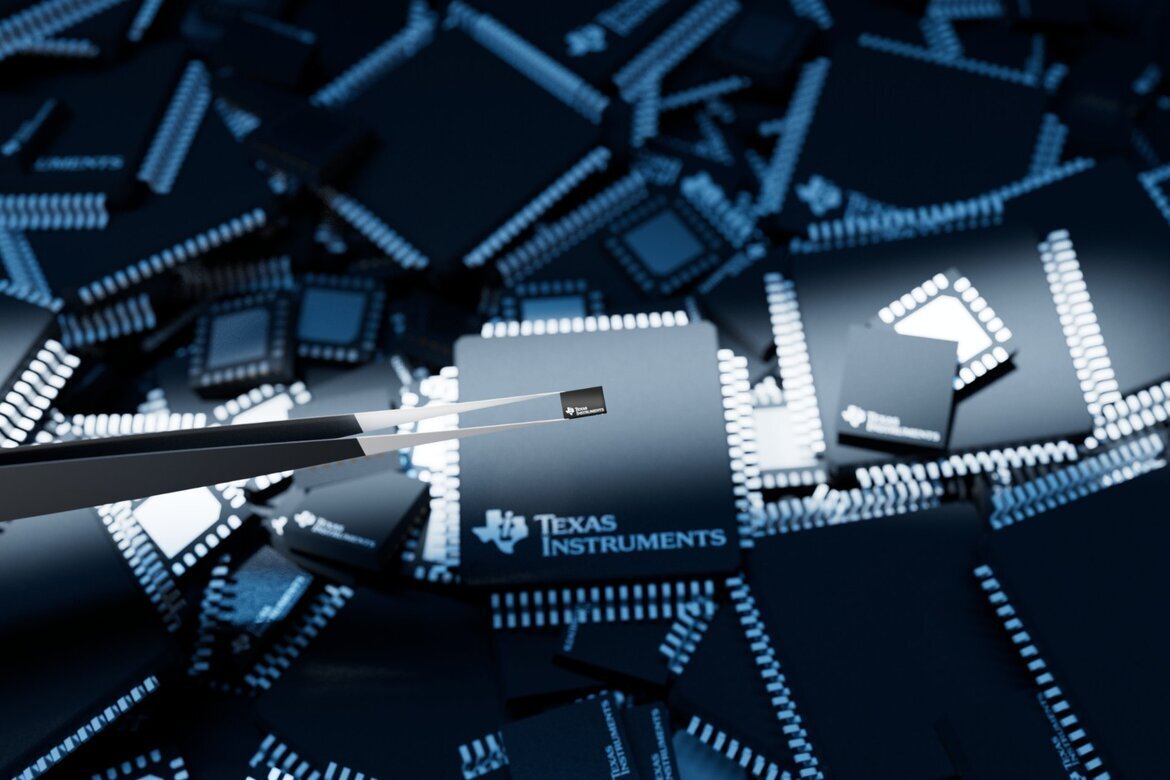

Texas Instruments reported first-quarter revenue of $4.83 billion on Wednesday, a 19% increase from the same period a year ago and well above the $4.53 billion average analyst estimate. Earnings per share of $1.68 also exceeded expectations of $1.27. Shares rose 19% on Thursday, closing at a record high and marking the company’s best single-day gain since 2000. The stock is up 63% for the year.
The results reflect accelerating demand for analog semiconductors – components that regulate power, convert real-world signals into digital data, and perform the essential support functions that more advanced processors depend on to operate.
Data Center and Industrial Growth
CEO Haviv Ilan said on the earnings call that data center segment revenue grew approximately 90% year-over-year, driven by hyperscaler infrastructure buildout from companies including Meta and Amazon. The industrial segment grew 30% over the same period.
Texas Instruments does not manufacture the high-performance AI processors made by Nvidia and AMD, but its analog chips are embedded throughout the power management and signal conversion layers that data centers require to function. As AI infrastructure spending accelerates, demand for these support components scales proportionally with the hardware being deployed.
Second-quarter guidance of between $5 billion and $5.4 billion – representing growth of approximately 17% at the midpoint – suggests the demand environment is expected to remain strong. “If the market wants to grow at the same rate as Q1, we are ready. If it wants to accelerate, we are ready as well,” Ilan said.
Manufacturing Investment and Acquisitions
Texas Instruments is investing $60 billion to build three new fabrication plants in the United States, with additional manufacturing operations in Germany, Japan, and China. Apple CEO Tim Cook committed last year to sourcing critical foundation semiconductors for iPhones and other devices from Texas Instruments’ new Utah and Texas facilities. Other major customers include Nvidia, Ford, Medtronic, and SpaceX.
In February, the company agreed to acquire chip design firm Silicon Laboratories for $7.5 billion, expanding its capabilities in wireless and connectivity chips for industrial and consumer applications. The deal extends Texas Instruments’ reach into the IoT and edge connectivity segments that are becoming increasingly relevant as industrial automation and physical AI deployments proliferate.
Relevance to Robotics and Industrial AI
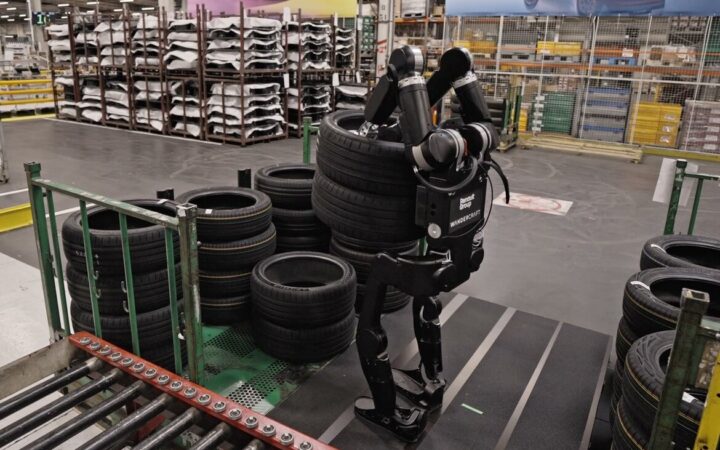
For the robotics and industrial AI sector, Texas Instruments’ results serve as a leading indicator of infrastructure demand. Analog chips are embedded in motor controllers, sensor interfaces, power management systems, and edge compute hardware – components that are present in virtually every industrial robot, autonomous vehicle, and physical AI deployment. The 30% growth in Texas Instruments’ industrial segment reflects the same underlying demand that is driving investment across the robotics supply chain more broadly. As humanoid robots, autonomous vehicles, and AI-driven factory systems scale from pilots to production, the analog semiconductor layer scales with them.
Disclaimer: RobotsBeat is an independent media brand owned and operated by NuvexMedia LLC, publishing news, research, and insights on artificial intelligence, emerging technologies, automation, and related industries. NuvexMedia LLC invests in and collaborates with companies across the AI, Robotics, technology, software, and digital innovation sectors. These relationships do not influence RobotsBeat's editorial coverage, and the publication maintains full editorial independence to provide accurate, timely, and objective information. © 2026 NuvexMedia LLC. All rights reserved. This content is for informational purposes only and should not be considered legal, tax, investment, financial, or other professional advice.