


Toyota is expanding its use of humanoid robots in manufacturing, deploying Digit robots from Agility Robotics at its Canadian production facilities following a year-long pilot. The move signals growing confidence among major automakers that humanoid robots are ready to assist with real industrial tasks.
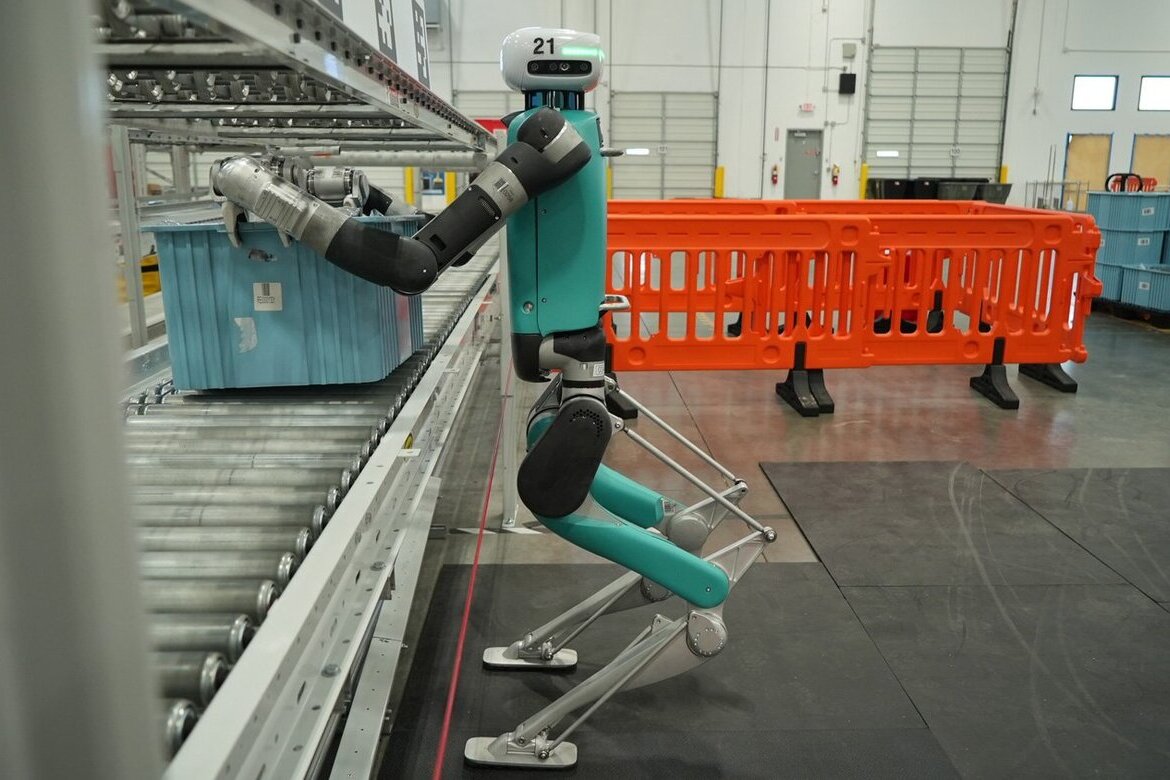
Toyota Motor Manufacturing Canada, the automaker’s largest production operation outside Japan, plans to initially deploy Digit robots to handle repetitive logistics tasks such as loading and unloading containers from automated transport systems. The company operates major assembly plants in Cambridge and Woodstock, Ontario, producing vehicles at significant scale and employing thousands of workers.
The deployment represents one of the clearest examples yet of humanoid robots moving from pilot programs into sustained manufacturing roles.
Moving Beyond Pilot Programs
Toyota’s evaluation of Digit involved multiple phases, including technical validation and onsite trials using three robots. Following the pilot’s success, the company plans to introduce at least seven additional robots, with the potential for further expansion if operational benefits continue.
The initial focus is on material handling tasks within production and logistics workflows. These activities are repetitive and physically demanding, making them ideal candidates for automation.
Humanoid robots offer a distinct advantage in such environments because they can operate within spaces designed for human workers. Unlike traditional industrial robots, which often require specialized infrastructure, humanoids can integrate into existing workflows with minimal facility modification.
Toyota executives emphasized that the deployment is intended to improve both operational efficiency and employee working conditions. Automating routine tasks allows human workers to focus on higher-value activities, while reducing physical strain associated with repetitive manual labor.
A Growing Commercial Footprint for Humanoid Robots
The partnership between Toyota and Agility Robotics reflects a broader trend across the manufacturing and logistics sectors. Major companies are increasingly testing humanoid robots as part of long-term automation strategies.
Digit has already been deployed commercially by logistics provider GXO Logistics, and pilots or deployments are underway at companies including Amazon and automotive and industrial supplier Schaeffler.
These deployments mark a shift from demonstration-driven development toward production-oriented integration. Rather than focusing on technical showcases, robotics companies are prioritizing reliability, safety, and compatibility with existing industrial systems.
Agility Robotics has also developed a cloud-based fleet management platform, allowing companies to monitor and coordinate robot operations at scale. This infrastructure enables humanoids to function as part of integrated production systems rather than isolated machines.
The Strategic Role of Humanoids in Manufacturing
Labor shortages and workforce demographics are accelerating interest in humanoid robotics. Manufacturing facilities often face challenges filling physically demanding roles, particularly in logistics and material handling.
Humanoid robots provide a flexible solution. Because they are designed with human-like form factors, they can operate in environments originally built for human workers without requiring major redesign.
This flexibility differentiates humanoids from traditional industrial automation systems, which typically require customized installations.
Agility Robotics CEO Peggy Johnson said the company is working to develop humanoids capable of safely operating alongside human workers. Cooperative safety is a critical requirement for large-scale deployment, ensuring robots can function reliably in shared workspaces.
The automotive industry has become a focal point for humanoid robot deployment. Automakers including BMW, Mercedes-Benz, and Hyundai Motor Company have also begun testing or deploying humanoid robots in manufacturing environments.
A Turning Point for Physical AI Deployment
Toyota’s decision to move from pilot testing to operational deployment reflects a key inflection point for humanoid robotics. The central question facing the industry has been whether humanoids can deliver reliable performance under real production conditions.
Deployments like this suggest that humanoid robots are beginning to meet those requirements, at least for certain classes of tasks.
The transition from experimental demonstrations to production deployment represents a fundamental shift in robotics commercialization. Rather than proving what robots can do in controlled environments, companies are now demonstrating what robots can do consistently in real-world industrial operations.
As physical AI systems continue to improve, humanoid robots may become a standard component of manufacturing infrastructure. Toyota’s deployment of Digit signals that the industry is entering a new phase – one where humanoid robots are no longer experimental technology, but emerging tools of industrial production.
Disclaimer: RobotsBeat is an independent media brand owned and operated by NuvexMedia LLC, publishing news, research, and insights on artificial intelligence, emerging technologies, automation, and related industries. NuvexMedia LLC invests in and collaborates with companies across the AI, Robotics, technology, software, and digital innovation sectors. These relationships do not influence RobotsBeat's editorial coverage, and the publication maintains full editorial independence to provide accurate, timely, and objective information. © 2026 NuvexMedia LLC. All rights reserved. This content is for informational purposes only and should not be considered legal, tax, investment, financial, or other professional advice.