Unitree Robotics has introduced the AS2 quadruped robot, combining high-speed mobility, heavy payload capacity, and LiDAR-enabled autonomy for industrial and field applications.
Unitree Robotics has unveiled the AS2, a high-performance quadruped robot designed to balance speed, payload strength, and AI-driven autonomy. The new model expands the Chinese company’s portfolio of robotic platforms aimed at industrial inspection, logistics, research, and outdoor operations.
Weighing approximately 18 kilograms with its battery installed, the AS2 can achieve peak speeds approaching 5 meters per second, or roughly 11 miles per hour. It also supports a standing payload capacity of up to 65 kilograms in its education-focused configuration, positioning it among the more capable quadrupeds currently on the market.
The launch reflects a broader push in the robotics industry to move legged robots beyond demonstration environments into practical deployment scenarios.
Engineering for Mobility and Load Capacity
The AS2 is powered by high-torque inner rotor motors delivering up to 90 newton-meters of joint torque. With 12 degrees of freedom and dual encoders per joint, the system is designed for precision control and dynamic stability.
Industrial-grade bearings and an optimized torque-to-weight ratio allow the robot to carry meaningful loads while maintaining agility. Under continuous walking conditions, it can transport approximately 15 kilograms for extended periods, while unloaded runtime exceeds four hours, covering distances of more than 20 kilometers.
Battery configurations vary by model, with higher-end versions equipped with a 15,000mAh lithium pack supporting longer endurance and fast charging. The robot’s IP54 rating and operating temperature range from -20°C to 50°C position it for use in harsh environments, including industrial sites and outdoor terrain.
Mobility metrics indicate the robot can climb stairs up to 25 centimeters, handle 40-degree slopes, and traverse uneven surfaces. These capabilities are increasingly important for inspection and maintenance tasks where wheeled systems struggle.
AI and LiDAR Integration Expand Autonomy
Beyond mechanical performance, the AS2 integrates advanced sensing and computing capabilities. Higher-end models include industrial-grade LiDAR systems with up to 128 lines, enabling real-time mapping and obstacle detection.
The robot runs on an 8-core CPU and, in its developer-focused EDU version, supports optional expansion with NVIDIA Jetson Orin NX modules. This allows users to deploy embodied AI applications, integrate autonomous navigation stacks, and develop custom robotics software.
Connectivity options include Wi-Fi 6, Bluetooth 5.2, and optional 4G and GPS modules. The system also features onboard cameras, microphones, and speakers, supporting inspection, teleoperation, and human-robot interaction.
An intelligent side-follow system enables centimeter-level positioning and stable following behavior, useful for scenarios such as equipment inspection or mobile payload transport.
Quadrupeds Move Toward Industrial Utility
Quadruped robots have gained global attention over the past several years, but commercial adoption has remained concentrated in niche applications such as security patrols, research, and infrastructure inspection.
The AS2’s combination of speed, endurance, and payload suggests a focus on expanding those applications into more demanding industrial environments. As robotics companies compete to deliver practical legged systems, performance benchmarks such as torque, range, and load capacity are becoming increasingly central to differentiation.
Unitree’s approach emphasizes open development and integration flexibility, allowing researchers and industrial partners to customize applications. This aligns with broader industry trends toward modular robotics platforms that support third-party AI software and hardware expansion.
While pricing details have not been disclosed, the company positions the AS2 as a high-performance system suited for real-world tasks rather than purely experimental use.
As legged robots continue to evolve, platforms like the AS2 illustrate how advances in actuation, sensing, and embedded AI are pushing quadrupeds closer to sustained industrial deployment.
Researchers at Osnabrück University are building an AI-powered robotic system to identify and sort smart textiles, aiming to make e-textile recycling scalable and sustainable.
By Laura Bennett | Edited by Kseniia Klichova
Published:
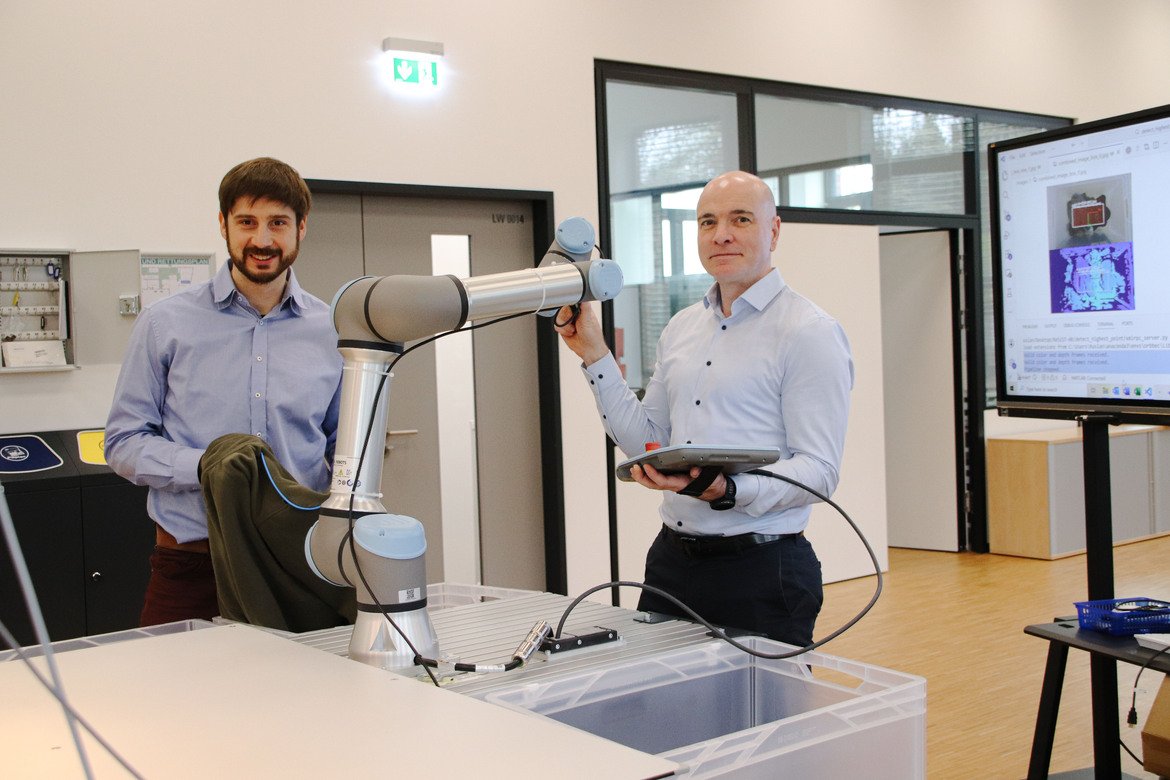
An AI-powered robotic system uses multispectral imaging and 3D sensors to identify smart textiles and embedded electronics on sorting lines. Photo: Osnabrück University of Applied Sciences
Researchers at Osnabrück University of Applied Sciences in Germany have launched a two-year initiative to develop an AI-powered robotic system capable of identifying and sorting smart textiles for recycling. The project addresses a growing sustainability challenge as garments embedded with electronics become more common in consumer wearables, industrial uniforms, and automotive applications.
The initiative, known as ReSiST-AR, is backed by regional development funding and aims to automate the detection and separation of e-textiles from conventional clothing streams. As smart fabrics integrate sensors, wiring, and electronic modules, traditional textile recycling systems struggle to process them safely and efficiently.
Without automated sorting, many of these garments risk ending up in landfills or being shipped abroad for low-cost manual processing.
Teaching Robots to Recognize Soft, Complex Materials
Unlike rigid materials such as metals or plastics, textiles present unique challenges for robotics systems. Fabrics are flexible, irregularly shaped, and often tangled or layered when placed on conveyor belts. Smart textiles add further complexity by embedding electronic components that may be hidden within seams or woven into fibers.
The research team is developing a robotic platform equipped with multispectral cameras and 3D sensors capable of scanning garments in mixed piles. AI-based material classification algorithms analyze the captured data to distinguish between fabric types and detect embedded electronics.
The goal is to enable robots to identify smart garments regardless of how they are positioned or folded. This requires machine learning models capable of interpreting varied visual and structural cues in real time.
Automation engineering researcher Steffen Greiser, who leads the project, noted that manual textile sorting is labor-intensive and often outsourced internationally, raising both environmental and ethical concerns. By automating the process, the team hopes to create regional recycling loops that reduce transportation and improve sustainability.
Designing Smart Textiles for Future Recyclability
Beyond sorting, the project also examines how smart textiles can be designed to simplify recycling. A separate research team is analyzing different integration methods, including sewn-in electronics, embroidery, and welded components, to determine how sensors and circuits can remain durable during use while being easier to remove at end of life.
This design-for-recycling approach reflects a broader shift in sustainable manufacturing, where product architecture is increasingly shaped by lifecycle considerations.
Guidelines developed through the project could help manufacturers create smart textiles that balance performance, user requirements, and recyclability. By embedding sustainability principles into product design, the initiative aims to prevent future waste streams from becoming unmanageable.
Robotics Expands into Circular Economy Applications
The ReSiST-AR project highlights how robotics and AI are moving into environmental and circular economy applications. Automated waste sorting has traditionally focused on rigid materials such as plastics and metals. Smart textiles introduce new technical demands that require advanced sensing and AI interpretation.
By combining robotics with multispectral imaging and AI-driven classification, researchers are building systems capable of operating in complex, variable environments where traditional automation struggles.
The project also involves collaboration with regional robotics and textile companies, allowing researchers to test prototypes in real industrial settings. These partnerships aim to accelerate commercialization and ensure that the technology can integrate into existing recycling infrastructure.
As wearable electronics and connected garments continue to proliferate, scalable recycling solutions will become increasingly necessary. The Osnabrück initiative offers an early example of how physical AI systems can support sustainability goals by automating complex sorting tasks that were previously dependent on manual labor.
Japan’s robotics industry posted its strongest quarterly orders on record in early 2025, driven by global labor shortages and surging demand for industrial automation.
By Daniel Krauss | Edited by Kseniia Klichova
Published:
Industrial robots on a Japanese factory floor reflect record global demand as manufacturers accelerate automation to address labor shortages. Photo: FANUC
Japan’s robotics industry recorded its highest quarterly order volume on record in the first quarter of 2025, underscoring how demographic pressures are reshaping global manufacturing. Orders for industrial robots reached ¥324.5 billion, a 14.2% increase from a year earlier and the strongest quarterly performance since tracking began in the 1980s.
The surge was driven largely by exports, which account for roughly 70% of Japan’s robot shipments. Demand expanded sharply across China, South Korea, the United States, and Germany as manufacturers moved to offset labor shortages and rising wage pressures.
The figures highlight a structural shift in the global labor market. Automation is no longer primarily a cost-cutting strategy. In many economies, it has become a response to workforce scarcity.
Demographics Push Automation from Option to Necessity
Japan’s working-age population has declined by more than 10 million people since its mid-1990s peak. The country currently has more job openings than applicants, a gap that has widened in manufacturing hubs where aging workers are retiring faster than replacements can be hired.
Similar trends are unfolding elsewhere. South Korea’s fertility rate has fallen to historic lows. Germany faces a projected industrial workforce decline of millions over the next decade. Even fast-growing Southeast Asian economies are seeing wage increases that make automation economically viable.
The result is a rapidly expanding robotics market. Analysts estimate the global industrial robot market could exceed $35 billion within the next few years, up from just over $20 billion in 2023.
Japan, long a leader in industrial robotics through companies such as FANUC and Yaskawa Electric, is benefiting from this wave. But record orders also mask intensifying competition.
China Emerges as Both Customer and Rival
China remains the largest consumer of industrial robots, accounting for more than half of global installations last year. The country’s manufacturing sector continues to automate aggressively as its own working-age population contracts.
At the same time, Chinese robotics manufacturers are gaining market share. Domestic producers now account for a growing percentage of installations within China, narrowing the historical technology gap with Japanese and European suppliers.
This dual role as top buyer and rising competitor creates strategic pressure for Japan’s robotics firms. Maintaining leadership will depend not only on hardware quality but also on advances in AI integration, cost competitiveness, and scalability.
Cobots and AI Redefine the Growth Cycle
Unlike previous automation booms centered on large industrial arms, much of the recent growth is coming from collaborative robots, or cobots. These systems are designed to operate alongside human workers without heavy safety barriers, expanding automation into small-batch manufacturing, food processing, and logistics.
Cobots now represent a growing share of global installations, up sharply over the past decade. Japanese firms are investing in AI-enabled systems capable of adapting to variable environments and learning tasks through demonstration.
Research from Japanese universities indicates that AI-integrated cobots significantly reduce programming and training time, a critical advantage for factories struggling to retain skilled workers.
This shift toward flexible automation reflects a broader transformation in robotics. Intelligence, rather than pure mechanical precision, is becoming the defining competitive factor.
Robotics and the New Labor Equation
The record order data reflects a deeper economic reality. In many advanced economies, there are not enough workers to sustain current industrial output without automation.
For countries facing demographic decline, robotics is increasingly viewed as essential infrastructure rather than discretionary investment. Governments are responding with targeted subsidies for next-generation robotics research and manufacturing support.
However, the automation surge also raises questions about workforce adaptation. While robots can fill gaps in physically demanding roles, long-term productivity gains depend on retraining programs and integration strategies that balance efficiency with employment stability.
For Japan’s robotics industry, the current moment represents both opportunity and urgency. Global labor shortages provide a powerful tailwind. But as competitors scale rapidly and AI reshapes manufacturing systems, technological leadership will depend on sustained innovation.
The record-setting quarter suggests that automation is entering a new phase. Not one driven primarily by cost savings, but by the fundamental need to maintain industrial capacity in a world where human labor is becoming increasingly scarce.
Hefei’s metro system has deployed robot dogs, drones, and humanoid robots to automate inspections, improve safety, and modernize urban rail operations.
By Rachel Whitman | Edited by Kseniia Klichova
Published:
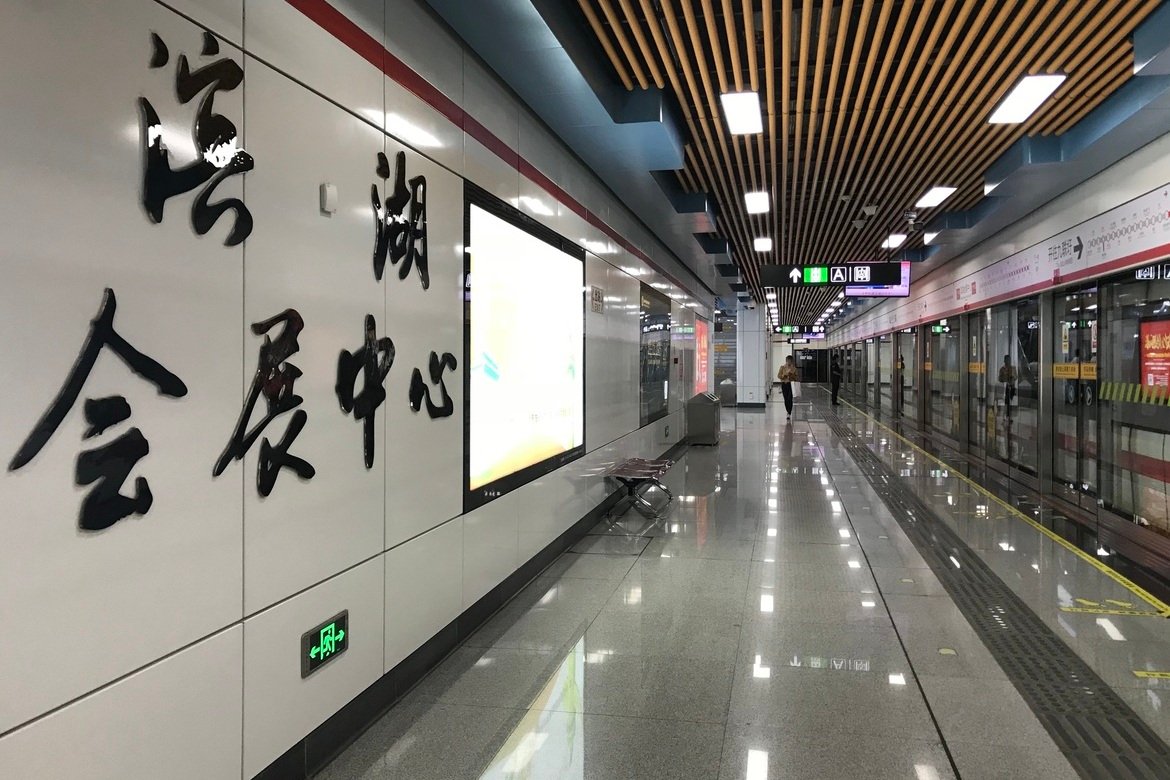
Robot dogs and aerial drones patrol and inspect Hefei’s metro system, illustrating how robotics is being integrated into urban rail operations. Photo: Hefei Metro
The Hefei Metro system in eastern China has introduced a network of robot dogs, drones, and AI-powered service robots as part of a broader initiative to modernize urban rail operations. The deployment represents one of the most visible examples of robotics being integrated into public transit infrastructure to improve safety, inspection efficiency, and passenger services.
The autonomous systems now operate across stations and tunnels in Hefei’s metro network, assisting human staff with tasks ranging from security patrols to infrastructure inspections. City authorities say the program aims to improve operational reliability and reduce the risk of accidents in one of the region’s busiest transport systems.
The initiative reflects a broader shift toward robotics-driven infrastructure management as cities adopt smart technologies to handle growing urban populations.
Robot Dogs and Drones Automate Inspection Tasks
Among the most prominent additions to the metro system are quadruped robot dogs equipped with cameras and environmental sensors. These machines patrol station platforms and corridors, scanning for obstacles, safety hazards, and abnormal conditions.
Unlike traditional human patrols, the robots can operate continuously and monitor multiple areas simultaneously. Their sensors allow them to identify potential issues such as objects left on platforms or equipment anomalies that could affect operations.
Drones are also being used to inspect tunnels and track infrastructure. Flying inspection systems can access areas that are difficult or dangerous for workers to reach, capturing visual and sensor data used to assess equipment conditions and detect potential maintenance problems.
Together, the robotic systems form what metro officials describe as a “robot cluster” supporting operational safety and infrastructure monitoring.
Robotics Expands into Public Transportation Infrastructure
In addition to inspection robots, Hefei Metro has introduced humanoid service robots that interact with passengers. These robots provide directions, answer questions, and assist commuters navigating stations.
The deployment illustrates how robotics can support both operational tasks and customer service in public infrastructure. While robots handle routine inspections and monitoring, human staff remain responsible for supervision, emergency response, and complex operational decisions.
Such systems are particularly valuable during peak travel periods, including major holiday travel surges, when passenger volumes increase dramatically.
By automating routine monitoring tasks, metro operators can allocate personnel more efficiently while maintaining high safety standards.
Smart Transit Systems Become a Key Urban Technology
Hefei’s robotics deployment is part of a broader push to integrate artificial intelligence, sensors, and data analytics into public transport networks. Smart metro systems increasingly rely on predictive maintenance, real-time monitoring, and automated inspection technologies to maintain reliability and reduce disruptions.
Data collected by robots and sensors can be analyzed to identify early signs of equipment wear or operational anomalies, allowing maintenance teams to address problems before they lead to service interruptions.
These capabilities are becoming increasingly important as urban rail networks expand and passenger demand continues to grow.
Cities around the world are exploring similar technologies as part of broader smart city initiatives designed to improve infrastructure efficiency and safety.
Robotics Moves into Everyday Urban Infrastructure
The Hefei Metro project highlights how robotics is gradually becoming embedded in everyday public systems rather than remaining confined to industrial environments. From transportation and utilities to construction and maintenance, robots are increasingly being used to monitor and manage complex infrastructure.
For urban transit networks, robotics offers the ability to improve safety while reducing operational costs and manual inspection requirements.
Hefei’s deployment provides an early example of how multiple types of robots – including quadrupeds, drones, and humanoids – can work together within a coordinated infrastructure system.
As cities continue to modernize their transportation networks, robotics and AI are likely to play a growing role in ensuring that critical infrastructure remains safe, efficient, and capable of supporting expanding urban populations.
Siemens and two robotics partners have launched the UK’s first fully customizable autonomous mobile robot manufacturing capability, aimed at modernizing factory logistics and industrial automation.
By Laura Bennett | Edited by Kseniia Klichova
Published:
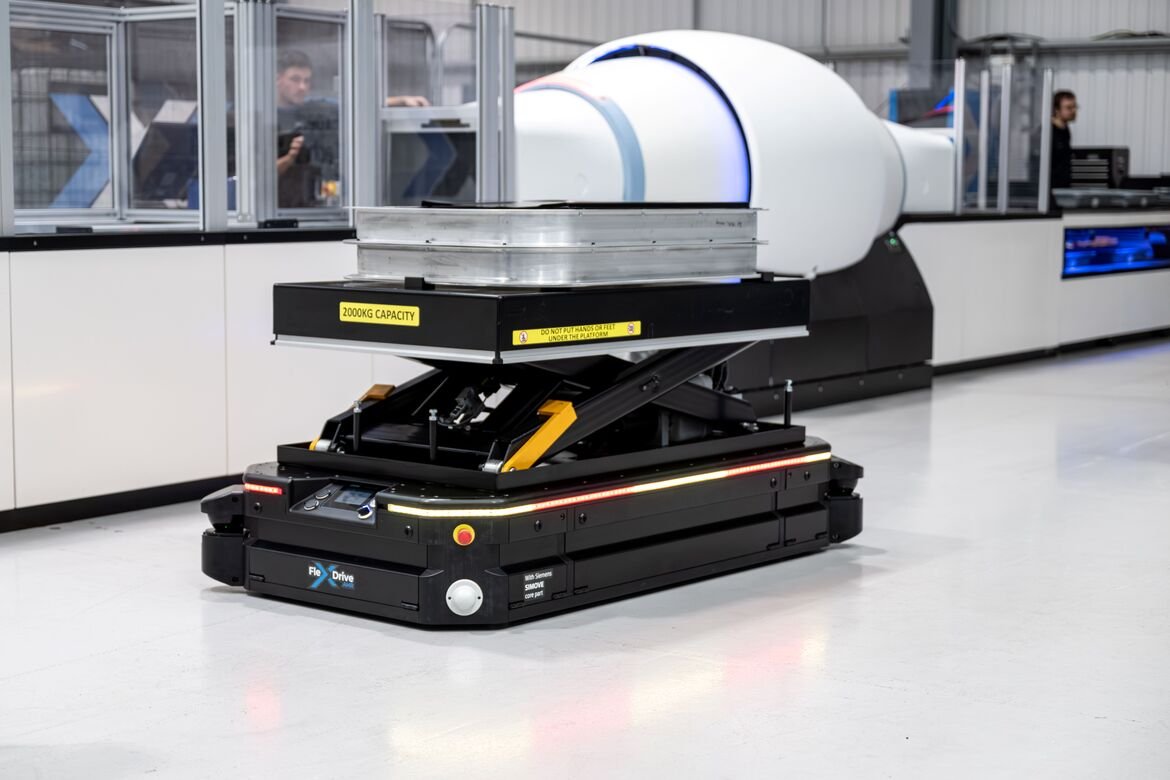
A new Siemens-led collaboration is enabling the UK’s first fully customizable autonomous mobile robot manufacturing capability for industrial logistics. Photo: Siemens
Siemens has partnered with Expert Technologies Group and RMGroup to create the United Kingdom’s first manufacturing capability dedicated to fully customizable autonomous mobile robots (AMRs). The initiative aims to provide domestic manufacturers with flexible automation systems designed to improve factory logistics and material handling.
The collaboration marks a strategic effort to strengthen the UK’s industrial automation ecosystem by developing robotics systems locally rather than relying on imported technologies. By combining Siemens’ automation software with robotics integration expertise from the two partner companies, the project creates an end-to-end platform for deploying AMR systems in manufacturing and warehouse environments.
Autonomous mobile robots are increasingly used to move materials within factories and distribution centers, offering an alternative to traditional automated guided vehicles that rely on fixed tracks or dedicated infrastructure.
Flexible Robotics for Modern Manufacturing
AMRs differ from earlier factory transport systems by navigating environments using onboard sensors, real-time mapping, and intelligent path planning. This allows them to move dynamically through busy industrial settings while avoiding obstacles and adapting to layout changes.
The robots produced through the new partnership are designed to be customizable for different industrial environments. Manufacturers can configure systems to support tasks such as delivering components to assembly lines, transporting finished goods to storage areas, or supplying materials to production cells.
The technology platform integrates Siemens’ SIMOVE control software, which enables robots to coordinate movements and manage logistics operations across facilities. Expert Technologies Group contributes its FlexDrive AMR platform, providing modular drive systems and navigation capabilities. RMGroup adds robotics integration and safety systems designed for industrial environments.
Together, these technologies allow factories to deploy robotics fleets tailored to their operational requirements, rather than adapting workflows to standardized equipment.
Building Domestic Robotics Capability
The partnership reflects growing interest in strengthening domestic robotics manufacturing in the UK. Many automation systems used in British factories are imported, which can create challenges related to integration, maintenance, and technical support.
By building robots locally and supporting them with domestic engineering teams, the collaboration aims to provide manufacturers with more reliable deployment and long-term support. The partners say this approach addresses a common problem in automation projects where overseas suppliers cannot provide sufficient integration support.
Local development also allows robotics systems to be adapted more easily to specific industry requirements, including aerospace, automotive, food processing, and logistics operations.
In addition to robotics hardware, the system incorporates wireless connectivity technologies such as industrial Wi-Fi and 5G to support real-time communication between robots, factory infrastructure, and digital management systems.
Autonomous Logistics Becomes Central to Industrial Automation
Material movement inside factories and warehouses represents a significant operational challenge for manufacturers. Traditionally, these tasks rely heavily on manual labor or fixed automation systems that are difficult to modify when production changes.
Autonomous mobile robots offer a more adaptable solution by enabling dynamic logistics operations. Fleets of AMRs can coordinate movements, optimize routes, and respond to changing workloads without requiring major infrastructure modifications.
These capabilities also allow manufacturers to scale automation gradually, starting with small deployments and expanding fleets as operational needs grow.
As manufacturing becomes more digital and data-driven, AMRs are increasingly integrated with digital twin simulations and factory management systems. This allows companies to analyze workflows, optimize operations, and improve productivity.
The Siemens-led collaboration represents a step toward building a domestic robotics ecosystem capable of supporting these advanced manufacturing technologies. By combining automation software, robotics hardware, and integration expertise, the partnership aims to help UK manufacturers deploy flexible, intelligent logistics systems as automation becomes an essential component of modern industrial production.
Hyundai’s Atlas humanoid robot is emerging as a major challenger to Tesla’s Optimus as automakers race to dominate what analysts see as a multi-trillion-dollar robotics market.
By Laura Bennett | Edited by Kseniia Klichova
Published:
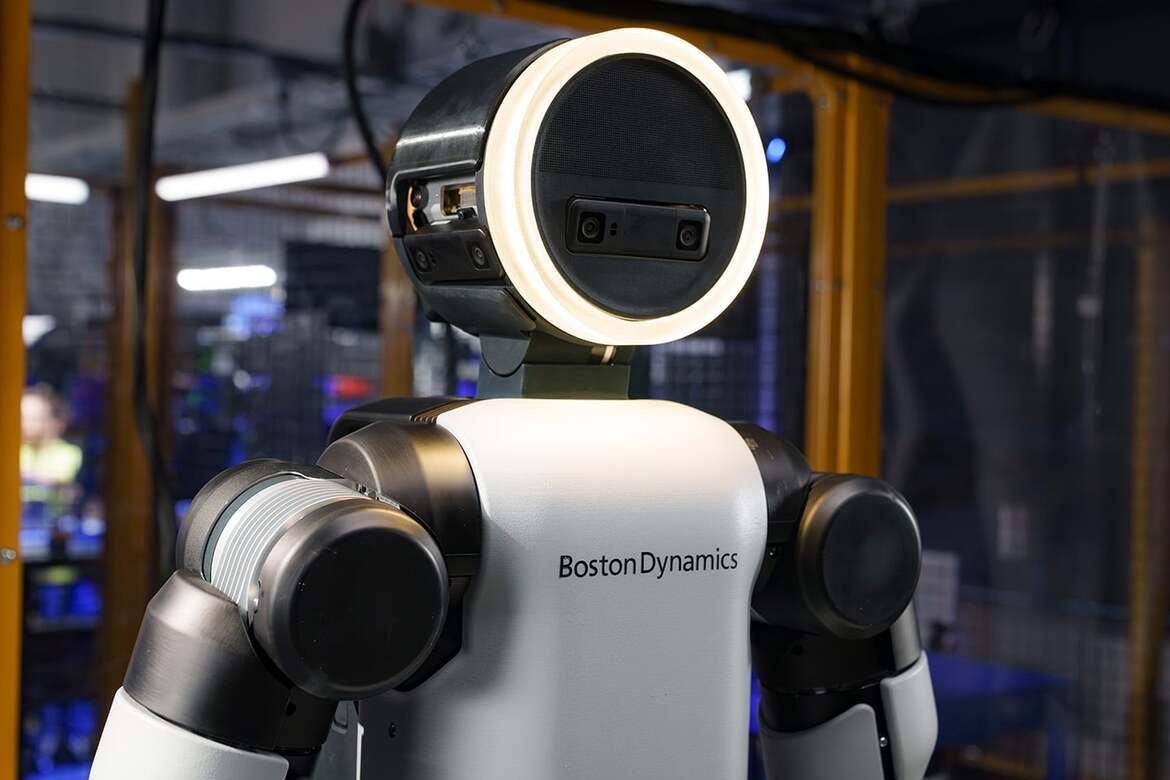
Hyundai’s Atlas humanoid robot demonstrates advanced mobility and industrial capabilities, highlighting intensifying competition with Tesla’s Optimus in the race for humanoid robotics leadership. Photo: Hyundai Motor Group
Hyundai Motor Group is emerging as a serious contender in the global race to commercialize humanoid robots, positioning its Atlas robot as a direct challenger to Tesla’s Optimus. The competition between the two automakers reflects a broader shift in the robotics industry, where companies with expertise in electric vehicles, artificial intelligence, and large-scale manufacturing are moving aggressively into humanoid systems.
Atlas gained widespread attention following demonstrations showcasing human-like agility, including complex movements such as jumping and rapid recovery from falls. Analysts say the robot’s technical capabilities and Hyundai’s industrial scale could make it one of the first humanoids deployed widely in manufacturing.
The rivalry highlights how robotics is becoming the next major frontier for automakers seeking growth beyond traditional vehicles.
Automakers Turn to Humanoid Robotics
Hyundai’s push into robotics accelerated after its acquisition of Boston Dynamics in 2021. The company has since invested heavily in robotics research, combining Boston Dynamics’ expertise in advanced mobility with Hyundai’s manufacturing and supply chain capabilities.
Atlas represents the centerpiece of that strategy. The robot features fully rotational joints, tactile sensing in its hands, and the ability to lift payloads of up to 50 kilograms. Hyundai plans to begin deploying Atlas robots in industrial settings around 2028, initially focusing on repetitive tasks such as preparing vehicle components for assembly.
Over time, the company expects the robots to take on more complex manufacturing roles, including direct assembly operations by 2030.
Humanoid robots offer a particular advantage in factories because they can operate in environments designed for humans, using existing tools and workflows without requiring major infrastructure changes.
Technical Differences Between Atlas and Optimus
Tesla’s Optimus robot has drawn global attention due to Elon Musk’s vision of deploying humanoid robots at massive scale. Tesla aims to begin selling Optimus commercially in 2026 and ultimately produce up to one million units annually.
Hyundai’s Atlas, however, is gaining recognition for its technical specifications. Analysts note that Atlas can carry heavier loads than many competing humanoid robots, including Optimus, potentially making it better suited for industrial environments such as automotive assembly plants.
The robot is designed to operate across a wide temperature range and perform demanding physical tasks, capabilities that could enable deployment in diverse industrial settings.
At the same time, the two companies take different approaches to robotics development. Tesla relies heavily on vertically integrated technology, including its own AI software and hardware platforms. Hyundai, by contrast, collaborates with external partners such as Nvidia for computing and Google DeepMind for AI research.
These different strategies could shape how each company scales robotics production and manages development costs.
Humanoid Robotics Becomes a Multi-Trillion-Dollar Market
The rivalry between Hyundai and Tesla reflects the growing economic significance of humanoid robotics. Analysts estimate the market could eventually reach trillions of dollars as robots expand from factory environments into logistics, services, and potentially even household assistance.
Automakers are particularly well positioned to enter the field because humanoid robots share many core technologies with electric vehicles, including batteries, electric motors, sensors, and AI computing systems.
Hyundai has announced major investments to support its robotics ambitions, including plans to build a dedicated robot manufacturing facility alongside an AI data center. Investors have responded enthusiastically, pushing the company’s market value higher following recent robotics demonstrations.
Despite the momentum, challenges remain. Humanoid robots must prove reliable and cost-effective before they can achieve widespread adoption. Manufacturing at scale and integrating robots safely into workplaces are complex engineering and operational tasks.
Still, the growing competition between Hyundai and Tesla suggests that the robotics industry is entering a new phase. As companies with large manufacturing capabilities enter the market, humanoid robots may move more quickly from research laboratories to real-world deployment.
Nvidia’s record revenue and growing physical AI segment highlight the expanding computing demand behind autonomous vehicles and humanoid robots such as Tesla’s Optimus.
By Daniel Krauss | Edited by Kseniia Klichova
Published:
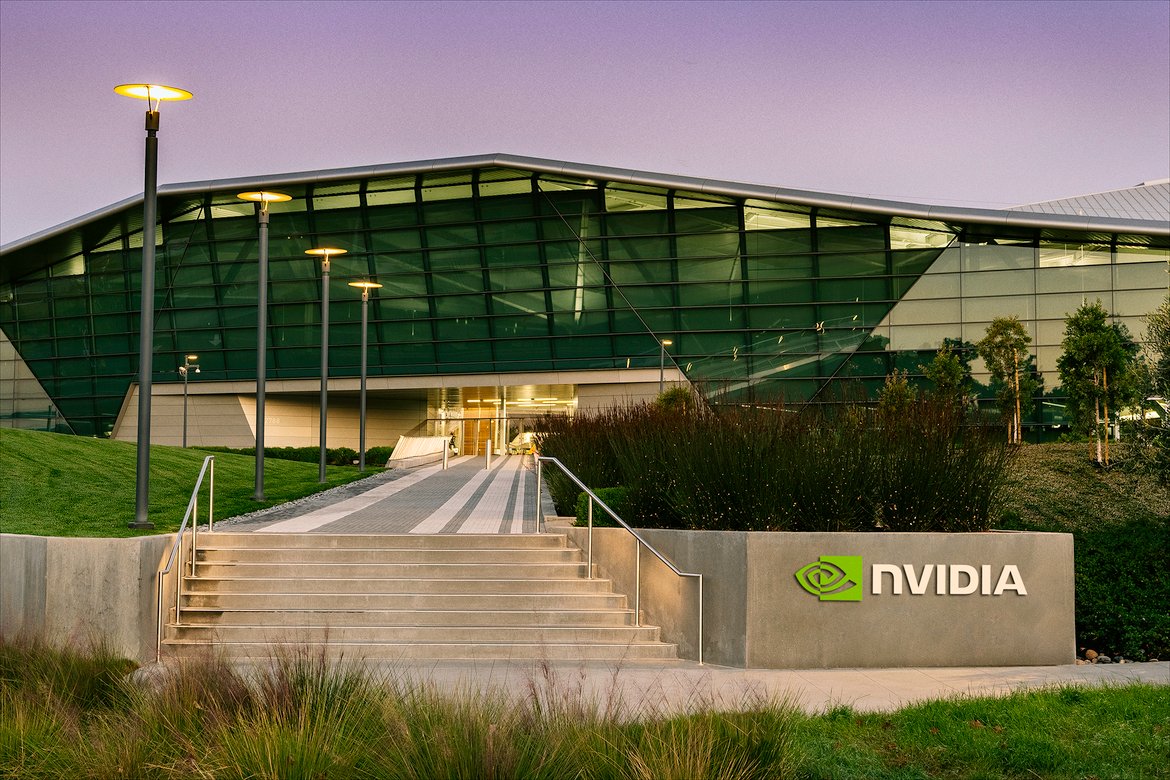
Nvidia’s AI computing platforms are increasingly used to train physical AI systems such as autonomous vehicles and humanoid robots, including Tesla’s Optimus. Photo: Nvidia
Nvidia’s latest earnings report underscores a rapidly expanding market for physical AI, the category of artificial intelligence designed to operate in real-world machines such as autonomous vehicles and humanoid robots. The chipmaker reported quarterly revenue of $68 billion, exceeding expectations and nearly doubling its performance from the same period a year earlier.
Alongside its record results, Nvidia disclosed that its emerging physical AI segment generated $6 billion in fiscal 2026 revenue. The category includes computing systems used to train and operate robotics platforms such as robotaxis and humanoid robots, including projects developed by companies like Tesla and Waymo.
The figures highlight how robotics and autonomous systems are becoming a growing driver of demand for advanced AI infrastructure.
Physical AI Requires Massive Computing Resources
Unlike conversational AI systems that operate entirely in digital environments, physical AI must interact with complex real-world conditions. Robots and autonomous vehicles must process large volumes of sensor data, simulate physical environments, and learn from real-world experiences.
This process requires significantly greater computing resources for training and simulation. Autonomous driving systems, for example, rely on massive datasets generated by vehicles operating in real-world conditions. Similarly, humanoid robots must train models capable of coordinating movement, perception, and decision-making across complex environments.
Nvidia has positioned its GPUs and AI computing platforms as the backbone of this development cycle. Robotics developers use these systems to train neural networks in simulation and to process real-world data collected from fleets of vehicles and robots.
As robotics and autonomous systems expand, this infrastructure layer is becoming increasingly important.
Tesla’s Optimus Program Highlights Robotics Opportunity
Tesla represents one of the most visible applications of physical AI. The company is developing the Optimus humanoid robot alongside its autonomous vehicle technology, both of which rely on large-scale AI training.
Tesla CEO Elon Musk has described robotics as a potential multi-trillion-dollar industry. The company plans to begin commercial sales of Optimus robots in 2026, with long-term ambitions to scale production to as many as one million units annually.
If that level of production is achieved, and robots are sold at roughly $25,000 per unit, the business could generate approximately $25 billion in annual revenue. That would represent a significant new growth engine for Tesla beyond its automotive operations.
However, manufacturing humanoid robots at scale remains technically challenging. Musk has acknowledged that early production will likely ramp slowly before reaching industrial-scale output.
Robotics Growth Creates a New AI Infrastructure Market
The connection between Nvidia and Tesla illustrates a broader shift in the AI industry. While much of the recent focus has been on generative AI models used for text and image generation, the next wave of AI deployment may increasingly involve physical machines.
Robotics systems require large-scale simulation, sensor processing, and machine learning training environments, all of which depend on high-performance computing infrastructure.
Nvidia CEO Jensen Huang has described robotics as one of the most promising opportunities for AI expansion, as machines capable of interacting with the physical world could dramatically expand the scope of automation.
Companies developing robotaxis, industrial robots, and humanoid systems are already among the largest users of AI computing resources.
Competition Intensifies in the Robotics Race
Despite the strong outlook for physical AI, the robotics market remains highly competitive. Tesla faces growing competition from robotics companies in both the United States and China that are investing heavily in humanoid robot development.
Chinese manufacturers in particular are scaling production rapidly, potentially putting downward pressure on prices as the industry matures.
At the same time, investor enthusiasm for robotics has driven significant gains in the share prices of companies connected to the sector. Both Nvidia and Tesla have seen strong stock performance over the past year as investors bet on the long-term potential of AI-powered machines.
Whether those expectations are realized will depend on how quickly robotics systems can move from experimental deployments to reliable, large-scale commercial use.
For Nvidia, however, the immediate impact is clear: as robots and autonomous vehicles become more capable, the demand for computing infrastructure powering physical AI is likely to grow alongside them.
German Chancellor Friedrich Merz toured Unitree Robotics in Hangzhou, signaling Berlin’s interest in expanding cooperation with China’s fast-growing robotics and AI sector.
German Chancellor Friedrich Merz visited Unitree Robotics in Hangzhou this week, underscoring Germany’s growing interest in cooperation with China’s rapidly advancing robotics and artificial intelligence sector. The visit, part of a two-day trip to China that included a stop in Beijing, signals a pragmatic approach by Berlin as global competition in robotics intensifies.
At Unitree’s headquarters, Merz observed live demonstrations of humanoid robot performances, including martial arts routines and coordinated robot combat displays. He also examined hardware components and received briefings from founder Wang Xingxing on the company’s product development and international ambitions.
The visit was accompanied by a delegation of roughly 30 senior German executives from industries including automotive, machinery, chemicals, and biopharma, highlighting the commercial dimension of the trip.
Robotics Becomes a Diplomatic and Industrial Priority
Unitree is one of China’s most prominent robotics firms, known for developing quadruped and humanoid robots that have gained international visibility. The company’s demonstrations, including high-mobility humanoid performances, reflect advances in motion control, actuation systems, and AI-driven coordination.
Merz’s presence at the facility indicates that robotics is emerging as a strategic area of dialogue between Germany and China. Germany remains Europe’s largest robotics market and a global leader in industrial automation, but it faces increasing competition from Chinese companies that are rapidly scaling both production and AI integration.
For Germany’s manufacturing sector, which relies heavily on automation, collaboration with fast-growing robotics ecosystems could offer access to new supply chains, hardware platforms, and AI capabilities.
Wang described the visit as an opportunity to deepen collaboration with German firms and expand global development of intelligent robotics. He emphasized the potential of the German market, where demand for automation remains strong despite recent economic headwinds.
Competition and Cooperation Intersect in Physical AI
The visit comes at a time when robotics is becoming central to global technology competition. Chinese robotics firms have accelerated development in recent years, leveraging large domestic markets, vertically integrated supply chains, and strong government support.
Germany, meanwhile, is grappling with declining robotics revenue and slower industrial growth, even as long-term automation drivers remain intact. This creates a complex dynamic: Germany is both a competitor and a potential partner in China’s robotics expansion.
For German industrial leaders accompanying the chancellor, exposure to China’s robotics manufacturing capabilities provides insight into how quickly the sector is evolving. Chinese firms are increasingly combining hardware engineering with AI-driven software platforms, narrowing historical technology gaps.
At the same time, geopolitical tensions and supply chain concerns complicate technology cooperation. Robotics and AI sit at the intersection of economic opportunity and strategic sensitivity.
Robotics Moves to the Center of Global Industrial Strategy
Merz’s visit to Hangzhou highlights how robotics is no longer confined to research labs or factory floors. It has become a central element of national industrial strategy and international economic diplomacy.
Humanoid and quadruped robots on display during the visit demonstrated capabilities that were once largely experimental. As these systems improve and scale, they are expected to expand into manufacturing, logistics, inspection, and service sectors.
For Germany, whose economy is deeply tied to advanced manufacturing, maintaining competitiveness in robotics and automation is critical. Engaging with Chinese technology leaders may offer commercial opportunities, but it also reflects recognition that innovation in physical AI is increasingly global.
The Hangzhou stop signals that robotics cooperation, alongside competition, will shape the next phase of industrial relations between Europe and China. As embodied AI systems move toward broader deployment, they are becoming not just industrial tools, but instruments of economic policy and international partnership.
China’s robotics technology has reached approximately 98% of U.S. capability, according to MIT Professor Sangbae Kim, highlighting the growing importance of data and industrial scale in physical AI.
By Laura Bennett | Edited by Kseniia Klichova
Published:
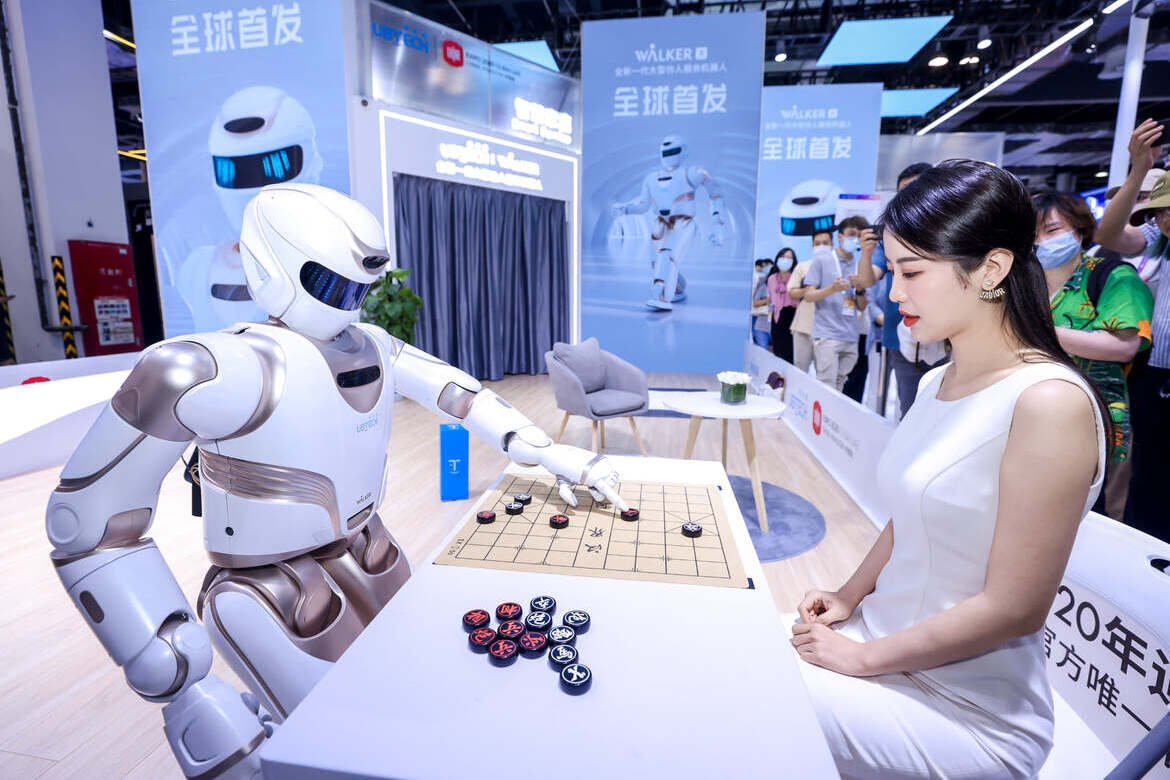
Humanoid robots developed in China demonstrate advanced mobility and coordination, reflecting rapid progress in embodied AI and physical robotics systems. Photo: UBTECH Robotics
China’s robotics industry has rapidly advanced to near parity with the United States, reaching an estimated 98% of U.S. technological capability, according to MIT mechanical engineering professor Sangbae Kim. The assessment highlights how access to large-scale industrial infrastructure and real-world data is accelerating development of physical AI and humanoid robotics.
The narrowing gap reflects broader changes in global robotics competition, where advances in artificial intelligence, data collection, and manufacturing scale are reshaping traditional leadership dynamics. China’s robotics companies are benefiting from intense domestic competition, extensive deployment environments, and faster commercialization cycles.
These advantages are helping accelerate progress in humanoid robotics, autonomous systems, and industrial automation.
Data and Industrial Scale Drive Robotics Advancement
Physical AI systems require large volumes of real-world data to operate reliably, particularly for humanoid robots designed to function in complex human environments. Unlike digital AI models trained primarily on internet data, robots must learn through physical interaction, which is slower and more difficult to scale.
China’s industrial ecosystem provides a significant advantage in this process. The country’s manufacturing base, large workforce, and extensive infrastructure allow robotics companies to deploy and refine systems across diverse real-world environments. This enables faster iteration and validation compared with regions where deployment opportunities are more limited.
Professor Kim emphasized that the ability to gather and apply physical data is becoming a key determinant of robotics competitiveness. As robots operate in factories, logistics centers, and public spaces, the resulting data improves their performance and accelerates development cycles.
China’s competitive market structure also contributes to rapid progress. Technologies and operational insights spread quickly across companies, enabling the industry as a whole to advance more rapidly.
Despite recent advances, significant challenges remain before humanoid robots can achieve widespread deployment. Humanoid systems are far more complex than many existing robotic platforms, requiring precise coordination across dozens of joints and continuous perception of dynamic environments.
Reliability remains a critical barrier. Industrial environments demand robots capable of operating safely and consistently under varying conditions. Even relatively simpler autonomous systems, such as self-driving vehicles, continue to face technical and safety challenges.
Humanoid robots must overcome additional hurdles, including dexterity, manipulation of irregular objects, and adaptation to unpredictable scenarios.
While advances in language models and vision-language systems are improving robot intelligence, physical performance depends on real-world training and validation, which takes significantly longer to achieve.
Robotics Adoption Likely to Begin with Structured Industrial Tasks
The earliest widespread adoption of physical AI is expected to occur in structured environments such as logistics and manufacturing, where tasks are repetitive and predictable. Robots are already being deployed in large fulfillment centers to automate material handling and transportation.
More complex tasks requiring fine motor skills and adaptability, such as repair work or handling irregular objects, are expected to take longer to automate. These limitations reflect the gap between current robotics capabilities and the flexibility of human workers.
Rather than replacing human labor entirely, robotics is likely to augment human workers, particularly in physically demanding or repetitive roles.
Global Robotics Competition Enters a New Phase
China’s rapid progress reflects a broader shift in robotics competition toward scale-driven innovation. While the United States remains a leader in AI research and robotics development, China’s ability to deploy systems at large scale is accelerating its technological advancement.
The convergence of artificial intelligence, robotics hardware, and manufacturing infrastructure is creating a new competitive landscape where data, deployment, and integration capabilities are as important as fundamental research.
As physical AI continues to evolve, the balance of leadership in robotics may depend less on isolated technological breakthroughs and more on the ability to integrate AI into real-world systems at industrial scale.
China’s progress toward parity with the United States underscores how robotics is becoming a central arena for global technological competition, with implications for manufacturing, infrastructure, and the future of automation.
Kyoto University researchers have introduced Buddharoid, a humanoid robot monk trained on Buddhist scriptures, as AI begins to expand into cultural and spiritual roles.
Researchers in Japan have introduced Buddharoid, a humanoid robot monk designed to provide spiritual guidance and engage in philosophical conversations, marking a new frontier for artificial intelligence and robotics beyond traditional industrial and service roles. Developed by scientists at Kyoto University, the system integrates advanced language models with a humanoid robotic platform capable of movement, gestures, and interactive dialogue.
The robot has been trained on extensive Buddhist scriptures, enabling it to answer complex spiritual and ethical questions while interacting with temple visitors. During recent demonstrations, Buddharoid moved through temple spaces, speaking directly with attendees and responding dynamically to their inquiries.
The project reflects how physical AI systems are expanding into roles traditionally associated with human expertise, including education, counseling, and cultural preservation.
Addressing Demographic and Cultural Challenges
Japan’s aging population and declining workforce have created shortages across many sectors, including religious institutions. Buddhist temples, which play an important cultural and community role, are facing declining numbers of clergy and reduced capacity to maintain traditional services.
Researchers see robotics as a potential way to support religious institutions by preserving access to teachings and enabling new forms of engagement. Buddharoid was designed to complement human clergy by providing guidance and answering questions based on centuries of Buddhist doctrine.
Unlike earlier robotic systems used in religious contexts, which were often limited to prerecorded responses or scripted interactions, Buddharoid can engage in real-time conversations. Its integration of language models allows it to interpret questions, generate contextual responses, and communicate in a more natural and adaptive manner.
The humanoid form also enables physical presence within temple environments, allowing the robot to perform gestures and adopt postures consistent with traditional practices.
Expanding the Scope of Physical AI Applications
The development of Buddharoid highlights how robotics is expanding beyond industrial automation into social and cultural domains. Advances in language models, motion control, and human-robot interaction have enabled robots to perform roles that require communication, emotional sensitivity, and contextual understanding.
Physical embodiment adds an additional dimension to AI systems, allowing users to interact with machines in ways that feel more natural and engaging than purely digital interfaces.
These capabilities could have applications beyond religious settings, including education, elder care, and counseling, where human interaction and communication are central.
Robotics and AI Enter Cultural and Human-Centered Roles
Buddharoid’s introduction illustrates a broader shift in robotics toward human-centered applications. While industrial automation remains the dominant market for robotics, advances in AI are enabling new categories of robots designed to interact directly with people.
The project also reflects how cultural institutions are adapting to technological change. By integrating AI and robotics into traditional environments, researchers and organizations are exploring ways to preserve knowledge and maintain services despite demographic challenges.
As robotics technology continues to evolve, systems like Buddharoid demonstrate how AI-powered machines can move beyond physical labor to support intellectual, cultural, and spiritual functions. The development represents an early example of how physical AI may extend into domains historically defined by human experience and expertise.
Tokyo Electric Power Company has introduced a 22 meter robotic arm designed to remove radioactive debris from the Fukushima nuclear plant, marking a key step in long-term decommissioning efforts.
By Rachel Whitman | Edited by Kseniia Klichova
Published:
The newly developed robotic arm will enable Tepco to retrieve radioactive debris from Fukushima reactors, expanding the role of robotics in nuclear decommissioning. Photo: Tepco
Tokyo Electric Power Company Holdings has unveiled a new robotic arm designed to retrieve highly radioactive fuel debris from the Fukushima Daiichi nuclear power plant, marking a critical milestone in one of the most complex nuclear cleanup operations in history. The system, measuring 22 meters in length, is expected to begin installation in the coming weeks, with debris retrieval trials planned later this year.
The robotic arm is part of Tepco’s long-term effort to decommission the Fukushima facility, which was severely damaged during the 2011 earthquake and tsunami. Approximately 880 tons of radioactive fuel debris remain inside three reactors, presenting extreme hazards that make human intervention impossible.
The introduction of more advanced robotic systems reflects the increasing reliance on automation and remote-controlled machines to perform dangerous tasks in environments inaccessible to humans.
Robotics Enables Access to Hazardous Environments
The new robotic arm was developed by the International Research Institute for Nuclear Decommissioning and represents a significant improvement over earlier tools. Previous debris retrieval attempts relied on narrow, rod-like devices capable of extracting only extremely small samples. By contrast, the new arm can reach a wider area and manipulate debris with greater precision and stability.
The system is designed to operate remotely, allowing operators to control the arm from a safe distance while maintaining precise manipulation capabilities inside highly radioactive reactor containment structures.
Robotics plays a crucial role in nuclear decommissioning because radiation levels inside damaged reactors remain lethal to humans. Remote systems equipped with cameras, sensors, and precision manipulators allow operators to inspect, analyze, and remove hazardous materials without direct exposure.
These capabilities are essential for advancing cleanup operations that are expected to continue for decades.
Long Term Decommissioning Depends on Robotics Advancement
The debris retrieval process at Fukushima represents one of the most technically challenging robotics applications in existence. Unlike controlled industrial environments, damaged nuclear reactors present unpredictable structural conditions, limited visibility, and extreme radiation exposure.
The new robotic arm will be used in the third debris retrieval trial at the plant’s No. 2 reactor. Large-scale removal operations are planned to begin at the No. 3 reactor after 2037, reflecting the long timeline required to safely complete the cleanup.
Each phase of debris retrieval provides critical data that informs future operations. Robotics systems must be capable of navigating confined spaces, handling fragile and hazardous materials, and operating reliably in extreme conditions.
Advances in robotics hardware, control systems, and remote operation are making these capabilities possible.
Nuclear Cleanup Highlights Strategic Role of Robotics
The Fukushima cleanup underscores how robotics has become essential infrastructure for managing hazardous environments. While robotics is often associated with manufacturing and logistics, nuclear decommissioning represents one of its most demanding and important applications.
These operations require highly specialized robots capable of performing tasks that would otherwise be impossible. The technologies developed for nuclear cleanup also contribute to broader robotics advancements, including remote manipulation, precision control, and autonomous operation in extreme environments.
As global nuclear infrastructure ages and decommissioning projects increase, robotics is expected to play an expanding role in managing environmental risks and ensuring safe cleanup operations.
The deployment of Tepco’s new robotic arm marks a significant step forward in this process, demonstrating how robotics continues to enable critical work in environments where human access remains impossible.
Xpeng has started building a dedicated humanoid robot manufacturing base in Guangzhou, aiming to achieve large-scale production by 2026 using vertically integrated AI and robotics technology.
By Laura Bennett | Edited by Kseniia Klichova
Published:
Updated:
Xpeng’s humanoid robot manufacturing base in Guangzhou will support large-scale production of embodied AI systems, marking the automaker’s expansion into robotics. Photo: Xpeng
Chinese electric vehicle maker Xpeng has begun construction of a dedicated humanoid robot manufacturing facility in Guangzhou, positioning itself to achieve mass production of advanced robotic systems by 2026. The new site, located in the Guangtang Sci-Tech Innovation City Embodied Intelligence Industrial Park, represents one of the first full-chain humanoid robot production bases designed for industrial-scale deployment.
The facility will span approximately 110,000 square meters and include specialized infrastructure to support robotics manufacturing, including reinforced load-bearing structures, enhanced power supply, and production lines tailored to humanoid systems. Xpeng signed a strategic agreement with local government authorities to support the project, which has been designated as a priority development initiative.
The company’s expansion into robotics reflects a growing convergence between the automotive and robotics industries, as advances in artificial intelligence, sensors, and manufacturing techniques enable companies to apply vehicle technology to humanoid robots.
Leveraging Automotive Expertise to Scale Robotics Manufacturing
Xpeng’s robotics strategy builds on its experience in developing intelligent electric vehicles, where the company has already established capabilities in AI chips, software platforms, and large-scale manufacturing. These technologies are directly transferable to humanoid robots, which require similar systems for perception, motion control, and autonomous operation.
The company’s latest humanoid robot, known as IRON, integrates multiple AI chips delivering over 2,000 trillion operations per second of computing power. The system combines vision, language, and action models to enable robots to understand their environment, interact with humans, and perform physical tasks.
This architecture reflects a broader industry shift toward embodied AI systems powered by foundation models, allowing robots to interpret instructions and adapt to complex environments.
By building a vertically integrated manufacturing base, Xpeng aims to accelerate production and reduce costs, addressing one of the main barriers to large-scale robotics deployment.
Manufacturing Scale Becomes the Next Competitive Frontier
The humanoid robotics industry faces two major challenges: developing capable AI systems and scaling manufacturing to produce robots at industrial volumes. While significant progress has been made in robot intelligence, large-scale production remains limited.
Xpeng’s manufacturing facility is designed to address this bottleneck by integrating the entire production chain, from component manufacturing to final assembly. This approach mirrors strategies used in electric vehicle production, where vertical integration has enabled companies to scale rapidly.
Chairman He Xiaopeng has stated that achieving mass production is essential for making humanoid robots commercially viable. The company aims to deliver advanced robots at scale by the end of 2026, potentially making it one of the first companies to reach industrial-level production.
Scaling production could significantly reduce costs and accelerate adoption across industries, including manufacturing, logistics, and services.
Automakers Expand into Embodied AI and Robotics
Xpeng’s investment in humanoid robotics reflects a broader trend among automotive companies expanding into robotics and embodied AI. Automakers already possess many of the core technologies required for humanoid robots, including electric drivetrains, sensors, AI computing systems, and manufacturing expertise.
These capabilities allow automotive companies to leverage existing infrastructure and supply chains to accelerate robotics development.
Humanoid robots are increasingly viewed as an extension of autonomous vehicle technology, with similar AI systems enabling perception, navigation, and decision-making in physical environments.
By applying its automotive manufacturing expertise to robotics, Xpeng is positioning itself to compete in what could become a major new industrial sector. If successful, its Guangzhou facility could help establish scalable humanoid robot production, accelerating the transition of embodied AI from experimental systems to widely deployed industrial machines.
Google has brought robotics software company Intrinsic fully in house, signaling a major push to integrate its AI models and cloud infrastructure into industrial robotics.
By Rachel Whitman | Edited by Kseniia Klichova
Published:
Updated:
Intrinsic’s robotics platform enables developers to build and deploy AI-driven automation across industrial robots, now integrated with Google’s AI and cloud infrastructure. Photo: Intrinsic
Google has brought robotics software company Intrinsic fully into its core operations, marking a significant step in its strategy to accelerate physical AI deployment across manufacturing and industrial automation. The move integrates Intrinsic’s robotics platform with Google’s broader artificial intelligence ecosystem, including its Gemini AI models, cloud infrastructure, and DeepMind research.
Intrinsic was originally launched in 2021 as part of Alphabet’s experimental Other Bets division, focused on simplifying robotics software development. By bringing Intrinsic closer into Google, the company aims to accelerate the transition of AI-driven robotics from research environments into real-world industrial deployment.
The integration reflects growing recognition among major technology companies that robotics represents the next frontier for artificial intelligence, extending machine intelligence beyond digital systems into the physical world.
Building a Software Platform for Industrial Robotics
Intrinsic’s core technology provides a software platform designed to make robotics applications easier to develop, deploy, and operate. Traditionally, industrial robots require specialized programming and system integration, limiting flexibility and slowing adoption.
Intrinsic addresses this challenge by providing a unified development environment that allows developers to create robotics applications using modular building blocks known as skills. These components enable robots to perform tasks such as identifying objects, manipulating parts, or navigating production environments without requiring extensive custom coding.
The platform also includes simulation capabilities that allow developers to design and test robotics workflows virtually before deploying them in physical systems. This reduces deployment time and enables faster iteration.
By integrating Intrinsic’s platform with Google’s AI models, robotics systems can incorporate advanced perception, reasoning, and decision-making capabilities, allowing robots to adapt dynamically to changing conditions.
Linking AI Research to Industrial Deployment
Google’s decision to integrate Intrinsic more closely reflects a broader strategy to connect its AI research capabilities with industrial applications. While Google has been a leader in developing advanced AI models, translating those capabilities into physical systems has remained a key challenge.
Intrinsic provides a pathway for deploying AI in real-world environments, particularly in manufacturing and logistics. The platform supports a wide range of robotic hardware, allowing developers and automation providers to build applications that work across different robot types and configurations.
This hardware-agnostic approach mirrors software platform models in other technology sectors, where standardized development frameworks accelerate innovation and adoption.
Google’s Gemini models and cloud infrastructure provide additional capabilities, including advanced machine learning, large-scale data processing, and scalable deployment. Together, these technologies could enable robots to perform more complex tasks and improve over time through continuous learning.
Physical AI Becomes a Strategic Priority for Major Tech Companies
Google’s integration of Intrinsic highlights the increasing importance of physical AI as a strategic focus for major technology companies. Robotics represents a large potential market, particularly in manufacturing, logistics, and infrastructure, where automation can address labor shortages and improve productivity.
Unlike traditional industrial automation, which relies on fixed programming, AI-driven robotics systems can adapt to changing environments and perform more diverse tasks. This flexibility is essential for enabling broader deployment across industries.
By combining robotics software platforms with advanced AI models and cloud infrastructure, companies like Google aim to create scalable systems that can support widespread automation.
The move also positions Google to compete more directly with other companies investing heavily in robotics and physical AI, including Amazon, Nvidia, and emerging robotics startups developing foundation models and autonomous systems.
As AI capabilities continue to advance, the integration of software intelligence with physical machines is expected to reshape industrial automation. Google’s decision to bring Intrinsic in house signals its intent to play a central role in that transition, bridging the gap between AI research and real-world robotics deployment.
RLWRLD has raised $26 million in new funding to develop robotics foundation models trained in real industrial environments, accelerating deployment across logistics and manufacturing.
RLWRLD, a physical AI startup focused on robotics foundation models, has raised $26 million in new funding, bringing its total seed investment to approximately $41 million. The company is using the capital to accelerate development of AI systems trained directly inside factories and logistics facilities, marking a shift toward real-world data-driven robotics intelligence.
The funding round includes venture capital firms Headline Asia and Z Venture Capital Corporation, alongside strategic investors such as CJ Logistics, Lotte Ventures, and Hanwha Asset Management. These partnerships reflect growing industry demand for robotics systems capable of learning from real operational environments rather than controlled laboratory settings.
RLWRLD plans to officially launch its robotics foundation model in the first half of 2026, positioning itself among a growing number of companies developing generalized AI systems for industrial automation.
Training Robotics AI Inside Real Industrial Environments
RLWRLD’s approach focuses on training foundation models directly within active industrial operations, including logistics centers and manufacturing facilities. This strategy allows robots to learn from real-world workflows, capturing data on physical tasks such as handling objects, navigating environments, and interacting with equipment.
Foundation models, which have transformed fields such as natural language processing, are now being adapted for robotics. These models aim to enable machines to perform a wide range of physical tasks without requiring task-specific programming.
By collecting large-scale operational data from strategic partners, RLWRLD is building a dataset tailored to industrial environments. This real-world data advantage could improve robots’ ability to adapt to complex and changing conditions, a key challenge in deploying automation across diverse facilities.
Company executives and investors say this approach addresses a fundamental limitation in robotics development: the difficulty of translating laboratory-trained models into reliable performance in production environments.
RLWRLD’s investor network includes logistics operators, retailers, and manufacturing firms that are actively collaborating on robotics deployments. These partnerships provide both funding and access to operational environments where robots can be trained and tested.
Several proof-of-concept projects are already underway with companies in South Korea and Japan, with some progressing to joint deployment phases. These collaborations allow RLWRLD to refine its AI models while helping partners automate complex workflows.
Investors are also supporting RLWRLD’s international expansion. Headline Asia is assisting the company’s entry into North American markets, while Z Venture Capital is facilitating commercialization efforts in Japan through connections with telecommunications, retail, and industrial partners.
This model of co-development between robotics startups and industrial operators is becoming increasingly common as companies seek to accelerate deployment while reducing technical and operational risks.
Foundation Models Become Central to Industrial Automation
RLWRLD’s funding highlights a broader shift toward foundation models as the core intelligence layer for physical AI systems. Instead of developing robots for narrow tasks, companies are building generalized AI systems capable of learning from experience and adapting to new environments.
These models rely on multimodal data collected from sensors, cameras, and operational systems, enabling robots to develop more flexible and reliable behavior. As the models improve, they can be deployed across multiple facilities, allowing robots to transfer knowledge between different environments.
This approach has the potential to significantly accelerate robotics adoption by reducing the need for custom programming and enabling more scalable deployment.
As labor shortages intensify and industrial automation becomes increasingly critical, robotics foundation models could play a central role in transforming manufacturing, logistics, and infrastructure operations. Companies like RLWRLD are betting that intelligence trained in real-world environments will become the defining competitive advantage in the next generation of industrial robotics.
Germany’s robotics industry is projected to shrink again in 2026, raising concerns that Europe’s largest automation hub is losing ground to faster-growing competitors in Asia and North America.
By Rachel Whitman | Edited by Kseniia Klichova
Published:
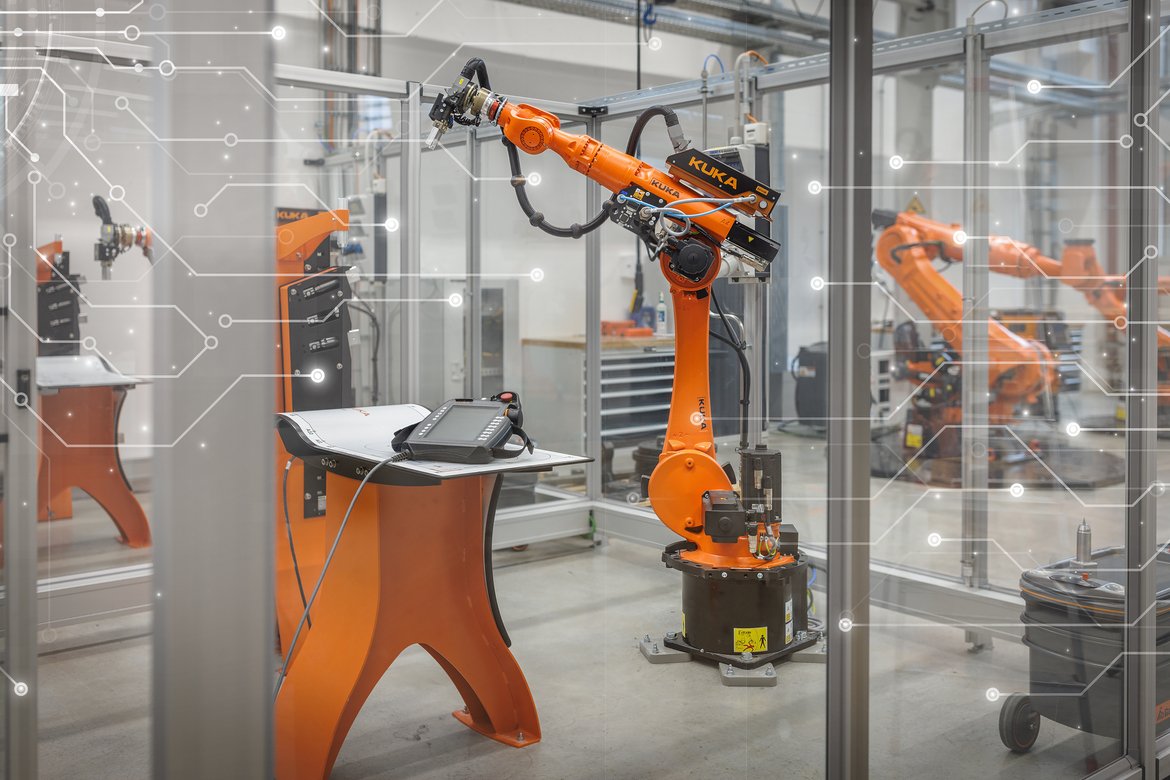
Germany’s robotics and automation sector is facing declining revenues and rising global competition, challenging its position as Europe’s largest robotics market. Photo: KUKA
Germany’s robotics and automation industry is expected to contract again in 2026, highlighting growing concerns that one of the world’s most established robotics hubs is losing momentum amid intensifying global competition. Industry revenue is projected to fall by 5% to approximately €14.1 billion, marking the second consecutive year of decline following a 7% drop in 2025.
The downturn reflects a combination of weak industrial demand, geopolitical uncertainty, and structural competitiveness challenges, according to the VDMA Robotics + Automation Association, Germany’s leading industry group. While robotics remains central to Germany’s manufacturing base, slowing investment and rising international competition are reshaping the global landscape.
Germany has long been a cornerstone of industrial robotics, but recent trends suggest that leadership in automation is shifting toward regions investing more aggressively in robotics and artificial intelligence.
Demand Weakness and Structural Challenges Slow Growth
The decline in Germany’s robotics industry is driven in part by reduced demand from domestic manufacturers, which have delayed automation investments amid economic uncertainty. German companies across sectors including automotive and industrial manufacturing have become more cautious, contributing to lower order volumes and declining revenue.
Export markets, traditionally a source of stability, have not been strong enough to offset weaker domestic demand. Industry leaders also point to broader structural challenges, including high operating costs, regulatory complexity, and slower implementation cycles compared with competitors in Asia.
Germany remains Europe’s largest robotics market and one of the top five globally. However, installations fell by 5% in 2024, reflecting reduced industrial expansion and slowing automation investment. Despite this decline, Germany still accounts for nearly one-third of Europe’s annual robot installations, underscoring its continued importance in the global robotics ecosystem.
Industry leaders warn that maintaining competitiveness will require faster adoption of new technologies, improved policy support, and stronger alignment between research, manufacturing, and commercialization.
Global Robotics Investment Shifts Toward Faster-Growing Regions
While Germany’s robotics sector contracts, other regions are expanding. North America saw a rebound in robot orders in 2025, with companies investing heavily in automation to address labor shortages, improve productivity, and support reshoring of manufacturing operations.
Asia, particularly China, continues to expand its robotics capabilities rapidly, supported by strong government investment, large domestic manufacturing bases, and integrated AI development strategies. Robotics companies in the region are scaling production and accelerating deployment across industries, including logistics, electronics manufacturing, and infrastructure.
This shift reflects broader changes in robotics development, where advances in artificial intelligence and embodied systems are reshaping competitive dynamics. Countries and companies able to integrate AI, software, and hardware development more rapidly are gaining advantages in both innovation and commercialization.
Germany’s robotics leadership has historically been rooted in precision engineering and industrial automation expertise. However, the emergence of AI-driven robotics platforms is changing the basis of competition, placing greater emphasis on software capabilities and scalability.
Long Term Drivers Remain Intact Despite Short Term Decline
Despite near-term challenges, industry leaders remain confident in robotics’ long-term growth potential. Automation continues to play a critical role in addressing labor shortages, improving industrial productivity, and supporting advanced manufacturing.
Digitalization, artificial intelligence, and smart production systems are expected to drive future demand for robotics globally. For Germany, maintaining competitiveness will depend on its ability to adapt to these shifts while addressing structural barriers that limit growth.
The current slowdown represents more than a cyclical downturn. It signals a transition period in which global robotics leadership is becoming more distributed, with emerging players and new business models reshaping the industry.
Whether Germany can maintain its position as a leading robotics power will depend on its ability to accelerate innovation, scale new technologies, and compete in a robotics market increasingly defined by AI-driven systems and global competition.
Join our list to receive latest Blockchain, Crypto & Fintech news:
WordPress database error: [Table 'u752143311_u5t1U.wp_coingecko_coins' doesn't exist]
            SELECT coins.*, meta.post_id as post_id
            FROM `wp_coingecko_coins` coins
            INNER JOIN wp_postmeta meta ON (meta.meta_key = 'wpcf-coin-main-tag' AND meta.meta_value = coins.slug )
            ORDER BY market_cap_usd
            DESC LIMIT 9