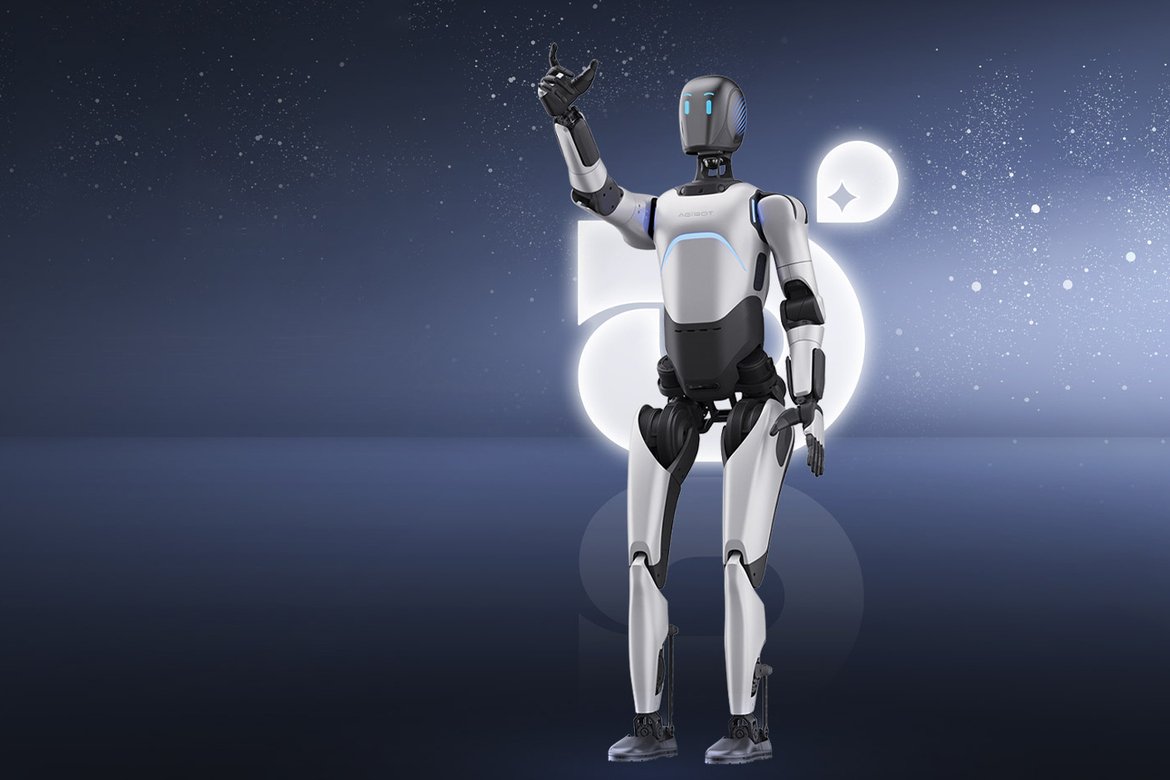
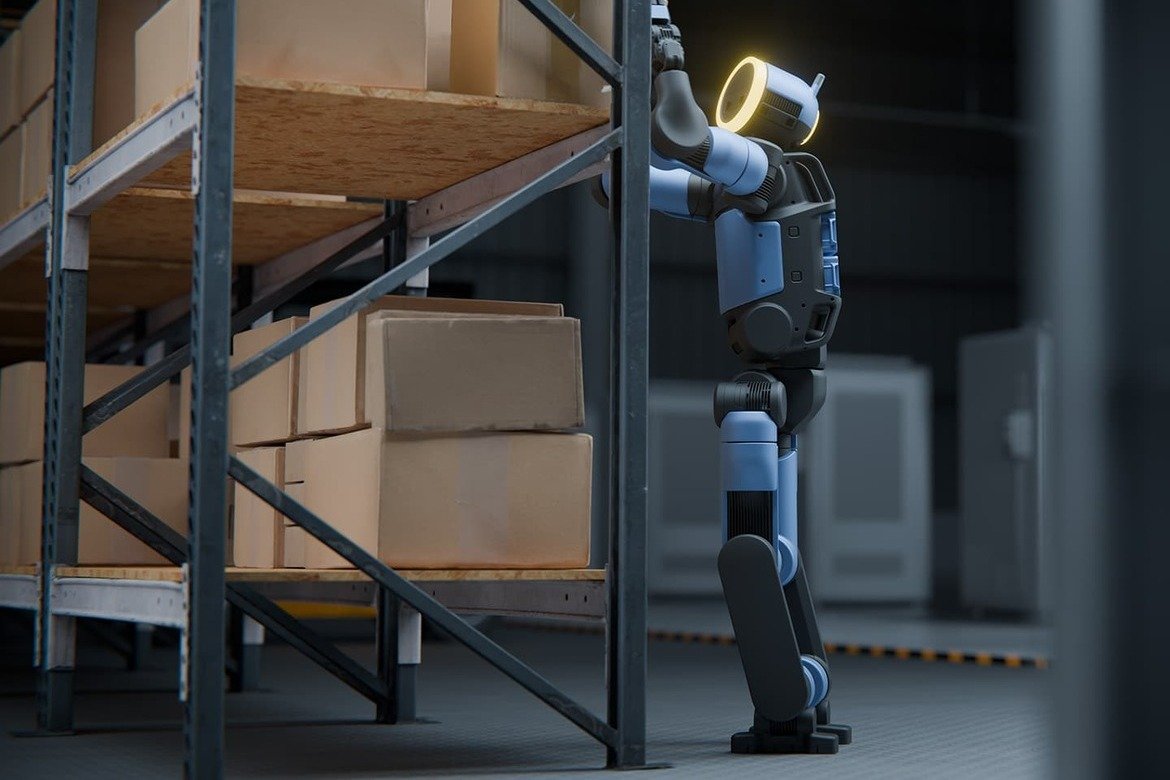
China’s AI2 Robotics has raised $145 million in Series B funding to advance its embodied AI models and scale production of its AlphaBot robots for industrial and service applications.
By Daniel Krauss | Edited by Kseniia Klichova
Published:
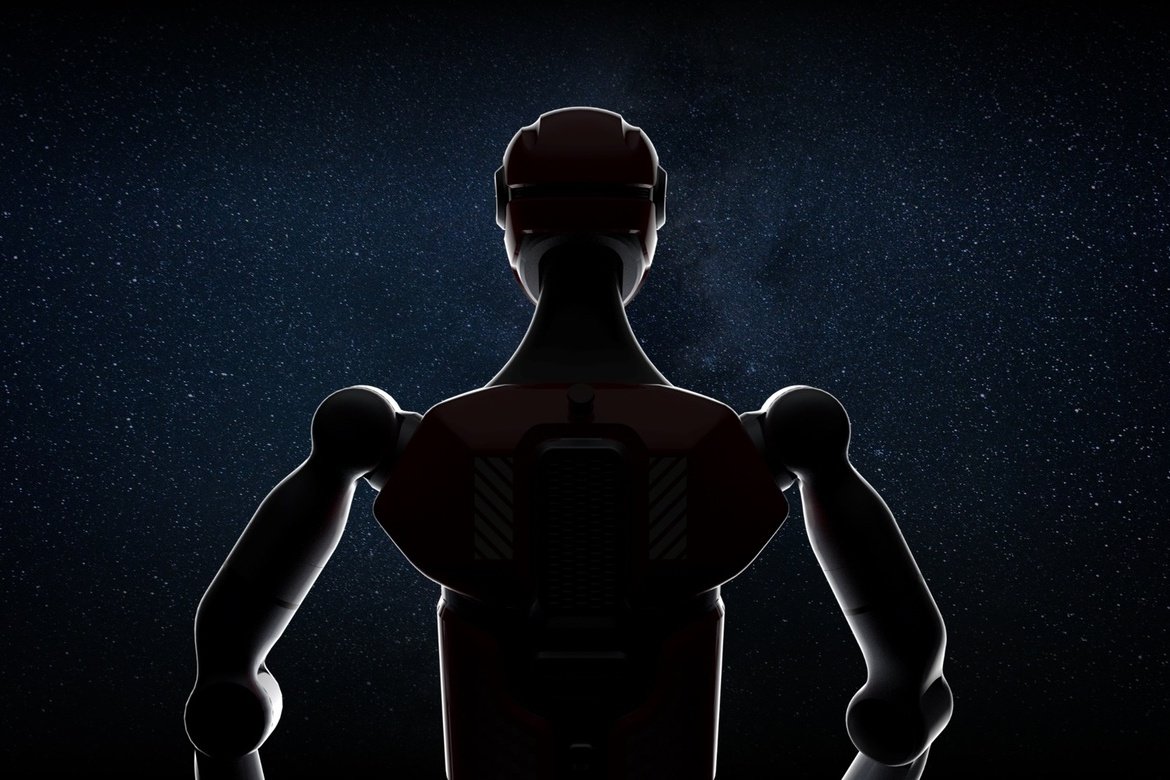
AI2 Robotics’ AlphaBot platform integrates proprietary vision-language-action models with robotic hardware, reflecting the shift toward general-purpose embodied AI systems. Photo: AI2 Robotics
AI2 Robotics, a Shenzhen-based embodied AI startup, has raised approximately $145 million in Series B funding as it accelerates development and production of its AlphaBot robots. The investment, which values the company at roughly $1.4 billion, underscores growing momentum behind general-purpose robotics platforms designed to operate across multiple industries.
The funding will support expansion of AI2 Robotics’ proprietary embodied AI models and scaling of manufacturing capacity, with production targets rising from around 1,000 robots annually to as many as 10,000 units. The company’s AlphaBot systems, which combine wheeled mobility with humanoid manipulation capabilities, are already being deployed in industrial and commercial environments, including electronics manufacturing and public service operations.
The raise reflects intensifying competition among robotics companies globally to develop general-purpose machines capable of performing diverse physical tasks, powered by advances in foundation models and embodied AI.
Building Foundation Models for Physical Intelligence
At the center of AI2 Robotics’ strategy is its proprietary Global and Omni-body Vision-Language-Action model, designed to enable robots to interpret environments, understand instructions, and execute tasks autonomously. Vision-language-action models represent a new class of robotics AI systems that integrate perception, reasoning, and motion control into unified neural networks.
Unlike traditional robots programmed for fixed tasks, embodied AI systems are trained using continuous feedback loops that allow them to learn from real-world interactions. This approach enables robots to adapt to new environments and perform a wider range of activities without extensive reprogramming.
AI2 Robotics’ AlphaBot platform integrates this model directly into its hardware systems, allowing robots to coordinate movement, interpret visual input, and respond dynamically to changing conditions. The company describes its approach as combining model development, hardware manufacturing, and deployment into a unified platform.
This vertically integrated model mirrors strategies used by leading autonomous vehicle and robotics developers, where tight coupling between software and hardware enables faster iteration and performance optimization.
Scaling Production and Commercial Deployment
The company’s Series B investors include major technology and industrial firms such as Baidu and CRRC, along with financial and manufacturing partners. These collaborations are expected to accelerate deployment across industries including manufacturing, logistics, and public infrastructure.
AI2 Robotics has already secured orders for large numbers of robots from industrial customers, reflecting early demand for embodied AI systems capable of supporting manufacturing and operational workflows. Planned applications extend beyond industrial settings to healthcare, elder care, and community services, areas where robots could help address labor shortages and operational complexity.
Scaling production from thousands to tens of thousands of units represents a critical step toward commercialization. Historically, robotics companies have struggled to move beyond limited pilot deployments due to hardware complexity and cost. Increasing production volume can reduce unit costs while enabling broader adoption.
China Accelerates Push into General Purpose Robotics
AI2 Robotics’ funding highlights China’s growing emphasis on embodied AI as a strategic technology sector. Chinese robotics companies are increasingly focusing on general-purpose platforms capable of supporting diverse applications, rather than specialized systems designed for narrow tasks.
This approach aligns with broader industry trends toward foundation models for robotics, similar to large language models in software AI. By training robots on large datasets and enabling continuous learning, companies aim to create systems that can operate across industries and environments.
Industrial partnerships play a central role in this strategy, providing both deployment opportunities and real-world data needed to improve AI performance. Access to large-scale manufacturing environments also allows robotics companies to iterate rapidly and validate systems under real operating conditions.
The combination of advanced AI models, scalable hardware production, and industrial integration could enable embodied AI systems to move from experimental deployments to widespread commercial use.
As embodied AI becomes a focal point of global robotics development, companies like AI2 Robotics are positioning themselves to compete in a market that could redefine automation, extending robotics beyond fixed industrial roles into general-purpose machines capable of operating across the physical economy.
ZaiNar has raised more than $100 million and unveiled a physical AI platform that turns wireless networks into precise positioning systems for robots, devices, and autonomous systems.
By Laura Bennett | Edited by Kseniia Klichova
Published:
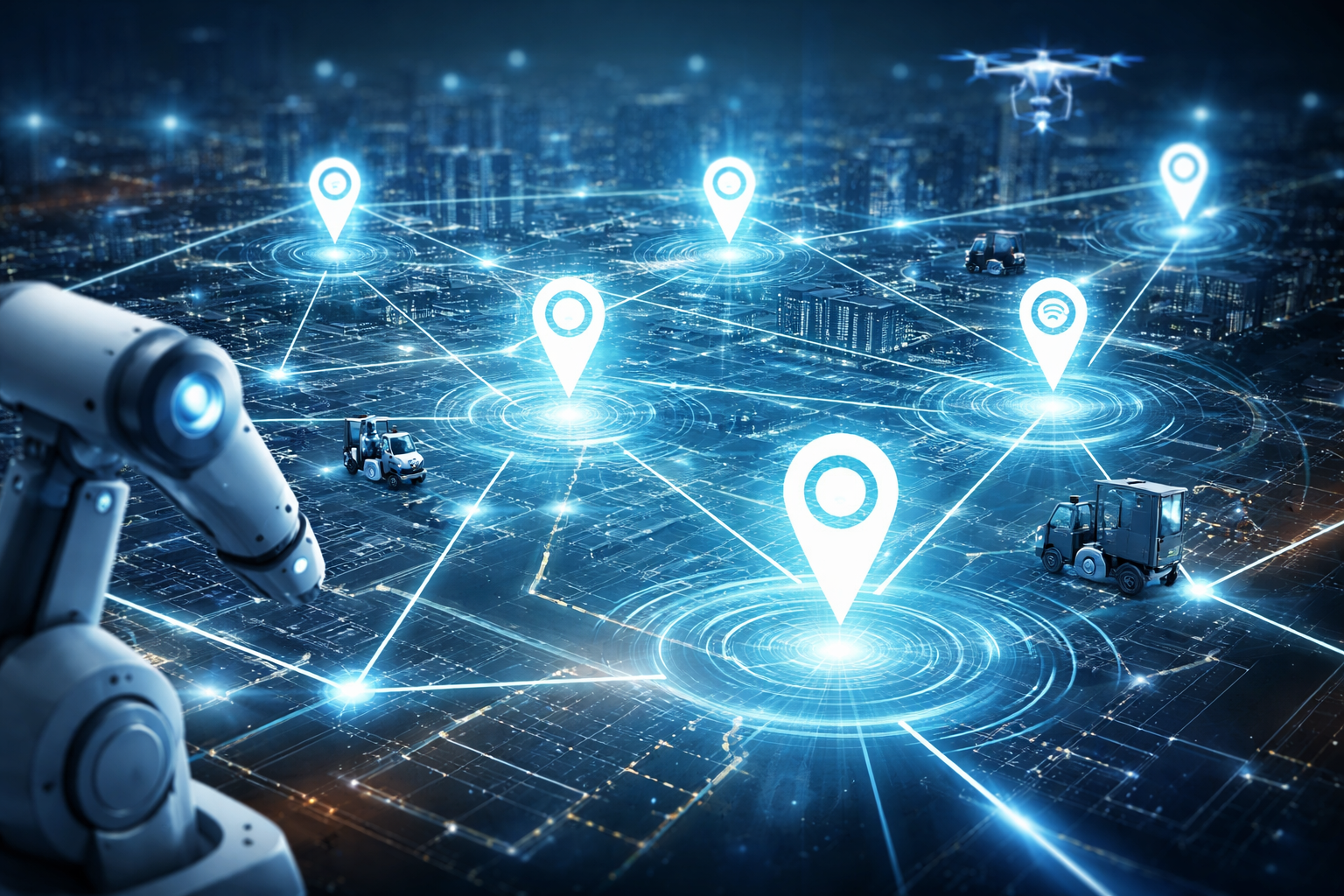
ZaiNar’s physical AI platform transforms wireless networks into real-time positioning systems, providing robots and autonomous machines with precise spatial awareness. Photo: ZaiNar
ZaiNar, a California-based startup emerging from nearly a decade of stealth development, has raised more than $100 million and introduced a platform designed to solve one of robotics’ most persistent technical challenges: accurate, continuous spatial awareness. The company says its system can transform existing wireless infrastructure into a sensing layer that enables robots, autonomous vehicles, and connected machines to precisely locate themselves and other objects in real time.
The funding round, which brings ZaiNar’s valuation above $1 billion, signals growing recognition that physical AI systems require new infrastructure beyond compute and sensors. While advances in artificial intelligence have accelerated robotic perception and decision-making, the ability to maintain reliable, real-time awareness of physical position remains a major bottleneck.
ZaiNar’s platform addresses this gap by turning existing wireless signals into a precise positioning network, eliminating the need for dedicated hardware such as cameras, GPS receivers, or specialized tracking beacons.
Building the Missing Spatial Layer for Robotics
Physical AI systems, including robots and autonomous vehicles, rely on continuous knowledge of their location relative to other objects. While GPS provides useful outdoor navigation, it lacks the precision required for many robotics applications and performs poorly indoors or in dense urban environments. Vision-based systems can offer high accuracy but require constant visual input and significant computing power, and their performance can degrade in complex or obstructed environments.
ZaiNar’s approach uses advanced time synchronization across wireless networks to determine precise location from existing signals. By synchronizing wireless transmissions with extremely high timing accuracy, the system can calculate positions to within less than a meter, even through walls or without direct line of sight.
This capability allows any device connected to wireless networks, including 5G, Wi-Fi, or private cellular systems, to continuously determine its position without additional sensors or infrastructure. The company says its technology works with existing network deployments, avoiding the need for costly hardware installations that often limit scalability.
The result is a persistent spatial awareness layer that can support robots operating in warehouses, hospitals, factories, and construction sites, where precise coordination between machines and objects is critical.
Enabling Coordination Across Autonomous Systems
Accurate positioning is essential for enabling coordinated autonomous operations. Robots performing logistics tasks, for example, must navigate dynamic environments with other robots, workers, and moving equipment. Without reliable location data, systems must rely on slower or less efficient perception methods, limiting scalability.
ZaiNar’s platform provides real-time positional data that can be shared across devices and systems, enabling coordinated behavior between robots, autonomous vehicles, and connected infrastructure.
The company says its technology is already deployed commercially in multiple industries. Applications include helping healthcare providers locate medical equipment, enabling safer operations in construction environments, and supporting autonomous coordination in logistics and industrial settings.
By providing a unified spatial reference layer, the platform could reduce reliance on computationally intensive vision systems while improving reliability in environments where traditional sensing methods are unreliable.
Infrastructure Becomes Central to Physical AI Scaling
ZaiNar’s emergence reflects a broader shift in robotics toward infrastructure-driven scaling. While much of the recent focus has been on improving robot intelligence through machine learning, physical AI systems also require reliable spatial data to operate effectively in real-world environments.
Historically, robotics systems have relied on combinations of GPS, cameras, and proprietary tracking hardware, each with limitations in cost, accuracy, or scalability. By leveraging existing wireless infrastructure, ZaiNar aims to provide a foundational capability that can support a wide range of autonomous systems without requiring dedicated sensor deployments.
The company has filed more than 100 patents related to its positioning and synchronization technology and reports hundreds of millions of dollars in contracts and commercial agreements, indicating strong demand from enterprise and infrastructure operators.
As robotics expands into logistics, healthcare, transportation, and construction, positioning infrastructure may become as essential as compute platforms and sensors. If widely adopted, systems like ZaiNar’s could enable more reliable and scalable deployment of physical AI, providing the spatial awareness necessary for autonomous machines to operate safely and efficiently at industrial scale.
Yukai Engineering’s Mirumi, a small robotic bag charm, is entering global markets as robotics companies explore emotionally expressive consumer products tied to fashion and collectibles.
By Daniel Krauss | Edited by Kseniia Klichova
Published:
Updated:
Mirumi, a small emotionally responsive robot designed to attach to handbags, reflects a growing trend toward consumer robotics that prioritize emotional interaction and everyday presence. Photo: Yukai Engineering
Yukai Engineering, a Tokyo-based robotics company, is introducing Mirumi, a small, emotionally expressive robot designed to attach to handbags, marking an expansion of robotics into fashion and consumer accessories. The product, which resembles a plush character with wide eyes and soft fur, is scheduled for global rollout in 2026, with production scaling to tens of thousands of units as the company targets international markets.
Mirumi represents a departure from industrial and service robotics, focusing instead on emotional interaction. The robot reacts to its surroundings by turning its head, making eye contact, and displaying shy or curious movements inspired by infant behavior. Rather than performing functional tasks, Mirumi is designed to evoke emotional responses and maintain a persistent presence in everyday life.
The launch comes as robotics companies increasingly explore consumer markets beyond automation, leveraging advances in miniaturization, sensors, and embedded AI to create products that integrate into personal environments.
Robotics Moves into Consumer Lifestyle Products
Unlike traditional robots designed for manufacturing or logistics, Mirumi’s primary role is social and emotional. The device attaches to bags and interacts passively with its environment, blending robotics with fashion and personal expression.
Yukai Engineering has already secured approximately 4,000 preorders outside Japan and plans to manufacture around 30,000 units by mid-2026. The robot is expected to retail for about $149, positioning it as an accessible consumer robotics product rather than a high-cost experimental device.
The company is actively targeting global fashion markets, including collaborations with designers and appearances at international events such as Milan Fashion Week. Retail expansion includes planned partnerships with major department stores and fashion outlets, reflecting growing interest from both technology and fashion sectors.
This strategy aligns with broader growth in the global collectibles and accessories market. Character-based products, including plush collectibles and bag charms, have seen strong demand among adult consumers, particularly in what industry analysts describe as the “kidult” segment. This demographic shift has helped drive expansion in both the toy industry and adjacent markets such as fashion accessories.
Emotional Robotics Becomes a New Category
Mirumi’s development highlights a broader shift toward emotionally responsive robotics designed for everyday environments. Advances in sensors, compact actuators, and embedded AI systems have made it possible to create small robots capable of subtle, expressive movement.
Unlike task-oriented robots, emotionally expressive robots aim to create ongoing relationships with users. These systems rely less on functional capability and more on behavioral design, using movement patterns and responsiveness to maintain engagement.
Yukai Engineering has previously developed similar products that emphasize companionship and emotional interaction. The company’s approach reflects a growing segment of robotics focused on human-robot interaction rather than industrial productivity.
Industry analysts expect emotionally responsive robotics to become more common as robotics hardware becomes smaller, more affordable, and easier to integrate into consumer products. These systems may eventually serve as interfaces for broader AI services, acting as physical embodiments of software agents.
Consumer Robotics Expands Beyond Utility
Mirumi’s launch signals how robotics is expanding into consumer identity and lifestyle products, where emotional value can be as important as functional capability. The robot’s positioning as both a fashion accessory and a technology product reflects the convergence of robotics, design, and consumer culture.
This convergence also reflects changes in how robotics companies approach commercialization. Instead of focusing solely on enterprise customers, some firms are building products for direct consumer adoption, using emotional engagement to drive sustained interaction.
The emergence of emotionally expressive robots like Mirumi suggests that the robotics industry is beginning to explore new markets where the primary role of robots is not to perform labor, but to establish presence, interaction, and connection in everyday life.
U.K.-based Wayve has secured up to $1.5 billion in new funding to expand its AI-driven autonomous driving software, with robotaxi deployments planned in London and integration into consumer vehicles by 2027.
By Rachel Whitman | Edited by Kseniia Klichova
Published:
Wayve’s autonomous driving software is designed to operate across multiple vehicle platforms, enabling robotaxis and consumer vehicles without requiring proprietary hardware systems. Photo: Wayve
Wayve, a London-based autonomous driving startup, has raised up to $1.5 billion in new funding to accelerate deployment of its AI-driven vehicle software, marking a shift toward licensing-based autonomy as robotaxis prepare to launch on public roads. The round values the company at $8.6 billion and positions it to expand globally as robotaxi services using its technology enter commercial operation this year.
The funding includes $1.2 billion from investors such as SoftBank, Microsoft, Nvidia, Uber, Mercedes-Benz, Nissan, and Stellantis, with Uber committing an additional $300 million contingent on performance milestones. The capital injection brings Wayve’s total funding to more than $3 billion since its founding in 2017, underscoring growing investor confidence in software-centric approaches to autonomous driving.
Robotaxis powered by Wayve’s system are expected to begin operating in London in partnership with Uber later this year, while Nissan plans to integrate the company’s technology into consumer vehicles starting in 2027.
A Software First Approach to Autonomy
Wayve’s strategy differs fundamentally from competitors such as Waymo and Tesla, which have invested heavily in vertically integrated models involving proprietary vehicles or company-owned fleets. Instead, Wayve focuses on building a generalized AI driving system that can be integrated into vehicles produced by automakers or operated by third-party fleet providers.
The company’s software is designed as a plug-and-play platform capable of functioning across different hardware configurations, including vehicles equipped with cameras alone or those using lidar, radar, and other sensors. This flexibility allows automakers and mobility providers to deploy autonomous functionality without redesigning vehicles around proprietary sensor stacks.
Wayve co-founder and CEO Alex Kendall has described the licensing model as the most scalable path forward, allowing the company to focus on developing the AI software layer rather than managing vehicle manufacturing or fleet operations. This approach also reduces the capital intensity associated with building and maintaining autonomous fleets.
The model mirrors the broader shift in robotics and physical AI toward software-defined systems, where intelligence becomes the primary value layer and hardware serves as a deployment platform.
Commercial Deployment Signals Industry Transition
The new funding arrives as autonomous driving moves from pilot programs into early commercialization. Waymo, currently the leading operator of commercial robotaxis, has expanded its services to additional U.S. cities and continues to scale operations globally. Other companies, including Waabi and Tesla, are also pursuing robotaxi deployment, though at different stages of readiness.
Wayve’s entry into commercial service in London represents a key milestone, particularly because its business model depends on adoption by external partners rather than direct fleet ownership. Success will depend on whether its AI can operate reliably across different vehicle platforms and environments without extensive customization.
The company has already conducted testing across multiple international locations, including Germany, Japan, and the United States, reflecting its ambition to build a globally deployable autonomous driving system.
Partnerships with automakers such as Nissan, Mercedes-Benz, and Stellantis also extend Wayve’s reach beyond ride-hailing into consumer vehicles. This dual deployment model, spanning robotaxis and privately owned cars, could significantly expand the total addressable market for autonomous driving software.
Autonomous Driving Becomes a Software Platform Market
Wayve’s funding highlights a broader shift in autonomous driving toward platform-based business models, where companies compete to provide the AI systems that enable autonomy rather than owning the physical vehicles themselves.
This approach resembles developments in other robotics sectors, where software platforms increasingly define system capabilities and scalability. By separating the intelligence layer from the hardware, companies can deploy across diverse vehicle types and geographies without replicating infrastructure.
The outcome of this transition remains uncertain. Vertically integrated operators such as Waymo retain advantages in controlling system performance and deployment environments, while licensing-focused companies like Wayve aim to scale faster by leveraging existing automotive manufacturing and mobility networks.
If Wayve’s model succeeds, it could reshape the economics of autonomous driving, transforming autonomy from a capital-intensive infrastructure business into a software-driven platform integrated across the global automotive industry.
Japan has launched a national effort to mass-produce humanoid robots by 2027, bringing together universities, electronics firms, and government support to address labor shortages and restore its robotics leadership.
By Daniel Krauss | Edited by Kseniia Klichova
Published:
A collaborative alliance of Japanese universities and electronics firms is developing domestically produced humanoid robots for disaster response and industrial use, marking a national push into physical AI. Photo: Waseda University
Japan is preparing to mass-produce humanoid robots by 2027 as part of a coordinated effort between universities, electronics manufacturers, and semiconductor companies. The initiative reflects a broader national strategy to address labor shortages while reestablishing Japan’s role in a rapidly advancing global robotics sector.
The effort, led by a consortium known as the Kyoto Humanoid Association, brings together robotics developers such as Waseda University and tmsuk alongside major industrial firms including Murata Manufacturing, Renesas Electronics, and Sumitomo Heavy Industries. The group aims to complete a working prototype by March 2026, followed by commercial-scale manufacturing the following year.
The project marks one of Japan’s most ambitious attempts in recent decades to translate its robotics expertise into large-scale deployment of humanoid systems capable of operating in real-world environments.
A National Effort to Address Labor Shortages
Japan’s humanoid robotics initiative is driven in part by demographic pressure. The country’s working-age population continues to shrink as birth rates decline and the population ages, creating persistent labor shortages in construction, manufacturing, infrastructure maintenance, and emergency response.
Recent labor reforms limiting overtime hours have intensified workforce constraints, accelerating interest in automation solutions capable of operating in human-designed environments. Humanoid robots are seen as uniquely suited for such roles because their physical structure allows them to use existing tools, navigate standard buildings, and perform tasks without requiring major infrastructure changes.
The consortium is developing two primary humanoid platforms. One is a large disaster-response robot standing approximately 250 centimeters tall with the ability to lift loads exceeding 50 kilograms. The second is a research-oriented humanoid with human-like proportions and greater mobility, designed to accelerate software and AI development.
Government support is expected to play a central role in scaling these systems. Japan’s Cabinet Office plans to introduce a national AI Robotics Strategy in fiscal year 2026, aimed at accelerating deployment and creating early demand in areas such as disaster response, inspection, and infrastructure maintenance. The government’s Moonshot Research and Development Program is also funding work toward a general-purpose humanoid AI platform by 2030.
Physical AI Becomes a Strategic Priority
The initiative reflects Japan’s recognition that robotics is entering a new phase defined by the integration of artificial intelligence and physical systems, often described as physical AI. While Japan historically led humanoid robotics through projects such as Honda’s ASIMO and Murata Manufacturing’s balancing robot, recent advances in AI-driven perception and motion control have shifted momentum toward companies in the United States and China.
Advances in machine learning, sensor technology, and simulation have made humanoid robots more viable for practical applications, but the key challenge remains data. Humanoid robots must learn to operate in complex environments by gathering visual and spatial information and adjusting their movements in real time. Training these systems requires large volumes of real-world data collected from human-centered perspectives.
Industry leaders involved in the consortium emphasize that collaboration is essential to overcoming these challenges. Japanese companies are contributing specialized technologies, including precision motors, sensors, and microcontrollers, to accelerate development and ensure compatibility across hardware and software layers.
This coordinated approach differs from earlier robotics efforts that were often driven by individual companies. By pooling expertise across universities, semiconductor firms, and heavy industry, Japan is attempting to build a scalable ecosystem capable of competing internationally.
A Race to Reclaim Robotics Leadership
Japan’s move comes amid intensifying global competition in humanoid robotics. Companies such as Tesla, Figure AI, and Agility Robotics in the United States, along with rapidly advancing Chinese robotics firms, are pushing toward commercial deployment of humanoid systems in factories and logistics operations.
For Japan, the current initiative represents both an economic opportunity and a strategic necessity. Humanoid robots could help stabilize productivity as the labor force declines while strengthening domestic capabilities in semiconductor integration, AI, and precision manufacturing.
The success of the effort will depend on whether Japan can move beyond prototype development and achieve reliable, cost-effective production at scale. Mass production by 2027 would mark a shift from demonstration systems to deployable machines capable of performing meaningful work in industry and public infrastructure.
If successful, the initiative could signal Japan’s reemergence as a central player in humanoid robotics, this time driven not only by mechanical engineering but by the convergence of AI, semiconductor technology, and industrial-scale manufacturing.
Hyundai Motor Group has deployed unmanned firefighting robots with South Korea’s National Fire Agency, signaling robotics’ growing role in safety-critical infrastructure.
By Rachel Whitman | Edited by Kseniia Klichova
Published:
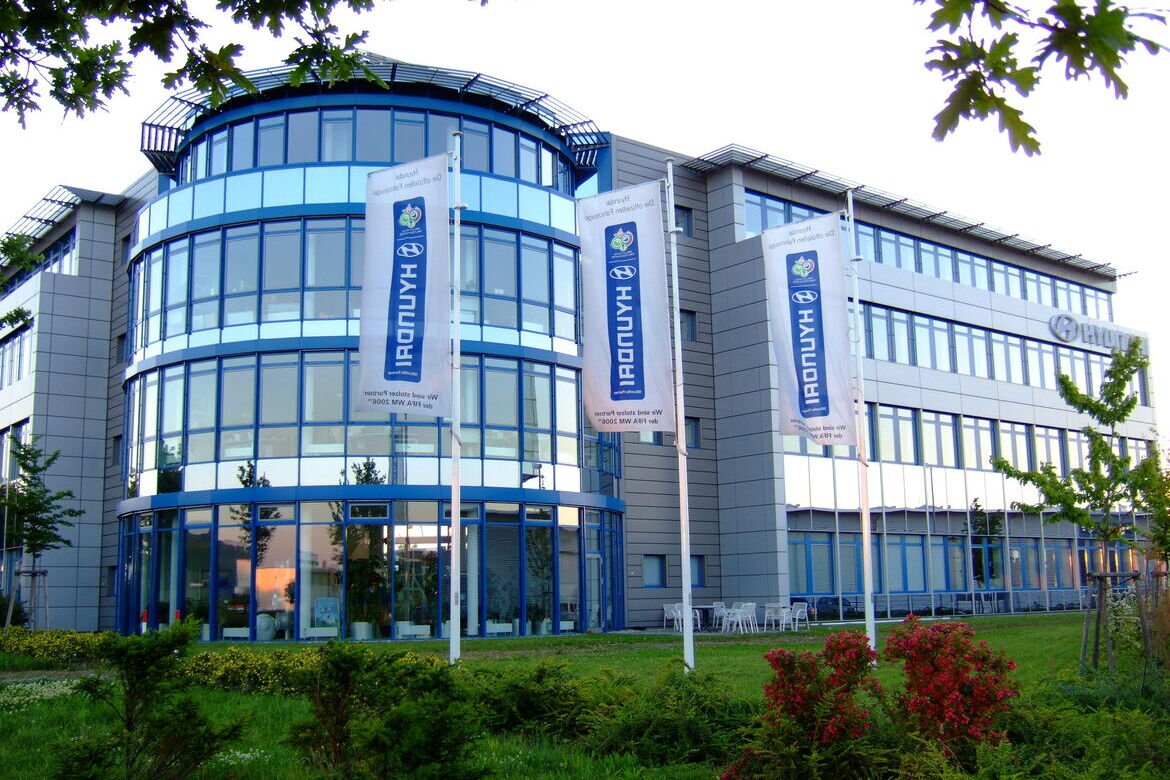
Hyundai’s unmanned firefighting robot operates in extreme heat environments, reflecting robotics’ growing role in protecting emergency responders and supporting disaster response operations. Photo: Hyundai Motor Group
Hyundai Motor Group’s deployment of unmanned firefighting robots with South Korea’s National Fire Agency marks a turning point in how robotics is moving from industrial automation into core public safety infrastructure. While robots have long been associated with manufacturing efficiency, their role is expanding into frontline emergency response, where reliability and survivability can determine life-or-death outcomes.
The initiative reflects a broader shift in robotics deployment priorities. Increasingly, companies and governments are adopting robots not only to improve productivity, but to operate in hazardous environments where human risk is highest. The firefighting robots now entering service in South Korea illustrate how physical AI is evolving into a safety-critical technology, with implications far beyond emergency services.
Robots Designed for Conditions Too Dangerous for Humans
The firefighting robots are based on Hyundai Rotem’s HR-Sherpa unmanned vehicle platform, an electrified robotic system engineered for extreme operational conditions. Equipped with a front-mounted water cannon, thermal imaging cameras, and remote-control capability, the robots can suppress fires, assess structural hazards, and locate victims without exposing firefighters to immediate danger.
One of the most important technical features is a self-spraying thermal protection system. This mechanism continuously cools the robot’s exterior, allowing it to operate in environments with temperatures reaching up to 800°C. Such conditions are typically inaccessible to human responders and can quickly disable conventional vehicles or equipment.
The robots are also designed for mobility in unstable environments. With independent in-wheel motors and heat-resistant tires, they can traverse debris, collapsed structures, and uneven terrain commonly found at fire scenes. Infrared vision systems provide real-time situational awareness through smoke and flames, enabling remote operators to identify hazards and coordinate response strategies.
Two units have already been deployed in active rescue operations with specialized firefighting teams, with additional robots scheduled for deployment across regional emergency units. Their primary role is to perform initial suppression and reconnaissance tasks, helping reduce risks before human crews enter dangerous environments.
The deployment addresses a persistent safety challenge. Over the past decade, more than 1,800 firefighters in South Korea have been injured or killed in the line of duty, highlighting the need for technologies that reduce direct exposure to high-risk situations.
A Strategic Shift Toward Robotics as Critical Infrastructure
Hyundai’s firefighting robots illustrate how robotics is increasingly being treated as essential infrastructure rather than experimental technology. Historically, robotics investment focused on industrial productivity gains. Today, robots are being designed for resilience, autonomy, and reliability in unpredictable real-world environments.
The HR-Sherpa platform is part of Hyundai’s broader effort to develop modular robotic mobility systems capable of supporting multiple applications. In addition to firefighting, similar robotic platforms could be used for disaster response, hazardous material handling, and search-and-rescue operations.
This shift reflects advances across several core technologies, including sensor fusion, electrified mobility, and autonomous navigation. Improvements in perception systems allow robots to operate with greater awareness, while robust mobility platforms enable operation in environments where human access is restricted.
Equally important is the role of remote operation and autonomy. By allowing operators to control robots from safe distances while receiving real-time environmental data, robotics expands the operational reach of emergency responders without increasing human risk.
Hyundai Executive Chair Euisun Chung emphasized that the robots were developed specifically to protect human responders, describing them as partners capable of entering dangerous scenes ahead of firefighters.
What This Signals for the Future of Physical AI
The deployment signals a broader transition underway in the robotics industry. Physical AI systems are no longer confined to controlled factory settings. Instead, they are increasingly operating in dynamic, unpredictable environments where safety and adaptability are critical.
This transition has implications across multiple sectors. Emergency response, defense, infrastructure inspection, and industrial safety all represent areas where robotics can provide capabilities beyond human limitations. Robots can operate continuously, withstand hazardous conditions, and provide data-driven situational awareness in real time.
The move also reflects a maturation of robotics technology itself. Early robotics systems were limited by hardware reliability, battery capacity, and computational constraints. Recent advances in electrification, AI-based perception, and mobility systems have enabled robots to perform tasks that were previously impractical or unsafe.
For the robotics industry, deployments like Hyundai’s firefighting robots represent more than isolated experiments. They mark the emergence of robotics as part of the foundational systems that support modern society.
Robotics is no longer just reshaping factories. It is beginning to reshape how societies respond to risk, protect workers, and manage emergencies – a shift that underscores how physical AI is becoming infrastructure in its own right.
Sitegeist has raised €4 million in pre-seed funding to scale its AI-powered construction robots, targeting infrastructure repair and labor shortages in renovation projects.
By Laura Bennett | Edited by Kseniia Klichova
Published:
Updated:
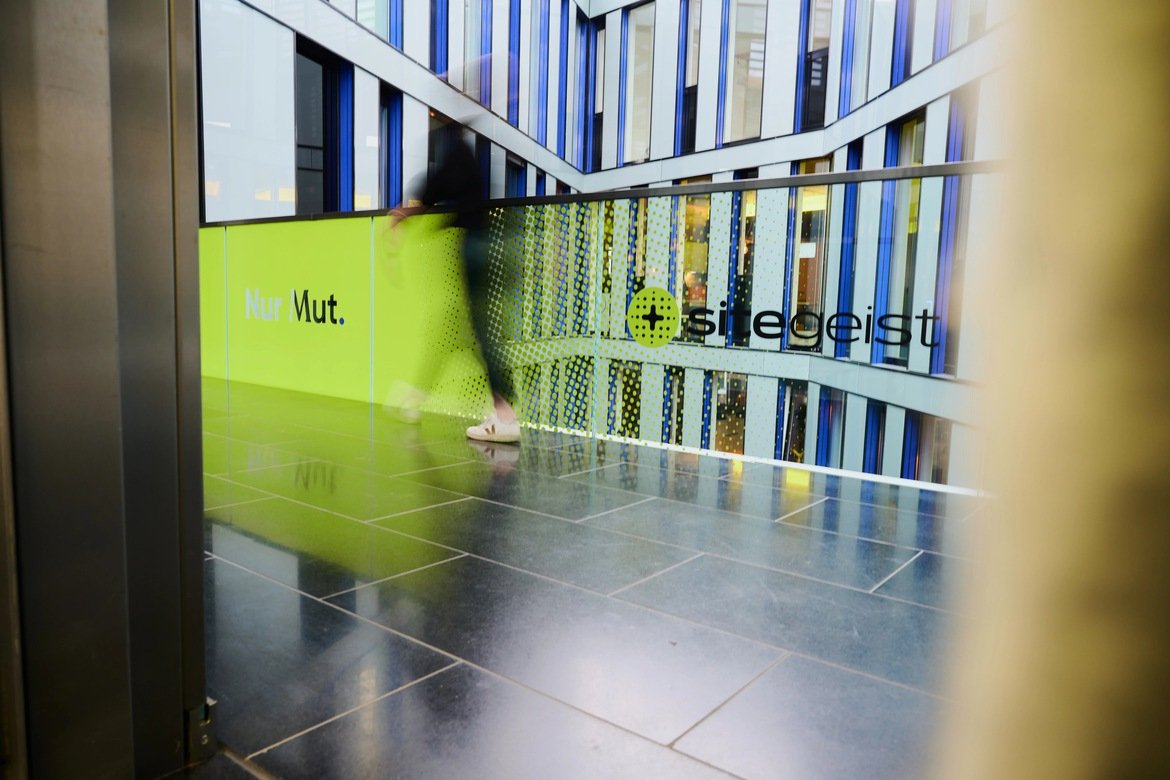
Sitegeist’s modular construction robots are designed to automate concrete renovation tasks directly on active infrastructure sites. Photo: Sitegeist
Munich-based robotics startup Sitegeist has raised €4 million in pre-seed funding to accelerate the deployment of AI-powered construction robots designed to automate concrete renovation. The investment reflects growing interest in applying physical AI to one of the least automated industries: infrastructure repair.
The funding round, led by venture firms including b2venture and OpenOcean, will support technology development, pilot deployments, and hiring as Sitegeist expands its robotic systems across active construction sites.
The investment highlights how robotics is beginning to address structural labor shortages and productivity bottlenecks in the global construction sector.
Automation Targets Infrastructure Repair Backlog
Aging infrastructure is emerging as one of the most urgent global challenges. Bridges, tunnels, and public buildings across Europe and North America require extensive renovation, with repair backlogs reaching hundreds of billions of euros.
Concrete removal and repair remain largely manual processes, requiring physically demanding labor and specialized skills. These tasks are difficult to scale, limiting the speed at which infrastructure can be restored.
Sitegeist’s robots are designed specifically to automate concrete renovation tasks. Unlike traditional industrial robots, which operate in controlled environments, Sitegeist’s systems work directly on existing structures.
The robots use perception systems and AI-based decision tools to analyze surfaces, identify work areas, and perform renovation tasks without relying on pre-existing digital models.
This capability allows the robots to operate in unstructured environments, a key requirement for construction automation.
Bringing Physical AI to Complex Real-World Environments
Construction presents unique challenges for robotics. Unlike factories, where robots operate in predictable environments, construction sites are highly variable and constantly changing.
Sitegeist’s approach focuses on adaptive robotics systems capable of functioning in real-world conditions. The robots use sensors and AI models to interpret their environment and adjust their actions dynamically.
This allows deployment on active construction sites without extensive preparation or digital mapping.
The company’s modular robotic platform integrates into existing workflows, enabling construction firms to deploy automation incrementally rather than redesigning entire operations.
By automating physically demanding tasks, the robots can improve safety while increasing productivity.
Addressing Labor Shortages and Scaling Productivity
Labor shortages are a major constraint in construction. Skilled workers are increasingly difficult to recruit and retain, particularly for physically intensive renovation tasks.
Robotics offers a scalable solution by automating repetitive and hazardous work. This allows human workers to focus on higher-value activities such as planning, supervision, and specialized operations.
Investors view construction robotics as a major growth opportunity. Infrastructure repair is a large and persistent market, with demand expected to increase as infrastructure ages.
Sitegeist’s spin-out from the Technical University of Munich reflects the growing commercialization of robotics research. The company’s founding team combines expertise in robotics, artificial intelligence, and engineering.
Construction Robotics as the Next Frontier for Physical AI
The construction industry has historically lagged behind manufacturing in automation adoption. However, advances in AI perception, computing, and robotics hardware are enabling robots to operate in more complex environments.
Sitegeist’s funding reflects broader momentum in applying embodied AI to industries beyond factories and warehouses.
Construction automation could significantly improve productivity while addressing workforce shortages and safety challenges.
The ability to deploy robots directly on existing infrastructure without requiring digital models is a key technical advancement. This reduces deployment barriers and accelerates adoption.
As physical AI expands into construction, robotics may become a critical tool for maintaining and upgrading global infrastructure.
Sitegeist’s funding round highlights a growing recognition that robotics is not limited to manufacturing. It is becoming an essential technology for addressing some of the world’s most pressing infrastructure challenges.
China’s top humanoid robot companies will showcase their latest technologies and global expansion plans at AW 2026 in Seoul, highlighting intensifying competition in physical AI.
By Rachel Whitman | Edited by Kseniia Klichova
Published:
Humanoid robots from leading Chinese manufacturers will be showcased at AW 2026, reflecting the country’s growing influence in physical AI and robotics. Photo: AGIBOT
China’s leading humanoid robot companies will gather in Seoul next month to present their latest technologies and global expansion strategies, signaling intensifying competition in the emerging embodied AI sector. The companies will participate in Smart Factory & Automation World (AW) 2026, one of Asia’s largest industrial automation events.
The conference will mark the first time several of China’s major humanoid robot developers appear together at a robotics exhibition in South Korea. The event reflects China’s growing influence in robotics manufacturing and highlights the country’s ambition to expand its humanoid robot industry internationally.
China’s Robotics Leaders Expand Global Presence
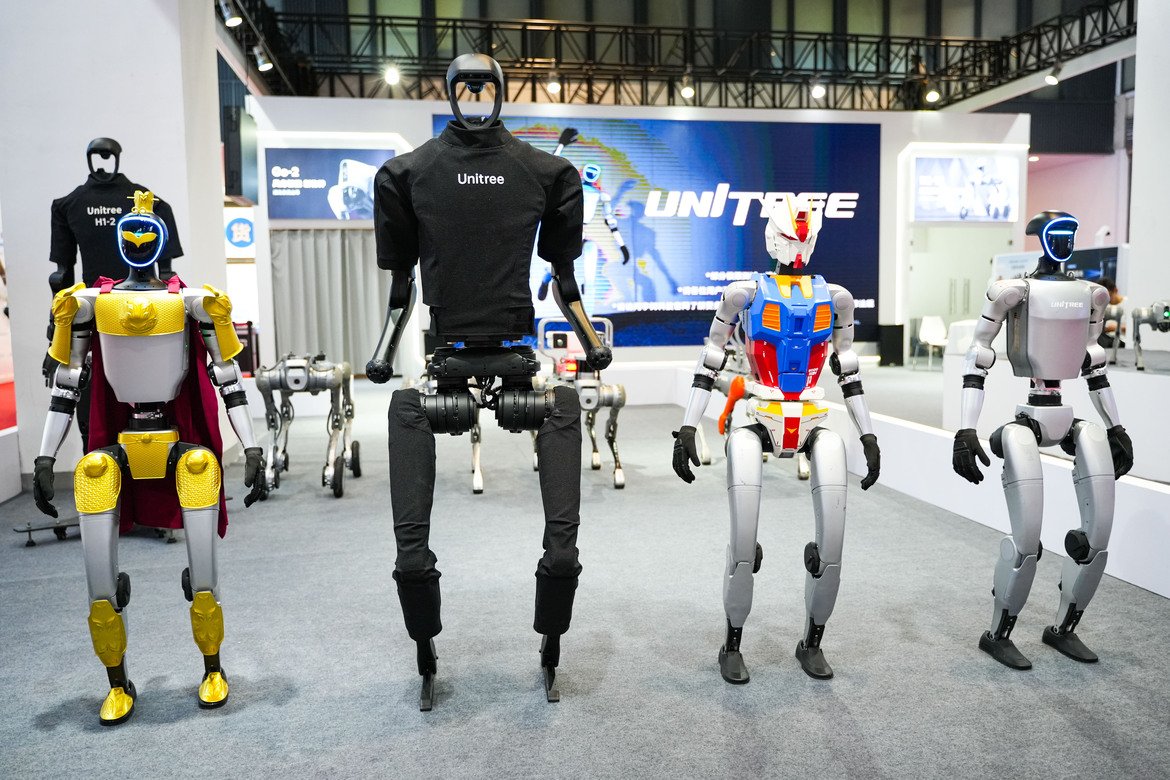
The participating companies include Unitree Robotics, Huawei, Fourier, and Leju Robotics, along with AGIBOT, a major player in humanoid robotics shipments. Executives and technical leaders from these firms will present commercialization roadmaps, technical progress, and global expansion plans.
The companies will also showcase live demonstrations of their humanoid robot platforms. These include AGIBOT’s X2 and G2 humanoids, Unitree’s G1 robot, and Leju’s Kuavo humanoid systems.
These demonstrations provide insight into how humanoid robots are evolving beyond research prototypes toward commercial deployment. The robots incorporate advanced actuators, perception systems, and AI-based control software designed for industrial and service applications.
Industry observers view such events as critical for establishing partnerships, attracting customers, and accelerating adoption.
Humanoid Robots Become Strategic Industrial Priority
The gathering highlights how humanoid robots are becoming a strategic priority for manufacturing and automation industries. Robotics companies are increasingly focusing on humanoid form factors, which allow robots to operate in environments designed for human workers.
Humanoid robots can perform tasks in factories, warehouses, and public environments without requiring specialized infrastructure. This flexibility makes them attractive for automation across a wide range of industries.
China has emerged as a major hub for humanoid robotics development, supported by strong manufacturing capabilities and growing investment in embodied AI.
Companies are expanding pilot deployments and working toward large-scale commercialization. Demonstrations at international events help validate technical progress and build confidence among potential customers.
Global Competition Intensifies in Physical AI
AW 2026 is expected to bring together hundreds of companies and thousands of industry participants, reflecting growing interest in robotics and automation technologies.
The participation of China’s humanoid robot developers underscores the global nature of competition in robotics. Companies from multiple countries are investing heavily in AI-driven automation, viewing robotics as a key component of future industrial productivity.
South Korea is also emerging as an important robotics hub, with companies including Hyundai Motor Group expanding robotics development and manufacturing capabilities.
The presence of academic researchers and industry leaders at the conference highlights the convergence of research and commercialization in humanoid robotics.
A Defining Moment for the Humanoid Robot Industry
The collective appearance of major humanoid robot companies reflects the rapid acceleration of embodied AI development.
As robots become more capable and economically viable, companies are racing to establish leadership in a market expected to expand significantly over the coming decade.
Events like AW 2026 serve as milestones in this transition, providing a platform for companies to showcase progress and shape the future direction of the industry.
The humanoid robot race is no longer confined to research labs. It is becoming a global industrial competition, with companies and countries investing heavily to define the next generation of automation.
China’s strong presence at AW 2026 highlights its growing role in shaping the future of robotics and physical AI.
AI robots could surpass the number of human workers within decades, driven by falling costs, rapid automation, and expanding adoption across industries.
By Daniel Krauss | Edited by Kseniia Klichova
Published:
Humanoid robots working alongside humans illustrate the accelerating shift toward physical AI and automation across industries. Photo: Boston Dynamics
Artificial intelligence-powered robots could outnumber human workers within the next few decades, according to new forecasts from industry leaders and economists. The prediction reflects accelerating adoption of robotics and AI agents across industries as automation becomes increasingly cost-effective and scalable.
Rob Garlick, former head of innovation and future of work at Citi Global Insights, said the rapid decline in robotics costs and improving capabilities are creating powerful incentives for companies to automate tasks traditionally performed by humans.
The trend reflects a broader shift toward physical AI systems that combine intelligent software with robotic hardware capable of performing real-world work.
Economics Driving Robotics Adoption
The key factor accelerating robotics adoption is economics. As robot prices fall and capabilities improve, the financial case for automation is strengthening rapidly.
Garlick noted that humanoid robots available today can recover their cost in less than 10 weeks in certain roles, based on labor savings. Earlier research indicated that robots costing around $15,000 could break even within weeks depending on wage levels, while more advanced systems could also achieve relatively short payback periods.
Such rapid return on investment makes automation attractive for companies facing rising labor costs and increasing pressure to improve efficiency.
As a result, businesses across sectors including logistics, manufacturing, and services are expanding their use of robotic systems.
The trend extends beyond physical robots to AI agents, software systems capable of performing tasks autonomously. These systems are already being integrated into business workflows to automate knowledge work.
Robots and AI Agents Scaling Rapidly
Forecasts suggest that both physical robots and AI agents will expand dramatically over the coming decades. Citi research projects that the global population of AI-powered robots could reach 1.3 billion by 2035 and exceed 4 billion by 2050.
At the same time, companies are rapidly increasing their use of AI agents. Management consulting firm McKinsey & Company, for example, has already deployed tens of thousands of AI agents internally, with expectations that the number will soon match its human workforce.
Technology leaders are also predicting massive expansion in robotics. Elon Musk, CEO of Tesla, has said that the number of robots could eventually exceed the global human population.
These projections reflect a convergence of advances in AI software, robotics hardware, and computing infrastructure.
Physical AI Reaches a Commercial Tipping Point
Recent advances in AI models, sensors, and computing hardware are enabling robots to perform increasingly complex tasks.
Unlike earlier industrial robots confined to repetitive factory operations, modern robots are designed to operate in human environments, performing logistics, service, and manufacturing tasks.
Humanoid robots, in particular, are attracting significant investment as companies seek automation solutions compatible with existing infrastructure designed for human workers.
The ability to deploy robots without redesigning entire facilities makes humanoid systems especially attractive for automation.
At the same time, AI agents are automating digital workflows, creating a parallel transformation in knowledge work.
Together, physical robots and AI agents represent a comprehensive shift toward automation across both physical and cognitive labor.
Workforce Impact and Economic Transformation
The rapid expansion of robotics is already influencing labor markets. Companies including Amazon, Salesforce, and Accenture have cited AI adoption as a factor in workforce reductions.
Consulting firm Challenger, Gray & Christmas reported that AI-related automation contributed to tens of thousands of job losses in the United States in 2025.
However, some technology leaders argue that AI will also create new jobs. Jensen Huang, CEO of NVIDIA, has said that AI-driven infrastructure development could generate high-paying roles in construction, engineering, and manufacturing.
This reflects a historical pattern in technological transitions, where automation eliminates certain jobs while creating new categories of work.
The Future of Human and Machine Labor
The projection that robots could outnumber human workers highlights the scale of the transformation underway.
Advances in embodied AI are enabling robots to perform tasks once considered uniquely human. At the same time, falling costs and improving reliability are making robots economically viable across a growing range of applications.
While widespread replacement of human workers remains uncertain, the trend toward increased automation appears irreversible.
The coming decades will likely see a hybrid workforce, where humans and robots collaborate across industries. The balance between human and machine labor will depend on technological progress, economic incentives, and policy decisions.
What is clear is that robotics and AI are rapidly moving from experimental technologies into core components of the global economy.
The rise of physical AI may ultimately reshape how work is performed, redefining productivity and the structure of labor itself.
Hyundai Motor Group plans to invest $6.9 billion in an AI, hydrogen, and robotics hub in South Korea, accelerating its transition into physical AI and advanced manufacturing.
By Rachel Whitman | Edited by Kseniia Klichova
Published:
Hyundai Motor Group is investing billions in AI infrastructure and robotics manufacturing to support the future of physical AI and autonomous systems. Photo: Hyundai Motor Group
Hyundai Motor Group plans to invest approximately $6.9 billion in a major artificial intelligence, hydrogen, and robotics hub in South Korea, underscoring its ambitions to become a leading player in physical AI and robotics manufacturing. The planned investment, centered in the Saemangeum region, reflects the company’s long-term strategy to build integrated infrastructure supporting next-generation autonomous and robotic systems.
The project includes plans for AI data centers, robotics manufacturing facilities, and hydrogen production infrastructure. Together, these components form a comprehensive ecosystem designed to support robotics development, production, and deployment at scale.
Building Infrastructure for Physical AI
At the core of Hyundai’s plan is the construction of a large-scale AI data center. Such facilities are essential for training and operating robotics and autonomous systems, which rely on massive datasets to improve perception, motion control, and decision-making.
Robots generate vast amounts of sensor data, including visual, spatial, and mechanical information. Processing this data requires high-performance computing infrastructure capable of training machine learning models and supporting real-time operation.
By building dedicated AI infrastructure, Hyundai aims to accelerate development of robotics and autonomous technologies across its manufacturing and mobility platforms.
The hub will also include a robotics manufacturing and foundry facility. This plant will produce robotic systems and components, supporting Hyundai’s expanding robotics portfolio, including humanoid robots and industrial automation platforms.
Establishing domestic manufacturing capacity allows the company to scale production while maintaining tighter integration between hardware development and AI software.
Integrating Robotics, Energy, and Manufacturing
Hyundai’s investment extends beyond robotics manufacturing to include hydrogen production facilities. The company plans to build water electrolysis plants to generate green hydrogen, supporting its broader strategy to integrate robotics with sustainable energy systems.
Hydrogen infrastructure can play a key role in powering future robotics and mobility systems, particularly in industrial and logistics environments requiring long-duration operation.
Saemangeum’s geographic advantages make it well suited for such infrastructure. The region offers extensive land availability and strong renewable energy potential, allowing large-scale deployment of energy-intensive computing and manufacturing facilities.
By colocating AI data centers, robotics manufacturing, and hydrogen production, Hyundai aims to create a vertically integrated ecosystem for physical AI development.
Robotics at the Center of Hyundai’s Transformation
Hyundai’s robotics investments reflect a broader shift in its corporate strategy. Traditionally known as an automotive manufacturer, the company is positioning itself as a mobility and robotics technology provider.
The company has committed tens of trillions of won to emerging technologies, including robotics, AI, and software-defined vehicles, as part of its long-term investment plan through 2030.
Robotics plays a central role in this strategy. The company’s acquisition of Boston Dynamics in 2021 provided access to advanced humanoid robotics technology, accelerating Hyundai’s entry into the embodied AI sector.
Developing robotics manufacturing infrastructure complements these efforts, enabling the company to move from research and development into large-scale production.
A Strategic Bet on Industrial AI
Hyundai’s investment highlights a broader industry shift toward physical AI infrastructure. As robotics adoption accelerates, companies are investing not only in robots themselves but also in the computing, manufacturing, and energy systems needed to support them.
AI data centers enable training of robotics models. Manufacturing facilities enable scalable production. Energy infrastructure ensures reliable operation.
Together, these elements form the foundation of the physical AI ecosystem.
Hyundai’s robotics hub also has broader economic implications. The project is expected to create jobs, stimulate regional economic growth, and strengthen South Korea’s position in advanced robotics manufacturing.
The investment reflects increasing competition among global technology and automotive companies to establish leadership in robotics and embodied AI.
As humanoid robots and autonomous systems move closer to widespread deployment, infrastructure investments like Hyundai’s Saemangeum hub will play a critical role in determining which companies lead the next phase of automation.
Hyundai’s strategy signals that the future of robotics will be shaped not only by advances in AI software, but also by the industrial infrastructure needed to bring physical AI systems into the real world.
The global reception robots market is projected to grow from $1.2 billion in 2023 to $6.8 billion by 2032, driven by AI advances and rising demand for automated customer service.
By Daniel Krauss | Edited by Kseniia Klichova
Published:
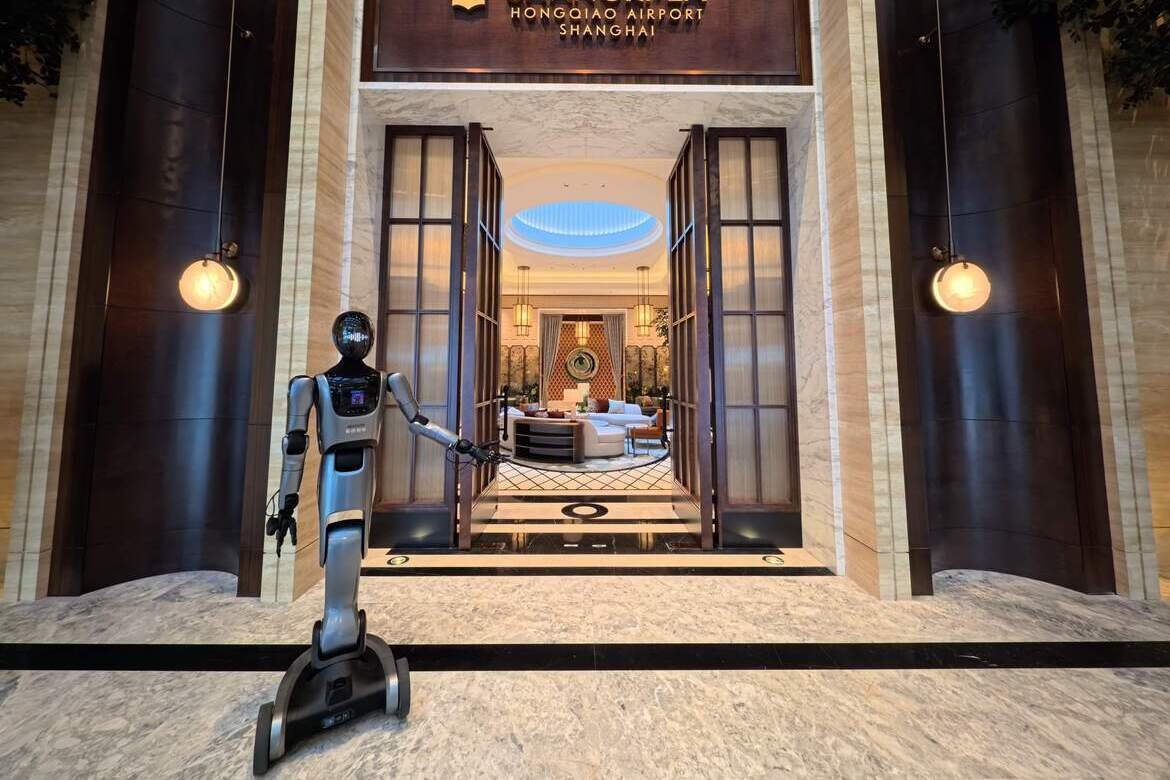
Reception robots equipped with AI and natural language processing are increasingly deployed in hotels, offices, and healthcare facilities. Photo: KEENON Robotics
The global market for reception robots is expected to expand rapidly over the coming decade, growing from $1.2 billion in 2023 to $6.8 billion by 2032. The surge reflects rising demand for automated customer service across hospitality, healthcare, and corporate sectors, as advances in artificial intelligence make service robots more capable and economically viable.
The projected growth represents a compound annual rate of more than 21%, positioning reception robots as one of the fastest-growing segments within the broader service robotics industry.
AI Advances Transform Customer-Facing Robotics
Recent improvements in AI, particularly natural language processing and computer vision, have significantly expanded the capabilities of reception robots. Modern systems can greet visitors, answer questions, verify identities, and provide directions, tasks that previously required human staff.
Unlike earlier automation systems limited to scripted interactions, AI-enabled reception robots can interpret spoken language, respond dynamically, and improve performance over time through machine learning.
Companies such as SoftBank Robotics and Keenon Robotics have already deployed reception robots in hotels, hospitals, and retail environments. These robots can provide consistent service 24 hours a day, helping organizations maintain customer engagement while reducing operational costs.
Cloud connectivity and edge computing are further enhancing capabilities, allowing robots to access centralized knowledge bases and continuously update their performance.
Labor Shortages and Cost Pressures Accelerate Adoption
One of the primary drivers behind reception robot adoption is the growing shortage of service workers. Businesses in hospitality, healthcare, and corporate environments face increasing difficulty recruiting and retaining staff for routine customer service roles.
Reception robots offer a practical solution by automating repetitive tasks such as visitor registration, information assistance, and basic security screening. This allows human workers to focus on more complex or personalized interactions.
Economic considerations also play a key role. While initial deployment costs can be significant, robots offer long-term savings through reduced labor expenses and continuous availability.
Hospitals are increasingly deploying reception robots to assist with patient check-in and navigation, reducing wait times and improving operational efficiency. Corporate offices are using robots to streamline visitor management and enhance security procedures.
Transportation hubs, including airports and train stations, are also adopting reception robots to improve passenger experience and reduce congestion.
Asia Leads Global Growth in Service Robotics
Asia Pacific is emerging as the fastest-growing region for reception robot adoption, driven by strong investment in automation and robotics. Countries such as China, Japan, and South Korea are at the forefront of deploying service robots across public and commercial environments.
Government initiatives promoting smart cities and digital infrastructure are accelerating adoption. The region also benefits from a strong robotics manufacturing ecosystem, enabling faster development and deployment.
North America and Europe remain important markets as well, particularly in corporate and healthcare applications where automation can improve operational efficiency and address labor shortages.
Reception Robots as a Gateway to Physical AI
Reception robots represent an early form of embodied AI in customer-facing roles. Unlike industrial robots confined to factories, these systems interact directly with people, requiring advanced perception, communication, and decision-making capabilities.
The segment serves as a testing ground for broader physical AI deployment. Improvements in perception, mobility, and conversational ability developed for reception robots can later be applied to more complex robotic systems.
Competition in the market is intensifying as robotics companies continue to improve hardware and software capabilities. Advances in sensors, processors, and AI models are enabling more natural interactions and expanding potential applications.
The growth of reception robots reflects a broader shift toward automation in service industries. As AI capabilities continue to improve and costs decline, robots are expected to become a more common presence in public-facing roles.
Reception robots may not replace human workers entirely, but they are increasingly becoming part of hybrid human-robot service environments. Their rapid market growth signals how embodied AI is moving beyond industrial settings into everyday customer interactions.
HONOR will unveil its first humanoid robot at Mobile World Congress 2026, marking a strategic expansion from smartphones into embodied AI and robotics.
Chinese smartphone maker HONOR plans to unveil its first humanoid robot at Mobile World Congress (MWC) 2026 in Barcelona, marking a strategic shift from mobile devices into embodied AI and robotics. The move positions HONOR among a growing number of consumer technology companies seeking to expand beyond traditional computing platforms into physical AI systems.
The announcement represents one of the clearest signs yet that humanoid robotics is becoming a target for companies outside the traditional robotics and industrial automation sectors.
From Smartphones to Physical AI
HONOR’s humanoid robot debut will be part of its broader product showcase at MWC 2026, which also includes new smartphones, laptops, and tablets. The robotics initiative is part of the company’s long-term strategy to develop integrated AI systems spanning digital and physical devices.
The company has framed its robotics expansion as a step toward a “human-machine synergized future”, reflecting a broader industry shift toward embodied AI – systems that can perceive and act in the physical world.
Smartphone manufacturers have extensive experience in key enabling technologies for robotics, including mobile processors, cameras, sensors, and battery systems. These components are foundational to humanoid robots, which require advanced computing and perception capabilities to operate autonomously.
HONOR’s entry into robotics reflects the convergence of mobile computing and physical automation.
Consumer Technology Companies Enter Robotics
HONOR is among the first major smartphone manufacturers to publicly announce humanoid robot development. The move reflects a broader trend in which companies traditionally focused on consumer electronics are exploring robotics as the next major computing platform.
Historically, robotics development was dominated by industrial automation companies and specialized robotics firms. However, advances in AI models, computing hardware, and sensor technology have lowered barriers to entry.
Consumer electronics companies have several advantages. They operate at large production scale, have established supply chains, and possess expertise in integrating hardware and software into cohesive systems.
This convergence mirrors earlier transitions in computing. Smartphones combined processors, sensors, connectivity, and AI into unified platforms. Humanoid robots may represent a similar integration, but applied to physical interaction.
Strategic Implications for the Robotics Industry
HONOR’s robotics initiative reflects a growing belief that embodied AI will become a major computing platform over the coming decade.
As AI systems become more capable, the next phase of development involves deploying intelligence into physical systems that can interact with real-world environments.
Smartphone companies are well positioned to participate in this transition. Many of the technologies required for robotics – edge computing, computer vision, and battery optimization – are extensions of existing mobile technology capabilities.
At the same time, robotics introduces new challenges. Unlike smartphones, humanoid robots must manage dynamic motion, physical interaction, and safety-critical operations.
The expansion of companies like HONOR into robotics could accelerate industry growth by increasing investment, competition, and technological innovation.
The Broader Shift Toward Embodied AI
HONOR’s humanoid robot debut highlights a broader shift across the technology industry. Companies that once focused exclusively on digital platforms are now targeting physical AI systems.
This reflects a growing recognition that the future of AI will extend beyond software into machines capable of interacting with the physical world.
Humanoid robots remain in early stages of commercialization, but rapid progress in AI models, computing hardware, and manufacturing is accelerating development.
HONOR’s entry signals that robotics is no longer confined to specialized robotics companies. Instead, it is emerging as a new frontier for the broader technology industry.
As embodied AI becomes more central to computing, companies with expertise in integrated hardware and software systems may play a key role in shaping the future of robotics.
EngineAI has demonstrated its PM01 humanoid robot performing rapid recovery maneuvers, highlighting advances in balance control, dynamic locomotion, and embodied AI resilience.
Chinese robotics firm EngineAI has released new footage of its PM01 humanoid robot demonstrating rapid balance recovery and dynamic motion control, highlighting advances in embodied AI resilience. The compact humanoid continues moving even after being pushed off balance, quickly correcting its posture and resuming coordinated motion.
The demonstration reflects a critical area of progress in humanoid robotics: stability and recovery. While walking is a baseline capability, maintaining balance under unpredictable physical disturbances remains essential for real-world deployment.
The PM01’s performance suggests improvements in how robots perceive and respond to physical forces, an essential capability for operating outside controlled laboratory environments.
Stability and Recovery as Core Robotics Capabilities
Balance recovery is one of the most demanding challenges in humanoid robotics. When a robot is pushed or slips, its control system must rapidly calculate how to redistribute weight, adjust joint torque, and stabilize its posture.
The PM01 demonstration showed the robot absorbing external forces, recalculating its center of mass, and restoring balance within seconds. This process depends on continuous feedback from sensors, real-time motion planning, and precise actuator control.
The robot also performed more advanced maneuvers, including controlled slips and a forward flip. Such movements require synchronized coordination across multiple joints and accurate prediction of landing forces.
Forward flips are particularly challenging because they shift the robot’s center of mass ahead of its base of support, increasing instability. Successfully completing such maneuvers demonstrates progress in whole-body control and dynamic balance.
These capabilities rely on integrated perception and control systems powered by onboard computing hardware, including NVIDIA Jetson processors and depth-sensing cameras that provide spatial awareness.
Compact Design with Research Focus
The PM01 is designed as a research-focused humanoid platform. Its compact size and lower center of mass improve stability while reducing mechanical stress during dynamic movements.
The robot features 24 degrees of freedom, enabling smooth and flexible motion across its joints. Its lightweight aluminum structure balances strength and agility, allowing it to absorb impacts while maintaining mobility.
Compared with larger humanoid robots, compact platforms like PM01 can achieve faster recovery and more efficient motion due to reduced inertia. This makes them valuable platforms for testing locomotion algorithms and control systems.
The robot’s computing architecture supports real-time AI workloads, enabling continuous environmental perception and motion adjustment.
The Importance of Recovery for Real-World Deployment
Recovery capability is a key requirement for robots operating in real environments. Unlike controlled demonstrations, real-world environments present unpredictable obstacles, uneven surfaces, and unexpected forces.
A robot that cannot recover from disturbances risks falling, which can cause mechanical damage and operational downtime.
Improved recovery capability increases reliability, allowing robots to operate safely alongside humans and perform tasks in dynamic environments such as factories, warehouses, and public spaces.
The ability to recover autonomously also reduces the need for human intervention, improving operational efficiency.
Competitive Pressure in Compact Humanoid Platforms
The PM01 enters a growing segment of compact humanoid robots designed for research and development. Competitors include platforms from Unitree Robotics and Robot Era, which are also focused on improving locomotion, balance, and manipulation capabilities.
Compact humanoids play an important role in robotics development. They allow researchers to refine AI models, control systems, and hardware design before scaling to full-sized industrial robots.
As embodied AI systems improve, recovery capability is emerging as a key performance metric. Stability under disturbance reflects the maturity of a robot’s perception, planning, and control integration.
EngineAI’s demonstration highlights how humanoid robots are progressing beyond controlled locomotion toward resilient physical intelligence.
While recovery from disturbances may appear to be a narrow technical milestone, it represents a foundational capability required for real-world deployment. As humanoid robots move from research platforms into operational environments, stability and resilience will be essential for reliable performance.
Unitree’s CEO says humanoid robots have reached the capability of a 10-year-old child but large-scale deployment remains three to five years away due to technical and manufacturing challenges.
By Daniel Krauss | Edited by Kseniia Klichova
Published:
Updated:
Unitree humanoid robots demonstrate coordinated movement as the company works toward large-scale industrial deployment within the next five years. Photo: Unitree Robotics
Humanoid robots have reached a level comparable to a 10-year-old child in physical and cognitive capability, according to Wang Xingxing, founder and CEO of Unitree Robotics. Despite rapid advances, Wang said large-scale commercial deployment is still three to five years away, reflecting the gap between demonstration capability and industrial-scale adoption.
The assessment highlights a pivotal moment for embodied AI. While humanoid robots are progressing quickly in mobility, perception, and task execution, fundamental technical and manufacturing challenges continue to limit widespread deployment.
Progress in Capability, Limits in Generalization
Recent humanoid robots have demonstrated increasingly sophisticated abilities, including coordinated locomotion, manipulation, and dynamic movement. These capabilities reflect significant advances in actuators, sensors, and AI-based control systems.
However, Wang emphasized that generalization remains a core limitation. Current robots can perform tasks they have been trained extensively on, but struggle to adapt reliably to unfamiliar environments or unexpected scenarios.
This limitation stems from the nature of embodied AI, which must integrate perception, decision-making, and physical action in real time. Unlike software-based AI systems that operate in controlled digital environments, physical robots must contend with unpredictable physical conditions.
Improving generalization requires large volumes of real-world training data, along with more advanced models capable of understanding physical environments and adapting dynamically.
Manufacturing and Infrastructure Challenges
Beyond AI limitations, scaling humanoid robots presents major manufacturing challenges. Wang identified production yield rates for critical components as a key constraint.
Humanoid robots require complex assemblies involving actuators, sensors, processors, and structural components. Maintaining consistent quality across large production volumes remains difficult, particularly for emerging robotics platforms.
Standardization is another barrier. Unlike industrial robot arms, which operate in highly structured environments, humanoid robots are designed for broader use cases. The lack of standardized deployment scenarios complicates integration and slows adoption.
Despite these challenges, Unitree plans to significantly expand production. The company expects humanoid robot shipments to reach between 10,000 and 20,000 units in 2026, reflecting growing demand and improving manufacturing capacity.
A Timeline for Commercial Deployment
Wang’s projection that large-scale adoption is three to five years away aligns with broader industry expectations. Robotics companies are increasingly transitioning from research prototypes toward commercial deployment, particularly in manufacturing and logistics.
Initial deployments are likely to focus on repetitive and structured tasks, where reliability requirements are easier to meet. As hardware and AI systems improve, humanoid robots will expand into more complex environments.
Unitree’s roadmap reflects a phased approach. The company is expanding deployment in industrial and service sectors, using real-world applications to improve performance and gather operational data.
Such deployments serve as both commercial operations and training environments, accelerating improvement through real-world experience.
The Path Toward Industrial-Scale Physical AI
The comparison to a 10-year-old child highlights both the progress and limitations of humanoid robotics. Like a child, humanoid robots can perform a range of tasks and learn from experience, but still lack the consistency and adaptability required for independent operation in complex environments.
Advances in AI models, computing infrastructure, and hardware manufacturing are expected to drive continued progress. Improvements in simulation, training data collection, and foundation models are helping robots learn more efficiently.
At the same time, scaling production will reduce costs and improve reliability, making humanoid robots more economically viable.
Wang’s timeline suggests that humanoid robots are approaching a tipping point. While widespread adoption may not be immediate, the underlying technology is advancing steadily toward commercial readiness.
As embodied AI continues to mature, humanoid robots are likely to transition from experimental systems into industrial tools, marking a significant shift in the evolution of automation.
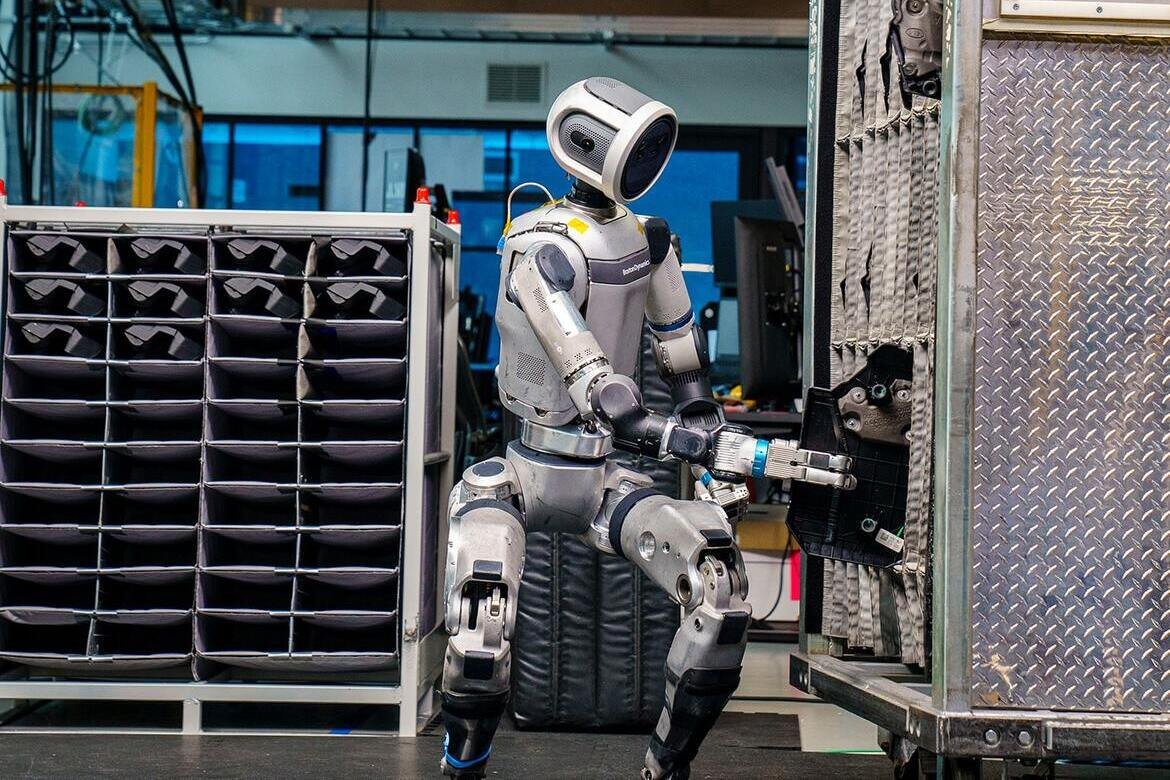
Boston Dynamics’ Atlas humanoid robot, backed by Hyundai Motor Group, could be priced at around $130,000, signaling a push toward large-scale industrial deployment.
By Daniel Krauss | Edited by Kseniia Klichova
Published:
Updated:
Boston Dynamics’ Atlas humanoid robot demonstrates whole-body control capabilities as Hyundai prepares for industrial deployment and commercialization. Photo: Boston Dynamics
Hyundai Motor Group’s humanoid robot Atlas, developed by its robotics subsidiary Boston Dynamics, is expected to be priced at approximately $130,000 per unit, according to a new report from the Export-Import Bank of Korea. The projected price point places Atlas among the first humanoid robots approaching economic viability for industrial deployment.
The estimate reflects growing confidence that humanoid robots are transitioning from research prototypes into commercial systems capable of performing productive work in manufacturing environments.
From Research Platform to Industrial Asset
Atlas has long been known for its advanced mobility, including the ability to perform aerial maneuvers, recover balance on slippery surfaces, and execute complex full-body movements. These capabilities are enabled by reinforcement learning and whole-body control systems developed through extensive training and real-world testing.
While such demonstrations highlight engineering progress, Hyundai’s strategy is focused on industrial deployment. The company plans to introduce Atlas robots into its manufacturing operations, beginning with logistics and sequencing tasks before expanding to assembly functions.
The report suggests that Atlas could significantly improve factory productivity if deployed effectively. By automating repetitive and physically demanding tasks, humanoid robots could accelerate production workflows while reducing worker fatigue.
Analysts estimate that investment in humanoid robots could pay for itself within approximately two years under favorable deployment conditions, assuming sufficient utilization and productivity gains.
A Strategic Bet on Physical AI
Hyundai’s robotics ambitions reflect a broader transformation underway across the automotive industry. Automakers are increasingly investing in robotics and artificial intelligence as core components of future industrial strategy.
Hyundai acquired Boston Dynamics in 2021 for approximately $1.1 billion, a move widely seen as a long-term investment in robotics and automation capabilities. At the time, the acquisition faced skepticism due to Boston Dynamics’ history of high research costs and limited commercial revenue.
However, Atlas has since emerged as a central component of Hyundai’s future robotics roadmap. The company has announced plans to deploy Atlas robots at its manufacturing facilities, including its advanced production sites in the United States.
Hyundai’s strategy positions robotics as a key pillar of its transformation from a traditional automaker into a broader mobility and automation company.
Growing Competition in Humanoid Robotics
Atlas is entering a rapidly expanding humanoid robotics market, where companies including Tesla, Figure AI, and Agility Robotics are developing competing platforms.
Industry forecasts suggest the global humanoid robot market could grow dramatically over the coming decade, driven by demand for automation in manufacturing, logistics, and service sectors.
Boston Dynamics itself is emerging as a major strategic asset within Hyundai Motor Group. Analysts estimate that the robotics subsidiary could achieve a valuation exceeding $70 billion, reflecting expectations of large-scale commercialization.
The development of Atlas also highlights broader supply chain implications. Humanoid robots require complex integration of actuators, sensors, computing systems, and software, creating opportunities for component suppliers and robotics ecosystem partners.
Commercialization Challenges Ahead
Despite growing optimism, significant challenges remain. Humanoid robots must demonstrate consistent reliability in real-world industrial environments, where safety, predictability, and uptime are critical.
The report noted that additional data collection and operational validation will be necessary to ensure safe and effective collaboration between robots and human workers.
Legal and regulatory frameworks also remain under development. Questions surrounding liability, safety standards, and operational accountability will need to be addressed as humanoid robots become more widely deployed.
Even so, Atlas represents a major milestone in humanoid robotics commercialization. With a projected price point approaching industrial viability and deployment plans underway, the robot signals a broader shift in robotics development.
Humanoid robots are no longer purely experimental machines. They are increasingly becoming industrial tools designed to perform productive work, marking a turning point in the evolution of physical AI.
Join our list to receive latest Blockchain, Crypto & Fintech news:
WordPress database error: [Table 'u752143311_u5t1U.wp_coingecko_coins' doesn't exist]
            SELECT coins.*, meta.post_id as post_id
            FROM `wp_coingecko_coins` coins
            INNER JOIN wp_postmeta meta ON (meta.meta_key = 'wpcf-coin-main-tag' AND meta.meta_value = coins.slug )
            ORDER BY market_cap_usd
            DESC LIMIT 9