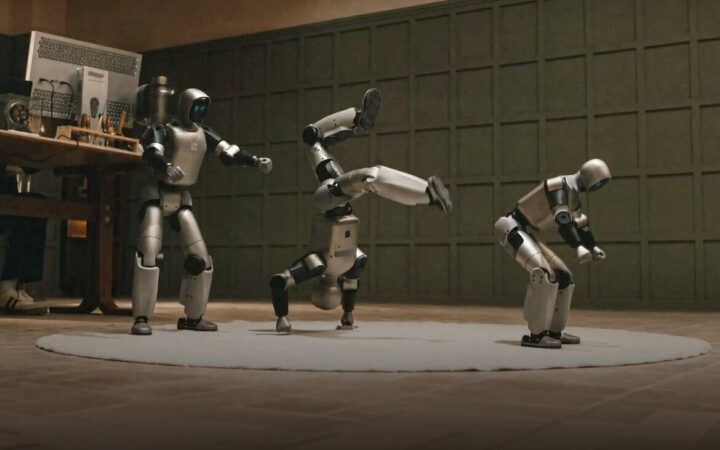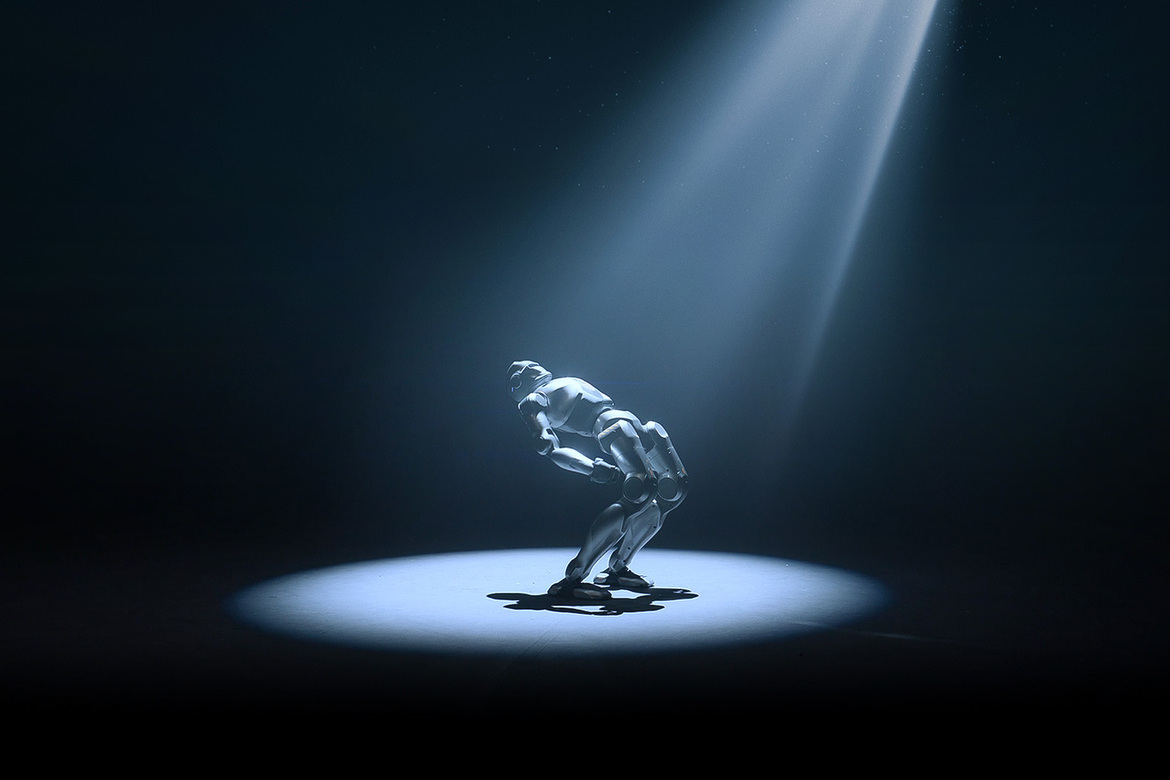


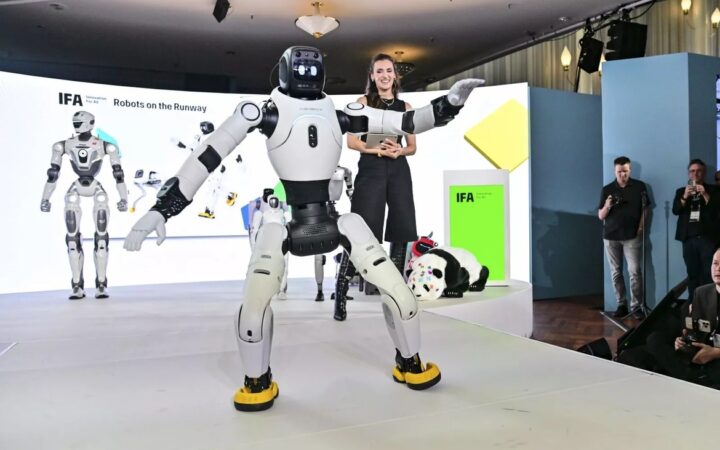
Chinese robotics firm EngineAI has released new footage of its PM01 humanoid robot demonstrating rapid balance recovery and dynamic motion control, highlighting advances in embodied AI resilience. The compact humanoid continues moving even after being pushed off balance, quickly correcting its posture and resuming coordinated motion.
The demonstration reflects a critical area of progress in humanoid robotics: stability and recovery. While walking is a baseline capability, maintaining balance under unpredictable physical disturbances remains essential for real-world deployment.
The PM01’s performance suggests improvements in how robots perceive and respond to physical forces, an essential capability for operating outside controlled laboratory environments.
Stability and Recovery as Core Robotics Capabilities
Balance recovery is one of the most demanding challenges in humanoid robotics. When a robot is pushed or slips, its control system must rapidly calculate how to redistribute weight, adjust joint torque, and stabilize its posture.
The PM01 demonstration showed the robot absorbing external forces, recalculating its center of mass, and restoring balance within seconds. This process depends on continuous feedback from sensors, real-time motion planning, and precise actuator control.
The robot also performed more advanced maneuvers, including controlled slips and a forward flip. Such movements require synchronized coordination across multiple joints and accurate prediction of landing forces.
Forward flips are particularly challenging because they shift the robot’s center of mass ahead of its base of support, increasing instability. Successfully completing such maneuvers demonstrates progress in whole-body control and dynamic balance.
These capabilities rely on integrated perception and control systems powered by onboard computing hardware, including NVIDIA Jetson processors and depth-sensing cameras that provide spatial awareness.
Compact Design with Research Focus
The PM01 is designed as a research-focused humanoid platform. Its compact size and lower center of mass improve stability while reducing mechanical stress during dynamic movements.
The robot features 24 degrees of freedom, enabling smooth and flexible motion across its joints. Its lightweight aluminum structure balances strength and agility, allowing it to absorb impacts while maintaining mobility.
Compared with larger humanoid robots, compact platforms like PM01 can achieve faster recovery and more efficient motion due to reduced inertia. This makes them valuable platforms for testing locomotion algorithms and control systems.
The robot’s computing architecture supports real-time AI workloads, enabling continuous environmental perception and motion adjustment.
The Importance of Recovery for Real-World Deployment
Recovery capability is a key requirement for robots operating in real environments. Unlike controlled demonstrations, real-world environments present unpredictable obstacles, uneven surfaces, and unexpected forces.
A robot that cannot recover from disturbances risks falling, which can cause mechanical damage and operational downtime.
Improved recovery capability increases reliability, allowing robots to operate safely alongside humans and perform tasks in dynamic environments such as factories, warehouses, and public spaces.
The ability to recover autonomously also reduces the need for human intervention, improving operational efficiency.
Competitive Pressure in Compact Humanoid Platforms
The PM01 enters a growing segment of compact humanoid robots designed for research and development. Competitors include platforms from Unitree Robotics and Robot Era, which are also focused on improving locomotion, balance, and manipulation capabilities.
Compact humanoids play an important role in robotics development. They allow researchers to refine AI models, control systems, and hardware design before scaling to full-sized industrial robots.
As embodied AI systems improve, recovery capability is emerging as a key performance metric. Stability under disturbance reflects the maturity of a robot’s perception, planning, and control integration.
EngineAI’s demonstration highlights how humanoid robots are progressing beyond controlled locomotion toward resilient physical intelligence.
While recovery from disturbances may appear to be a narrow technical milestone, it represents a foundational capability required for real-world deployment. As humanoid robots move from research platforms into operational environments, stability and resilience will be essential for reliable performance.
Disclaimer: RobotsBeat is an independent media brand owned and operated by NuvexMedia LLC, publishing news, research, and insights on artificial intelligence, emerging technologies, automation, and related industries. NuvexMedia LLC invests in and collaborates with companies across the AI, Robotics, technology, software, and digital innovation sectors. These relationships do not influence RobotsBeat's editorial coverage, and the publication maintains full editorial independence to provide accurate, timely, and objective information. © 2026 NuvexMedia LLC. All rights reserved. This content is for informational purposes only and should not be considered legal, tax, investment, financial, or other professional advice.