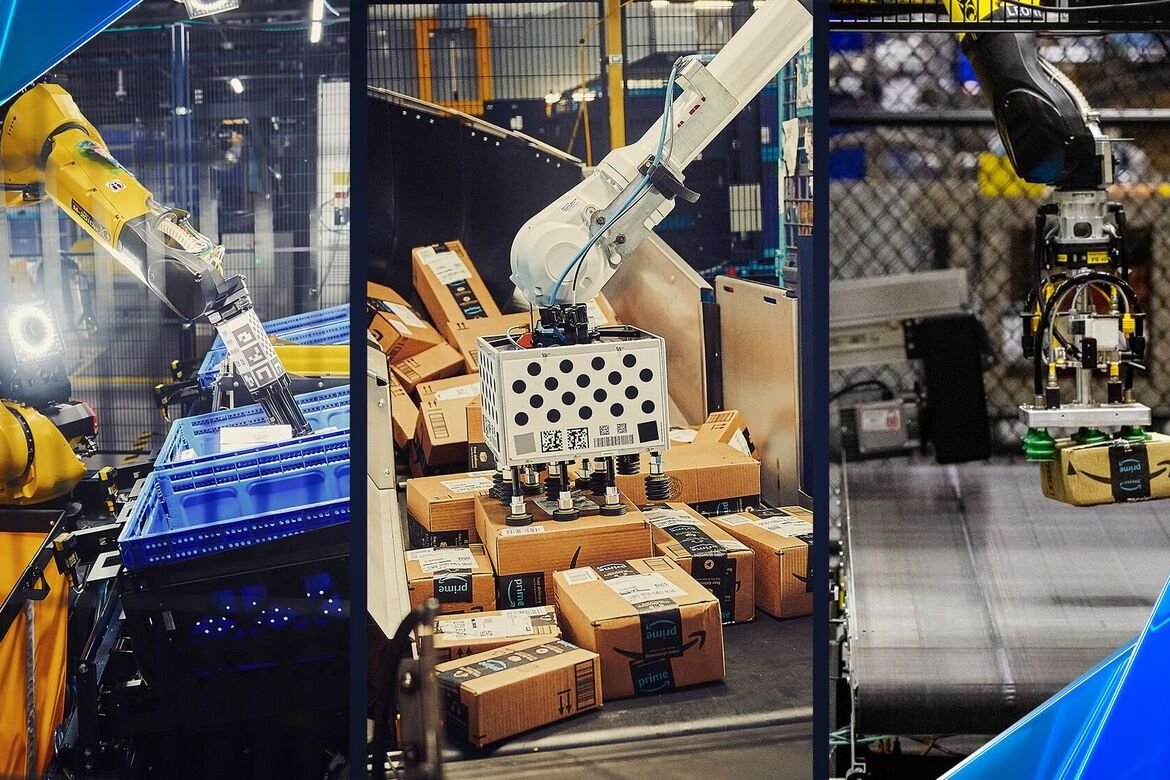

Amazon has halted its Blue Jay warehouse robotics project less than six months after introducing the prototype, underscoring both the rapid pace and inherent uncertainty of robotics innovation. The company confirmed that while development of the specific robot has stopped, its core technologies will be integrated into future automation systems.
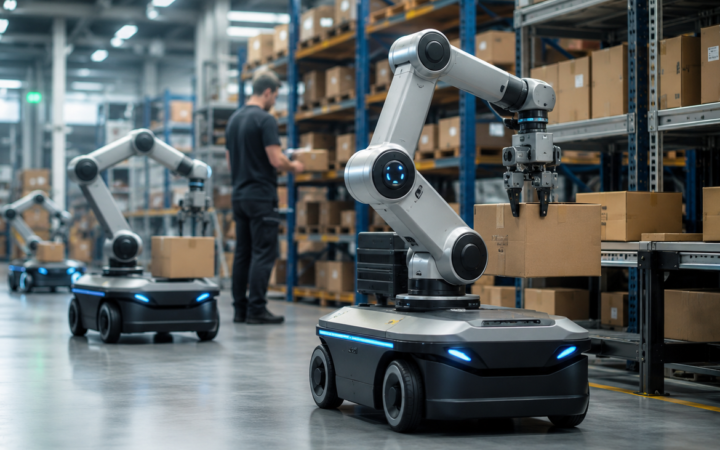
Blue Jay was unveiled in October as a multi-armed robotic system designed to sort and move packages in same-day delivery facilities. Unlike Amazon’s established fleet of mobile robots, which transport goods across warehouse floors, Blue Jay focused on manipulation – one of the most technically challenging aspects of warehouse automation.
The project’s suspension highlights the ongoing experimentation required to scale robotics beyond controlled environments and into complex real-world workflows.
Rapid Prototyping Meets Practical Constraints
Blue Jay represented a shift toward faster robotics development cycles. Amazon built the system in approximately one year, significantly shorter than the timelines required for earlier warehouse robots. The company attributed the accelerated development to advances in artificial intelligence, particularly in perception and manipulation.
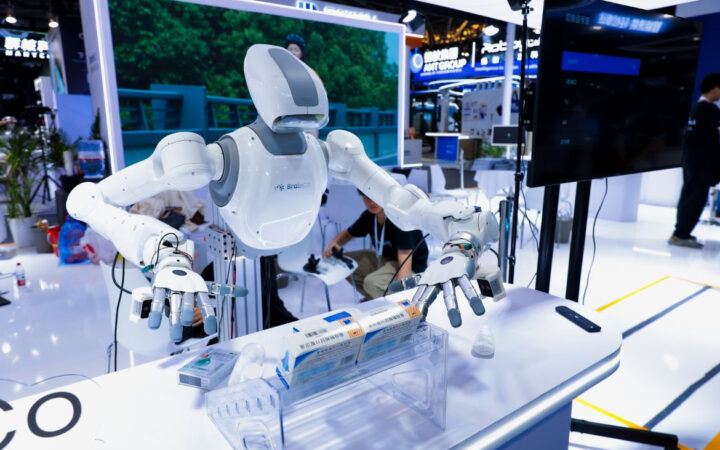
The robot was designed to automate package handling tasks traditionally performed by human workers, using multiple robotic arms to sort and reposition items. Such manipulation tasks require robots to interpret varied object shapes, weights, and orientations, often under tight time constraints.
Despite promising early results, Blue Jay remained a prototype rather than a production-ready system. Amazon said it would redeploy engineers and technologies developed during the project into other robotics programs.
This reflects a broader industry reality: robotics development often involves iterative experimentation, with individual projects serving as stepping stones toward more robust systems.
Robotics Remains Central to Amazon’s Automation Strategy
The suspension of Blue Jay does not signal a retreat from robotics. Amazon continues to operate one of the largest robotic fleets in the world, with more than one million robots deployed across its fulfillment centers.
These systems perform tasks including transporting inventory, sorting packages, and assisting human workers in warehouse operations. Amazon’s robotics program traces back to its 2012 acquisition of Kiva Systems, which provided the foundation for its automated fulfillment infrastructure.
More recently, the company introduced robots with enhanced manipulation capabilities, including the Vulcan system. Unlike traditional robots limited to predefined movements, Vulcan incorporates sensors and AI models that allow it to interact with objects more dynamically.
Such developments reflect Amazon’s long-term objective: expanding automation beyond transportation into manipulation and decision-making.
The Hard Problem of Robotic Manipulation
Blue Jay’s suspension underscores one of the most difficult challenges in robotics: enabling robots to handle diverse objects reliably in unstructured environments.
Transportation robots operate in relatively predictable conditions, moving along predefined routes. Manipulation robots, by contrast, must interpret and interact with objects that vary widely in size, shape, and material properties.
Advances in AI, particularly machine learning models trained on real-world data, are helping address these challenges. However, achieving production-level reliability requires extensive testing and refinement.
The underlying technologies developed for Blue Jay are expected to contribute to future systems, suggesting that the project’s impact will extend beyond its initial prototype phase.
Iteration as a Feature of Robotics Innovation
Amazon’s decision reflects a broader pattern in robotics development. Unlike software, where new features can be deployed instantly, robotics systems require hardware validation, safety certification, and integration with physical workflows.
Prototype projects often inform future designs, even if they are not deployed directly. By rapidly testing new concepts, companies can accelerate learning cycles and refine their automation strategies.
Amazon’s continued investment in robotics indicates that automation remains a core component of its fulfillment infrastructure. The company’s approach emphasizes continuous experimentation, where individual projects contribute to incremental improvements in capability.
The suspension of Blue Jay illustrates the iterative nature of robotics progress. Even as specific projects are discontinued, the knowledge gained helps drive the evolution of future systems.
As warehouse automation advances, manipulation – not mobility – is emerging as the next frontier. Amazon’s experience with Blue Jay highlights both the promise and complexity of building robots capable of handling the full range of tasks performed in modern logistics operations.