Robotics Could Add $201 Billion to Australia’s Economy – If Adoption Gaps Close

New research suggests increased robotics adoption could add AUD $201 billion to Australia’s GDP by 2040, but commercialization and deployment remain key challenges.

By Daniel Krauss | Edited by Kseniia Klichova Published:
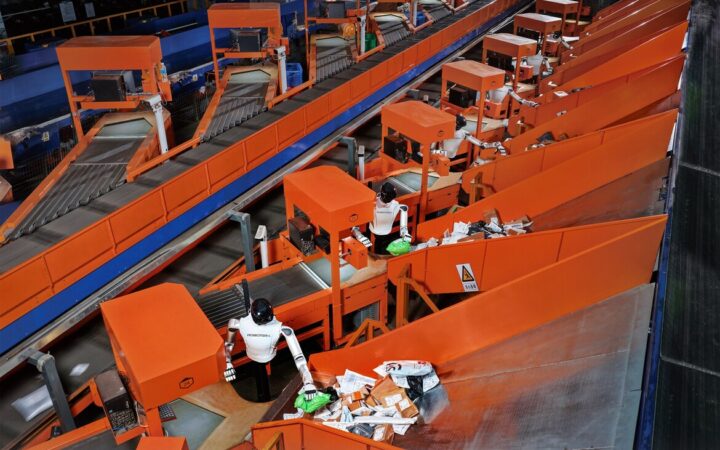
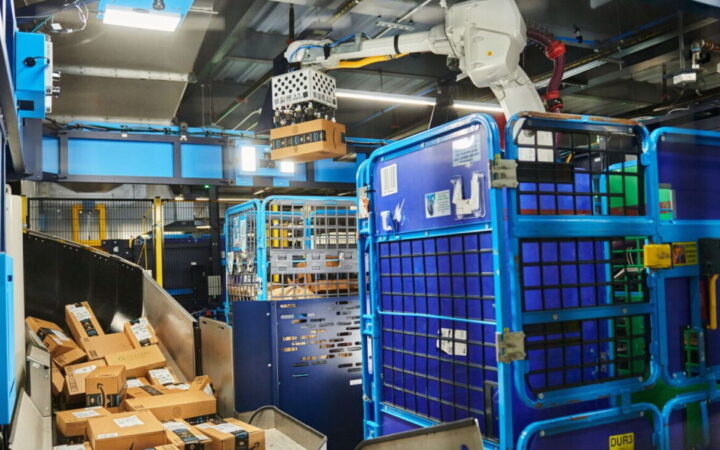
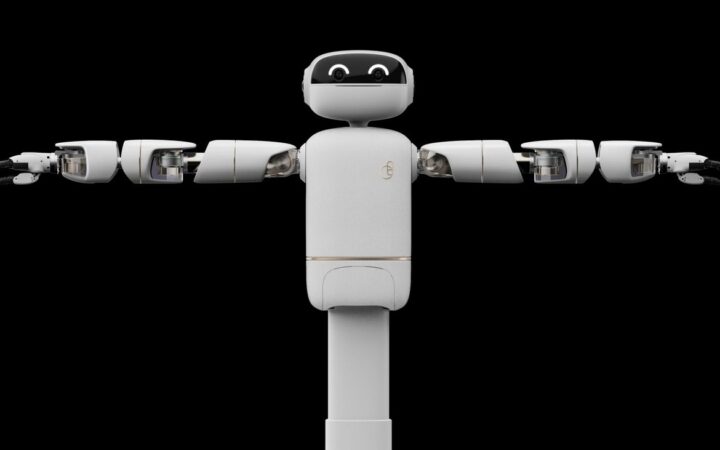
Robotics adoption in sectors such as logistics, manufacturing and agriculture could significantly boost Australia’s productivity and economic output. Photo: Amazon

Australia could unlock up to AUD $201 billion in additional economic output by 2040 through greater adoption of robotics, according to new modeling – but realizing that potential will depend less on technology breakthroughs than on closing persistent gaps in deployment.

The analysis, commissioned by Amazon Australia and conducted by consulting firm ACIL Allen, suggests that relatively modest increases in robot usage across industry and services could generate economy-wide productivity gains, higher wages and new employment opportunities.

The findings add to a growing global narrative: robotics is no longer just a tool for individual firms, but a macroeconomic lever shaping national competitiveness.

Productivity Gains Beyond Manufacturing

The report outlines a scenario in which Australia doubles its industrial robot density while increasing service robot adoption by around 15% in non-manufacturing sectors.

Under those conditions, average incomes could rise by roughly AUD $6,500 per person annually, while the economy could support nearly 129,000 additional jobs each year.

The benefits are not limited to traditional automation sectors.

While industries such as mining and agriculture already make significant use of robotics, the report highlights untapped potential in areas like logistics, retail and services – sectors where automation has historically been slower to scale.

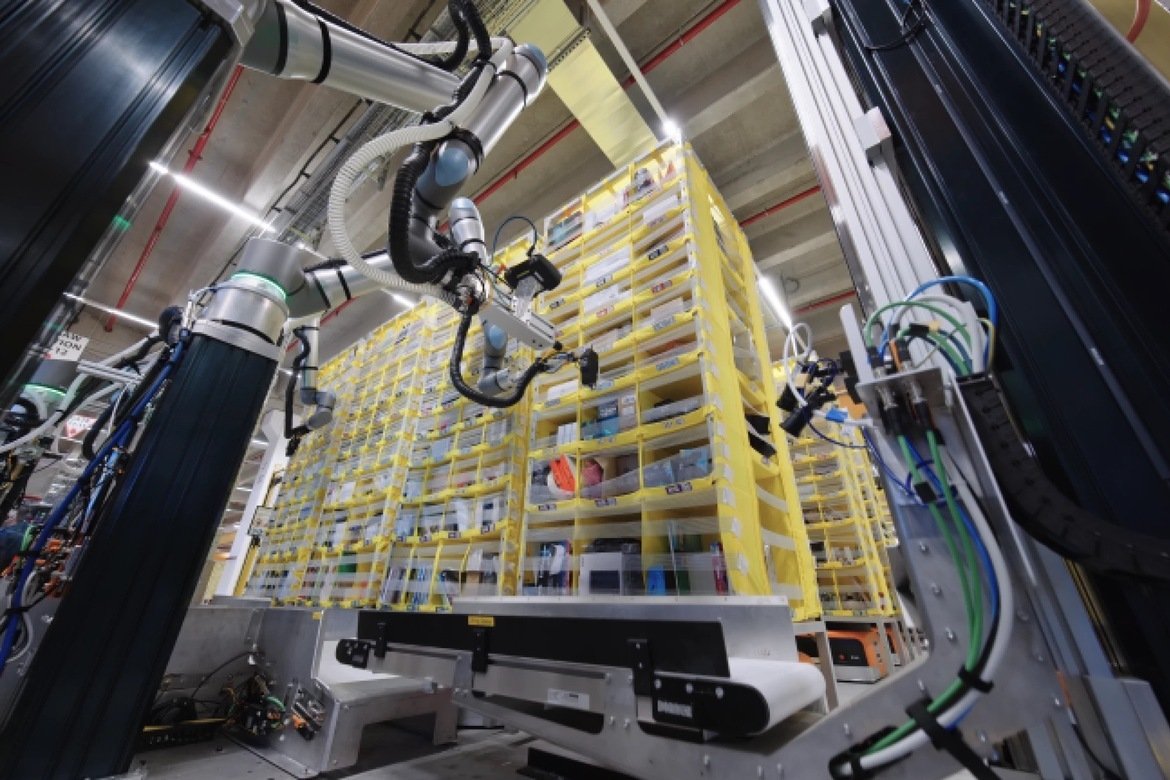
Amazon’s own operations illustrate the shift. In its fulfillment centers, mobile robots are used to transport heavy inventory, reducing physical strain on workers and allowing employees to transition toward oversight, maintenance and system management roles.

At the same time, software systems are becoming increasingly important. The company points to AI-driven fleet management tools that optimize robot movement, improving efficiency across large-scale operations.

The Commercialization Bottleneck

Despite strong research capabilities, particularly in field robotics, Australia continues to lag behind other markets in adoption, production and robotics-related employment.

The report identifies a familiar challenge: translating academic innovation into commercial deployment.

Bridging that gap requires more than investment in research. It depends on building connections between universities, industry and end users, along with creating environments where technologies can be tested, refined and scaled.

Robotics adoption also involves a complex ecosystem. Businesses must invest not only in hardware but also in software integration, workforce training and ongoing maintenance – factors that can slow uptake even when the underlying technology is mature.

The result is uneven adoption, with robotics concentrated in sectors where the return on investment is clear, while other industries remain cautious.

A National Competitiveness Question

The modeling suggests that even incremental progress could have broad economic effects, amplifying productivity across sectors rather than delivering isolated gains.

This scaling effect is central to the argument for robotics investment: improvements in automation can ripple through supply chains, labor markets and service industries.

At the same time, the findings highlight a strategic question for policymakers.

Countries that successfully integrate robotics into their economies may gain advantages in productivity, wages and industrial competitiveness. Those that lag risk falling behind as automation becomes a standard component of global business operations.

Australia’s position reflects both opportunity and constraint.

The country has strong research foundations and sector-specific expertise, particularly in challenging environments such as mining. But without stronger pathways to commercialization and wider adoption, those advantages may not translate into economic impact.

The report’s conclusion is cautious but clear: the potential gains from robotics are substantial, but they will depend on execution – not just innovation.

Business & Markets, News, Robots & Robotics

SAP and Humanoid Connect Enterprise AI to Warehouse Robotics in Live Trial

SAP, Humanoid, and Martur Fompak have completed a live warehouse trial linking enterprise AI agents to a humanoid robot. The test highlights how software-driven decisions can directly control physical labor systems.

By Rachel Whitman | Edited by Kseniia Klichova Published:
A humanoid robot executes warehouse picking tasks directed by an enterprise AI agent during a live trial, illustrating the convergence of digital decision-making and physical automation. Photo: Humanoid

A live warehouse trial involving SAP, robotics firm Humanoid, and automotive supplier Martur Fompak is offering a clearer view of how enterprise software systems may begin to directly control physical labor. The project connects SAP’s AI agent framework with a mobile humanoid robot, enabling task execution that originates from business logic rather than pre-programmed robotic routines.

The result is less about a single robot completing a task and more about a shift in system architecture. For decades, enterprise software has optimized operations in the digital layer, while robots have executed fixed workflows on the factory floor. This trial suggests those layers are beginning to merge.

From Enterprise Decisions to Physical Actions

At the center of the integration is a connection between SAP’s Joule AI agent and Humanoid’s KinetIQ robotics stack. In the proof of concept, a cloud-based software agent generated instructions based on operational needs and dispatched them directly to a physical robot.

The HMND 01 Alpha Wheeled robot then executed a logistics workflow inside a warehouse environment. It autonomously navigated to a designated pallet, retrieved a standardized container, and delivered it to a trolley as part of an order fulfillment cycle. The robot repeated the process across multiple iterations, handling different container types and operating within existing facility constraints.

This model differs from traditional automation, where tasks are predefined and robots follow rigid sequences. Instead, the system treats the robot as an endpoint of enterprise decision-making, allowing workflows to adapt dynamically based on business inputs.

SAP described the approach as embedding business context into robotic behavior, enabling machines to respond to operational priorities in real time rather than executing isolated tasks.

Embodied AI Moves into Enterprise Infrastructure

The trial reflects a broader convergence between two previously separate domains: enterprise AI and embodied AI. Software agents have long been capable of making decisions across functions such as procurement, scheduling, and inventory management. What has been missing is a direct link between those decisions and physical execution.

By connecting an enterprise agent to a humanoid system, the project demonstrates how digital instructions can translate into real-world actions without human mediation. In this case, warehouse picking becomes an extension of enterprise planning systems rather than a standalone robotic function.

The robot operated with a dual-arm payload capacity of 8 kilograms and was tested under real operational conditions over a multi-week deployment. The structured rollout included simulation and physical twin development, followed by on-site setup, training, and optimization, reflecting a methodology closer to enterprise software deployment than traditional robotics testing.

Executives involved in the project framed the outcome as a transition point. The ability to integrate robots into enterprise systems, measure them against operational metrics, and deploy them within existing workflows suggests that humanoid platforms are moving beyond experimental pilots.

A Bridge Between Pilots and Scaled Deployment

Despite the progress, the trial remains a proof of concept. The next phase will focus on extended validation in live production environments, where reliability, uptime, and integration complexity become more visible.

Still, the implications are notable. If enterprise systems can reliably orchestrate fleets of robots as extensions of digital processes, automation could shift from task-specific deployments to system-wide coordination. In such a model, robots are not programmed individually but managed as part of a broader computational infrastructure.

For Humanoid, the project provides evidence that its platform can operate within industrial constraints. For SAP, it demonstrates a pathway to extend enterprise AI beyond software into physical operations.

More broadly, the trial highlights an emerging pattern in robotics: the value of a robot is increasingly tied not just to its hardware capabilities, but to how seamlessly it integrates into existing digital systems. As that integration improves, the boundary between decision-making and execution may continue to narrow.

Artificial Intelligence (AI), Business & Markets, News, Robots & Robotics

Xiaomi Upgrades CyberOne Hand with Human Scale Precision and Tactile Intelligence

Xiaomi has introduced a redesigned bionic hand for its CyberOne humanoid robot, improving dexterity, tactile sensing, and durability. The upgrade reflects a broader push toward human-level manipulation in industrial robotics.

By Laura Bennett | Edited by Kseniia Klichova Published:
Xiaomi’s upgraded CyberOne hand integrates human-scale design, tactile sensing, and active cooling, signaling progress toward practical humanoid manipulation in industrial settings. Photo: Xiaomi

Xiaomi has introduced a redesigned bionic hand for its CyberOne humanoid robot, marking a step forward in one of the most technically challenging areas of robotics: human-level manipulation. The upgrade combines mechanical redesign, tactile sensing, and thermal management, reflecting how leading robotics programs are shifting from demonstration toward operational capability.

While much of the humanoid robotics conversation has focused on locomotion and general intelligence, manipulation remains a bottleneck for real-world deployment. Xiaomi’s latest iteration suggests that progress is increasingly coming from integrated system improvements rather than single breakthroughs.

Human Scale Design Meets Industrial Precision

A central change is the reduction of the hand’s size by roughly 60%, bringing it closer to the proportions of a human hand. This shift is not cosmetic. Matching human-scale geometry allows robots to interact more naturally with existing tools, components, and environments that were not designed for machines.

At the same time, Xiaomi has expanded the hand’s degrees of freedom, enabling more precise articulation and grip control. The result is a system better suited for tasks that require fine motor skills, such as component handling or in-hand manipulation.

This aligns with a broader industry direction. Rather than redesigning factories around robots, companies are increasingly trying to build robots that can operate within human-centered infrastructure. Achieving this requires not only mobility, but also dexterity that approaches human capability.

Tactile Sensing and Data as a Core Layer

Beyond mechanical improvements, Xiaomi has significantly expanded tactile sensing across the hand. The system now covers approximately 8,200 mm² across fingertips, finger pads, and the palm, allowing the robot to detect pressure and contact in a more distributed and nuanced way.

This is particularly relevant in scenarios where vision alone is insufficient. Occlusions, variable lighting, and complex object interactions often limit camera-based perception. Tactile feedback provides an additional channel for control, enabling more reliable grasping and manipulation.

To support training, Xiaomi is also using haptic gloves to capture human interaction data. This approach allows operators to transfer real-world tactile signals directly into training datasets, accelerating learning cycles. It reflects a growing emphasis on data pipelines in robotics, where physical interaction data is becoming as important as simulation.

Durability and Thermal Management Signal Deployment Focus

The company has also addressed one of the less visible but critical barriers to deployment: reliability. Earlier versions of the hand reportedly failed after fewer than 10,000 repetitive operations. The updated design extends this to over 150,000 grasping cycles, a threshold more consistent with industrial use.

In parallel, Xiaomi introduced a bionic “sweat gland” system for active cooling. Using liquid channels embedded within the structure, the system dissipates heat generated during continuous operation. Thermal management is often overlooked in robotics discussions, but it becomes essential when systems move from short demonstrations to sustained workloads.

These improvements build on prior internal testing, where the robot demonstrated multi-hour operation in factory-like conditions with a reported success rate above 90%. While still early, such metrics indicate a transition toward measurable performance benchmarks.

Taken together, the upgrades to CyberOne’s hand highlight a broader shift in humanoid robotics. Progress is no longer defined solely by headline capabilities, but by incremental advances in reliability, sensing, and integration.

For Xiaomi, the development signals a deeper commitment to robotics beyond consumer electronics. For the industry, it reinforces a key reality: achieving human-level manipulation will depend less on singular breakthroughs and more on the convergence of mechanical design, sensory feedback, and scalable data systems.

News, Robots & Robotics, Science & Tech

LimX Unveils ‘Luna’ Humanoid as Robotics Moves into Public-Facing Roles

LimX Dynamics has introduced its new humanoid robot Luna at a consumer-facing event, signaling a shift from industrial robotics toward public interaction and lifestyle applications.

By Daniel Krauss | Edited by Kseniia Klichova Published:
Oli and Luna are the first full-sized humanoid duo in VOGUE – a new moment for robotics on the global fashion stage, and winners of Cyber Fashion Pioneer Robot of the Year at Taobao Influencer Night. Photo: LimX Dynamics / X

Humanoid robots are beginning to step out of factories and into the spotlight.

Shenzhen-based LimX Dynamics has unveiled its latest humanoid robot, Luna, at a consumer-facing event in China, marking a notable shift in how robotics companies are positioning their machines – not just as industrial tools, but as interactive systems designed for public environments.

The robot made its debut at the Taobao Influencer Festival, where it performed a catwalk demonstration, showcasing balance, coordination and fluid motion rather than task-specific industrial capabilities.

The choice of venue underscores a broader trend: robotics companies are increasingly targeting applications that involve direct human interaction, from retail and entertainment to hospitality and public services.

From Industrial Platforms to Lifestyle Robots

LimX’s earlier humanoid platform, OLI, was built for industrial use, focusing on durability and operation in demanding environments such as construction sites.

Luna represents a departure from that approach.

With a more refined design and human-like proportions, the robot is intended for environments where appearance, movement and interaction matter as much as functionality. The system features 33 degrees of freedom, enabling more complex motion patterns and smoother walking dynamics.

During its public demonstration, Luna executed a controlled catwalk and an “illusion turn”, a movement designed to test dynamic balance and coordination.

These demonstrations, while not tied to specific industrial tasks, highlight the importance of mobility and expressiveness in robots designed for shared human spaces.

Hardware Meets Human Interaction

Under the surface, Luna builds on the same computing architecture as LimX’s industrial robots.

The system integrates multiple perception technologies, including depth cameras, RGB vision and LiDAR, combined with simultaneous localization and mapping (SLAM) to navigate dynamic environments.

Its software stack is based on ROS 2 and runs on high-performance edge computing hardware, enabling developers to build custom behaviors and applications.

This combination of advanced hardware and flexible software reflects a broader shift in robotics toward platforms that can be adapted for multiple use cases.

Rather than designing robots for a single task, companies are increasingly building general-purpose systems that can operate across different environments with appropriate software layers.

A New Phase for Humanoid Robotics

The unveiling of Luna comes at a time when humanoid robotics is expanding beyond early industrial pilots.

Companies are experimenting with applications that require not only physical capability but also social presence – guiding customers, interacting with audiences or participating in public events.

This shift introduces new challenges.

Robots operating in public spaces must meet higher expectations for safety, reliability and human-like behavior. Movement quality, appearance and interaction design become critical factors in user acceptance.

LimX’s recent funding round suggests that investors are backing this broader vision, betting that humanoid robots will find roles beyond traditional automation.

For now, demonstrations like Luna’s catwalk remain symbolic. But they point to an evolving industry where the success of humanoid robots may depend as much on how they move and interact as on what tasks they perform.

News, Robots & Robotics, Science & Tech

Sharpa’s Apple-Peeling Robot Signals Breakthrough in Dexterous AI Manipulation

Sharpa has unveiled a humanoid robot capable of peeling an apple autonomously, highlighting advances in dexterous manipulation powered by multimodal AI systems.

By Rachel Whitman | Edited by Kseniia Klichova Published: Updated:

A humanoid robot peeling an apple may appear trivial, but for robotics researchers it represents a significant milestone.

Singapore-based Sharpa has demonstrated a system capable of autonomously performing the task using two human-like hands, addressing one of the most difficult challenges in robotics: precise, contact-rich manipulation.

The achievement highlights a broader shift in the field, where advances in artificial intelligence are beginning to unlock levels of dexterity previously limited to humans.

Moving Beyond Pick-and-Place

Robotic manipulation has improved rapidly in recent years, particularly with the rise of Vision-Language-Action (VLA) models that allow machines to interpret visual input and execute tasks.

However, most systems remain constrained to relatively simple actions such as picking up objects or sorting items. Tasks that require continuous adjustment – like peeling an apple – introduce additional complexity.

These actions demand coordination across multiple degrees of freedom, precise force control and the ability to adapt to subtle changes in the object being handled.

Sharpa’s system addresses these challenges through a combination of hardware and software innovations.

Its dexterous hand, featuring 22 active degrees of freedom, is designed to approximate the flexibility of human hands. But the key advancement lies in how the system coordinates movement.

A New Approach to Dexterity

The company’s framework, known as MoDE-VLA (Mixture of Dexterous Experts), integrates multiple sensory inputs – including vision, touch and force – and processes them through specialized AI modules.

Rather than relying on a single model to handle all aspects of a task, the system dynamically activates different “experts” depending on the situation. For example, one component focuses on detecting contact events, while another manages force control.

This is paired with a secondary system, described as a “copilot”, which handles fine motor control.

In practice, humans provide high-level guidance during training, while the AI manages the detailed coordination required for finger movements and object manipulation.

The result is a system capable of executing complex sequences – such as peeling and rotating an apple – with greater stability and precision than previous approaches.

In testing, the robot achieved a peel completion rate of 73 percent, significantly outperforming baseline models and doubling success rates in contact-rich tasks.

Toward Human-Level Manipulation

The implications extend beyond a single demonstration.

Dexterous manipulation is widely seen as one of the last major barriers to deploying robots in unstructured environments such as homes, kitchens and workshops.

Tasks like cooking, cleaning or assembling delicate components require a level of adaptability and sensitivity that robots have historically struggled to achieve.

Sharpa’s approach suggests a path forward: combining multimodal sensing with modular AI systems that can specialize in different aspects of manipulation.

The system has also demonstrated improvements in other tasks requiring high precision, such as inserting connectors – an operation that demands millimeter-level accuracy and careful force application.

Still, challenges remain.

Achieving consistent performance across diverse real-world conditions will require further advances in data collection, training and system robustness. The current results, while promising, highlight how far the field still needs to go to match the full range of human dexterity.

Even so, the ability to peel an apple autonomously marks a step toward a broader goal: robots capable of performing everyday tasks with the fluidity and precision of human hands.

Artificial Intelligence (AI), News, Robots & Robotics, Science & Tech

Icarus Robotics Targets Space Labor with ISS Robot Test Mission

Startup Icarus Robotics is preparing to test autonomous free-flying robots aboard the ISS, aiming to automate routine tasks in space operations.

By Laura Bennett | Edited by Kseniia Klichova Published: Updated:
Icarus Robotics is developing free-flying robots designed to assist astronauts by performing routine tasks aboard space stations. Photo: Ethan Barajas / X

A new generation of robotics companies is turning its attention beyond Earth’s surface.

Icarus Robotics, a startup co-founded in 2024, is preparing to test autonomous robots aboard the International Space Station (ISS), marking a step toward deploying robotic labor in orbit. The mission, planned for early 2027, will evaluate how free-flying robots can operate in microgravity environments and support routine space operations.

The effort reflects a broader shift in robotics: extending automation into domains where human labor is constrained by cost, risk or physical limitations.

Building a Workforce for Orbit

Rather than developing humanoid systems, Icarus is focusing on a different form factor tailored to space.

Its platform, known as Joyride, is a fan-propelled, free-flying robot equipped with articulated arms and grippers. The system is designed to move independently within spacecraft and handle tasks such as unpacking cargo, organizing equipment and assisting with routine operations.

These activities, while essential, consume significant astronaut time and attention.

By offloading repetitive or time-consuming work to robots, space missions could become more efficient and allow human crews to focus on higher-value tasks such as research and mission planning.

The upcoming ISS mission will test key capabilities including autonomous navigation, maneuverability and operational reliability in a live orbital environment.

From Concept to Flight Heritage

To execute the mission, Icarus has partnered with Voyager Technologies, a company with extensive experience in managing space missions across government and commercial programs.

Voyager will support integration, safety certification, launch coordination and in-orbit operations – a critical step in moving the technology from prototype to flight-proven system.

In the space industry, demonstrating reliability in orbit – often referred to as achieving “flight heritage” – is a prerequisite for wider adoption.

For startups like Icarus, successful deployment on the ISS could open the door to future contracts in areas such as space station operations, satellite servicing and in-orbit manufacturing.

The company has already raised early funding to support development, reflecting investor interest in commercial space infrastructure and robotics.

Robotics Expands Beyond Earth

The planned mission highlights how robotics is becoming integral to the emerging space economy.

As activity in Low Earth Orbit increases – driven by commercial space stations, satellite networks and research initiatives – the demand for automation is expected to grow.

Robots offer a way to scale operations without proportionally increasing human presence, which remains expensive and resource-intensive.

Unlike terrestrial robotics, however, space systems must operate under unique constraints, including microgravity, limited communication and strict safety requirements.

This makes reliability and autonomy particularly important.

Icarus’s approach – focusing on task-specific, non-humanoid robots – reflects a pragmatic strategy aligned with near-term operational needs.

While humanoid robots often dominate public attention, specialized systems may be better suited to environments like space, where efficiency and adaptability matter more than human-like form.

If successful, the ISS demonstration could mark an early step toward a future where robotic labor becomes a standard component of space missions.

Exit mobile version