Li Auto Signals Strategic Shift Toward AI and Humanoid Robotics
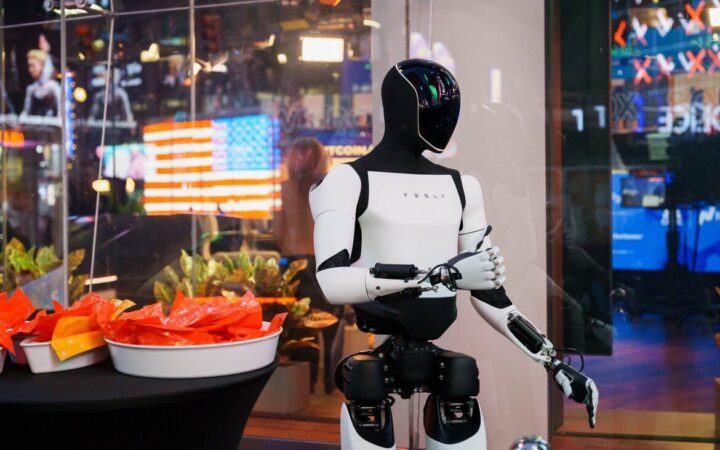
China’s Li Auto is expanding beyond electric vehicles, positioning artificial intelligence and humanoid robotics as core pillars of its long-term strategy.
Deep learning is a branch of artificial intelligence that uses neural networks with many layers to learn patterns from large amounts of data. It is especially effective at handling complex tasks such as image recognition, speech processing, and natural language understanding. Deep learning models improve performance as they are trained on more data and computing power. This approach powers many modern AI applications, including virtual assistants, recommendation systems, and autonomous technologies. Its ability to automatically learn features makes it a key driver of recent advances in AI.
China’s Li Auto is expanding beyond electric vehicles, positioning artificial intelligence and humanoid robotics as core pillars of its long-term strategy.
OpenAI has quietly built a growing robotics lab with around 100 employees, focusing on data collection using robotic arms rather than developing a full humanoid robot.
Asus is winding down new smartphone development as it redirects resources toward AI computing, robotics, and physical AI systems for industrial and enterprise markets.