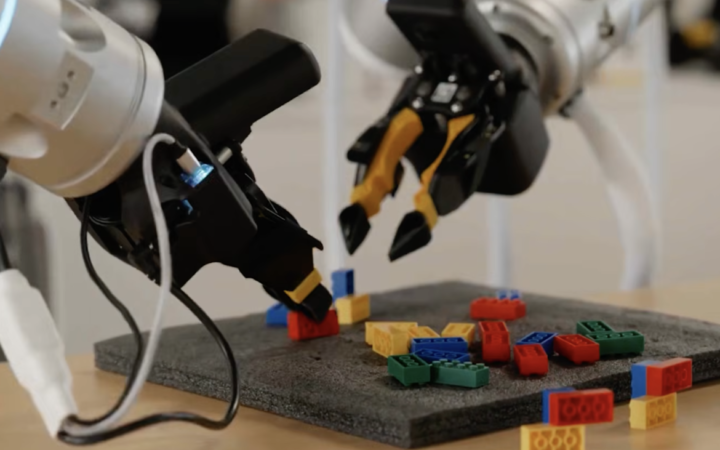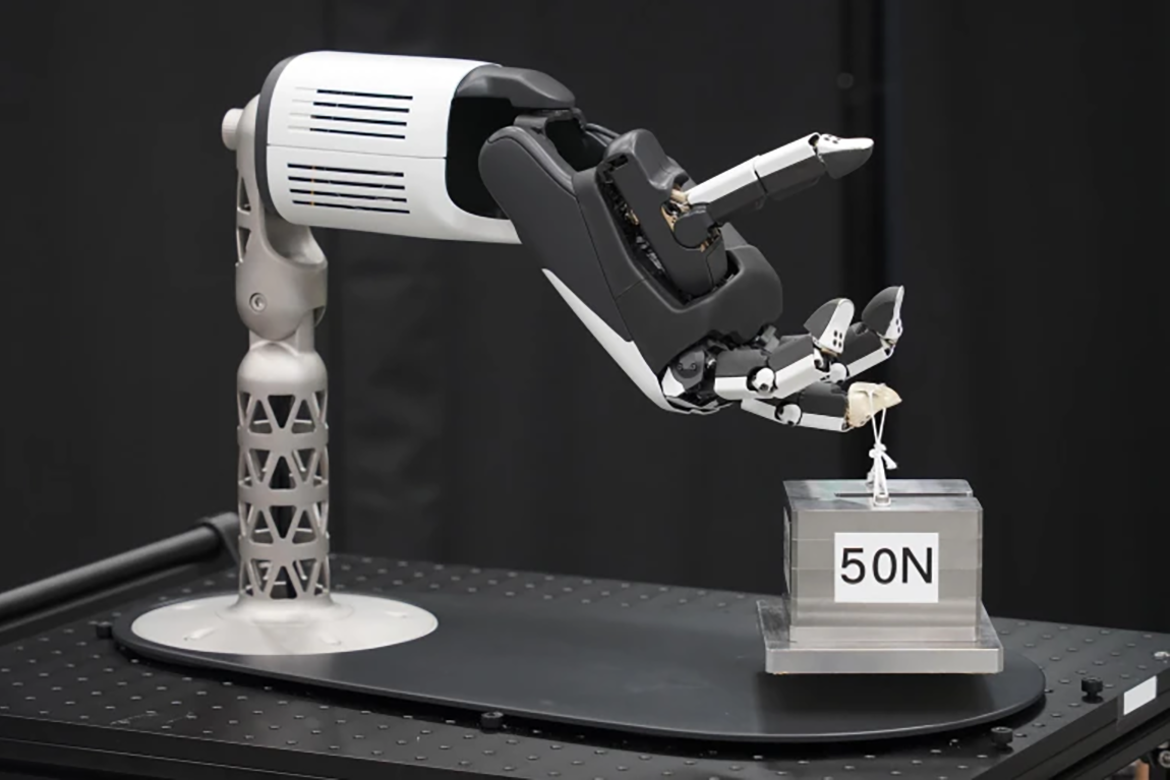

Honda has developed a four-fingered dexterous robotic hand capable of grasping a screw 1.6 millimeters in diameter between its thumb and index finger, rotating it, and inserting it into a hole, while also lifting objects weighing up to 5 kilograms using only its fingertips. The system was unveiled at a robotics exhibition in Tokyo in late May and has already drawn multiple business inquiries. Honda plans to begin full-scale field testing at its Yorii factory in Saitama Prefecture and targets commercialization in the early 2030s.
The announcement marks Honda’s most significant public robotics development since it retired ASIMO, the bipedal humanoid it debuted in 2000, in 2022. The company shifted its robotics research toward robotic fingers around 2019 and has continued the work largely out of public view until now.
The Hardware and Its Capabilities
The hand is designed without a little finger – a four-finger configuration that Honda determined was sufficient for the manipulation range required in manufacturing assembly. Tactile sensors across the fingers detect object shape, enabling the hand to orient components correctly before insertion rather than requiring precise pre-positioning by external systems.
The hand can handle tasks spanning extreme size differences: from a 1.6mm screw requiring fingertip precision to 5kg objects requiring sustained grip force. That range – fine motor control combined with meaningful payload capacity in a single system – is the design target that separates Honda’s hand from systems optimized for either precision or strength but not both.
A key advance is a newly developed and patent-applied finger drive mechanism. Conventional robotic fingers are powered by motors and wires, which creates durability challenges over repeated use cycles. Honda’s new mechanism, described by executive chief engineer Takahide Yoshiike as bending “like a willow”, transmits force efficiently while accommodating the flex that delicate manipulation requires. The system can also assemble connectors and sort parts, extending its utility beyond simple pick-and-place.
The Factory Testing Plan
Honda plans to begin full-scale field testing at the Yorii factory, where the robot will sort large volumes of parts supplied by subcontractors. The factory application is specifically chosen because sorting variable parts from external suppliers represents a real-world manipulation challenge – the incoming parts are not perfectly positioned, vary in orientation, and arrive in different configurations – that tests the system under conditions closer to commercial deployment than a controlled laboratory.
The commercialization goal is to enable a single robot to perform multiple tasks across a production line, helping manufacturers address labor shortages without deploying a separate specialized robot for each task type.
ASIMO’s Legacy and Honda’s Pivot
Honda’s return to public robotics comes seven years after it shifted research focus internally. ASIMO’s retirement in 2022 followed the company’s conclusion that it could not adequately address safety concerns about unexpected human-robot contact in uncontrolled environments. “Honda could not eliminate concerns that the robot might knock over people nearby in unexpected situations, such as a child suddenly hugging it,” Yoshiike said, “making further business expansion difficult to envision.”
The pivot from bipedal humanoid to dexterous industrial hand reflects both the lessons of ASIMO and the commercial reality that manufacturing labor shortages create more immediate addressable demand than consumer humanoid companionship. Honda has also announced a joint research project with RIKEN during fiscal 2026 to accelerate development of physical AI – technology intended to allow robots to autonomously learn tasks rather than requiring explicit programming for each new operation.
Disclaimer: RobotsBeat is an independent media brand owned and operated by NuvexMedia LLC, publishing news, research, and insights on artificial intelligence, emerging technologies, automation, and related industries. NuvexMedia LLC invests in and collaborates with companies across the AI, Robotics, technology, software, and digital innovation sectors. These relationships do not influence RobotsBeat's editorial coverage, and the publication maintains full editorial independence to provide accurate, timely, and objective information. © 2026 NuvexMedia LLC. All rights reserved. This content is for informational purposes only and should not be considered legal, tax, investment, financial, or other professional advice.