Inovance Plans Up to $2 Billion Hong Kong Listing as Robotics Capital Race Intensifies

Chinese robotics and automation firm Inovance is preparing a Hong Kong listing that could raise up to $2 billion, highlighting growing investor appetite for industrial and embodied AI technologies.

By Daniel Krauss | Edited by Kseniia Klichova Published:
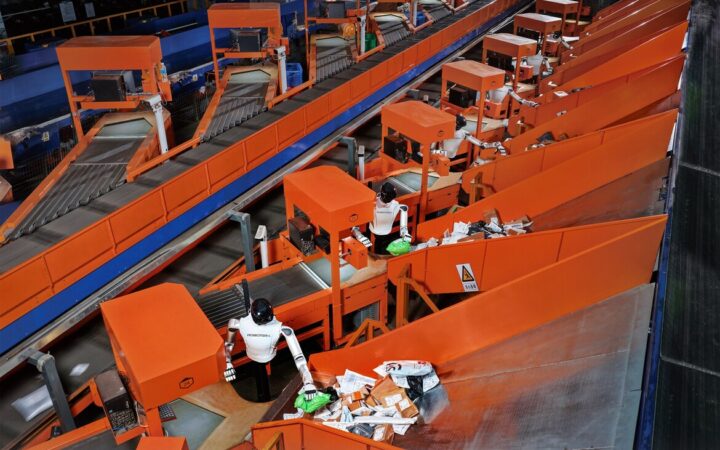
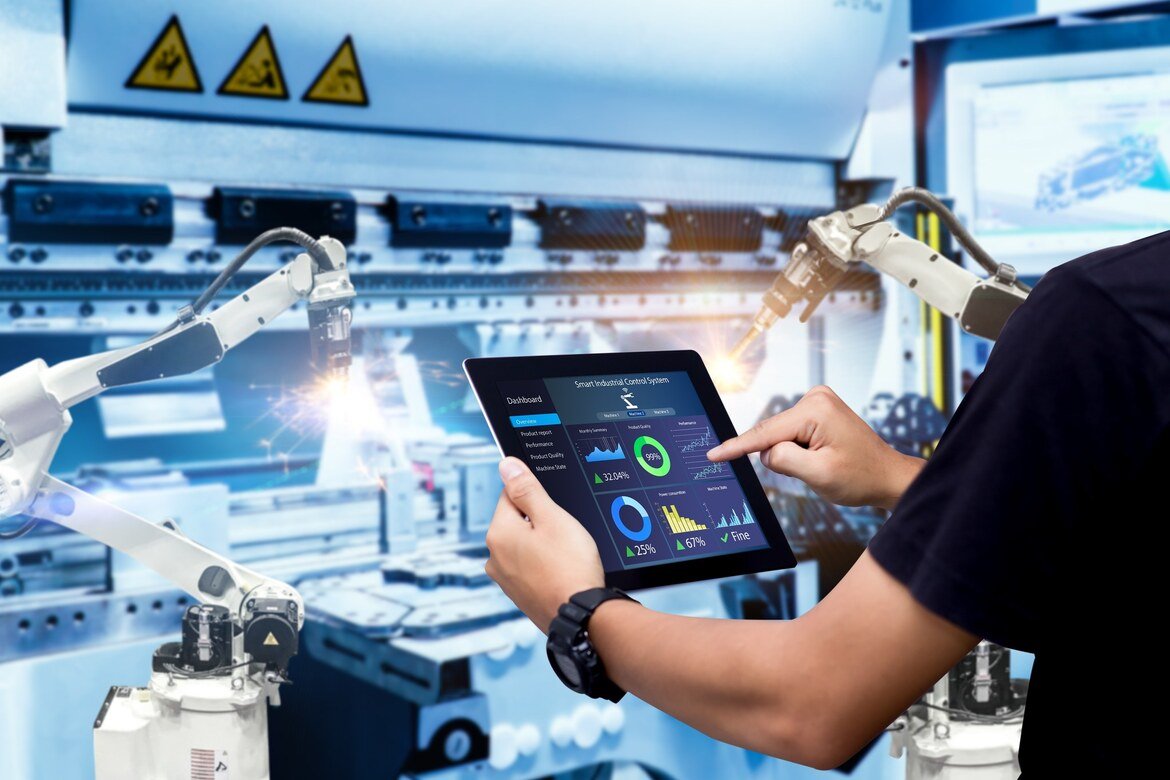
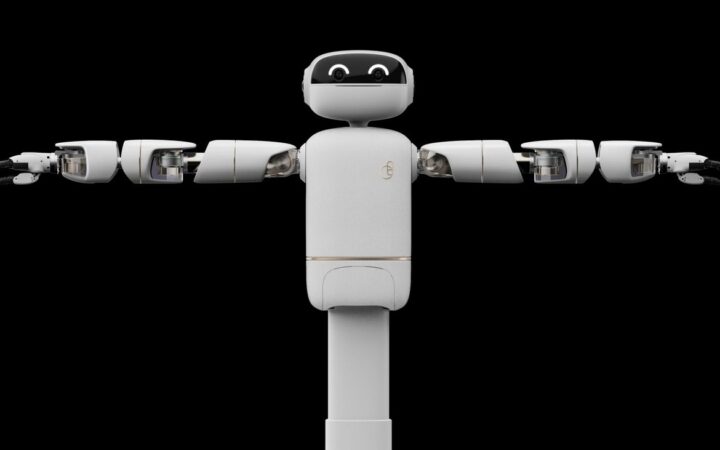
Inovance’s industrial robotics and automation systems are used across manufacturing sectors, as the company prepares a potential multi-billion-dollar Hong Kong listing. Photo: Inovance

Shenzhen-based automation and robotics company Inovance Technology is preparing a Hong Kong listing that could raise up to $2 billion, in what would be one of the largest robotics-related capital raises of the year.

The company has reportedly selected a group of global and Chinese investment banks – including Bank of America, Morgan Stanley and China International Capital Corp – to lead the offering, according to people familiar with the matter. The listing plans are still under consideration and could change in size or timing.

If completed, the deal would underscore how robotics and industrial automation are becoming central to the next phase of global AI investment.

Capital Flows Into Physical AI

The planned listing comes as investors increasingly shift attention from software-based AI to systems that operate in the physical world.

Inovance, which is already publicly traded in Shenzhen, develops industrial automation equipment and robotics systems used in sectors such as packaging, plastics and steel production. Its technologies form part of the infrastructure that enables automated manufacturing.

The company’s potential Hong Kong listing reflects a broader trend: mainland Chinese firms are turning to international markets to raise capital for expansion, particularly in high-growth sectors like robotics.

Hong Kong has re-emerged as a key venue for such offerings. Listings by mainland companies accounted for a large share of the exchange’s proceeds in 2025, as companies sought to tap global investors while maintaining access to Asian markets.

For robotics firms, access to capital is especially critical. Unlike software startups, companies building physical systems must invest heavily in manufacturing, supply chains and hardware development.

Scaling Industrial Robotics

Inovance’s business sits at the intersection of traditional industrial automation and newer forms of embodied AI.

While much of the current attention in robotics is focused on humanoid systems, industrial robots remain the backbone of automation in sectors such as manufacturing and logistics.

These systems are evolving as AI capabilities are integrated into control systems, enabling machines to operate with greater flexibility and adapt to changing conditions.

China has made robotics a strategic priority as part of its broader push to strengthen high-tech manufacturing. Companies like Inovance play a key role in that effort by supplying the components and systems that underpin automated production lines.

At the same time, newer robotics companies – including humanoid developers – are emerging alongside established industrial players, creating a layered ecosystem of automation technologies.

A Competitive Global Landscape

The potential IPO also highlights intensifying global competition in robotics.

Chinese firms are scaling rapidly, supported by domestic demand and government-backed initiatives. At the same time, companies in the United States and Europe are investing heavily in next-generation robotics platforms, including humanoid systems.

Capital markets are becoming a battleground in this competition. Large funding rounds and public listings provide the resources needed to scale manufacturing, expand internationally and invest in research and development.

For investors, the appeal of robotics lies in its potential to reshape industries ranging from manufacturing to logistics and services. But the sector also carries risks, particularly given the capital-intensive nature of hardware development and the long timelines required to achieve profitability.

Inovance’s planned listing reflects both sides of that equation: strong demand for robotics-driven automation and the substantial investment required to deliver it at scale.

As the industry evolves, access to capital may prove as important as technological innovation in determining which companies emerge as global leaders in physical AI.

Business & Markets, News, Robots & Robotics

Icarus Robotics Targets Space Labor with ISS Robot Test Mission

Startup Icarus Robotics is preparing to test autonomous free-flying robots aboard the ISS, aiming to automate routine tasks in space operations.

By Laura Bennett | Edited by Kseniia Klichova Published: Updated:
Icarus Robotics is developing free-flying robots designed to assist astronauts by performing routine tasks aboard space stations. Photo: Ethan Barajas / X

A new generation of robotics companies is turning its attention beyond Earth’s surface.

Icarus Robotics, a startup co-founded in 2024, is preparing to test autonomous robots aboard the International Space Station (ISS), marking a step toward deploying robotic labor in orbit. The mission, planned for early 2027, will evaluate how free-flying robots can operate in microgravity environments and support routine space operations.

The effort reflects a broader shift in robotics: extending automation into domains where human labor is constrained by cost, risk or physical limitations.

Building a Workforce for Orbit

Rather than developing humanoid systems, Icarus is focusing on a different form factor tailored to space.

Its platform, known as Joyride, is a fan-propelled, free-flying robot equipped with articulated arms and grippers. The system is designed to move independently within spacecraft and handle tasks such as unpacking cargo, organizing equipment and assisting with routine operations.

These activities, while essential, consume significant astronaut time and attention.

By offloading repetitive or time-consuming work to robots, space missions could become more efficient and allow human crews to focus on higher-value tasks such as research and mission planning.

The upcoming ISS mission will test key capabilities including autonomous navigation, maneuverability and operational reliability in a live orbital environment.

From Concept to Flight Heritage

To execute the mission, Icarus has partnered with Voyager Technologies, a company with extensive experience in managing space missions across government and commercial programs.

Voyager will support integration, safety certification, launch coordination and in-orbit operations – a critical step in moving the technology from prototype to flight-proven system.

In the space industry, demonstrating reliability in orbit – often referred to as achieving “flight heritage” – is a prerequisite for wider adoption.

For startups like Icarus, successful deployment on the ISS could open the door to future contracts in areas such as space station operations, satellite servicing and in-orbit manufacturing.

The company has already raised early funding to support development, reflecting investor interest in commercial space infrastructure and robotics.

Robotics Expands Beyond Earth

The planned mission highlights how robotics is becoming integral to the emerging space economy.

As activity in Low Earth Orbit increases – driven by commercial space stations, satellite networks and research initiatives – the demand for automation is expected to grow.

Robots offer a way to scale operations without proportionally increasing human presence, which remains expensive and resource-intensive.

Unlike terrestrial robotics, however, space systems must operate under unique constraints, including microgravity, limited communication and strict safety requirements.

This makes reliability and autonomy particularly important.

Icarus’s approach – focusing on task-specific, non-humanoid robots – reflects a pragmatic strategy aligned with near-term operational needs.

While humanoid robots often dominate public attention, specialized systems may be better suited to environments like space, where efficiency and adaptability matter more than human-like form.

If successful, the ISS demonstration could mark an early step toward a future where robotic labor becomes a standard component of space missions.

Comtech Positions Itself as ‘Super Connector’ in China’s Robotics Supply Chain Race

Comtech is building a global ecosystem linking chips, software and robotics companies, aiming to accelerate commercialization of embodied AI systems.

By Laura Bennett | Edited by Kseniia Klichova Published:
Comtech is building a global ecosystem connecting chipmakers, AI platforms and robotics companies to accelerate deployment of embodied AI systems. Photo: Kseniia Klichova / RobotsBeat

As robotics shifts from prototypes to scaled deployment, a new battleground is emerging not around individual machines, but around the supply chains that make them possible.

Chinese firm Comtech is positioning itself at the center of that transition, describing its role as a “super connector” linking chipmakers, software providers and robotics companies into a unified ecosystem for embodied AI.

The strategy reflects a growing recognition across the industry: building robots is no longer just a hardware challenge, but a systems integration problem spanning semiconductors, AI models, simulation and global distribution.

Building the Infrastructure Behind Robots

Comtech operates as both a distributor of electronic components and a platform for integrating AI technologies into physical systems.

The company works with more than 100 global chip suppliers – including major U.S. firms – while serving a wide range of Chinese robotics developers across industries such as humanoids, drones and autonomous vehicles.

Its role is to bridge these layers.

According to company executives, developing a robot involves far more than assembling parts. It requires simulation tools, 3D modeling, embedded AI models and integration across hardware and software systems before a product can be deployed.

Comtech’s ecosystem approach aims to streamline that process by connecting companies that would otherwise operate in isolation.

The company is also a key distributor for Nvidia’s Jetson edge AI platform in China, which is widely used for robotics and embedded AI applications.

From Fragmented Demand to Scalable Markets

One of the challenges in robotics today is the fragmented nature of demand.

Unlike mature industries, where large volumes of standardized products drive economies of scale, robotics often involves small production runs across diverse use cases.

This makes it difficult for individual companies – particularly startups – to build efficient supply chains and reach global markets.

Comtech’s model attempts to address that gap by aggregating demand and providing shared access to components, integration expertise and distribution channels.

At a recent industry forum, the company signed agreements with partners across sectors including drones, media and robotics services, while also showcasing collaborations in areas such as brain-computer interfaces and embodied intelligence.

The company is also expanding internationally, working to help Chinese robotics firms establish sales and service networks in North America and other markets.

The Next Phase: Commercial Viability

While the ecosystem approach may accelerate development, the industry still faces significant hurdles in commercialization.

Experts at the forum emphasized that technical capability alone is not enough. For robots to succeed in real-world environments, they must meet practical benchmarks for reliability, cost and return on investment.

In industrial settings, companies are increasingly evaluating robots based on payback periods, with some investors suggesting that systems must justify their cost within relatively short timeframes to gain adoption.

Data availability is another constraint. Training embodied AI systems requires large volumes of real-world interaction data, which remains limited compared with software-based AI.

Despite these challenges, investment in robotics continues to rise, with hundreds of funding deals already recorded this year.

Comtech’s strategy suggests that the next phase of competition may not be won solely by the companies building robots, but by those capable of orchestrating the complex networks required to bring them to market.

As embodied AI systems become more sophisticated, the ability to connect components, data and distribution channels into a cohesive ecosystem could prove as critical as the robots themselves.

News, Robots & Robotics, Science & Tech

MegazoneCloud and AVITA Partner to Bring AI Avatars into Physical Robots

MegazoneCloud and Japan’s AVITA are partnering to integrate AI avatars with autonomous robots, aiming to bring conversational physical AI systems into real-world industries.

By Rachel Whitman | Edited by Kseniia Klichova Published:
Forging the future of physical AI: MegazoneCloud CEO Doug Yeum [Left] and AVITA COO & CFO Shogo Nishiguchi [Right] finalize their strategic partnership at MegazoneCloud's Seoul headquarters. Photo: MegazoneCloud

MegazoneCloud and Japanese AI avatar company AVITA have announced a strategic partnership to bring “physical AI” systems into real-world deployment, combining conversational digital avatars with autonomous robots.

The collaboration reflects a growing shift in the robotics industry: moving beyond machines that can act in the physical world toward systems that can also communicate, guide and interact with humans in more natural ways.

By integrating cloud-based AI infrastructure with avatar-driven interaction models, the companies aim to deploy robots capable not only of performing tasks but also of engaging directly with customers across industries such as retail, finance and public services.

From Digital Avatars to Embodied Systems

At the core of the partnership is the integration of AVITA’s avatar technology with autonomous robotic platforms.

AVITA, founded by robotics researcher Hiroshi Ishiguro, has focused on creating AI avatars that can interact with users through conversation and visual representation. Its systems are already used in digital environments for customer support and training.

MegazoneCloud brings cloud infrastructure, AI deployment capabilities and a global enterprise network. Together, the companies plan to embed avatar systems into physical robots, effectively giving machines a conversational interface tied to real-world actions.

The combined system is designed to enable robots to guide customers, provide consultations and respond to inquiries while also performing physical tasks.

This approach differs from traditional service robots, which often rely on limited scripted interactions. By pairing avatars with autonomous decision-making systems, the companies aim to create more adaptive and human-like interactions.

Targeting High-Interaction Industries

The initial focus will be on sectors where customer interaction is central.

In retail, the companies are exploring applications such as unmanned checkout systems and in-store guidance. In finance, robots could assist with customer consultations, while training systems could simulate realistic interactions for employees.

AVITA’s existing products, including a customer interaction platform and a training system that uses AI avatars to simulate real-world conversations, will be integrated into these deployments.

The training system analyzes user responses and provides performance feedback, suggesting that physical AI systems could play a role not only in service delivery but also in workforce development.

The companies also plan to expand into public-sector use cases, where robots could assist with information services or administrative support.

Physical AI Moves Toward Human Interaction

The partnership highlights a broader evolution in robotics.

Early automation systems focused primarily on physical execution – moving objects, assembling parts or navigating spaces. More recent developments in embodied AI have added perception and decision-making capabilities.

The next step, increasingly, is communication.

As robots move into environments such as retail stores, offices and public spaces, their ability to interact with people becomes as important as their ability to perform tasks.

By combining avatars with physical systems, companies are attempting to bridge the gap between digital AI – which excels at conversation – and robotics, which operates in the physical world.

This convergence is drawing interest across the industry, with multiple companies exploring ways to integrate language models, perception systems and robotic hardware into unified platforms.

For MegazoneCloud and AVITA, the challenge will be translating these capabilities into reliable, scalable systems that can operate in real-world conditions.

If successful, the approach could redefine how businesses deploy automation – not just as a tool for efficiency, but as an interface between humans and machines.

Artificial Intelligence (AI), Business & Markets, News, Robots & Robotics

Agibot Hits 10,000 Humanoid Robots as Industry Shifts to Scale

Agibot has produced 10,000 humanoid robots, signaling a transition from early deployments to large-scale commercial adoption of embodied AI systems.

By Laura Bennett | Edited by Kseniia Klichova Published:
Agibot’s humanoid robots are being deployed across industries including logistics, retail and manufacturing as production reaches 10,000 units. Photo: Agibot

Agibot has reached a milestone of 10,000 humanoid robots produced, a figure that underscores how quickly the robotics industry is moving from experimentation to scaled deployment.

The company, which focuses on embodied AI systems, said a large portion of these robots are already operating in real-world environments across sectors such as logistics, retail, hospitality and manufacturing.

The milestone is notable not simply for its size, but for what it represents: a shift in robotics from technical feasibility to industrial-scale production and deployment.

From Prototypes to Production Lines

Agibot’s production trajectory reflects the rapid acceleration underway in humanoid robotics.

The company took nearly two years to build its first 1,000 units, followed by about a year to scale to 5,000. The jump from 5,000 to 10,000 units, however, was completed in just three months – a sharp increase in manufacturing speed driven by improvements in supply chains and production processes.

This kind of acceleration is unusual in hardware-heavy industries, where scaling production often takes years. It suggests that key bottlenecks in robotics manufacturing – including component sourcing, assembly and system integration – are beginning to ease.

For robotics companies, reaching this level of output is a critical step toward lowering costs and enabling broader adoption.

Real-World Deployment Drives Growth

Unlike earlier phases of robotics development, where systems were largely confined to demonstrations or pilot projects, Agibot’s robots are now being deployed at scale.

The machines are being used in environments ranging from showroom assistance and retail service to industrial production lines. Their presence in manufacturing workflows indicates that humanoid robots are beginning to move into roles traditionally occupied by fixed automation systems or human workers.

The company also reports growing international demand, with deployments expanding beyond China into markets across Europe, North America and Asia.

This global footprint suggests that demand for embodied AI systems is not limited to a single region but reflects a broader shift in how industries approach automation.

Scaling Data, Not Just Hardware

As more robots are deployed, the focus is increasingly shifting from hardware to data.

Thousands of machines operating in real-world environments generate continuous streams of operational data, which can be used to improve performance, refine control systems and expand capabilities.

At scale, this creates a feedback loop: more deployments produce more data, which improves the system, making further deployments more effective.

This dynamic is similar to what has driven progress in software-based AI, but applied to physical systems.

For Agibot and its competitors, the challenge is no longer proving that humanoid robots can work, but ensuring they can operate reliably, efficiently and safely at scale.

The company’s milestone suggests that the robotics industry may be entering a phase where growth is driven less by individual breakthroughs and more by the ability to manufacture, deploy and continuously improve systems in real-world conditions.

Faraday Future Expands Robotics Push with Dealership Deployments and School Programs

Faraday Future has delivered new humanoid robots for dealership use while testing education-focused deployments, signaling a broader strategy to integrate embodied AI across services and learning.

By Daniel Krauss | Edited by Kseniia Klichova Published:
Faraday Future’s humanoid robots are being deployed in dealership environments and educational programs as part of the company’s broader embodied AI strategy. Photo: Faraday Future

Faraday Future is expanding its presence in robotics with new deployments of humanoid systems in both commercial and educational settings, as the electric vehicle maker pushes deeper into what it calls an “embodied AI” ecosystem.

The California-based company said it recently delivered two of its robots – the Master and Aegis models – to Los Angeles-based New PBB Auto, where they will be used for reception and customer-facing duties in dealership and showroom environments.

The move reflects an emerging strategy among robotics companies to introduce humanoid systems into service roles where interaction with customers is as important as physical capability.

At the same time, Faraday Future is testing how its robots can be used in education, pointing to a broader effort to position embodied AI as both a commercial tool and a learning platform.

From Showroom Assistants to Service Platforms

The initial deployment focuses on dealership operations, where the robots are expected to greet visitors, provide information and assist with basic customer service tasks.

Such roles are increasingly seen as an early entry point for humanoid robots. Unlike industrial environments, where precision and speed dominate, service settings require machines to interact naturally with people – an area where embodied AI systems are still evolving.

Faraday Future’s approach suggests that automakers may view robotics as an extension of their existing ecosystems, connecting vehicles, retail environments and digital services.

The delivery is tied to a broader business relationship with New PBB Auto, which has previously committed to future vehicle orders from the company.

Testing Robots as Educational Tools

Alongside commercial deployments, Faraday Future has begun experimenting with robotics in education.

In Los Angeles, the company hosted an interactive demonstration involving more than 300 students, where participants engaged directly with humanoid robots, a robotic dog and one of the company’s vehicles.

The event, held in collaboration with a local school district, emphasized hands-on interaction rather than passive demonstrations. Company representatives said the experience highlighted how direct engagement with robots can increase student interest in artificial intelligence and STEM fields.

Faraday Future is now exploring whether such programs could be scaled into structured educational offerings, potentially combining robotics demonstrations with curriculum development.

The company describes this approach as a “Robot & Vehicle + Education” model, in which embodied AI systems are used not only as tools but also as teaching platforms.

Automakers Enter the Robotics Race

Faraday Future’s expansion into robotics underscores a broader trend in the automotive industry.

As vehicles become increasingly software-driven, automakers are exploring adjacent markets where artificial intelligence and hardware integration intersect. Robotics – particularly humanoid systems – represents one such opportunity.

Companies including Tesla have already signaled ambitions to develop humanoid robots alongside their automotive businesses. Faraday Future’s approach suggests a different entry point, focusing initially on service and education rather than large-scale industrial deployment.

The strategy also reflects a key challenge facing the robotics industry: identifying practical, near-term use cases.

While humanoid robots are often associated with future household or industrial roles, many companies are beginning with smaller, controlled deployments in environments such as retail, hospitality and education.

For Faraday Future, the combination of dealership deployments and school programs provides an early test of how embodied AI systems can function in real-world settings.

Whether these applications scale into a broader business remains uncertain. But the company’s efforts highlight how robotics is increasingly being treated not as a standalone industry, but as part of a wider ecosystem connecting mobility, services and digital intelligence.

Business & Markets, News, Robots & Robotics
Exit mobile version