Humanoid Robotics Emerges as $200 Billion Industrial Opportunity
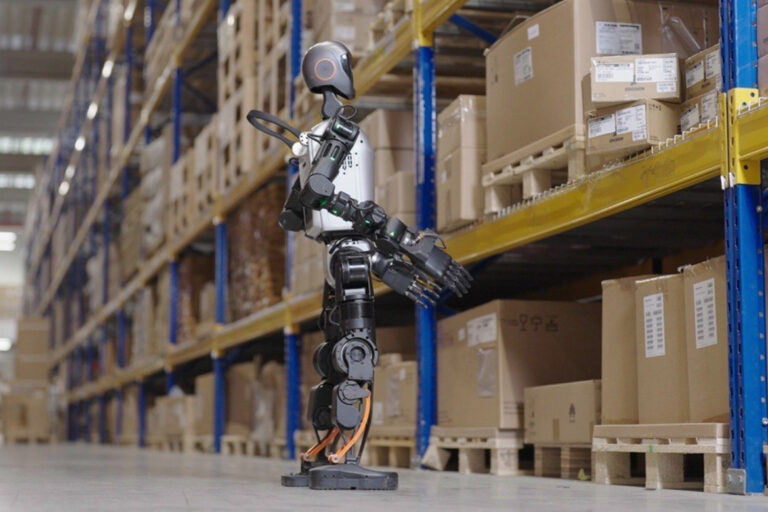
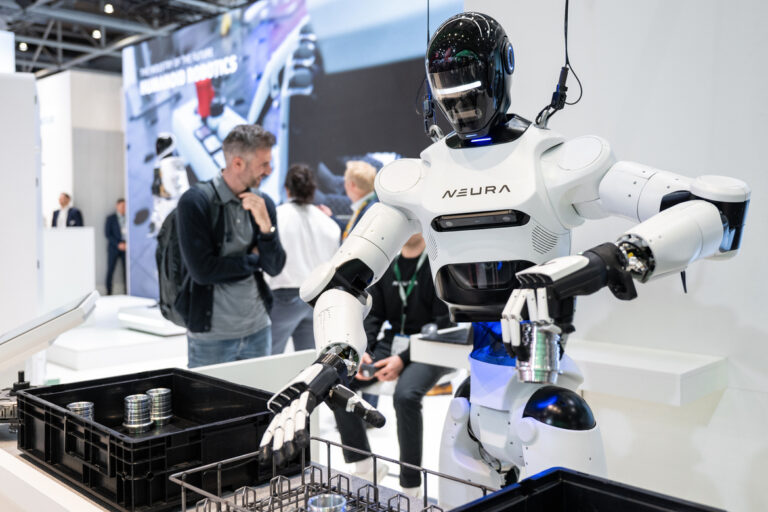
A new report projects humanoid robotics could grow into a $200 billion market, driven by labor shortages, aging populations, and advances in physical AI deployment.
Qualcomm unveiled its robotics platform and new humanoid-focused processor at the India AI Impact Summit 2026, signaling its push to become a core infrastructure provider for physical AI systems.
Unitree Robotics has begun deploying its G1 humanoid robots on production lines to assemble motor components, marking a shift from demonstrations to real industrial use.
Robotera has released footage of its L7 humanoid robot performing a traditional sword dance, demonstrating advanced balance, coordination, and real-time motion planning capabilities.
China’s most-watched television event is featuring humanoid robots from leading startups, turning the Spring Festival Gala into a national showcase for embodied AI and industrial automation ambitions.
AGIBOT has opened registration for its $530,000 World Challenge at ICRA 2026, inviting global teams to compete across simulation-to-real and world model tracks using its full-stack embodied AI platform.
Trener Robotics has raised $32 million in Series A funding to expand Acteris, its robot-agnostic AI skills platform. The company aims to replace traditional robot programming with conversational, production-ready automation across industrial environments.
AGIBOT introduced its full-size A3 humanoid robot in Shanghai, showcasing dynamic martial arts movements that signal progress in balance control and real-time motion planning. The demonstration highlights intensifying competition in China’s humanoid robotics sector.
Beijing-based X-Humanoid unveils Embodied Tien Kung 3.0, a full-size humanoid robot built on the Wise KaiWu platform, emphasizing openness, interoperability, and real-world industrial deployment.
Xiaomi has released Robotics-0, an open-source Vision-Language-Action (VLA) model designed to enable real-time perception and control for embodied AI systems, marking a strategic push into foundational robotics software.
Samsung Display is positioning OLED panels as a core interface layer for humanoid robots, arguing that voice alone will not be sufficient for reliable human-machine interaction.
RoboDK has launched RoboDK CAM, a software platform designed to automate toolpath generation and robot programming for machining cells, aiming to reduce integration time and engineering complexity.
Mobileye deepens its push into physical AI with a major ADAS partnership in India while advancing its robotics strategy through the planned acquisition of Mentee Robotics.
Just Eat Takeaway.com has launched ground robot delivery trials in Bristol and Milton Keynes, following Uber Eats’ recent rollout in Leeds, as UK platforms test physical AI for last-mile logistics.
Indian robotics startup CynLr has unveiled its Object Intelligence platform, designed to let robots learn and manipulate previously unseen objects in seconds without offline retraining.