

Standard Bots has raised $200 million in a Series C round co-led by General Catalyst and RoboStrategy, a publicly traded closed-end fund focused on robotics and physical AI, at a valuation of $1 billion. The New York-based robotics company plans to use the capital to expand its Glen Cove manufacturing facility to 70,000 square feet and accelerate toward its stated goal of delivering 10% of all new U.S. industrial robot deployments within the next year.
The round makes Standard Bots one of the few American industrial robotics companies to reach unicorn status while remaining focused on robot arm deployment at accessible price points for small and medium manufacturers, rather than humanoid prototypes or foundation model research.
The Problem Standard Bots Is Solving
China installed nine times as many industrial robots as the United States last year – more than the rest of the world combined. Most American manufacturers, particularly small and medium-sized operations, cannot close that gap using traditional industrial robots, which require skilled programmers, lengthy deployment cycles, and significant integration costs that put them out of reach for all but the largest facilities.
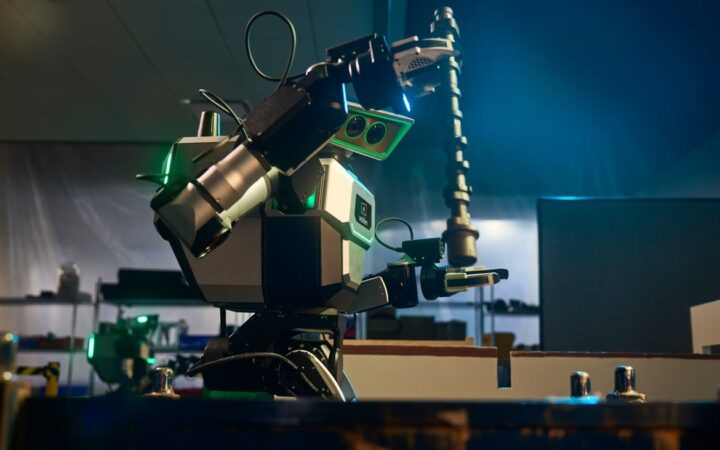
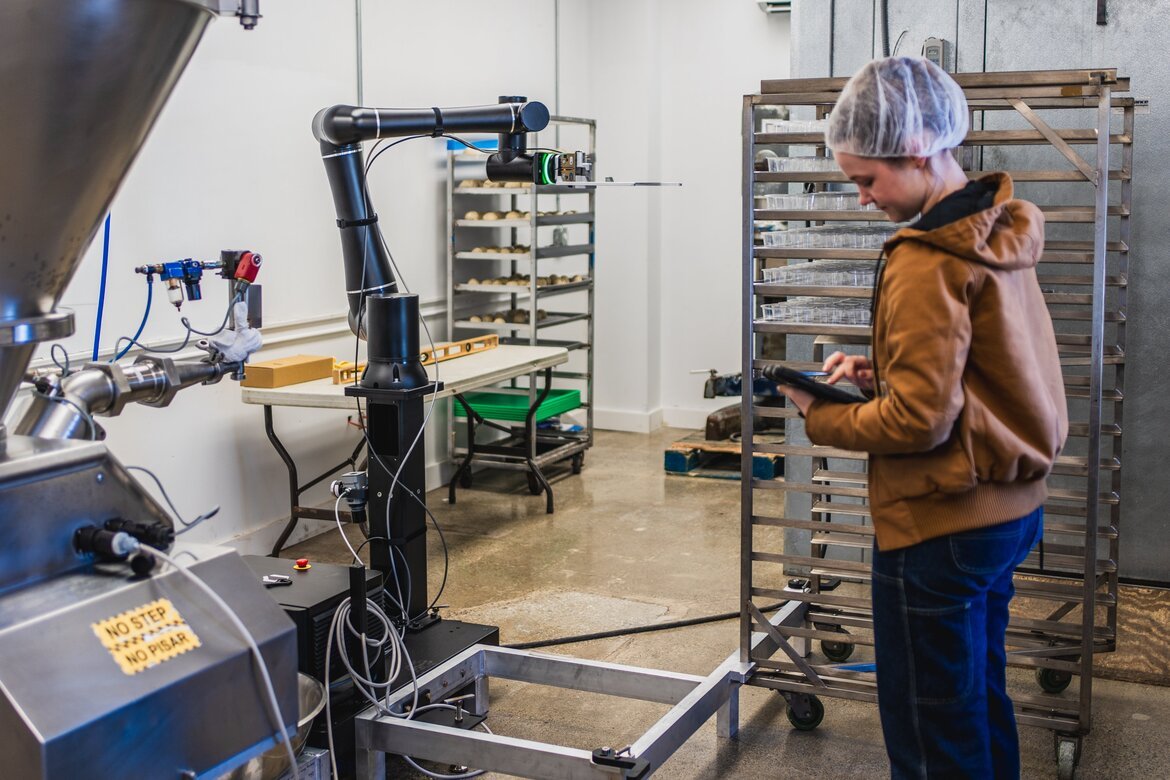
Standard Bots was built around a different model. Its AI-native robot arms learn through demonstration rather than code. An operator shows the robot how to perform a task; the company’s Flux AI Skill system records and replicates the routine without programming. The robots are deployed across machining, welding, palletizing, grinding, fastening, assembly, and inspection at roughly 30% lower cost than many legacy providers. Current customers include Amazon, Lockheed Martin, NASA, the U.S. Army, and Sunoco, alongside hundreds of smaller manufacturers.
Vertical Integration as a Competitive Strategy
Standard Bots takes a vertically integrated approach that goes further than most competitors in the segment. The company designs its own actuators, assembles products in-house, and plans to manufacture nearly every component domestically by 2027 – a supply chain strategy that both reduces import dependency and positions the company favorably against Chinese competitors in a policy environment that is increasingly attentive to robotics supply chain sovereignty.
The Glen Cove facility expansion will increase manufacturing capacity substantially as the company scales toward its deployment target. At 122 employees, Standard Bots is attempting to reach 10% of new U.S. industrial robot deployments while China is installing robots at a pace that exceeds the rest of the world combined – a scale challenge that the Series C directly addresses but does not fully resolve.
Competitive Positioning
Standard Bots enters a market segment receiving substantial capital from different directions. Figure AI raised over $1 billion at a $39 billion valuation for humanoid industrial robots. Physical Intelligence raised $400 million for foundation models that give robots generalized physical intelligence. Covariant, acquired by Amazon, built AI systems for warehouse robot manipulation.
What distinguishes Standard Bots from these well-funded competitors is the combination of current production deployment and accessible pricing for the SME manufacturing segment – a market that humanoid platforms and foundation model companies are not yet serving at commercial scale. The robots are on factory floors today; the competitors are largely still scaling toward deployment. Whether Standard Bots can reach its 10% deployment share target while building out domestic manufacturing infrastructure against deeply established competitors remains the central execution question the Series C is meant to answer.
Disclaimer: RobotsBeat is an independent media brand owned and operated by NuvexMedia LLC, publishing news, research, and insights on artificial intelligence, emerging technologies, automation, and related industries. NuvexMedia LLC invests in and collaborates with companies across the AI, Robotics, technology, software, and digital innovation sectors. These relationships do not influence RobotsBeat's editorial coverage, and the publication maintains full editorial independence to provide accurate, timely, and objective information. © 2026 NuvexMedia LLC. All rights reserved. This content is for informational purposes only and should not be considered legal, tax, investment, financial, or other professional advice.